alternatives à kaspr
Les 9 meilleures alternatives à Kaspr pour vos numéros de portable en 2026
Nous avons donc testé neuf alternatives. Quand on parle de numéros de portable, la grille est simple et sans pitié : le taux de numéros trouvés, la part de portables encore valides plutôt qu'injoignables, le coût réel par numéro valide plutôt que par crédit, et une couverture européenne obtenue légalement.
9 outils testés
mis à jour le 3 août 2026
14 min de lecture
Mis à jour le 3 août 2026
Les alternatives en un coup d'œil
pour une équipe qui veut des numéros de portable, Europe comprise, payés seulement quand ils sont valides, Enrow est la meilleure alternative à Kaspr : à partir de 15 €/mois, autour de 0,30 € le numéro valide au volume Pro (75 € pour 10 000 crédits = 250 numéros). Cognism fait un autre métier — la base pour grands comptes, énorme et consultable, avec des portables vérifiés, à condition d'assumer un contrat annuel. Lusha et ContactOut sont les outils d'affichage rapides les plus proches du fonctionnement de Kaspr ; RocketReach et SignalHire couvrent les recherches larges et le recrutement ; Wiza associe l'extraction Sales Navigator aux téléphones ; Apollo intègre la base dans un outil de campagnes. Chacun occupe un créneau précis ci-dessous, et aucun ne fait mieux dans l'ensemble pour des numéros fiables.
Kaspr, c'est une extension Chrome pour LinkedIn posée sur une base de données B2B. Vous ouvrez un profil, vous cliquez, et l'outil affiche un email ou un numéro de portable. C'est rapide, et vraiment bon sur les numéros européens. Mais Kaspr ne fait qu'afficher ce qu'il a en base.
Le numéro sort d'une fiche stockée, donc une partie des portables sont périmés — et vous payez un crédit téléphone, que la personne ait encore ce numéro ou non.
Si ce qu'il vous faut, ce sont des numéros de portable fiables, la meilleure alternative à Kaspr pour la plupart des équipes, c'est Enrow : un vrai Direct Phone Finder qui trouve en temps réel des numéros de portable conformes au RGPD, dans tous les pays, facturés seulement quand le numéro est valide, à partir de 15 €/mois.
Un numéro coûte 40 crédits, et un crédit ne part que sur un résultat trouvé — vous ne payez jamais un numéro qui ne répond plus.
Et voilà ce qu'aucun autre outil de cette liste ne fait. L'extension Chrome d'Enrow recopie le contact complet et vérifié — tous les champs, email et numéro de portable — depuis un profil LinkedIn ou Sales Navigator directement dans HubSpot, Salesforce ou Pipedrive, en un clic.
Enrow est premier ; les huit autres outils couvrent chacun un besoin précis. Aucun ne fait mieux dans l'ensemble.
Pourquoi les équipes cherchent des alternatives à Kaspr
Kaspr est un bon outil d'affichage pour un commercial qui travaille dans LinkedIn, et pourtant les équipes le quittent. Trois raisons. Si votre façon de travailler, ce sont des affichages rapides depuis LinkedIn et que vous acceptez qu'une partie soit erronée, Kaspr peut suffire. Si vous payez pour des numéros qui ne répondent plus et que vous voulez des numéros fiables, lisez la suite.
Transparence : notre conflit d'intérêts
Autant poser mon parti pris sur la table. Enrow est un outil de données — téléphone et email —, cet article classe des outils de recherche de numéros, et j'ai mis Enrow en premier. C'est mon entreprise, alors pesez tout ce qui suit à cette aune.
Et je dis dans la foulée ce qu'Enrow n'est pas. Ce n'est pas une base de données consultable. Cognism, Lusha et Apollo livrent d'énormes bases stockées que vous pouvez filtrer et parcourir ; nous, non, parce que tout notre modèle repose sur le temps réel.
Enrow ne fera pas tourner vos campagnes comme une suite du type Apollo, et il ne met pas vos boîtes mail en chauffe. Rien de tout cela n'est une lacune du produit.
Nous préférons trouver et vérifier un contact nous-mêmes plutôt que vous refiler une fiche stockée revendue, et nous ne construirons pas d'outil d'envoi.
Ce que je défends sans ciller, c'est le seul métier d'Enrow : trouver et vérifier des données de contact fraîches et exactes — emails et numéros de portable — et rien d'autre.
Si vous cherchez une base de plusieurs millions de contacts à filtrer vous-même, ou un tout-en-un qui envoie à votre place, l'un des outils ci-dessous vous conviendra mieux, et je vous y renverrai.
Mais si vous voulez des numéros de portable qui tombent sur la bonne personne sans payer pour les mauvais, ce périmètre volontairement étroit est toute la raison d'être d'Enrow.
Les 9 meilleures alternatives à Kaspr
1. Enrow
#1
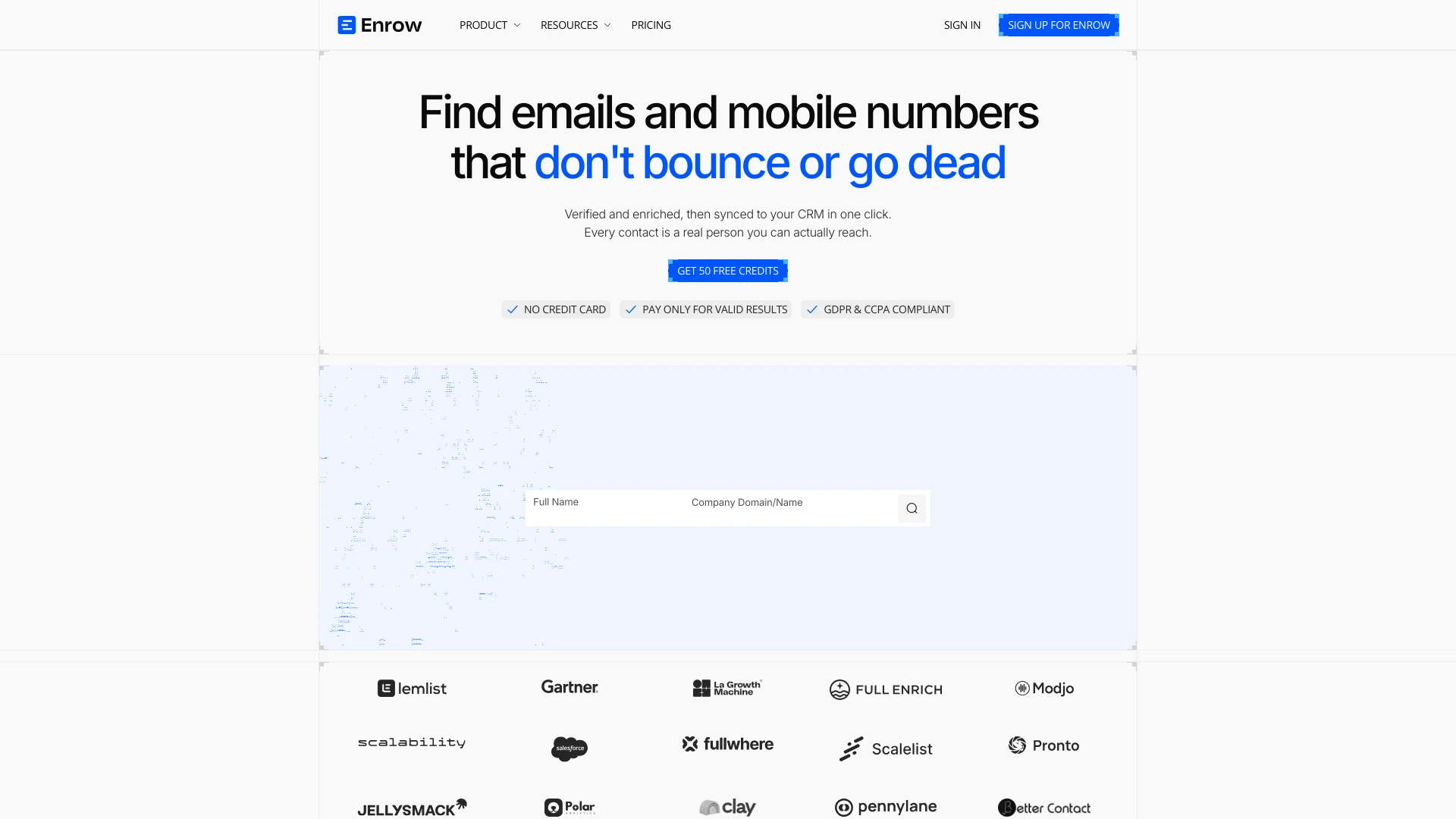
J'ai créé Enrow après une matinée de trop passée à regarder une facture d'affichage de numéros grimper, pendant que la moitié des portables que j'appelais tombaient sur une ligne coupée.
La différence avec Kaspr est nette, et elle tient à l'origine du numéro.
Kaspr affiche un portable tiré d'une fiche stockée. Enrow fait tourner un vrai Direct Phone Finder en temps réel : il va chercher le numéro de portable actuel, le contrôle et le renvoie — ou ne renvoie rien et ne vous facture rien. Toute la différence est là.
Un affichage tiré d'une fiche périmée vous coûte un crédit, que le numéro fonctionne ou non. Enrow ne consomme un crédit que sur un numéro valide.
Un numéro coûte 40 crédits : un forfait Start de 1 000 crédits donne 25 numéros, un forfait Pro de 10 000 crédits en donne 250, et chacun est un numéro confirmé valide.
Vient ensuite ce qui compte le plus pour les équipes européennes. Le RGPD. Enrow couvre les numéros de portable européens : vous n'avez pas à choisir entre la couverture et la conformité.
Kaspr aussi est orienté Europe et revendique une bonne précision sur le continent, certes — mais ça reste l'affichage d'une liste stockée, et les avis signalent des portables périmés, sans distinguer clairement ligne personnelle et ligne professionnelle avant l'appel.
Enrow renvoie le numéro de portable actuel, quel que soit le pays, vérifié au moment où vous le demandez.
Quand j'ai passé un lot de prospects français et allemands dans les deux outils, les portables d'Enrow tombaient sur la bonne personne ; deux des numéros de Kaspr sonnaient sur une ligne que le prospect avait manifestement quittée.
Les emails sortent du même moteur : plus de 10 vérifications par adresse, des catch-all validées et utilisables au lieu d'être écartées comme « risquées », et un taux de bounce sous 1 % sur un vrai envoi (moyenne constatée, pas une garantie contractuelle).
Et il y a un atout que rien d'autre ici n'égale. Depuis n'importe quel profil LinkedIn ou Sales Navigator, l'extension Chrome d'Enrow exporte le contact complet et vérifié — tous les champs, email et numéro de portable compris — directement dans HubSpot, Salesforce ou Pipedrive, en un clic. Pas de copier-coller.
Pas de fiche à moitié remplie. Kaspr affiche des champs sur le profil et vous laisse exporter une liste ; il ne dépose pas dans votre CRM une fiche contact complète et vérifiée comme le fait Enrow.
Un dernier point, pour ceux qui travaillent avec des agents IA. Enrow fournit un serveur MCP officiel (dépôt github.com/EnrowAPI/enrow-mcp) : vous appelez l'Email Finder, le vérificateur et le Direct Phone Finder directement depuis Claude, Cursor ou Windsurf.
Vos agents récupèrent ainsi des emails et des numéros de portable frais et vérifiés, toujours facturés au résultat valide. Ça reste marginal aujourd'hui, mais c'est commode si vous montez vos propres automatisations.
- +Un vrai Direct Phone Finder en temps réel : facturé seulement quand le numéro est valide, un numéro qui ne répond pas ne coûte jamais un crédit (Kaspr, lui, facture à l'affichage)
- +Numéros de portable conformes au RGPD dans tous les pays, Europe comprise
- +Plus de 10 vérifications par email ; les catch-all sont validées et utilisables, pas écartées
- +Intégrations natives Clay, HubSpot, Salesforce, Pipedrive, plus des webhooks, et une API vraiment solide avec un serveur MCP
- +L'extension Chrome exporte le contact complet et vérifié, tous les champs, d'un profil LinkedIn ou Sales Navigator dans votre CRM en un clic (aucun concurrent de cette liste ne le fait)
- +Pas de facturation par utilisateur, jusqu'à 10 utilisateurs sur Pro et sans limite sur Scale, et des crédits communs à toute l'équipe, dont le reliquat est reporté sur ces deux forfaits
- –Pas de base de données à parcourir, et c'est un choix. Une base stockée se périme dès qu'un prospect change de poste ou de numéro — précisément le problème qu'un outil d'appels cherche à éviter. Enrow travaille en direct, et c'est pour ça que ses numéros sont à jour. Pour constituer une liste, sourcez dans LinkedIn ou Sales Navigator, puis enrichissez.
- –Pas de campagnes d'envoi, et nous n'en ajouterons pas. Envoyez vos séquences avec Emelia d'abord, La Growth Machine ensuite, lemlist après.
- –Pas de données sur les technologies utilisées. Vous avez les infos entreprise que montre LinkedIn, mais rien sur la stack technique d'une société.
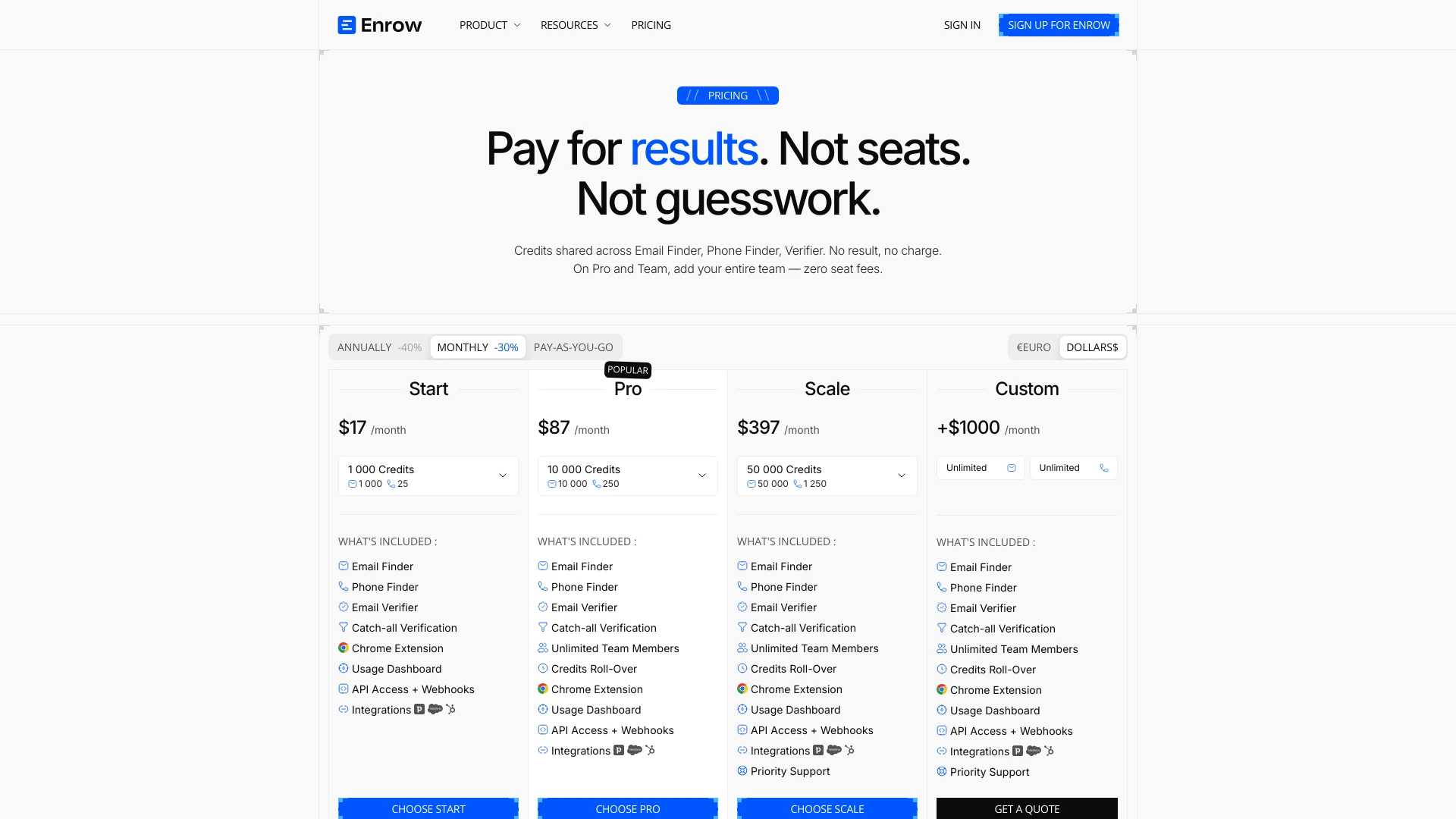
Trois paliers, facturés au mois. Start : 1 000 crédits pour 15 €, ou 4 000 pour 42 € (au mois uniquement). Pro : 10 000 pour 75 €, 20 000 pour 150 €, 30 000 pour 220 €.
Scale : 50 000 pour 360 €, jusqu'à 200 000 pour 1 250 €. Sur Pro et Scale, l'engagement annuel fait économiser environ 10 %, ce qui met les 10 000 crédits autour de 68 €/mois et les 50 000 autour de 324 €/mois.
Les règles de crédits s'apprennent vite : 1 email = 1 crédit, 1 numéro de portable = 40, une vérification 0,25, catch-all comprise, et rien n'est facturé tant que le résultat n'est pas valide. Un forfait de 10 000 crédits, ce sont donc 10 000 emails ou 250 numéros.
Les crédits inutilisés se reportent sur Pro et Scale. Offre gratuite : 50 crédits renouvelés chaque mois, sans carte, en continu.
Comme un crédit ne part que sur un résultat valide, le prix affiché est le coût réel.
La comparaison la plus propre se fait sur le plan Pro : 75 € pour 10 000 crédits, soit 10 000 emails valides à environ 0,0075 € pièce ou 250 numéros valides à environ 0,30 € pièce. Le Start reste l'entrée à 15 €.
Gardez en tête ce prix du numéro sur le Pro, parce que chaque outil d'affichage ci-dessous vous facture des portables stockés qu'ils fonctionnent ou non — son coût réel par numéro valide grimpe donc bien au-dessus de ce qu'annonce sa page de tarifs.
Appelez votre propre liste de test européenne avec Enrow avant de me croire sur parole. 50 crédits gratuits, renouvelés chaque mois, sans carte.
2. Cognism
Pensé pour l'équipe qui veut une grande base et des portables vérifiés, et qui peut assumer un contrat annuel.
Cognism est le poids lourd de cette liste.
Une grande base B2B conforme, avec un produit téléphone qui sort du lot : son palier supérieur ajoute des portables vérifiés (commercialisés sous le nom de Diamond Data, avec une précision annoncée élevée et un filtrage anti-démarchage) qu'un humain ou un processus a réellement contrôlés, au lieu d'une simple supposition tirée d'une base.
Face à Kaspr, c'est un vrai cran au-dessus. Kaspr affiche ce que sa base contient ; Cognism vérifie un portable à la demande et le passe au crible des listes anti-démarchage.
Pour un plateau de SDR grands comptes qui appelle beaucoup aux États-Unis et en Europe, cette couche vérifiée fait une vraie différence.
Le coût et l'engagement, c'est là que ça bloque pour la plupart des équipes. Pas de tarif public, pas d'option au mois, pas d'offre gratuite. Chaque licence se compte en milliers d'euros par an, en plus de frais de plateforme, et les portables vérifiés viennent encore en supplément.
C'est une base stockée au fond, donc en dehors des portables vérifiés, la même question de fraîcheur revient. Et vous signez un contrat annuel, sans connaître le prix à l'avance, après un cycle commercial.
Ce que mon test en conditions réelles a montré : les portables vérifiés décrochent vraiment mieux qu'un affichage brut, et c'est la vraie raison pour laquelle les grands comptes l'achètent. Mais Enrow y arrive autrement, et moins cher pour la plupart des équipes.
Il trouve le numéro de portable actuel en temps réel et ne facture que sur un numéro valide — pas de frais de plateforme, pas d'engagement annuel, pas de tarif par utilisateur.
Si vous êtes une petite ou moyenne équipe, le seul prix plancher de Cognism l'écarte ; si vous êtes un grand compte et voulez aussi la base, faites tourner Enrow comme couche temps réel à côté.
- +Grande base B2B conforme, bonne couverture Europe et États-Unis
- +Portables vérifiés (Diamond Data) avec filtrage anti-démarchage — la meilleure offre de téléphone vérifié de cette liste
- +Données d'intention et intégrations CRM/campagnes pour les workflows grands comptes
- +Réputation solide sur la conformité pour les secteurs réglementés
- –Pas de tarif public, pas de forfait au mois, pas d'offre gratuite ; contrat annuel et frais de plateforme en plus des licences
- –Tarif grands comptes — largement hors de portée des petites et moyennes équipes
- –Base stockée au fond ; la question de fraîcheur demeure en dehors de la couche de portables vérifiés
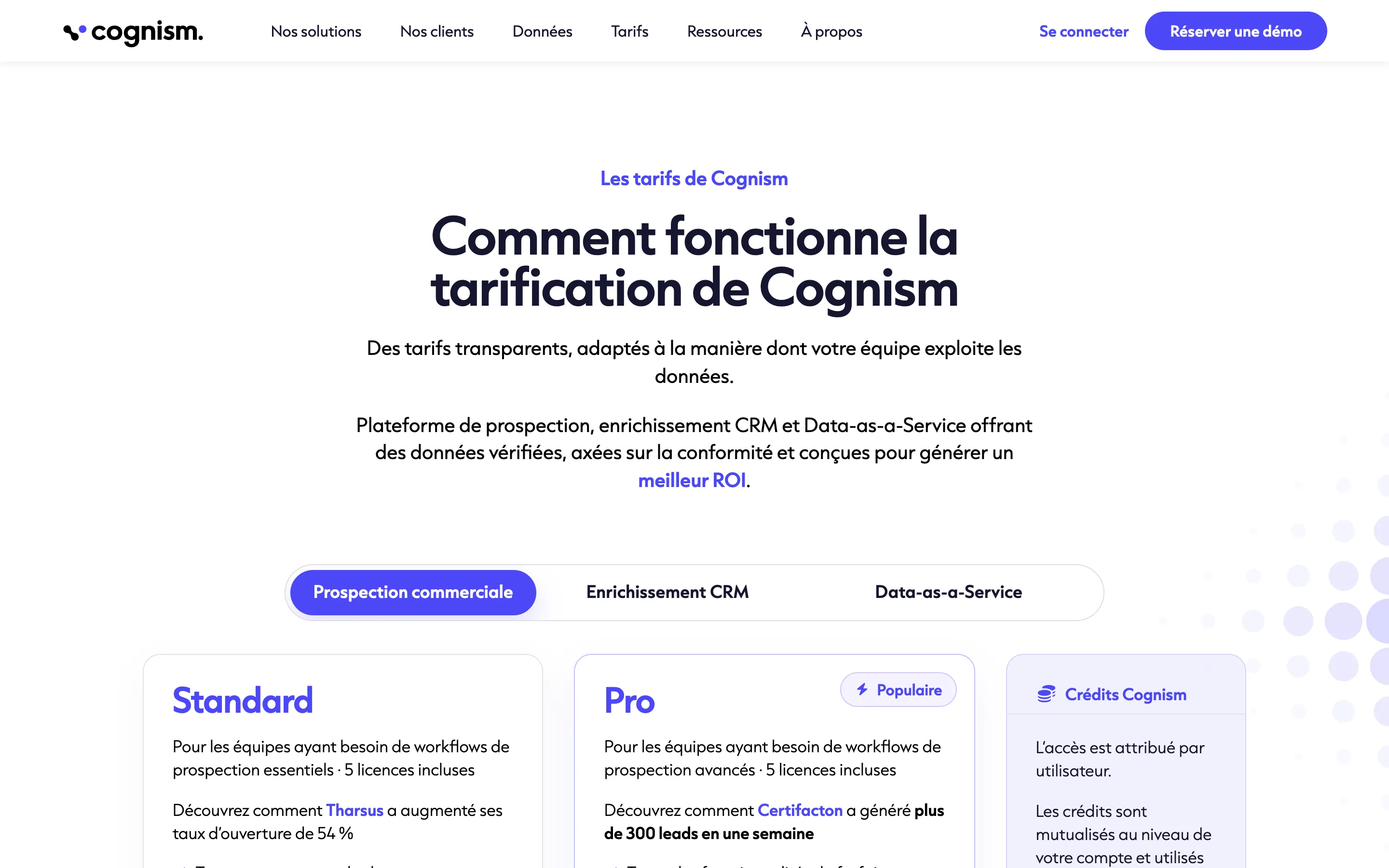
La tarification de Cognism est sur devis uniquement. Les estimations publiques situent l'entrée (Grow) autour de 1 250 €/utilisateur/an et le palier à portables vérifiés (Elevate) autour de 2 100 €/utilisateur/an, en plus de frais de plateforme souvent cités entre 12 500 et 20 000 €/an (Cognism ne publie pas ces chiffres). Ses portables vérifiés décrochent bien, mais le ticket d'entrée à cinq chiffres met le coût réel par numéro valide dans un tout autre budget que les 0,30 € du benchmark Pro d'Enrow.
vs Enrow: les portables vérifiés de Cognism sont son atout, et pour un grand plateau commercial, c'est une bonne raison de l'acheter. Enrow renvoie en temps réel des numéros de portable dans tous les pays, facturés seulement quand ils sont valides, sans frais par utilisateur ni contrat, et ajoute l'export du contact complet vers le CRM en un clic.
3. Lusha
L'équivalent le plus proche du fonctionnement de Kaspr.
Lusha fait presque exactement ce que fait Kaspr : une extension de navigateur posée sur une base stockée, qui affiche emails et numéros sur un profil LinkedIn, à un tarif pensé pour les PME.
Si vous hésitez sur Kaspr, Lusha est le premier nom que vous croiserez, et pour de bonnes raisons. Interface claire, affichage rapide, forfaits au crédit qui démarrent bas. Pour une petite équipe qui veut le fonctionnement de Kaspr chez un autre fournisseur, c'est le pas de côté naturel.
Même point de rupture que Kaspr, avec un piège tarifaire en plus. Lusha est une base stockée, ses portables vieillissent comme ceux de Kaspr, et en 2026, un affichage de numéro coûte 5 crédits, pas un seul — un usage centré sur le téléphone vide donc un forfait très vite.
Vous payez les crédits à l'affichage, pas sur un appel qui aboutit. La couverture dépend de la donnée détenue, et une équipe qui appelle beaucoup épuise vite le quota mensuel.
Sur mon test, les affichages sont revenus vite et l'interface était agréable, vraiment mieux que chez certains concurrents.
Mais quand j'ai appelé les portables pour de bon, le problème de la fiche périmée était bien là — et à 5 crédits le numéro, le coût réel par numéro est plus élevé que ne le laisse croire le prix affiché.
Enrow trouve le numéro actuel en temps réel et ne facture que sur un numéro valide.
- +Extension LinkedIn rapide et agréable pour afficher emails et téléphones
- +Prix d'entrée attractif et une offre gratuite utilisable
- +Bonnes intégrations CRM pour les équipes PME
- +Un fonctionnement familier, proche de Kaspr
- –Base stockée : les portables affichés vieillissent et une partie ne répond plus
- –Un affichage de numéro coûte 5 crédits en 2026 : un usage centré téléphone vide les forfaits vite
- –Les crédits partent à l'affichage, pas sur un appel qui aboutit
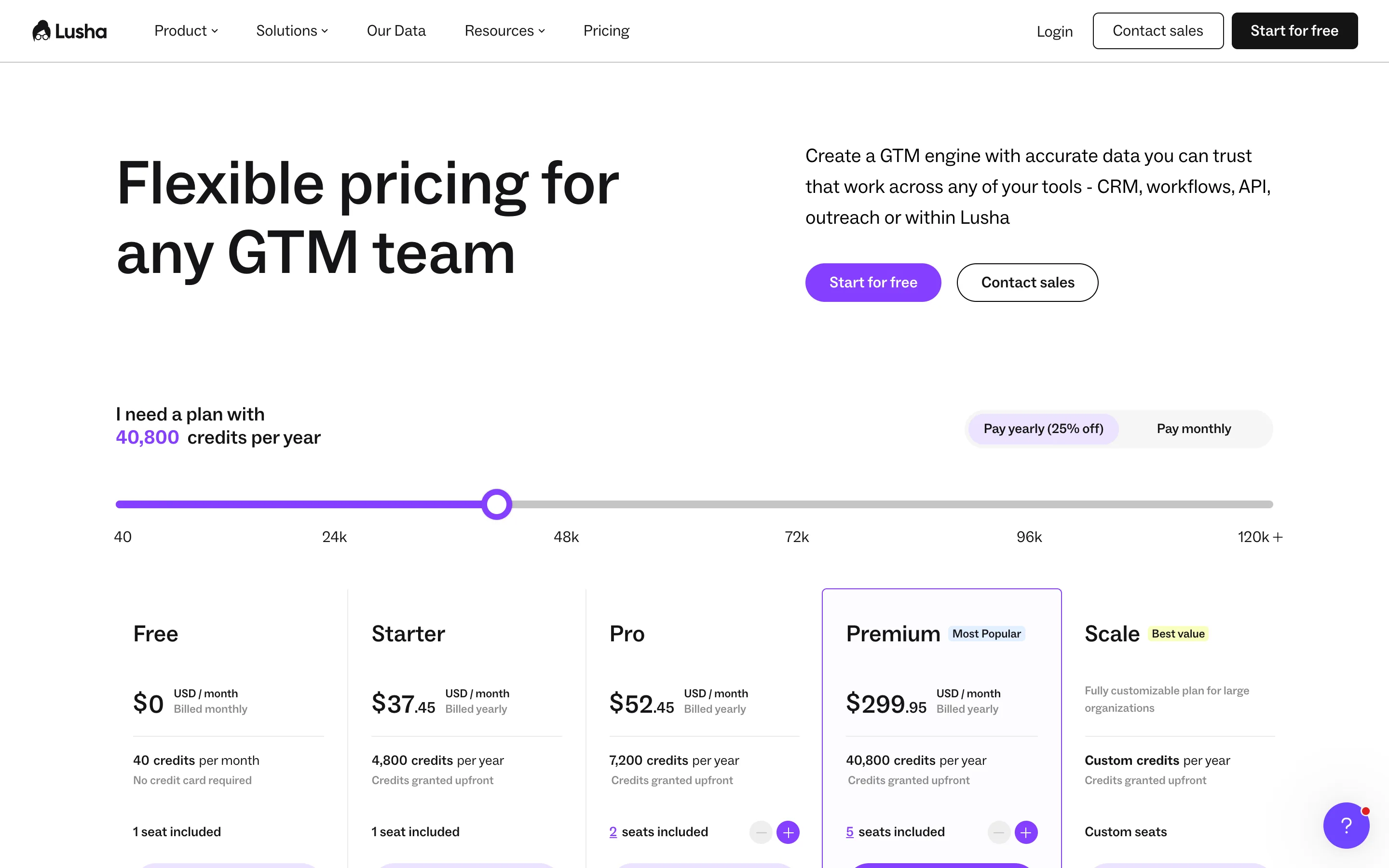
La tarification de Lusha : une offre gratuite de 40 crédits/mois, puis un Starter à 34 €/mois en annuel (400 crédits), et un Pro à 48 € (600 crédits/mois), facturés par compte, un affichage de numéro coûtant 5 crédits. À ~0,40 € le numéro affiché sur le Pro en annuel, une fois les affichages de base stockée ramenés à 50–70 % d'exploitables, le coût réel par numéro valide se rapproche de 0,57–0,80 €, nettement au-dessus des 0,27 € environ d'Enrow sur son Pro, avec la même facturation annuelle.
vs Enrow: Lusha prélève 5 crédits par affichage, bon ou mauvais, alors qu'Enrow ne facture que sur un numéro qui répond. Enrow exporte aussi le contact complet vers le CRM en un clic, ce que Lusha ne fait pas.
4. RocketReach
À choisir quand vous voulez une large couverture sur un immense index, avec les téléphones inclus dans une même recherche.
RocketReach indexe un très grand vivier de professionnels et renvoie emails et numéros à partir d'un seul crédit de recherche. Sa force, c'est l'étendue : il trouvera quelqu'un pour beaucoup de noms que d'autres outils manquent, tous secteurs et niveaux de séniorité confondus.
Comparé à l'affichage LinkedIn de Kaspr, RocketReach ressemble plutôt à un large index que vous interrogez par nom, entreprise ou domaine, les téléphones étant réservés aux paliers supérieurs.
Les téléphones traînent le même problème de base vieillissante, et ils sont réservés à un palier supérieur. Les portables n'arrivent qu'à partir du Pro, un crédit couvre un email ou un téléphone ou un profil complet — donc un mois centré sur le téléphone dévore votre quota de recherches.
C'est de la donnée stockée, la précision sur les portables est irrégulière, et le taux de numéros trouvés reste inférieur à celui d'un spécialiste. Le volume et l'API sont réservés aux paliers plus chers.
Mon avis : l'étendue est réelle, et si vous cherchez des contacts difficiles à trouver dans de nombreux secteurs, RocketReach les fait remonter.
Mais vous dépensez un crédit de recherche sur la tentative, pas sur le résultat — une recherche qui ne renvoie aucun numéro, ou un numéro périmé, coûte autant qu'un bon résultat — et il n'y a aucune conformité européenne à la hauteur des besoins d'une équipe qui appelle en Europe.
Enrow ratisse moins large, par choix, parce qu'il vérifie en temps réel : les numéros de portable qu'il renvoie, eux, sont à jour.
- +Index très vaste, large couverture des métiers et des secteurs
- +Un crédit couvre un email, un téléphone ou un profil complet
- +Recherches en masse et API sur les paliers supérieurs
- +Efficace pour les contacts difficiles à trouver, tous secteurs
- –Les portables sont réservés au Pro et au-dessus, et ils entament les mêmes crédits que les emails
- –Donnée stockée : la précision des portables est irrégulière et des numéros hors service passent au travers
- –Aucune conformité européenne dédiée pour appeler en Europe
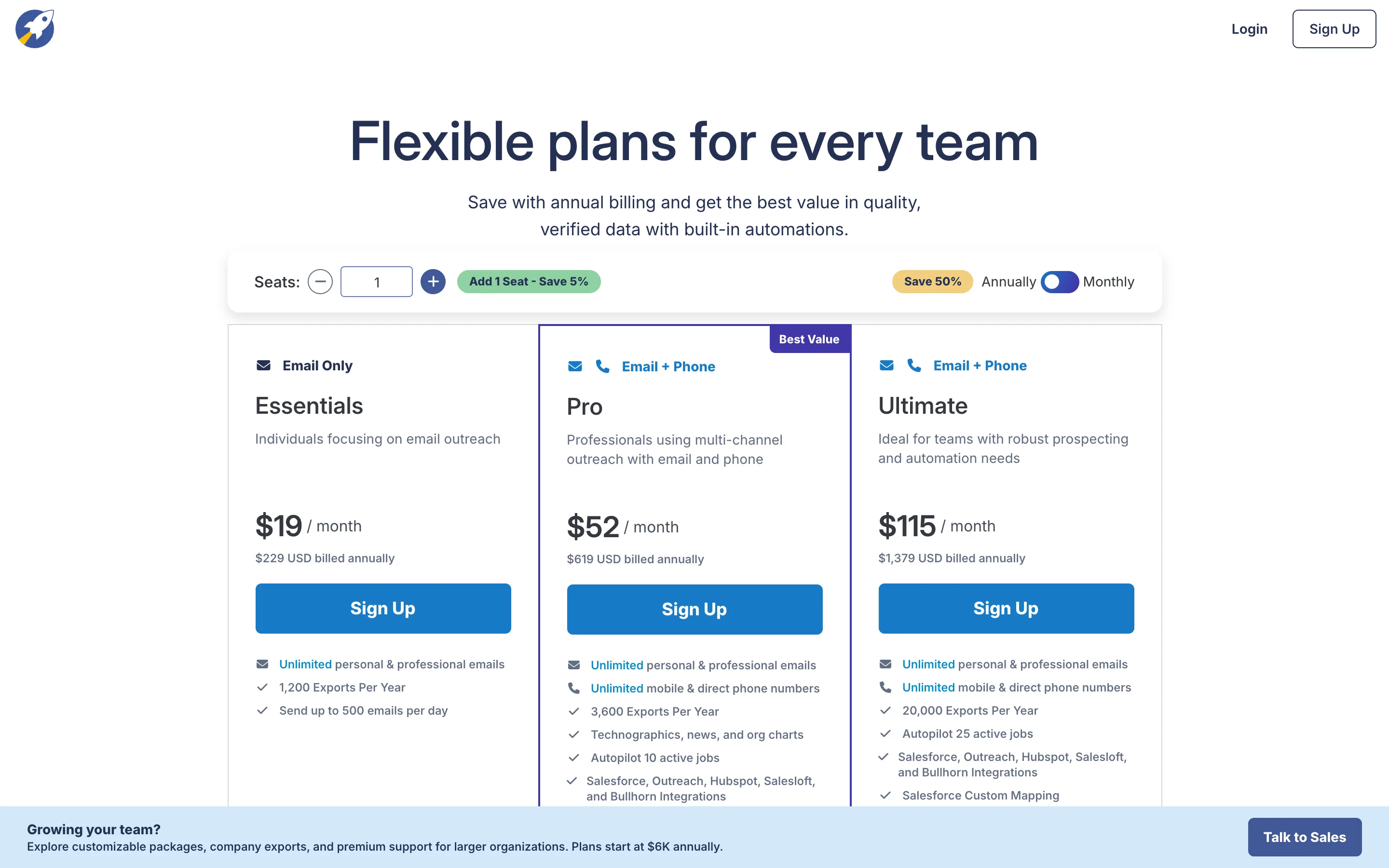
La tarification de RocketReach (en dollars, tarif annuel) : Essentials à ~30 €/mois pour les emails seuls, Pro à ~68 €/mois qui ajoute les téléphones. RocketReach est le seul outil ici à facturer la recherche, pas le numéro : entre un taux de réussite téléphone d'environ 30 %, des recherches mensuelles non reportables et les numéros stockés déjà coupés, le coût réel par portable valide grimpe autour de 1,80 €, soit à peu près 6× le benchmark Pro d'Enrow (0,30 €).
vs Enrow: l'étendue de RocketReach est son argument, mais vous payez à la recherche — une recherche sans téléphone, ou un numéro coupé, consomme quand même le crédit — et rien ne documente ce qui revient côté Europe. Enrow ne facture que sur un résultat valide et exporte le contact complet vers le CRM en un clic.
5. SignalHire
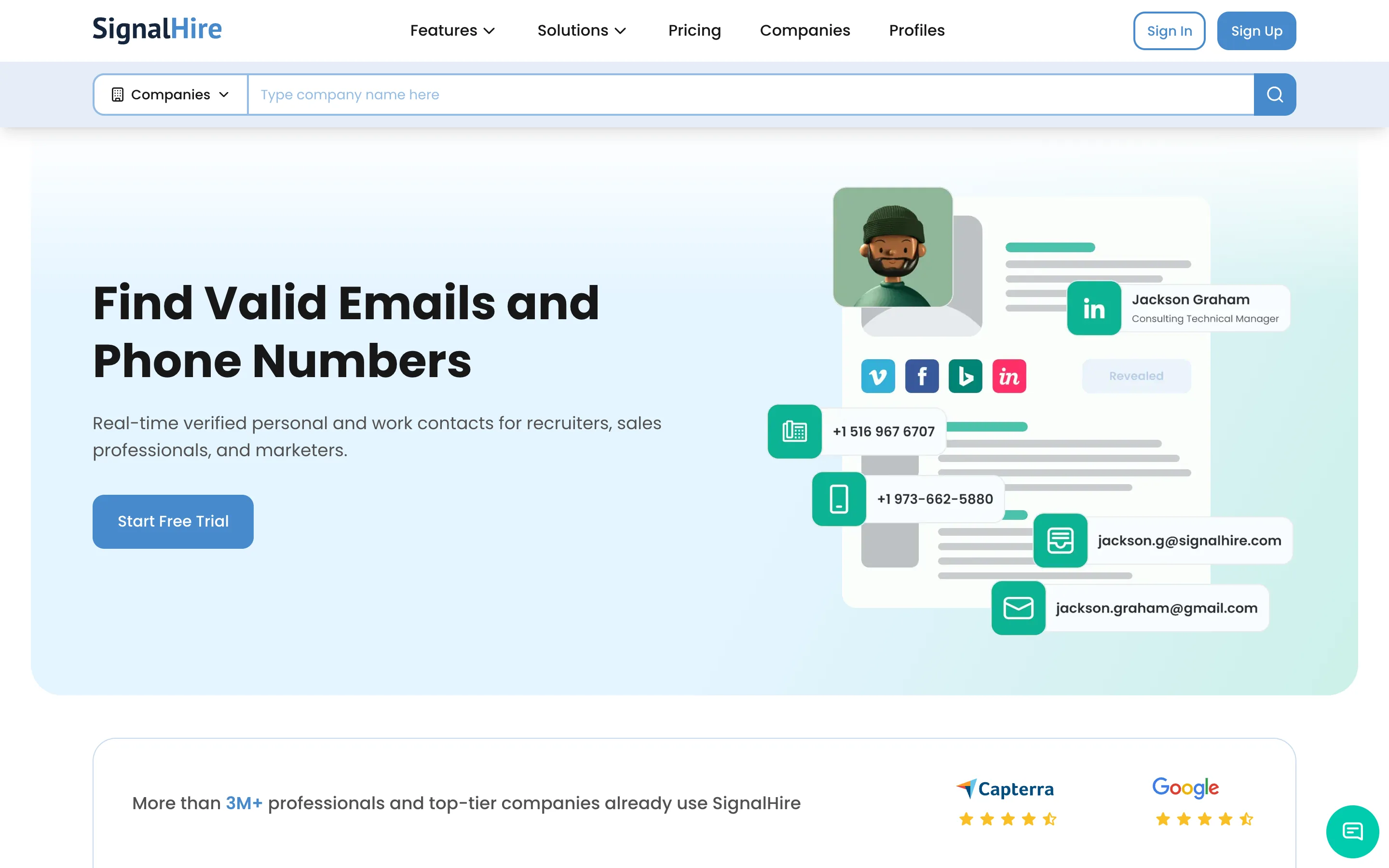
Les recruteurs viennent ici pour l'email personnel et le téléphone qui sortent d'un seul crédit.
SignalHire est populaire chez les recruteurs parce qu'un crédit ouvre une fiche contact complète : email pro, email personnel et un numéro de portable quand il l'a. Ce regroupement est pratique quand vous sourcez des candidats qui ne répondent pas sur une ligne professionnelle.
Face à Kaspr, SignalHire est moins ancré dans LinkedIn et ressemble davantage à une base que vous interrogez, avec un penchant recrutement et des fonctions pensées pour les ATS.
Le hic vous sera familier. C'est une base stockée : la donnée téléphone vieillit, et un crédit part à l'affichage que le numéro fonctionne ou non.
La couverture est correcte aux États-Unis et plus inégale ailleurs, et il n'y a pour ainsi dire aucune conformité pour les numéros de portable européens. Les forfaits se comptent en crédits, et les mois où vous appelez beaucoup finissent par coûter cher.
En le passant sur une liste type recrutement, j'ai apprécié qu'un crédit me donne un email personnel et un portable d'un coup ; c'est un vrai confort, et l'essai gratuit permet de s'en rendre compte.
Mais j'ai encore payé pour des portables périmés, et pour appeler en Europe, je n'ai trouvé aucune trace de l'origine des numéros. Les numéros de portable d'Enrow reviennent à jour et, pour l'Europe, obtenus légalement, et vous ne payez que lorsqu'ils sont valides.
- +Un crédit affiche email pro, email personnel et téléphone d'un coup
- +Pensé pour le recrutement, avec des intégrations ATS
- +Prix d'entrée attractif et un petit essai gratuit
- +Options de volume et API à plus grande échelle
- –Base stockée : la donnée téléphone vieillit et certains numéros ne mènent nulle part
- –Le crédit part à l'affichage, pas sur une ligne confirmée
- –Couverture surtout américaine ; aucune conformité pour les numéros de portable européens
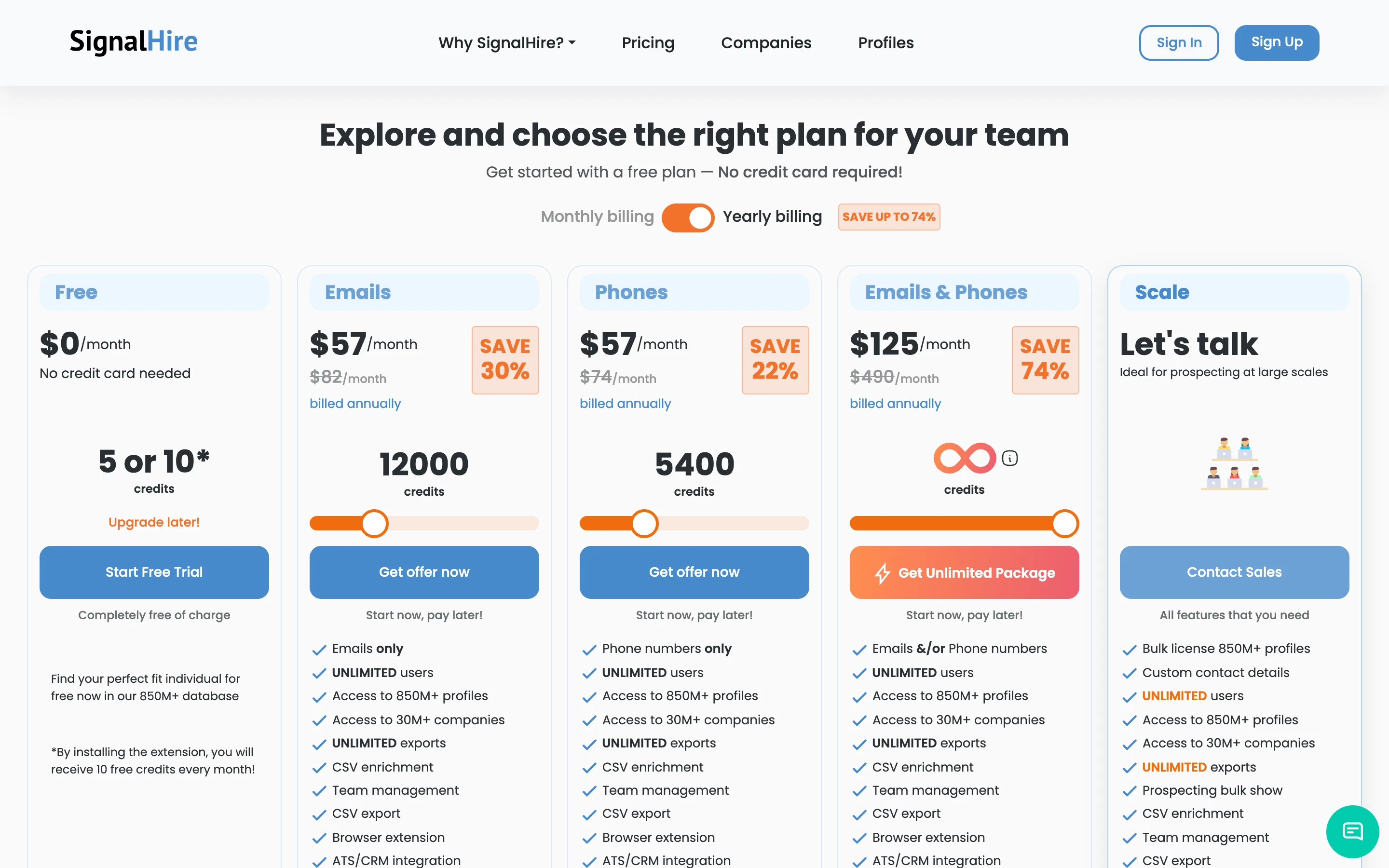
La tarification de SignalHire (en dollars) : l'essai donne 5 crédits, puis l'offre combinée Emails & Phones est à ~126 €/mois pour 900 crédits (~100 € en annuel), un crédit renvoyant une fiche complète, téléphone compris. Ça fait environ 0,14 € le portable affiché, mais ce sont des affichages de liste stockée facturés bons ou mauvais : une fois les ratés retirés, le coût réel par numéro valide et actuel passe au-dessus des 0,30 € d'Enrow, sans la moindre documentation européenne.
vs Enrow: la fiche complète d'un seul crédit est pratique pour le recrutement, mais une partie de ce prix achète des lignes coupées dont vous avez quand même payé l'affichage. Enrow vérifie le numéro de portable en temps réel et ne facture que sur un numéro valide.
6. Wiza
Si vous passez vos journées dans Sales Navigator et que vous voulez transformer une recherche en liste de contacts avec les téléphones, c'est celui-là.
La spécialité de Wiza, c'est de scraper une recherche LinkedIn Sales Navigator pour en tirer une liste exportable, avec les emails et, sur les forfaits téléphone, les numéros de portable.
Si votre façon de travailler, c'est « je construis une recherche Sales Nav, j'exporte toute la page », Wiza le fait mieux que l'affichage profil par profil de Kaspr. Pour ceux qui construisent des listes en masse depuis Sales Navigator, c'est un vrai gain de temps.
C'est côté téléphone, et dans les petits caractères, que ça se complique. Les téléphones sont sur le palier Email+Phone, plus cher, les crédits ne se reportent pas, et il y a des plafonds d'export sur les forfaits annuels.
Pour les numéros, l'outil s'appuie sur de la donnée stockée, donc le même problème de fraîcheur s'applique, et il faut en plus un abonnement Sales Navigator actif. Au-delà du quota, chaque numéro supplémentaire est facturé.
Quand j'ai exporté une recherche Sales Nav avec les téléphones, la vitesse m'a impressionné et le CSV est arrivé propre, sans rien à réorganiser avant de le verser dans mon CRM.
Mais les portables sont des affichages de données stockées, donc une partie arrive périmée, et le forfait téléphone est tarifé en conséquence.
Enrow ne scrape pas de listes, c'est une vraie différence. Mais pour les numéros eux-mêmes, il trouve et vérifie chaque numéro de portable en direct et ne facture que sur un numéro valide.
- +Transforme une recherche Sales Navigator en liste de contacts exportable, et vite
- +Emails et téléphones disponibles ensemble sur le palier Email+Phone
- +Exports CSV propres et intégrations CRM
- +Une offre gratuite pour tester le fonctionnement
- –Les téléphones sont sur le palier plus cher ; les crédits ne se reportent pas
- –Nécessite un abonnement Sales Navigator actif ; plafonds d'export sur les forfaits annuels
- –Des portables issus de données stockées : une partie arrive déjà périmée
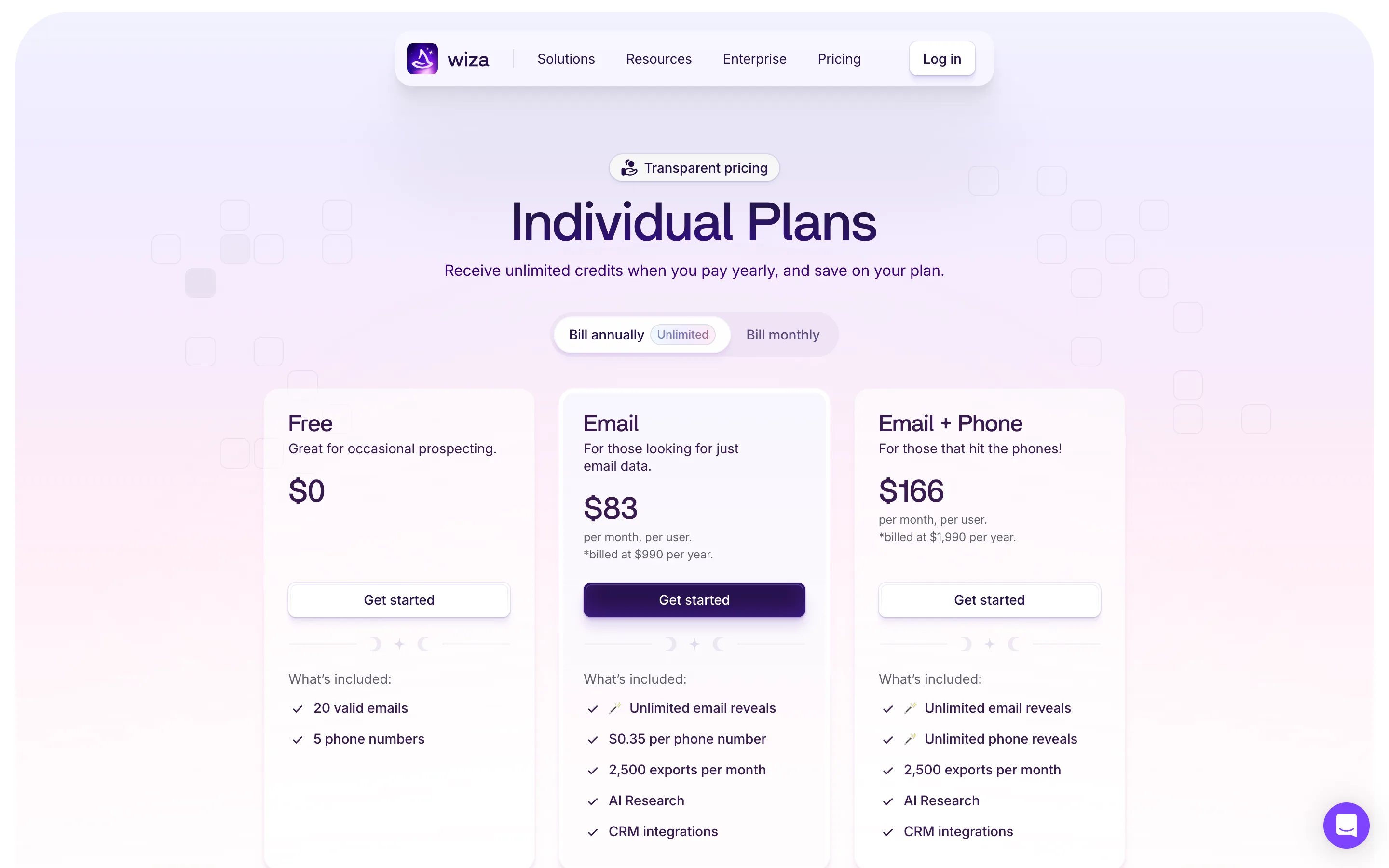
La tarification de Wiza (en dollars, par utilisateur) : une offre gratuite, puis Email+Phone à ~181 €/mois pour 500 emails et 500 téléphones (~151 €/mois en annuel). En attribuant tout le forfait aux téléphones, ça fait ~0,36 € le numéro affiché ; comptés à 50–70 % d'exploitables, les affichages de données stockées portent le coût réel par portable valide autour de 0,52–0,73 €, au-dessus des 0,30 € d'Enrow, avant même l'abonnement Sales Navigator obligatoire.
vs Enrow: Wiza gagne sur les exports Sales Navigator en masse, qu'Enrow ne fait pas. Mais les numéros eux-mêmes sont des affichages de données stockées, sans documentation européenne et avec des crédits non reportables, alors qu'Enrow vérifie chaque numéro de portable en direct, ne facture que sur un numéro valide, et reporte les crédits sur Pro et Scale.
7. Apollo

À regarder quand vous voulez toute la suite base + campagnes, pas seulement des téléphones.
Apollo associe une immense base B2B à des campagnes, de l'enrichissement et une extension Chrome, le tout dans un abonnement facturé par utilisateur.
Là où Kaspr est un outil d'affichage d'emails et de téléphones, Apollo est une plateforme go-to-market complète : vous sourcez dans la base, vous enrichissez, et vous lancez la campagne sans quitter l'onglet.
Pour une petite équipe qui veut un seul outil pour tout, c'est cette ampleur qui séduit, et la base est bien plus grande que ce que Kaspr fait remonter.
Le prix de cette ampleur, ce sont les téléphones. Apollo prélève les portables sur une enveloppe de crédits unique par utilisateur, à 8 crédits l'affichage, et c'est un produit de base stockée, donc une partie s'avère périmée quand on appelle vraiment.
Comme cette enveloppe est commune, chaque téléphone grignote des crédits dont vos emails et vos exports ont aussi besoin, et ces crédits, attribués par utilisateur, expirent à chaque cycle. Si l'objectif, c'est d'appeler, l'enveloppe d'Apollo se vide vite et les crédits supplémentaires alourdissent la note.
Reconnaissons à Apollo qu'il passe du filtre à la campagne au même endroit, et vite. Mais quand j'ai composé ces numéros un par un, sa donnée téléphone, stockée et peu fournie, a vite montré ses limites.
Enrow renvoie en temps réel des numéros de portable dans tous les pays, ne facture que sur un numéro valide, sans rien compter par utilisateur. Vous voulez le tout-en-un ? Achetez Apollo et branchez Enrow dessus pour des emails et des téléphones propres.
- +Grande base B2B avec campagnes et enrichissement au même endroit
- +Extension Chrome et intégrations CRM
- +Offre gratuite généreuse (900 crédits/an par utilisateur)
- +Un seul outil pour sourcer, enrichir et envoyer
- –Un affichage de numéro coûte 8 crédits pris sur l'enveloppe commune, que les portables vident vite ; la donnée stockée vieillit
- –Une seule enveloppe de crédits par utilisateur : les téléphones se disputent les mêmes crédits que les emails et les exports
- –Crédits attribués par utilisateur, qui expirent à chaque cycle sans report
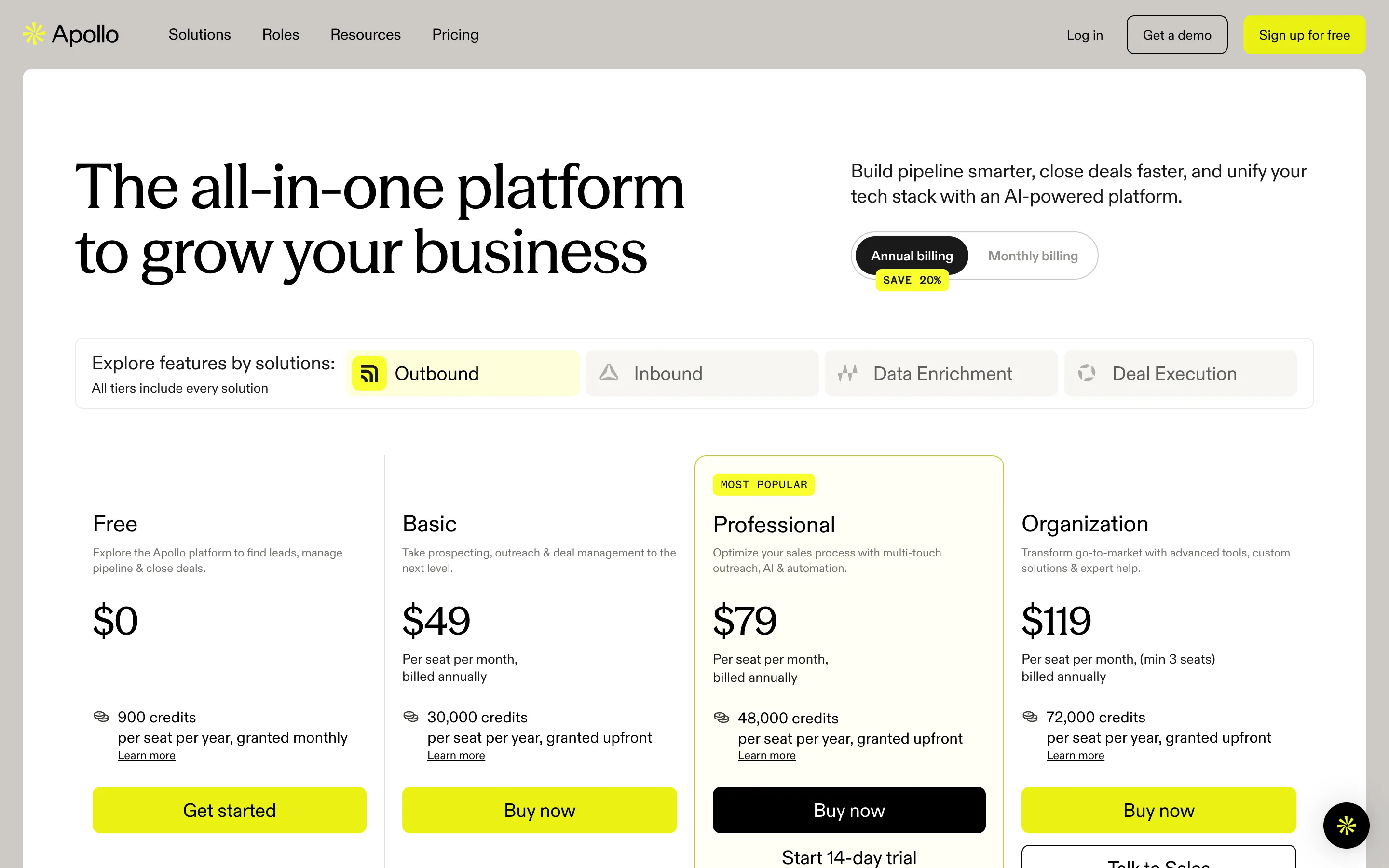
La tarification d'Apollo (en dollars, par utilisateur) : Free, puis Basic à ~45 €/utilisateur/mois en annuel (30 000 crédits unifiés/utilisateur/an), un email coûtant 1 crédit et un affichage de numéro 8. En consacrant tous les crédits aux portables, on obtient ~0,14 € le numéro affiché, mais c'est une fiction pour qui appelle : entre des crédits partagés avec vos emails, la donnée stockée périmée et des crédits qui ne se reportent pas, le coût réel par portable valide rejoint puis dépasse les 0,30 € du benchmark Pro d'Enrow — et tout est multiplié par le nombre d'utilisateurs.
vs Enrow: Apollo, c'est le tout-en-un ; Enrow, c'est la couche de données. Les numéros d'Enrow, trouvés en temps réel, ne sont facturés que s'ils sont valides, sans supplément par utilisateur : faites tourner les deux si vous voulez la suite plus des téléphones propres.
8. ContactOut
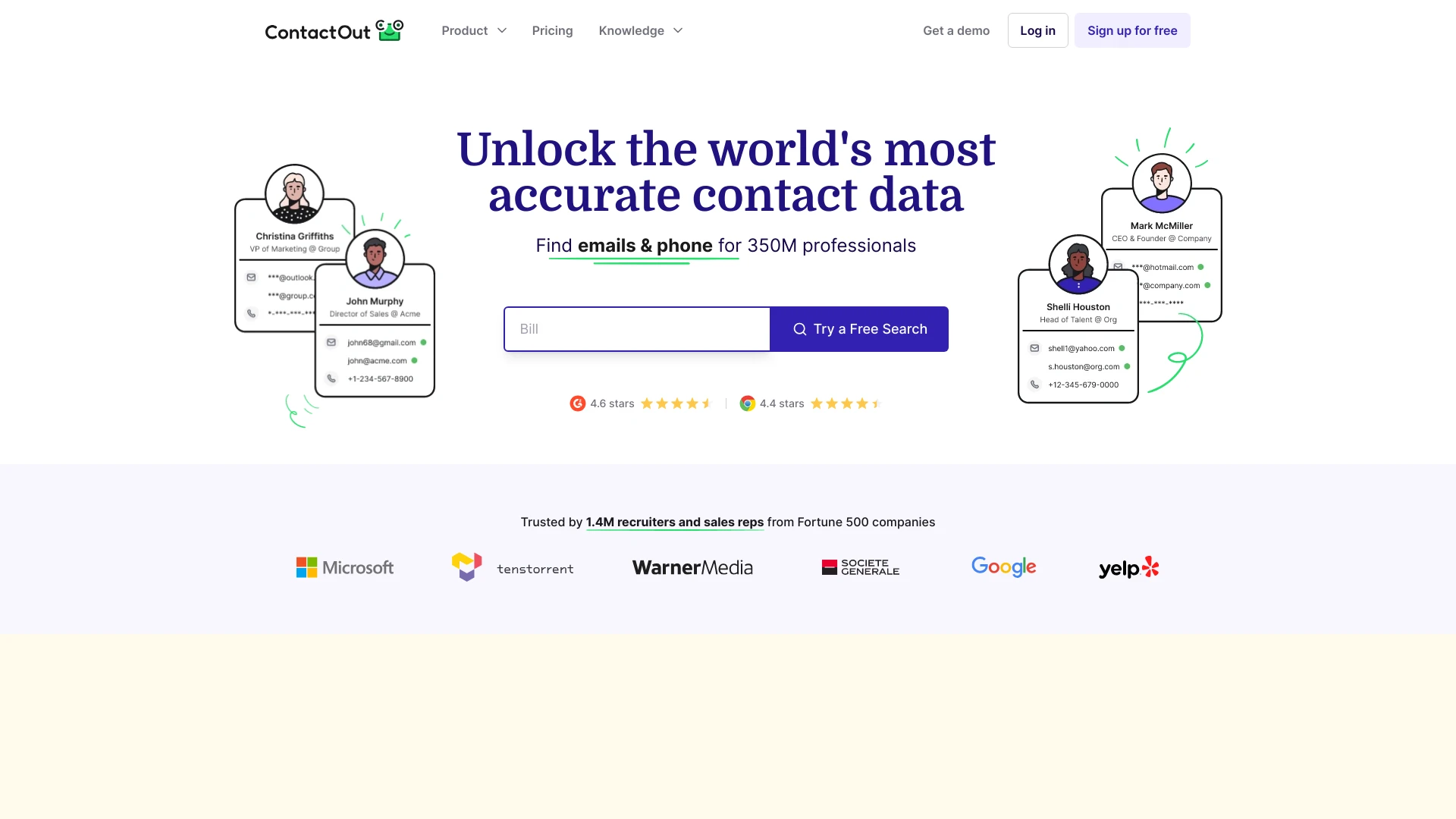
Fait surtout pour le recruteur qui s'appuie sur les emails personnels et l'affichage natif dans LinkedIn.
ContactOut est une extension LinkedIn et une base connue pour faire remonter les emails personnels à côté des emails pro, ce que les recruteurs adorent, plus les numéros sur les forfaits qui incluent le téléphone.
Son fonctionnement est proche de celui de Kaspr : afficher les données de contact sur un profil LinkedIn, puis exporter. Sa force sur l'email personnel est ce qui le distingue vraiment d'un outil centré sur le pro.
Le nerf de la guerre, c'est l'économie du téléphone et les plafonds cachés.
Un affichage de numéro coûte 1 crédit, pris sur un quota téléphone à part, et ces forfaits qui donnent une impression d'« illimité » sont plafonnés au mois (par exemple, un plafond de 2 000 emails / 1 000 téléphones par mois).
C'est de la donnée stockée, les portables vieillissent, et il n'y a aucune conformité européenne dédiée. Les téléphones sont sur le palier Email+Phone et au-dessus.
En le testant sur des candidats qui ne répondent pas sur une adresse pro, j'ai trouvé le taux d'emails personnels vraiment utile — la seule chose pour laquelle je le garderais.
Mais les téléphones sortent d'une liste stockée et restent sous un plafond mensuel, donc le coût réel par numéro valide est plus élevé qu'il n'en a l'air, et je n'ai rien vu qui documente l'Europe.
Les numéros de portable d'Enrow sont en temps réel et facturés seulement quand ils sont valides.
- +Bonne couverture des emails personnels, appréciée des recruteurs
- +Affichage et export natifs dans LinkedIn
- +Forfaits Email+Phone avec des plafonds mensuels élevés
- +Un quota quotidien gratuit pour tester
- –Donnée stockée : les portables vieillissent et un affichage raté consomme quand même un crédit
- –Des plafonds d'usage raisonnable au mois s'appliquent même sur les forfaits « illimités » (2 000 emails / 1 000 téléphones)
- –Aucune conformité pour les numéros de portable européens
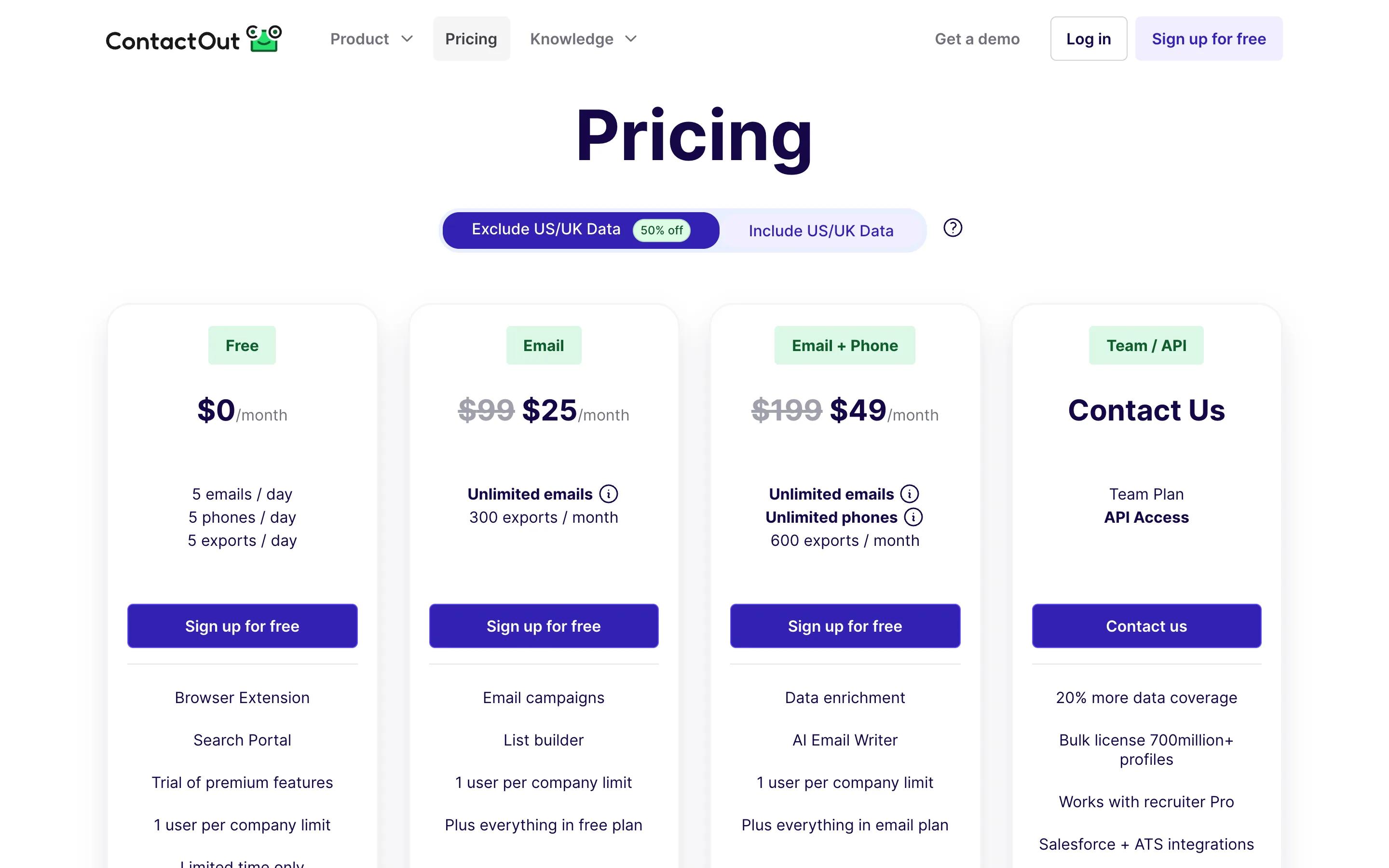
La tarification de ContactOut (en dollars) : Free, puis Email+Phone à ~90 €/mois au mois (~72 € en annuel) avec un plafond de 2 000 emails et 1 000 téléphones/mois, un affichage de numéro coûtant 1 crédit sur un solde distinct. Ça revient à ~0,09 € le portable affiché seulement si vous saturez les 1 000 téléphones chaque mois ; appelez comme une vraie équipe, ne comptez que 50–70 % de portables stockés exploitables, et le coût réel par numéro valide sort largement de cette fourchette, bien au-dessus des 0,30 € d'Enrow, sans documentation européenne.
vs Enrow: ContactOut gagne sur le sourcing d'emails personnels pour les recruteurs, un métier qu'Enrow n'exerce pas. Mais ses téléphones sortent d'une liste stockée, sous un plafond mensuel et sans documentation européenne, alors qu'Enrow renvoie des numéros en temps réel facturés au seul résultat valide, avec l'export du contact complet vers le CRM en un clic.
9. Kaspr
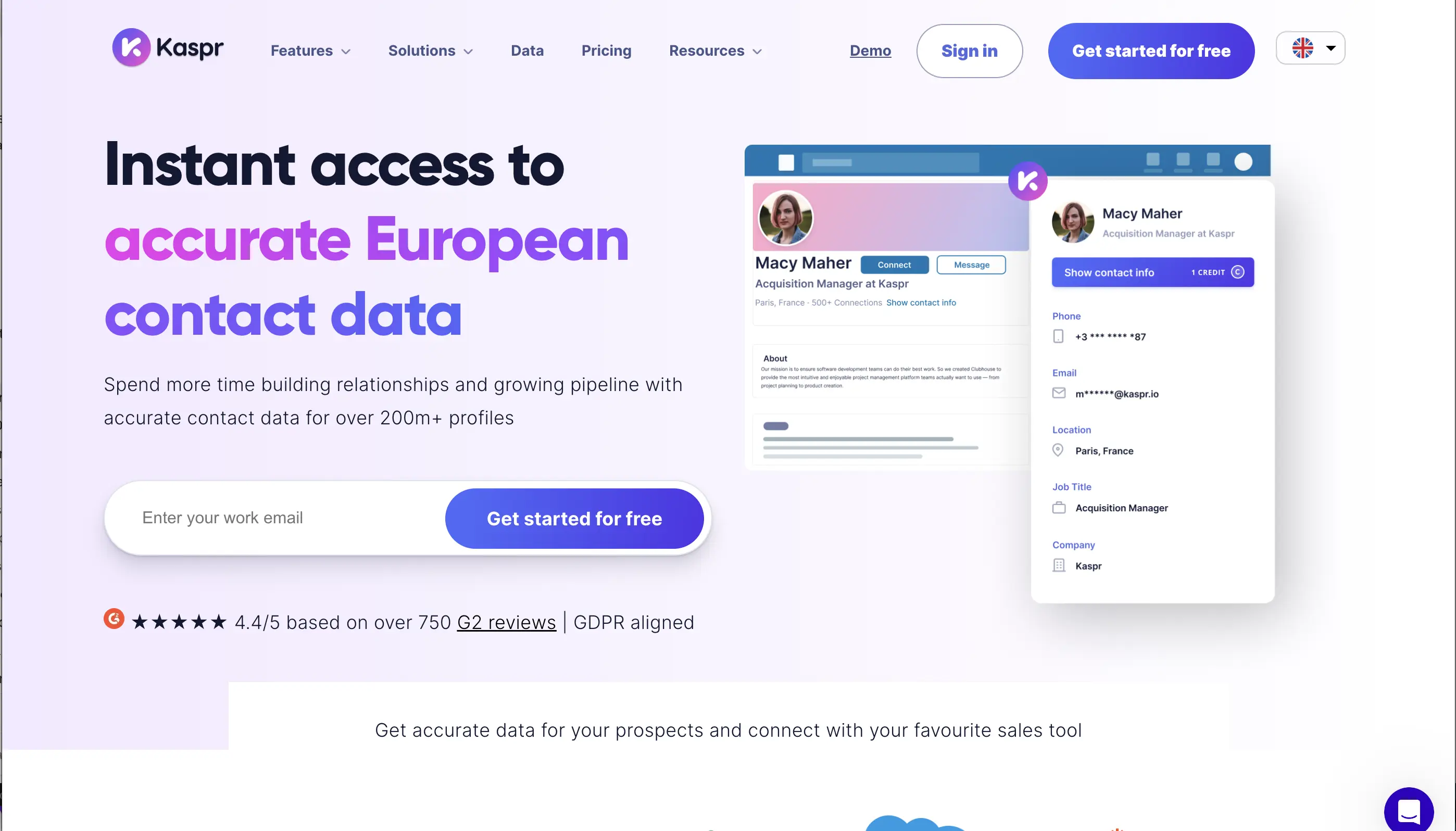
L'outil d'affichage qui sert d'étalon à cet article.
Kaspr est la référence, alors voyons-le tel qu'il est. Une extension Chrome pour LinkedIn posée sur une base B2B stockée : vous ouvrez un profil, vous cliquez, il sort les numéros et les emails qu'il détient, puis vous laisse exporter vers une liste ou un CRM.
Il est orienté Europe, revendique une bonne précision sur le continent, et les commerciaux aiment sa rapidité. Pour quelqu'un qui prospecte dans LinkedIn toute la journée et veut un portable en deux clics, ce confort est un vrai argument.
Les crédits d'emails B2B « illimités » des forfaits payants aident aussi — avec la mention en petits caractères : « illimité » veut dire plafonné à 10 000 emails par compte et par mois au titre de l'usage raisonnable, pas vraiment sans limite.
C'est le modèle de l'affichage lui-même qui fixe la limite.
Les portables sortent d'une fiche stockée, et une fiche stockée vieillit, donc une partie de ce que vous affichez est un téléphone que la personne a changé ou un poste qu'elle a quitté — et les avis disent exactement ça : des numéros personnels périmés, rien qui distingue clairement personnel et professionnel avant l'appel.
Le crédit téléphone part à l'affichage, pas sur un appel qui aboutit, donc les mauvais numéros coûtent autant que les bons. La facturation se fait par utilisateur avec une réserve de téléphones fixe, et les crédits téléphone supplémentaires reviennent cher.
Il y a aussi un point de conformité : la CNIL a infligé 240 000 € à Kaspr en décembre 2024 pour du scraping de données LinkedIn, à regarder si vous êtes dans un secteur réglementé.
Pour un commercial qui veut des affichages LinkedIn rapides et accepte qu'une partie soit fausse, Kaspr fait le travail, et la rapidité est réelle, je le lui accorde. Mais si vous payez pour des portables qui ne répondent plus, c'est justement la raison de changer.
Enrow trouve chaque numéro de portable en temps réel, ne facture que sur un numéro valide, et exporte la fiche contact complète dans le CRM en un clic, ce qu'un outil d'affichage et d'export de liste ne fait pas.
- +Extension Chrome LinkedIn rapide pour afficher téléphones et emails
- +Crédits d'emails B2B illimités sur les forfaits payants (plafonnés à 10 000 par compte et par mois en usage raisonnable)
- +Donnée orientée Europe, avec une bonne précision annoncée sur le continent
- +Un fonctionnement simple, apprécié des commerciaux
- –Des affichages de base stockée : une partie des portables est périmée, et vous payez à l'affichage, pas sur l'appel qui aboutit
- –Facturation par utilisateur avec une réserve de téléphones fixe ; les crédits téléphone supplémentaires sont chers
- –Pas de facturation sur l'appel confirmé ; une amende CNIL de 240 000 € (décembre 2024) pour du scraping de données LinkedIn ; pas d'export du contact complet vers le CRM
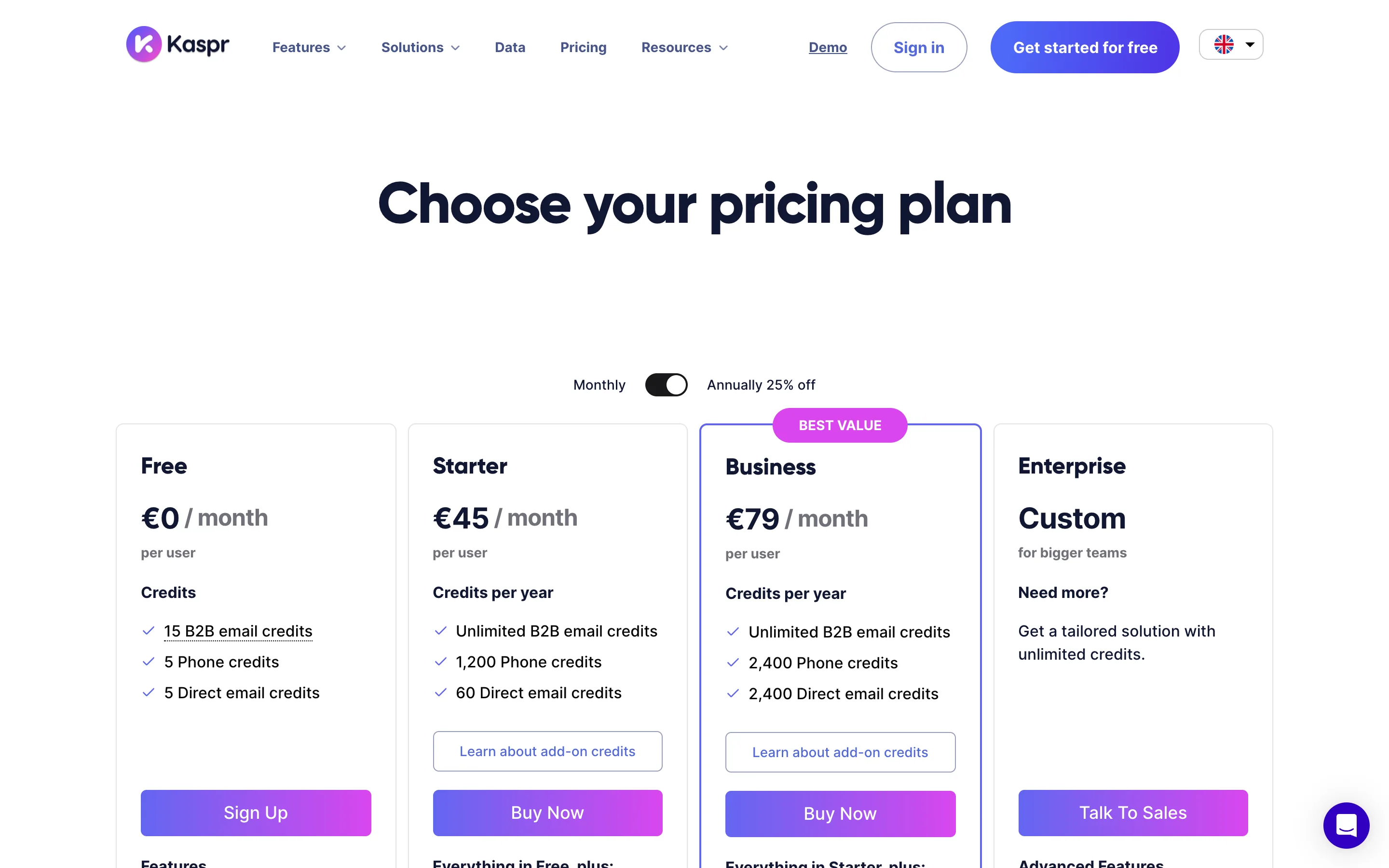
La tarification de Kaspr (en euros, par utilisateur, au mois) : Free, puis Starter à 59 €/utilisateur/mois (100 crédits téléphone par mois) et Business à 99 €/utilisateur/mois (200 crédits téléphone par mois). Les « emails B2B illimités » sont en fait plafonnés à 10 000 emails par compte et par mois (kaspr.io/terms). Au prix affiché, un numéro sort à ~0,59 € (Starter) ou ~0,50 € (Business) ; en ne comptant que 50–70 % d'affichages de base stockée exploitables, le coût réel par portable valide monte autour de 0,84–1,18 € sur le Starter, 2,8 à 3,9 fois les 0,30 € du benchmark Pro d'Enrow (75 € pour 10 000 crédits = 250 numéros, facturé au mois lui aussi), et de 0,71–0,99 € sur le Business, 2,4 à 3,3 fois — et par utilisateur.
vs Enrow: une fois les affichages périmés retirés, le coût réel par numéro valide de Kaspr se situe au-dessus des 0,30 € d'Enrow, qui ne facture rien par utilisateur, là où Kaspr multiplie la note par le nombre de licences. Enrow trouve chaque numéro de portable en temps réel, ne facture que sur un numéro valide, et exporte le contact complet et vérifié vers le CRM en un clic.
Appelez votre propre liste de test européenne avec Enrow avant de me croire sur parole. 50 crédits gratuits, renouvelés chaque mois, sans carte.
Comparatif côte à côte
Verdict final
Ramenez tout au métier qui compte ici — des numéros de portable fiables, Europe comprise, payés seulement quand ils sont valides — et Enrow ressort en tête. Kaspr affiche une base stockée ; Enrow fait tourner un vrai Direct Phone Finder qui va chercher le numéro actuel et ne facture un crédit que lorsqu'il s'avère valide. Sur le coût réel par numéro valide, son benchmark Pro autour de 0,30 € se situe bien en dessous des 0,71–1,18 € de Kaspr une fois les affichages périmés retirés, tous deux facturés au mois, et sans tarif par utilisateur côté Enrow. Et il y a ce geste que personne d'autre ici ne réussit : depuis un profil LinkedIn ou Sales Navigator, l'extension Chrome dépose le contact complet et vérifié dans HubSpot, Salesforce ou Pipedrive, en un clic. En toute honnêteté : Enrow n'est pas une base consultable, ne fait pas de campagnes et ne couvre pas les technologies. Si votre besoin, c'est une grande base avec des portables vérifiés et que vous avez un budget grands comptes, c'est le métier de Cognism. Mais si ce qu'il vous faut, ce sont des numéros de portable qui tombent sur la bonne personne sans payer pour les mauvais, ce périmètre étroit est toute la raison d'être d'Enrow.
Appelez votre propre liste de test européenne avec Enrow avant de me croire sur parole. 50 crédits gratuits, renouvelés chaque mois, sans carte.
FAQ
Notre méthodologie
J'ai fait le test moi-même : une même liste de contacts B2B réels, passée dans chaque outil la même semaine, puis les portables appelés un par un pour voir lesquels répondaient encore. J'ai suivi quatre repères : le taux de numéros trouvés, la part de portables valides plutôt qu'injoignables une fois appelés, le coût réel par numéro valide et non le prix au crédit affiché, et la couverture européenne — des numéros de portable obtenus légalement, la priorité ici. Personne ne m'a payé pour figurer dans ce classement et aucun lien affilié ne l'oriente ; les prix des concurrents viennent de leurs pages officielles, lues le 02/07/2026.
utilisateur illimité
Prêt à passer à la vitesse supérieure
sans cb
aucun setup requis