alternatives à derrick
Les 9 meilleures alternatives à Derrick pour les équipes data B2B en 2026
Nous avons testé 9 alternatives sur les quatre points qui décident vraiment d'un budget de prospection : le taux de contacts trouvés, le taux de bounce sur un vrai envoi, le coût réel d'un contact utilisable, et la couverture téléphonique en Europe.
9 outils testés
mis à jour le 6 octobre 2026
14 min de lecture
Mis à jour le 6 octobre 2026
Les alternatives en un coup d'œil
si vous voulez des emails et des numéros de portable vérifiés, que vous ne payez que lorsqu'ils fonctionnent, Enrow est le meilleur choix : 15 €/mois pour commencer, un plan Pro autour de 0,0075 € l'email vérifié, et une extension Chrome qui recopie le contact complet dans votre CRM. Les huit autres couvrent chacun un besoin plus étroit. Emelia si vous tenez à envoyer depuis le même outil, Anymailfinder ou Findymail si vous ne visez que des adresses américaines, Dropcontact si un DPO français doit valider vos outils. Choisissez selon votre usage, ci-dessous — mais sur la qualité de la donnée, aucun ne fait mieux dans l'ensemble.
Derrick, c'est une extension Google Sheets. Vous collez une liste de contacts dans une colonne, l'outil complète le reste : emails, téléphones, informations sur l'entreprise. Le crédit ne coûte presque rien, et c'est son principal argument.
Mais on ne paie pas des crédits, on paie des contacts. Derrick facture chaque ligne qu'il traite, même celles qui ne donnent rien, comme les recherches sans résultat.
Enrow fait l'inverse : vous ne payez que les contacts trouvés et vérifiés — numéros de portable européens compris, ce que très peu d'outils peuvent fournir légalement. À partir de 15 €/mois. Son extension Chrome ajoute chaque contact LinkedIn dans votre CRM en un clic, déjà vérifié. Et vous avez 50 crédits gratuits chaque mois.
Pourquoi les équipes cherchent des alternatives à Derrick
Derrick est une extension pratique et bon marché — et pourtant, on la dépasse vite. Trois raisons. Rien de tout ça ne s'améliore avec un forfait plus gros. Vous traitez simplement plus de lignes.
Transparence : notre conflit d'intérêts
Enrow est mon produit, et il est premier d'un classement que j'ai écrit moi-même. Vous connaissez donc mon parti pris aussi bien que moi.
Ce que je ne ferai pas, c'est cacher les faiblesses d'Enrow. Plusieurs outils plus bas dans cette page en font plus que lui : ils envoient des campagnes, ils enchaînent les relances, ils empilent des dizaines d'options d'enrichissement dans une feuille de calcul.
Nous ne faisons rien de tout ça, et c'est un choix. Un seul produit, une seule obsession : les emails et les numéros de portable les plus fiables que vous puissiez acheter, vérifiés avant qu'on vous facture quoi que ce soit.
C'est ce périmètre volontairement étroit qui garantit la qualité de la donnée, et je le referais sans hésiter.
Vous voulez cent colonnes de données dans un tableur ? Derrick, ou un autre outil plus bas, s'en chargera. Vous voulez que l'email et le numéro soient justes au moment précis où vous envoyez et où vous appelez ? C'est toute la raison d'être d'Enrow.
Les 9 meilleures alternatives à Derrick
1. Enrow
#1
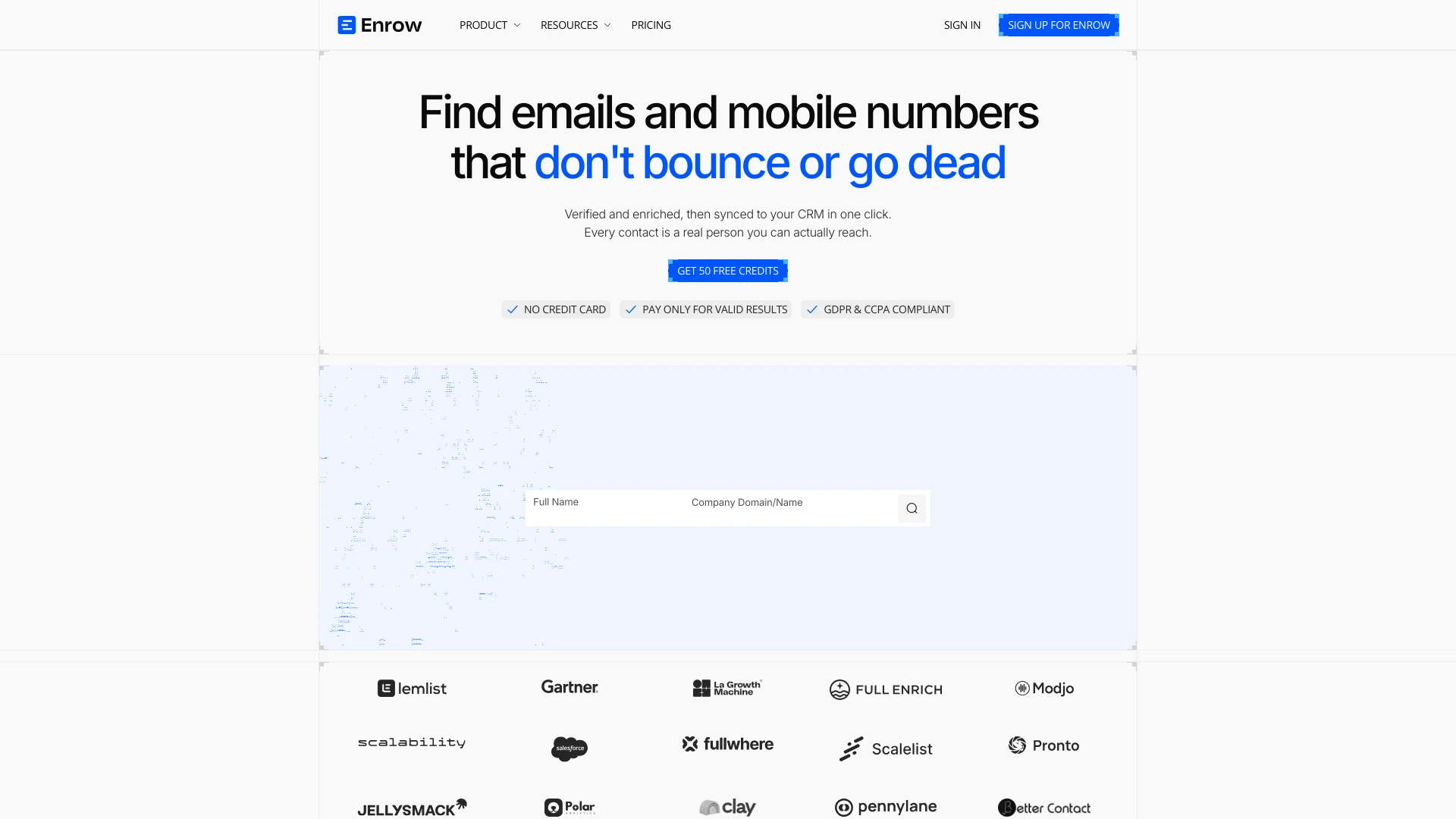
Encore une précision, en toute transparence : ce produit est le mien, et des outils comme Derrick font partie des raisons pour lesquelles je l'ai créé.
J'en avais assez de payer pour enrichir des fichiers, de n'en récupérer qu'une partie, et de me retrouver quand même avec des emails qui bouncent. Alors j'ai construit la facturation que j'aurais voulue en tant que client.
C'est là tout l'argument. Derrick remplit des cellules en croisant des sources, et il compte un crédit à chaque donnée, que l'adresse soit bonne ou non. Enrow ne facture un email que lorsqu'il est trouvé et vérifié — jamais autrement. Une recherche qui ne trouve rien ne coûte rien.
Une adresse qui échoue à la vérification ne vous coûte rien non plus, puisqu'elle n'est jamais comptée comme valide.
La vérification, c'est là que les deux produits n'ont plus rien à voir. Derrick rassemble ce que ses fournisseurs lui donnent ; Enrow soumet chaque adresse à plus de 10 vérifications — plusieurs tests SMTP, plusieurs contrôles catch-all depuis des serveurs situés dans différentes régions — avant de la valider.
Les adresses catch-all ressortent vérifiées et utilisables, au lieu d'être mises de côté comme « risquées ». Sur ma liste de test, j'ai retrouvé entre 60 et 70 % des contacts, et moins de 1 % ont bouncé sur un vrai envoi.
Ce sont des chiffres constatés sur cette liste, pas une garantie.
Vient ensuite le téléphone, là où Derrick n'a rien de sérieux à proposer. Le Direct Phone Finder d'Enrow trouve des numéros de portable dans tous les pays, Europe comprise.
Un numéro français ou allemand, chez nous, n'est pas perdu d'avance — alors que la plupart des outils de cette page abandonnent dès qu'il s'agit de l'Europe.
Reste ce que personne d'autre ne fait ici. Ouvrez un profil LinkedIn ou Sales Navigator, cliquez une fois, et l'extension Chrome écrit la fiche complète et vérifiée — email, numéro de portable, tous les champs — directement dans HubSpot, Salesforce ou Pipedrive.
Pas de formule, pas de copier-coller, pas de fiche à moitié remplie. Pour ceux qui travaillent avec des agents IA, il existe aussi un serveur MCP officiel (dépôt github.com/EnrowAPI/enrow-mcp) : Claude ou Cursor peuvent appeler directement la recherche et la vérification ; tout est détaillé sur la page API.
- +Facturé uniquement quand un résultat est vérifié ; les recherches ratées ne coûtent rien
- +Numéros de portable dans tous les pays, Europe comprise
- +Plus de 10 vérifications par email ; les catch-all sont vérifiées et utilisables
- +La fiche contact complète passe de LinkedIn au CRM (HubSpot, Salesforce, Pipedrive) en un clic
- +Intégrations natives Clay, HubSpot, Salesforce et Pipedrive, plus une API documentée et un serveur MCP
- +Pas de facturation par utilisateur ; les crédits Pro et Scale se reportent d'un mois sur l'autre
- –Pas de base de données à parcourir. Une base stockée vieillit, et on finit par contacter des gens qui ont changé de poste ; nous avons choisi la recherche en temps réel, donc la constitution des listes se fait dans LinkedIn ou Sales Navigator.
- –Enrow n'envoie pas vos campagnes. Nous avons décidé de ne pas construire cette partie : Emelia, La Growth Machine ou lemlist s'en chargent.
- –Les informations sur l'entreprise s'arrêtent au niveau de LinkedIn. Pas de données sur les technologies utilisées — là où Derrick vous propose volontiers une colonne dédiée.
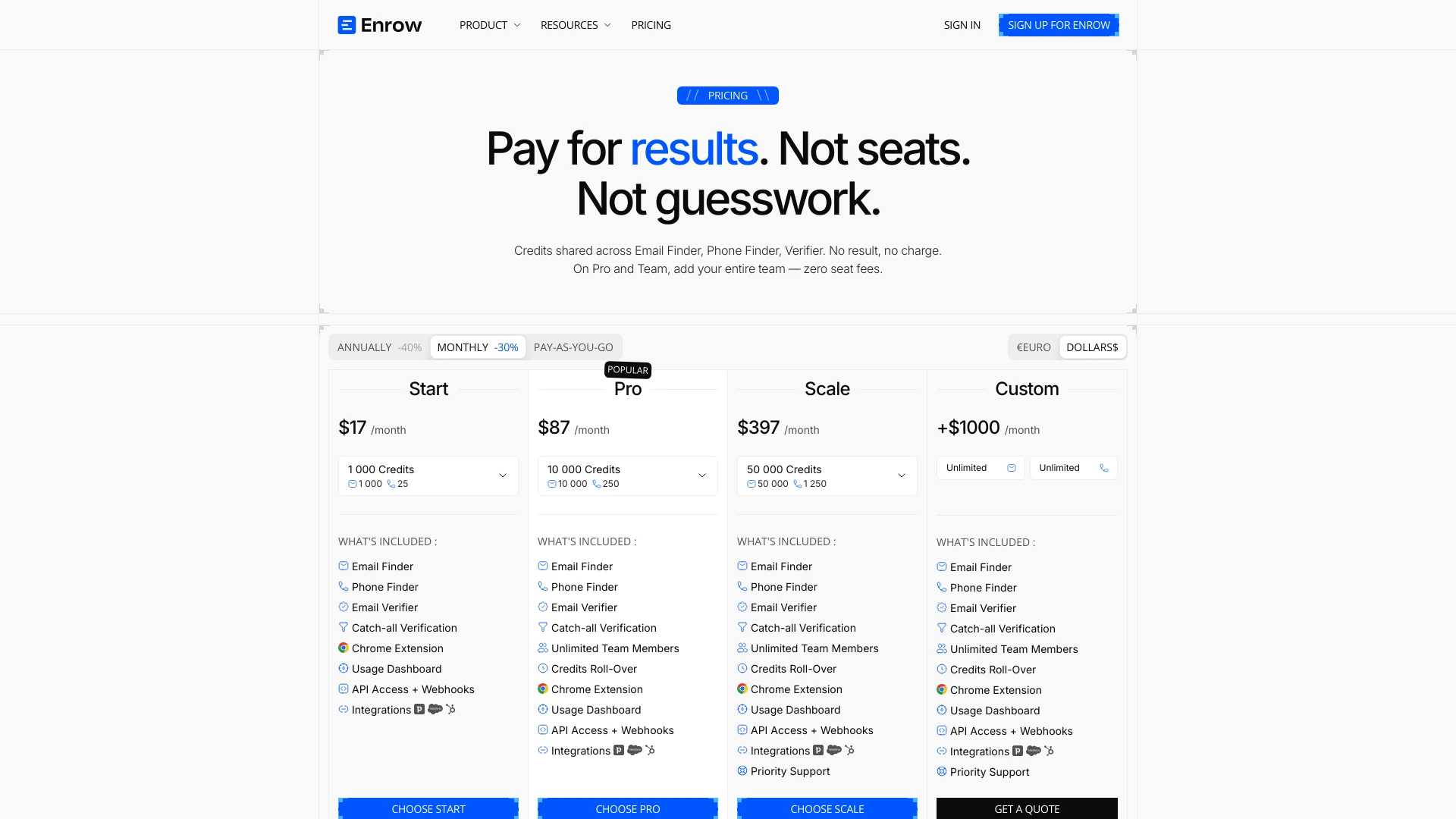
Trois paliers, facturés au mois. Start : 1 000 crédits pour 15 €, ou 4 000 pour 42 € (au mois uniquement). Pro : 10 000 pour 75 €, 20 000 pour 150 €, 30 000 pour 220 €.
Scale : 50 000 pour 360 €, 80 000 pour 540 €, 140 000 pour 900 €, 200 000 pour 1 250 €.
L'engagement annuel réduit Pro et Scale d'environ 10 %, ce qui met les 10 000 crédits autour de 68 €/mois et les 50 000 autour de 324 €/mois.
Un crédit vaut un email ; un numéro de portable en coûte 40 ; une vérification, 0,25, catch-all comprise.
Rien n'est facturé tant que le résultat n'est pas vérifié, donc la comparaison la plus honnête se fait sur le plan Pro : pour 75 €, vous avez 10 000 emails vérifiés ou 250 numéros vérifiés, soit environ 0,0075 € l'email ou 0,30 € le numéro.
Le Start reste l'entrée à 15 €. Les crédits Pro et Scale se reportent d'un mois sur l'autre.
Sur le papier, le crédit de Derrick donne envie. Sauf que ses crédits paient des lignes traitées — recherches, vérifications, colonnes d'IA, lignes vides — alors que ceux d'Enrow ne paient qu'un email trouvé et vérifié.
Une fois ramené à ce qui fonctionne vraiment, l'écart se réduit très vite, puis s'inverse dès que vous commencez à envoyer.
L'offre gratuite se renouvelle toute seule : 50 crédits chaque mois, sans carte, aussi longtemps que vous voulez. Et comme un crédit ne part que sur un résultat vérifié, aucun des 50 n'est gâché sur une adresse au hasard.
Chaque mois, vous recevez 50 crédits neufs sur votre compte. Sans carte bancaire, et ils ne partent que sur des résultats vérifiés. Comparez Enrow à l'outil que vous quittez.
2. Emelia
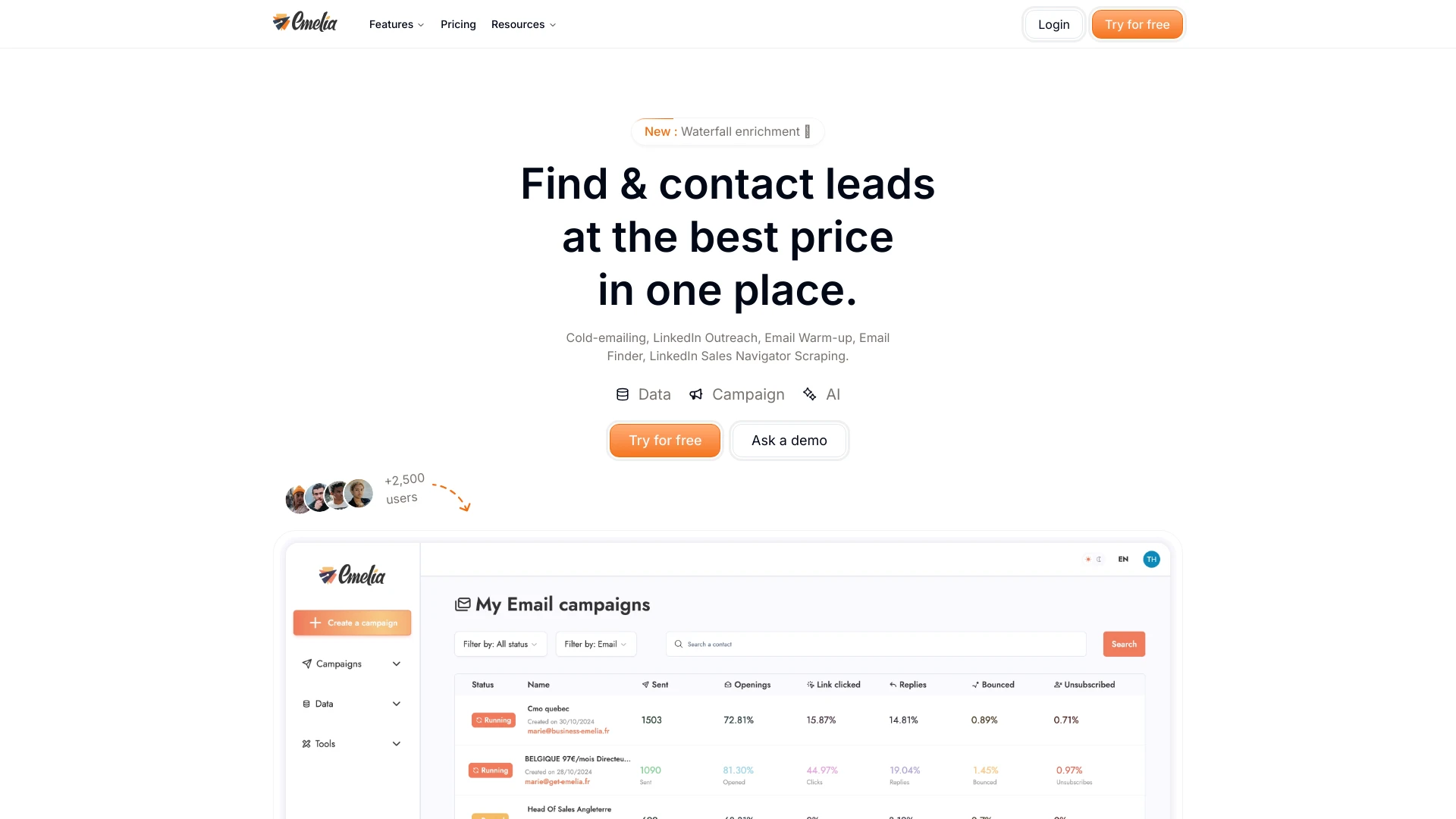
Emelia fait un autre métier : elle envoie.
C'est un outil de campagnes avec une recherche de contacts intégrée : cold email, étapes LinkedIn, mise en chauffe des boîtes, le tout au même endroit.
Derrick n'a jamais joué sur ce terrain, nous non plus — et c'est justement pour ça qu'Emelia est l'outil que nous conseillons à ceux qui nous demandent d'envoyer des campagnes.
Comme source de données, elle est correcte, mais ce n'est pas son point fort. Les crédits de recherche se consomment sur les contacts trouvés, la couverture téléphonique est faible, et un usage intensif bascule sur des packs de crédits en plus du forfait de base.
La combinaison que je recommande n'a pas changé : Enrow trouve et vérifie, Emelia envoie.
- +Chercher, vérifier et envoyer (cold email + LinkedIn + mise en chauffe) au même endroit
- +Les crédits de recherche ne se consomment que sur les contacts trouvés
- +Extraction de Sales Navigator et enrichissement en cascade inclus
- +Envois et contacts illimités sur les forfaits payants
- –Couverture téléphonique faible ; ce n'est pas un outil pour appeler
- –Un usage intensif oblige à acheter des packs de crédits en plus
- –Pensée d'abord pour l'envoi : côté données, elle reste en deçà des outils de recherche spécialisés
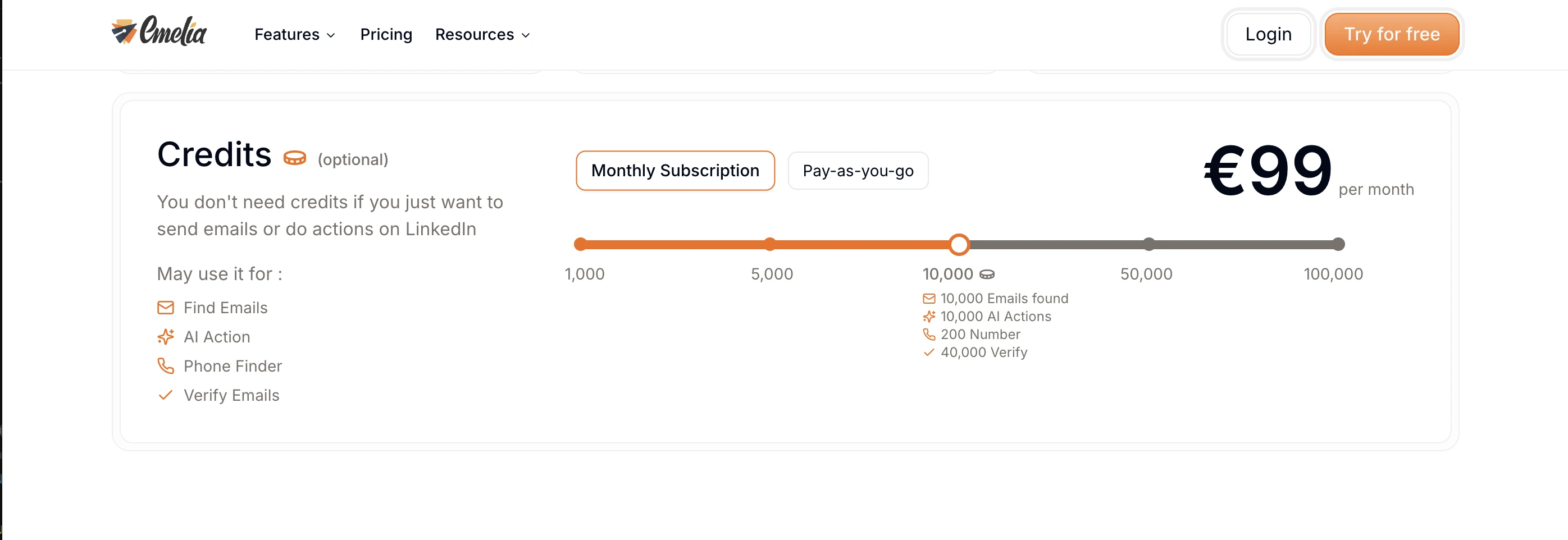
Start autour de 37 €/mois (3 boîtes mail, 1 accès LinkedIn, 500 crédits) ; la recherche passe par des packs vendus à part. Les crédits ne partent que sur un contact trouvé, donc le prix affiché reflète le coût réel — reste à savoir quel pack vous achetez.
vs Enrow: aucune comparaison possible sur la donnée, et Emelia ne prétend pas le contraire. Donnez-lui les contacts vérifiés d'Enrow à 0,015 € l'unité, et les deux outils font leur meilleur travail.
3. Prospeo
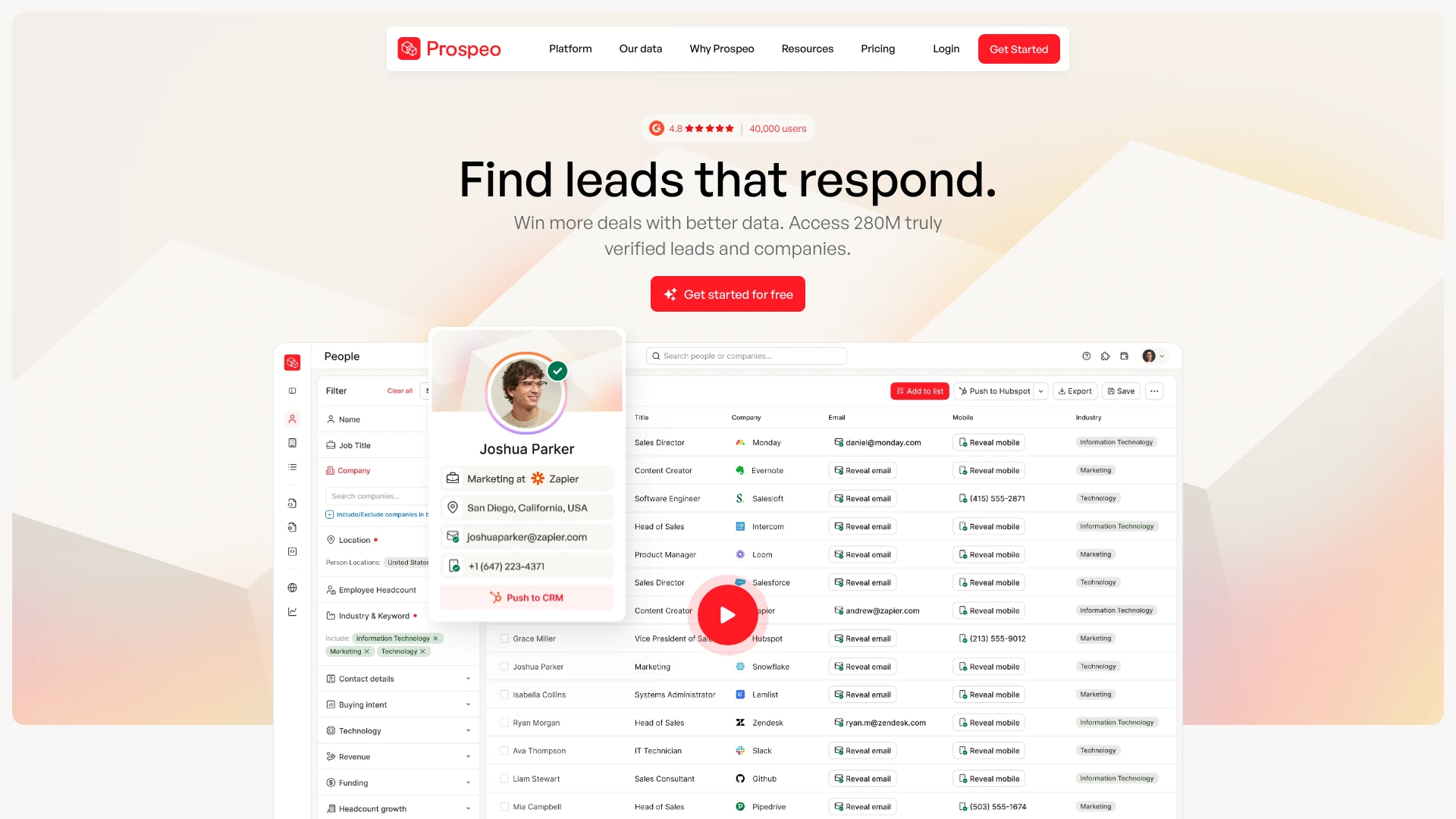
Prospeo attaque Derrick sur son point le plus fort : le prix. Mais regardez au-delà.
Sur ma liste, il a trouvé environ 20 % des contacts. Enrow, 60 à 70 %.
Prospeo facture à l'email trouvé — une recherche ratée ne coûte rien — donc cet écart ne fait pas monter votre prix par contact ; il signifie simplement que quatre cibles sur cinq restent introuvables, et que vous finissez la liste avec un deuxième outil.
Le reste correspond à ce niveau de prix. La qualité devient irrégulière au-delà des petits volumes, les numéros coûtent 10 crédits sans couverture européenne documentée, les crédits de l'offre gratuite ne se reportent pas, et la facturation est par utilisateur.
Son prix au résultat est réel — une recherche ratée ne coûte rien — mais il démarre au-dessus d'Enrow, et à ce tarif il ne couvre qu'une petite partie d'une liste.
- +1 crédit par email trouvé, 0 sur une recherche ratée
- +Extension Chrome rapide pour LinkedIn et les noms de domaine
- +Vérification incluse dans le même compteur de crédits
- +Offre gratuite (100 crédits/mois)
- –N'a trouvé qu'environ 20 % de ma liste de test ; la plupart des contacts restent introuvables
- –Les numéros coûtent 10 crédits, sans couverture européenne documentée
- –Pas de report des crédits, et la facturation par utilisateur s'additionne vite en équipe
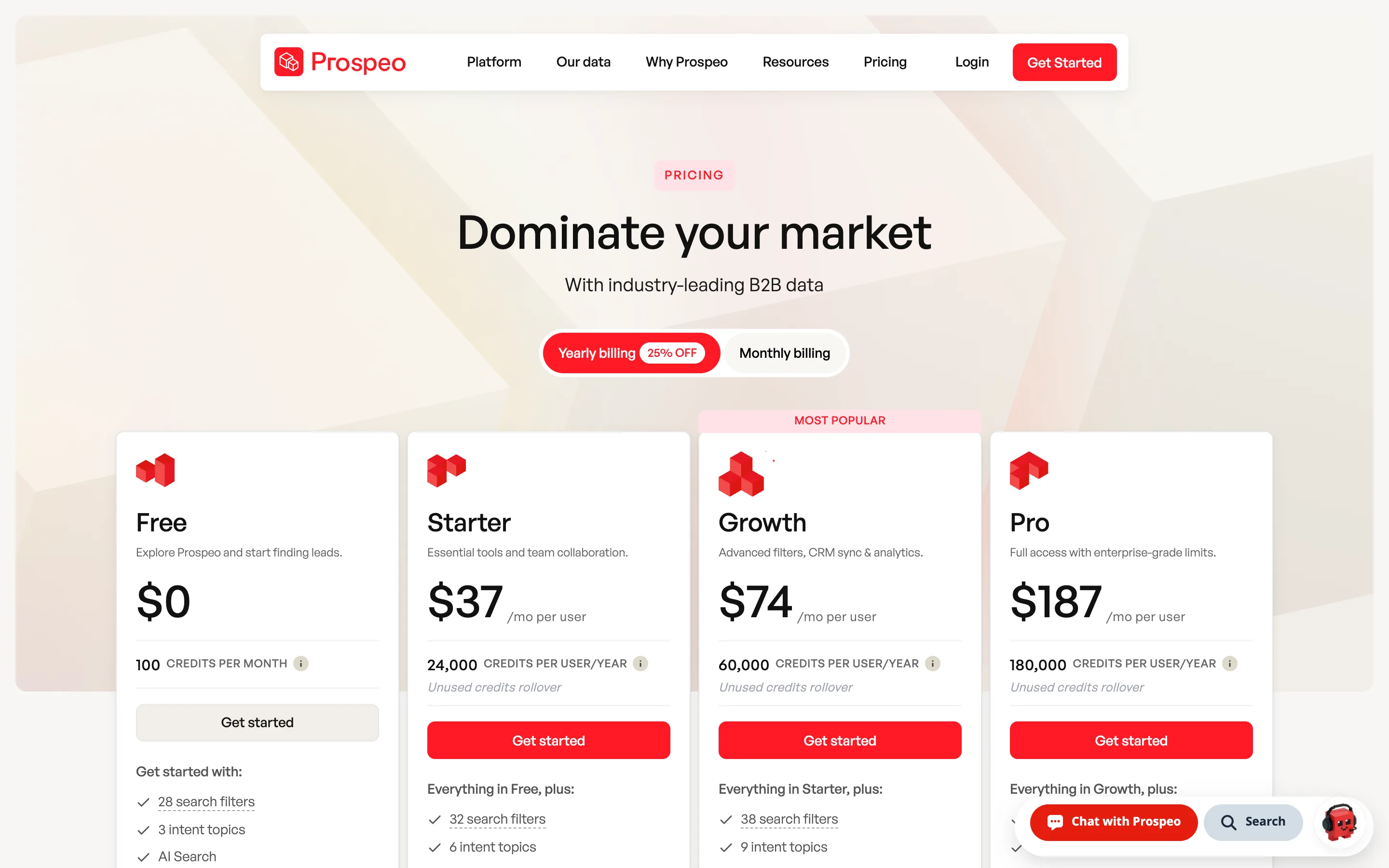
Prospeo démarre à 49 $/mois pour 2 000 crédits ; les numéros coûtent 10 crédits. Comme il ne facture que les emails trouvés, son prix affiché est bien le coût réel : environ 0,0245 $ l'email vérifié, déjà 1,4× les 0,017 $ d'Enrow à volume égal.
vs Enrow: le prix affiché est déjà au-dessus d'Enrow, et les taux de réussite n'ont rien à voir. Les 0,017 $ d'Enrow, avec 60 à 70 % de contacts trouvés, vous donnent une liste complète — pas un cinquième de liste.
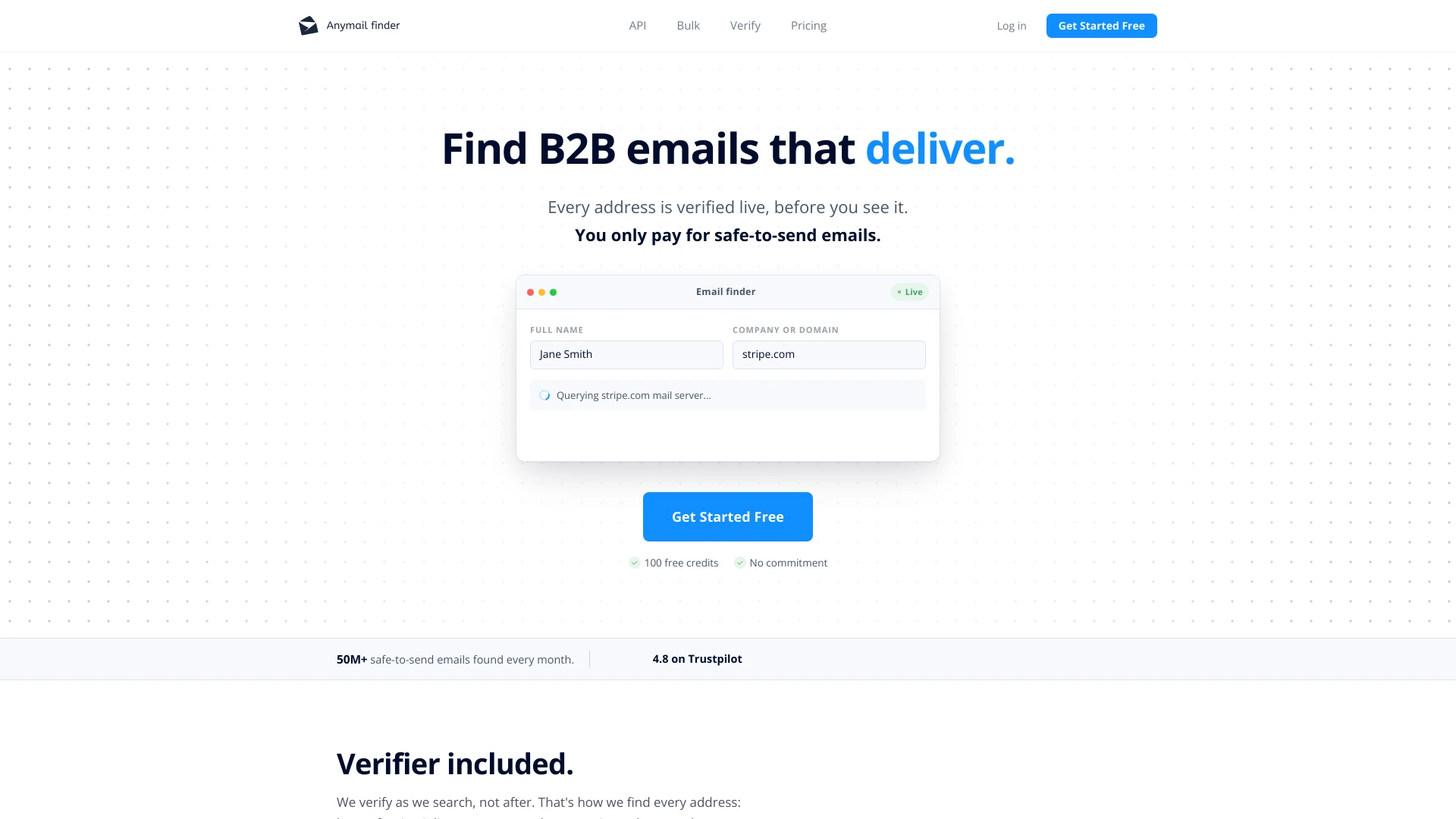
Anymailfinder fait une chose que Derrick ne garantit pas : il ne facture que lorsque l'email est vérifié.
Des emails vérifiés, facturés seulement une fois trouvés et contrôlés. Pas de téléphones, pas de base de données, pas d'envoi vers le CRM, pas de tableur. Un crédit vaut un email trouvé, vérifier une adresse que vous avez déjà coûte moins cher, et les crédits inutilisés se reportent tant que vous restez abonné.
La facturation est honnête, et le périmètre tient en une phrase. Sur une liste en désordre, les lignes impossibles à vérifier ne m'ont rien coûté, ce qui a évité de gonfler la facture.
- +Facturé uniquement sur les emails confirmés valides
- +Bonne gestion des adresses catch-all
- +Crédits reportables tant que l'abonnement est actif
- +Accès simple : à l'unité, en masse ou par API
- –Emails uniquement, aucun numéro de téléphone
- –L'entrée est à 0,045 € l'email vérifié, environ 3× le tarif d'Enrow à volume égal
- –Aucun envoi vers le CRM ni export de contact digne de ce nom
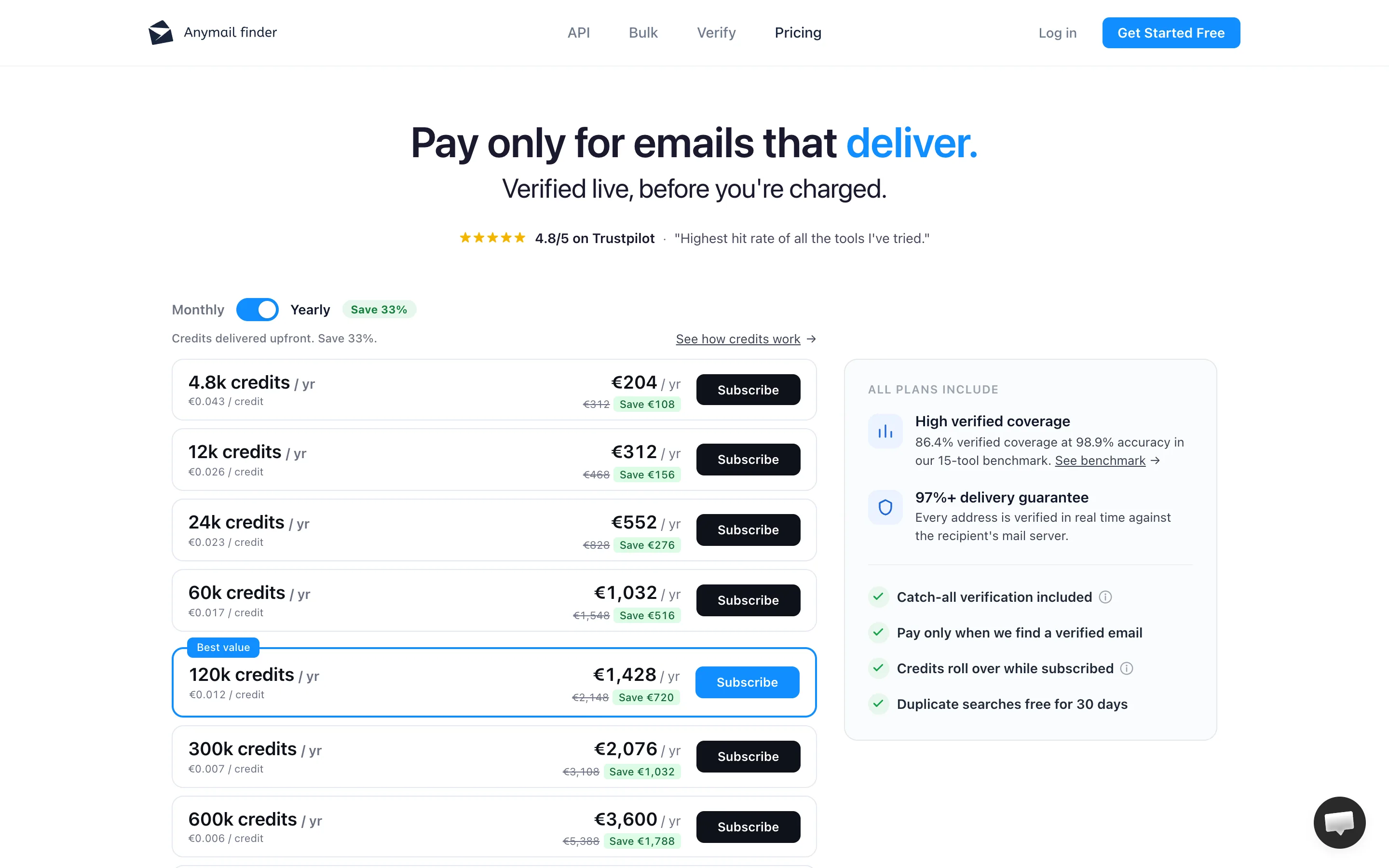
Standard à partir de 26 €/mois (400 crédits), un crédit par email trouvé. La facturation au résultat garde le prix honnête : le palier à 45 € revient à environ 0,045 € l'email vérifié, soit près de 3× les 0,015 € d'Enrow au même volume de 1 000 emails.
vs Enrow: même logique de facturation, deux fois moins de produit, et environ trois fois le tarif d'entrée par email vérifié. À volume égal, Enrow passe en dessous — et ajoute les numéros de portable et l'export vers le CRM qu'Anymailfinder n'a jamais cherché à faire.
5. LeadMagic
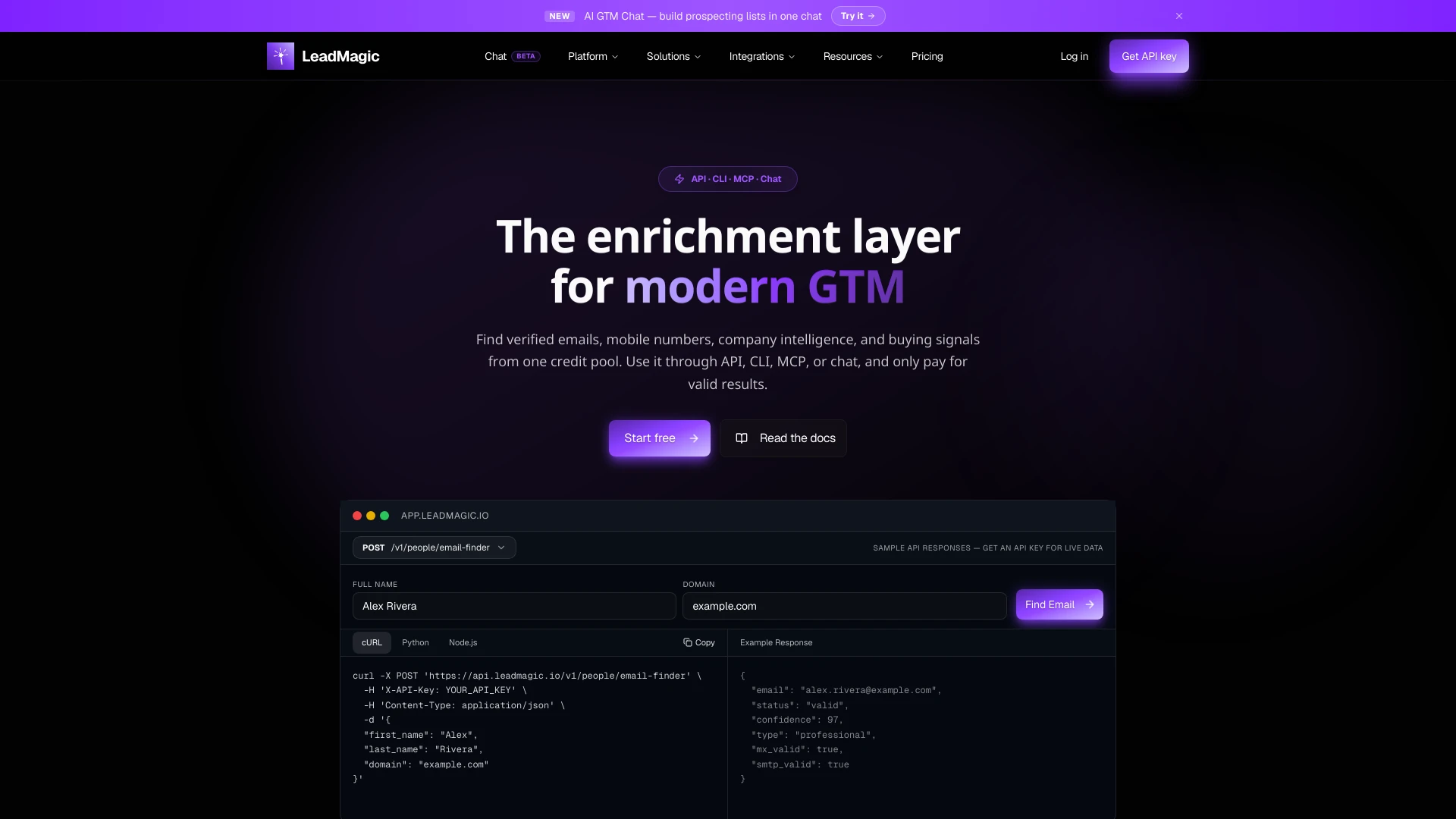
LeadMagic reprend l'idée de Derrick — beaucoup de données, un seul compteur de crédits — mais la tourne vers les développeurs plutôt que vers les tableurs.
Tout est pensé pour l'API : plus de 15 points d'accès (email, portable, entreprise, profil, changements de poste) qui puisent dans un compteur commun, avec un serveur MCP pour les agents IA.
Les crédits ne sont retirés qu'en cas de succès — le bon réglage, et c'est déjà plus que Derrick. Là où Derrick tourne dans Google Sheets, LeadMagic tourne dans votre code.
En revanche, ce n'est pas un outil qu'on met entre les mains d'un commercial. Aucune interface à cliquer, une couverture téléphonique européenne non communiquée, et le report des crédits ne commence qu'au palier au-dessus.
La documentation est mieux faite que le tableau de bord de la plupart des outils — ce qui montre bien à qui LeadMagic s'adresse.
- +Payé au résultat : les recherches ratées ne coûtent rien
- +Plus de 15 points d'accès sur un compteur de crédits unique
- +Outils pour développeurs : API, ligne de commande, serveur MCP
- +Recherche de numéros de portable incluse dans le même compteur
- –Pas de report des crédits sur le forfait d'entrée Basic
- –Le numéro de portable coûte 5× un email, sans aucune information publiée sur la couverture européenne ou le RGPD
- –Pensé pour l'API : sans développeur, on reste bloqué
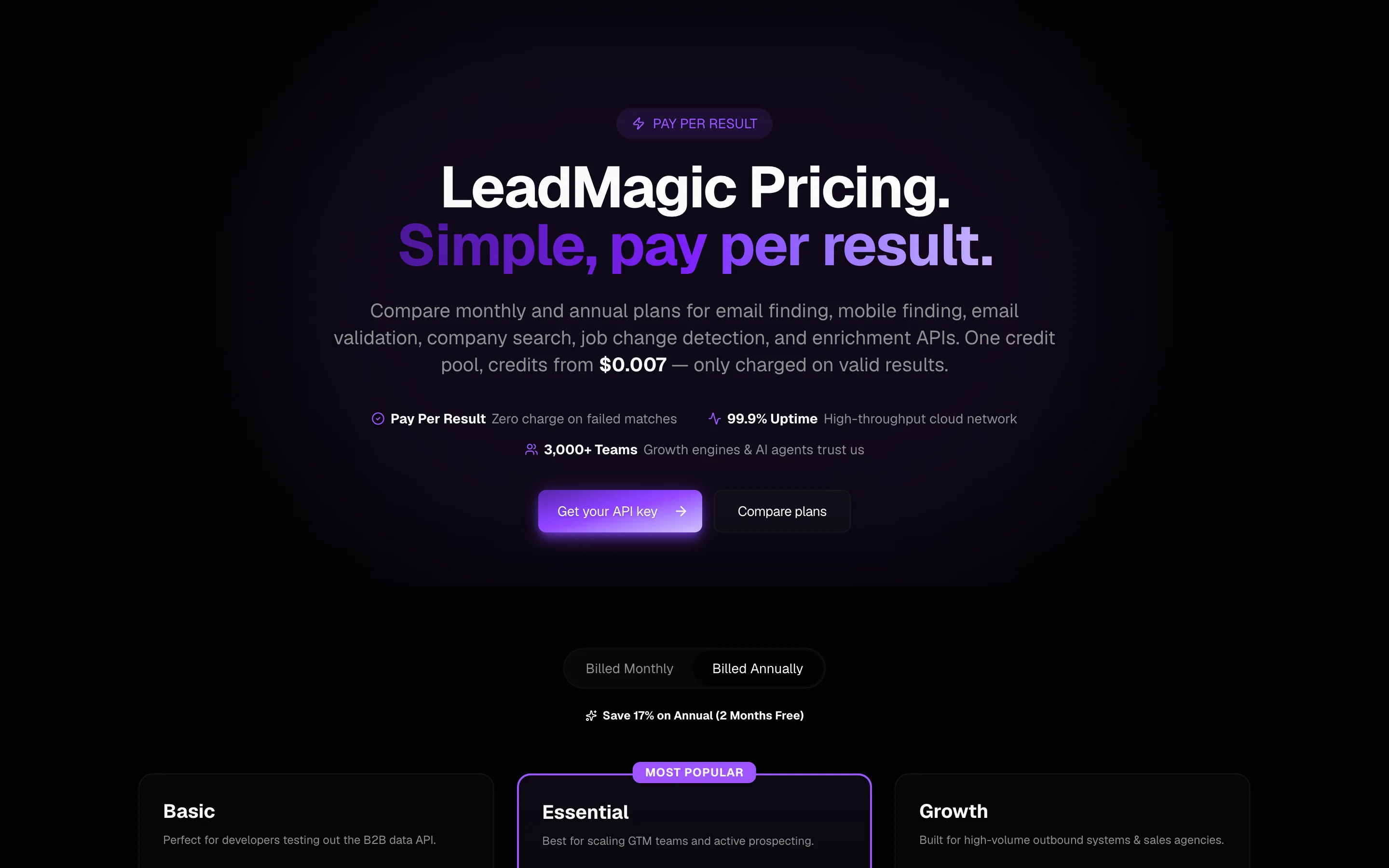
LeadMagic démarre à 45 €/mois pour 2 000 crédits : un email coûte 1 crédit, un numéro de portable 5, retirés seulement en cas de succès. L'email vérifié tombe ainsi autour de 0,022 €, mais son numéro à 0,11 € arrive sans aucune information sur la couverture européenne, donc incomparable à un portable européen vérifié.
vs Enrow: deux façons honnêtes de facturer, deux publics. Enrow couvre la partie API, puis ajoute le produit pour les commerciaux : une interface, l'extension et l'export vers le CRM en un clic.
6. Hunter
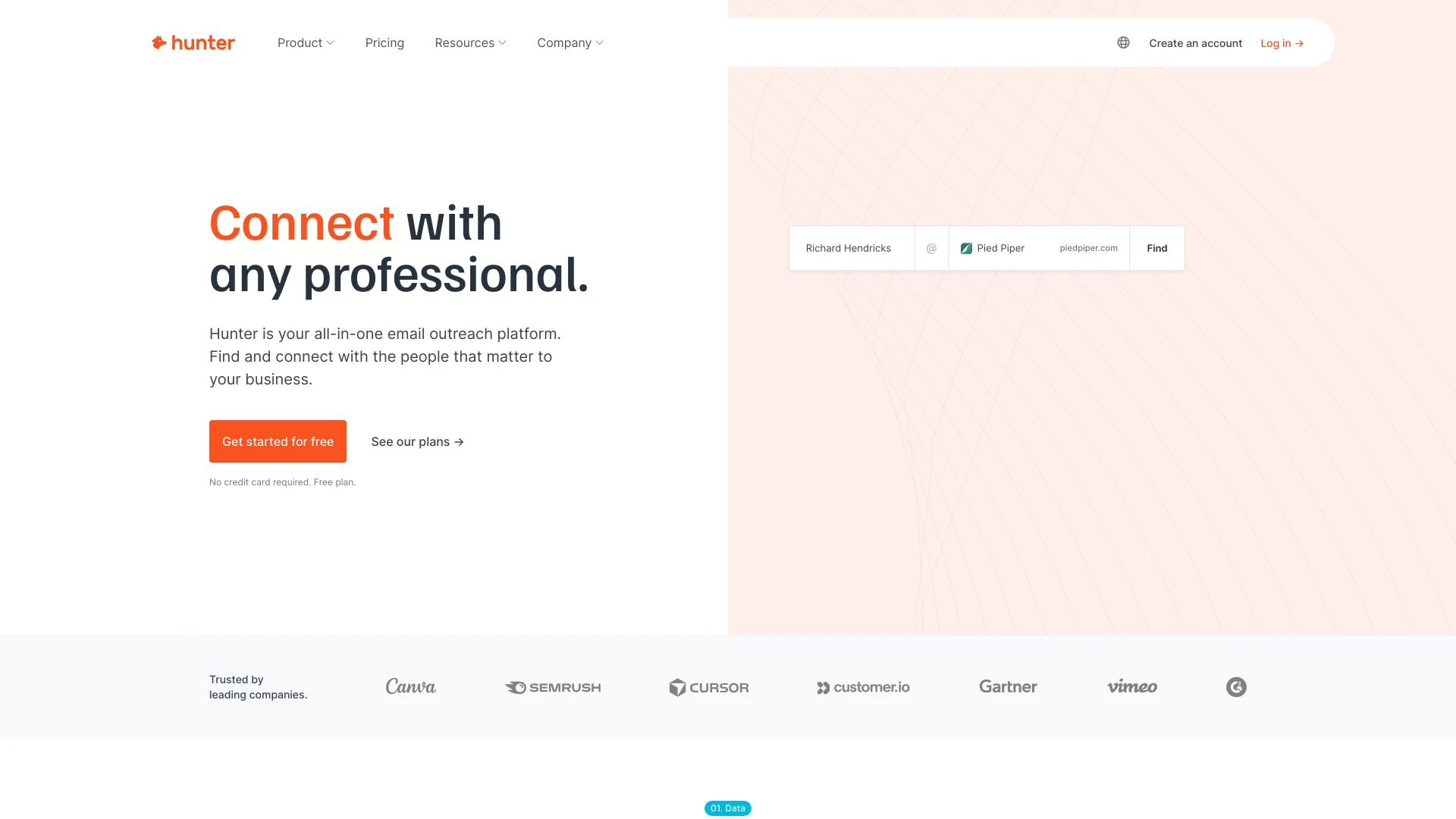
Hunter, c'est l'outil sur lequel la plupart des gens apprennent à trouver des emails — et il est très bon sur un point que Derrick imite avec une formule : la recherche par domaine.
Donnez-lui une entreprise, il liste les adresses qu'il trouve, avec un indice de confiance. C'est vraiment pratique, et son 4,4/5 sur G2 (plus de 600 avis) est mérité pour un outil sur lequel on débute. Nous avons tout détaillé dans notre analyse de Hunter.
Le problème, c'est la facturation et la donnée. Hunter facture chaque recherche lancée, pas l'adresse valide trouvée : vous payez, que la recherche renvoie quelque chose d'utilisable ou rien du tout.
Hunter ne publie aucun taux de réussite. Pour les outils facturés de cette façon, je compte sur environ 30 % de recherches d'email qui renvoient une adresse, une estimation à moi pour faire mes budgets et non un chiffre de Hunter : la plus grande partie de la facture paie donc des recherches vides.
Et parmi les adresses qui reviennent, certaines sont devinées à partir du format de l'entreprise, avec un faible indice de confiance. Ce sont celles-là qui bouncent.
La donnée vient d'un crawl du web : solide sur les grandes entreprises, plus mince sur les petites, là où se trouvent la plupart de vos cibles. Enfin, il n'y a aucun numéro de téléphone, sur aucun forfait.
- +Très bonne recherche par domaine ; liste vite les adresses d'une entreprise
- +Vraie offre gratuite et intégrations partout
- +Un indice de confiance sur chaque résultat
- +Connu de presque tous les commerciaux
- –Facturé à la recherche lancée, pas au résultat valide, et des adresses devinées à faible indice de confiance se glissent dans les résultats
- –Aucune donnée téléphonique, sur aucun forfait
- –La donnée issue du crawl s'appauvrit sur les petites entreprises
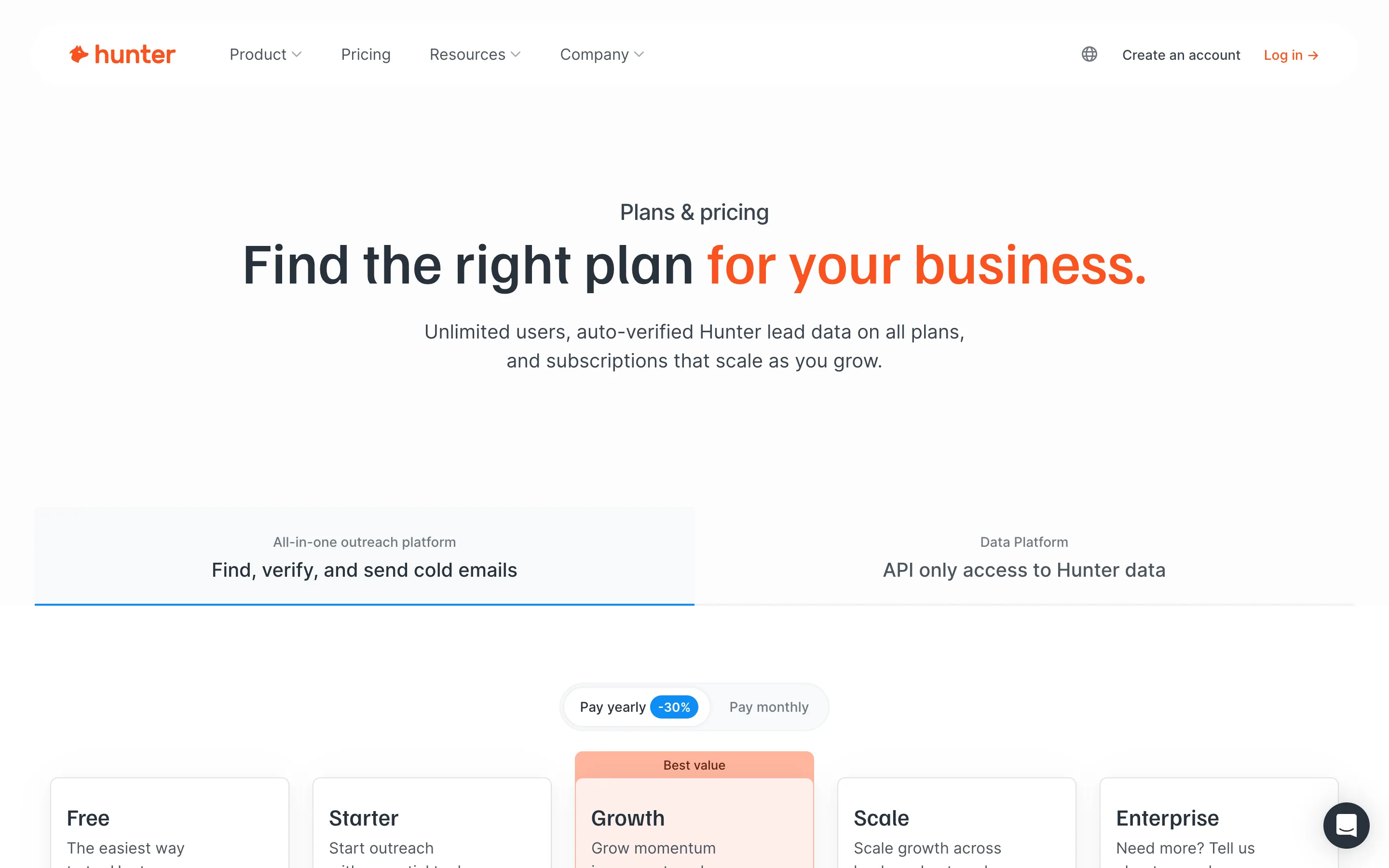
Hunter démarre à 49 €/mois pour 2 000 crédits, mais un crédit part à la recherche lancée, pas à l'adresse valide. Cela fait 0,0245 € la recherche. Divisez par les ~30 % de réussite supposés plus haut : un email que vous obtenez vraiment revient à près de 0,082 €, environ 5,5× le tarif Start d'Enrow et 11× le Pro, et davantage quand les crédits non utilisés expirent en fin de mois.
vs Enrow: Hunter facture la recherche, qu'elle aboutisse ou non ; Enrow ne facture que lorsque l'adresse est trouvée et vérifiée (une recherche ratée ne coûte rien), ajoute des numéros de portable européens que Hunter n'a jamais eus, et commence à 15 €.
7. Snov
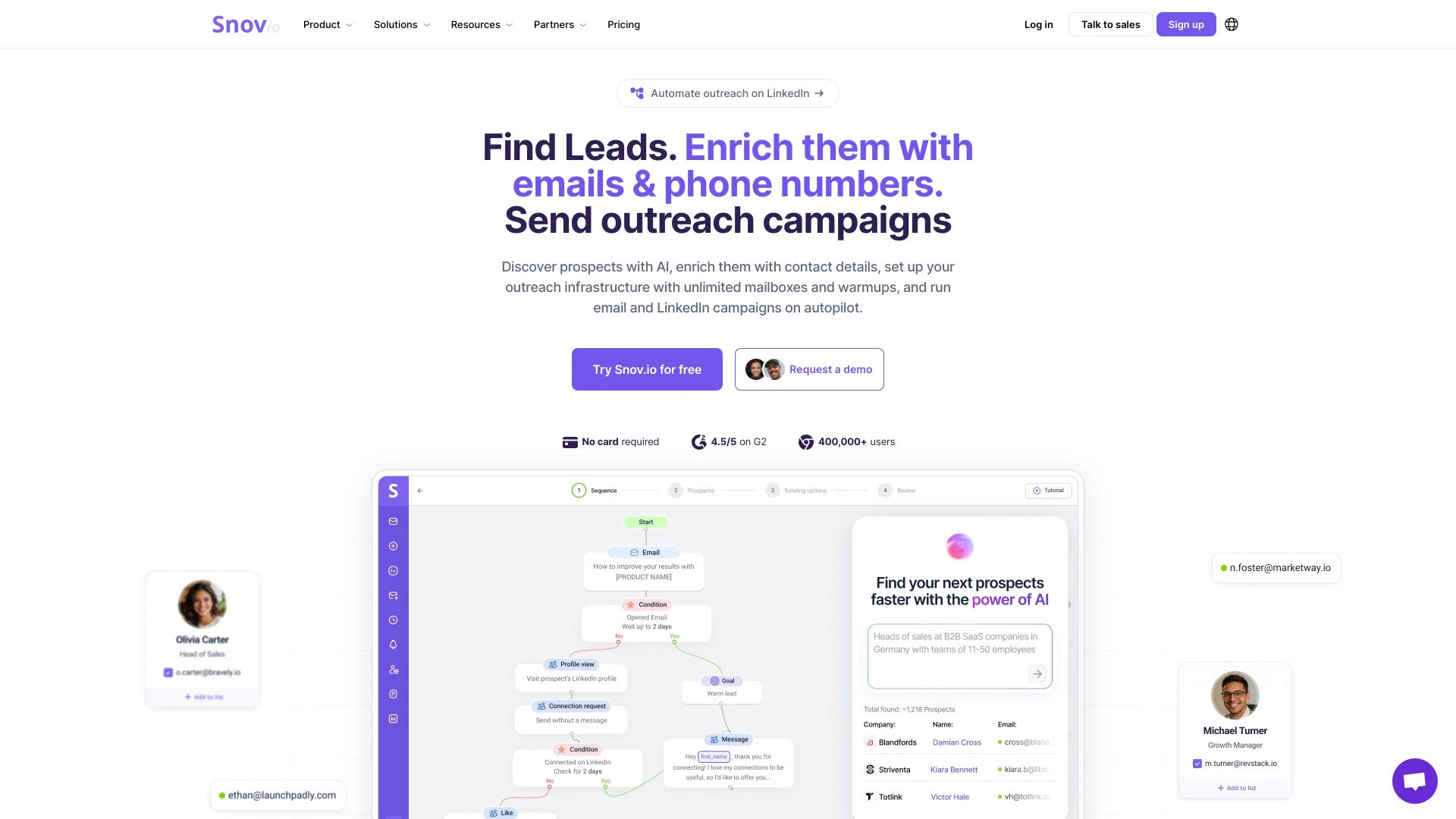
Snov vend l'ensemble : recherche, vérification, campagnes automatisées, un petit CRM, une facture modeste.
C'est correct pour un indépendant qui n'a pas d'exigences fortes sur la donnée. Mais les crédits partent sur la recherche, pas sur le résultat vérifié : vous payez, que ça renvoie une adresse utilisable ou non.
Appliquez-lui la même hypothèse que pour tout outil facturé à la recherche, environ 30 % de recherches qui aboutissent : rien que ça multiplie déjà le coût réel par trois avant le moindre envoi. Pire, les adresses stockées qu'il ressort vieillissent, donc une partie bounce.
Une bonne partie de ce que Snov m'a trouvé demandait une deuxième vérification avant que j'ose écrire.
- +Recherche, vérification, campagnes automatisées et CRM dans un seul abonnement
- +Base de prospects consultable incluse
- +Nombre d'utilisateurs illimité sur les forfaits payants
- +25 % de remise en annuel
- –Facturé à la recherche, pas au résultat vérifié ; à peine ~30 % (estimé) renvoient quelque chose, et les adresses périmées bouncent
- –Rien pour le téléphone en Europe ; les numéros passent par des jetons vendus à part
- –Un outil surdimensionné si vous n'avez besoin que d'emails vérifiés
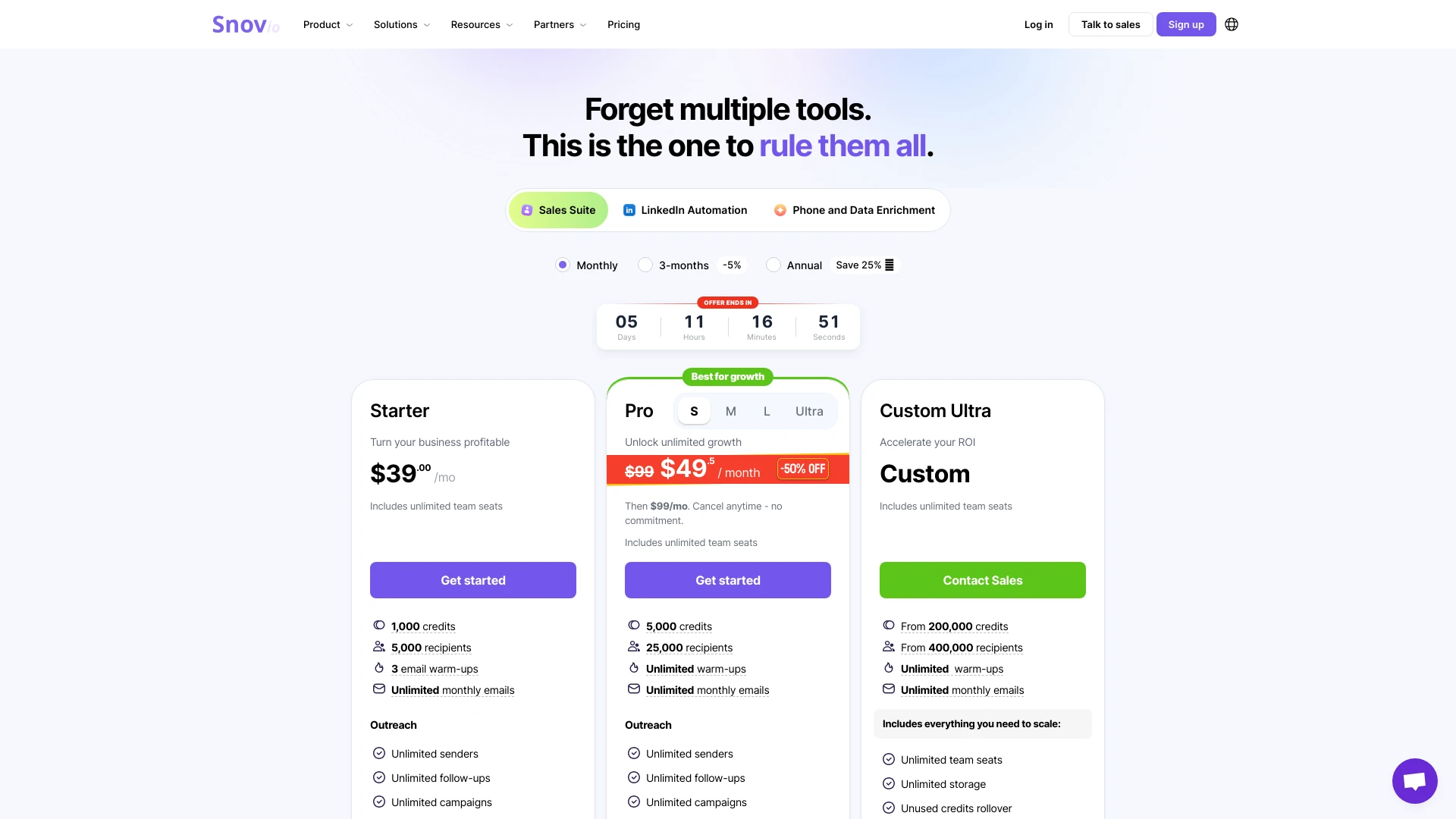
Snov démarre à 35 €/mois pour 1 000 crédits, mais le crédit achète une recherche, pas une adresse qui fonctionne. Snov ne publie pas non plus de taux de réussite, donc le calcul repose sur notre hypothèse d'environ 30 % : le coût réel monte autour de 0,12 € l'email trouvé, plus de trois fois le prix affiché, avant même les adresses périmées qui bouncent.
vs Enrow: Snov, c'est le bel emballage ; la donnée à l'intérieur, c'est le point faible. Enrow n'est que de la donnée — fraîche, facturée au résultat vérifié — et il fonctionne avec n'importe quel outil d'envoi, y compris celui de Snov.
8. Findymail
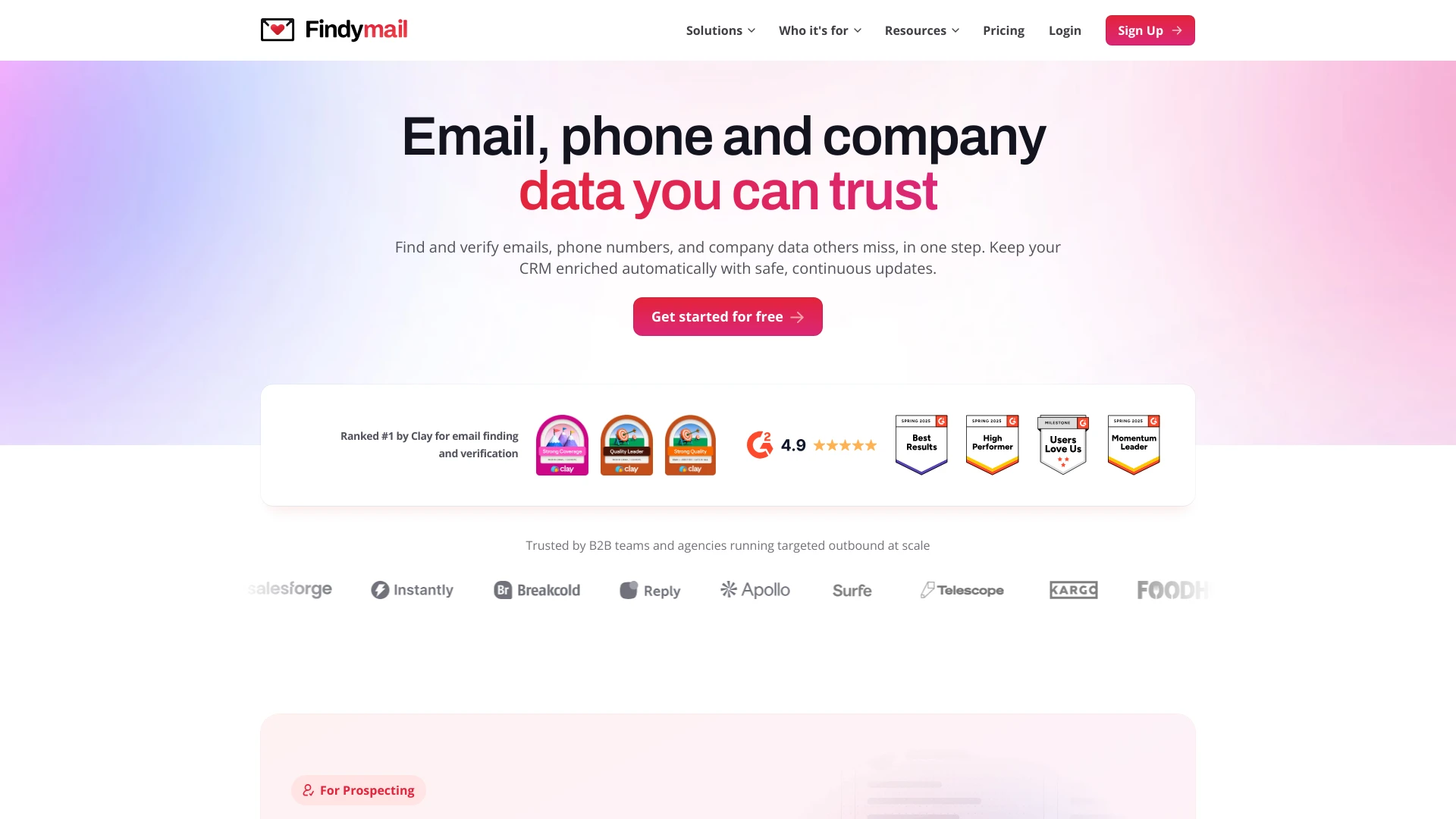
Reconnaissons à Findymail ce qu'il vaut : c'est un vrai outil de recherche d'emails, et sur les adresses américaines, il est efficace.
Il facture aussi de la bonne façon : sur le résultat trouvé et vérifié, rien sur une recherche ratée. Donnez-lui une liste de domaines ou un export LinkedIn, et ce qui revient tient plutôt bien sur un vrai envoi.
Nous allons plus loin dans notre analyse de Findymail.
Sa limite, c'est la géographie ; son point faible, c'est le prix. Le RGPD le prive des numéros européens : pour appeler en Europe, il est hors jeu, et sa couverture téléphonique s'arrête aux États-Unis.
Le forfait de départ est à 45 €/mois pour 1 000 crédits, le report des crédits ne dépasse pas 2× le quota du mois, et il n'y a pas de vraie offre gratuite. Sur ma liste, ses adresses américaines ont tenu ; la moitié française n'est revenue qu'avec des emails.
- +Facturé sur les résultats trouvés et vérifiés : une recherche sans résultat ne coûte rien
- +Grande précision sur les emails B2B américains
- +SOC 2 Type 2, conforme RGPD, hébergé en Europe
- +Intégrations natives HubSpot, Salesforce, Pipedrive, Instantly et lemlist
- –Numéros limités aux États-Unis, aucun en Europe (bloqué par le RGPD)
- –Le report des crédits plafonne à 2× le quota du mois
- –Pas de vraie offre gratuite ; le forfait de départ est à 45 €/mois
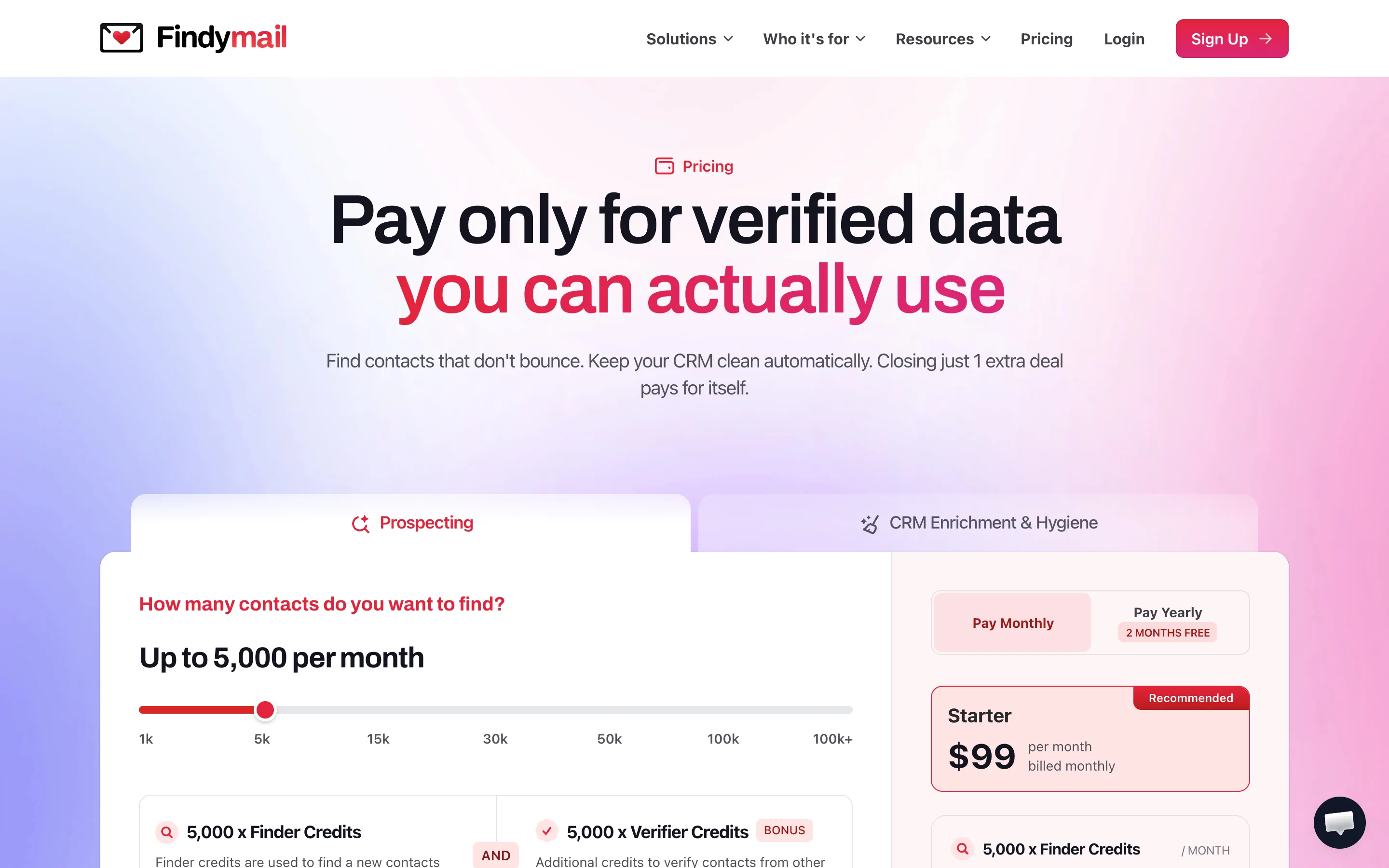
Findymail démarre à 45 €/mois pour 1 000 crédits de recherche, sur un seul forfait Starter à curseur. La facturation ne triche pas : ce palier revient à environ 0,045 € l'email vérifié, près de 3× les 0,015 € d'Enrow au même volume. Les numéros affichés à 0,18 € excluent l'Europe, donc sur une liste européenne ce chiffre ne vaut rien.
vs Enrow: même facturation honnête, une couverture plus limitée, un tarif d'entrée plus élevé. Enrow démarre à 15 € au lieu de 45 €, met l'email vérifié à 0,015 €, et fournit les numéros de portable européens que Findymail n'a pas le droit de donner.
9. Dropcontact
Dropcontact, c'est le choix que ferait votre DPO — et il joue sur le même terrain que Derrick : enrichir des lignes que vous avez déjà.
Tout se passe sous RGPD, sur des serveurs européens ; la donnée est recalculée à la volée plutôt que tirée d'un fichier revendu, et il intègre des informations légales françaises (SIREN, TVA) que la plupart des outils ignorent.
Sur les emails, il fonctionne au résultat : une adresse qu'il ne trouve pas, c'est le crédit remboursé. Pour nettoyer un CRM français ou européen, c'est un bon spécialiste, et notre page Dropcontact fait la comparaison complète.
Mais regardez bien ce qu'il fait. Comme Derrick, Dropcontact enrichit des lignes que vous lui donnez ; il n'est pas fait pour trouver un contact à partir de zéro, comme le fait un outil de recherche.
Chaque contact traité consomme un crédit, et les numéros n'apparaissent que lorsqu'il en récupère un dans une signature d'email — il n'y a donc pas de vrai produit de recherche de téléphone derrière.
Il a nettoyé mes lignes françaises proprement, et il a sorti deux numéros sur une centaine de contacts.
- +Pensé pour le RGPD : serveurs européens, conforme par conception
- +Paiement au résultat sur les emails ; les adresses introuvables sont remboursées
- +Informations légales françaises (SIREN, TVA) intégrées
- +Enrichissement natif dans HubSpot, Pipedrive, Salesforce, Zoho
- –Enrichit des lignes existantes ; ce n'est pas un outil de recherche en temps réel pour de nouveaux contacts
- –Les numéros viennent seulement des signatures d'emails, pas d'un vrai produit de recherche de téléphone
- –L'entrée à 19 € donne 500 crédits qui expirent chaque mois ; le report coûte 29 € pour le même volume
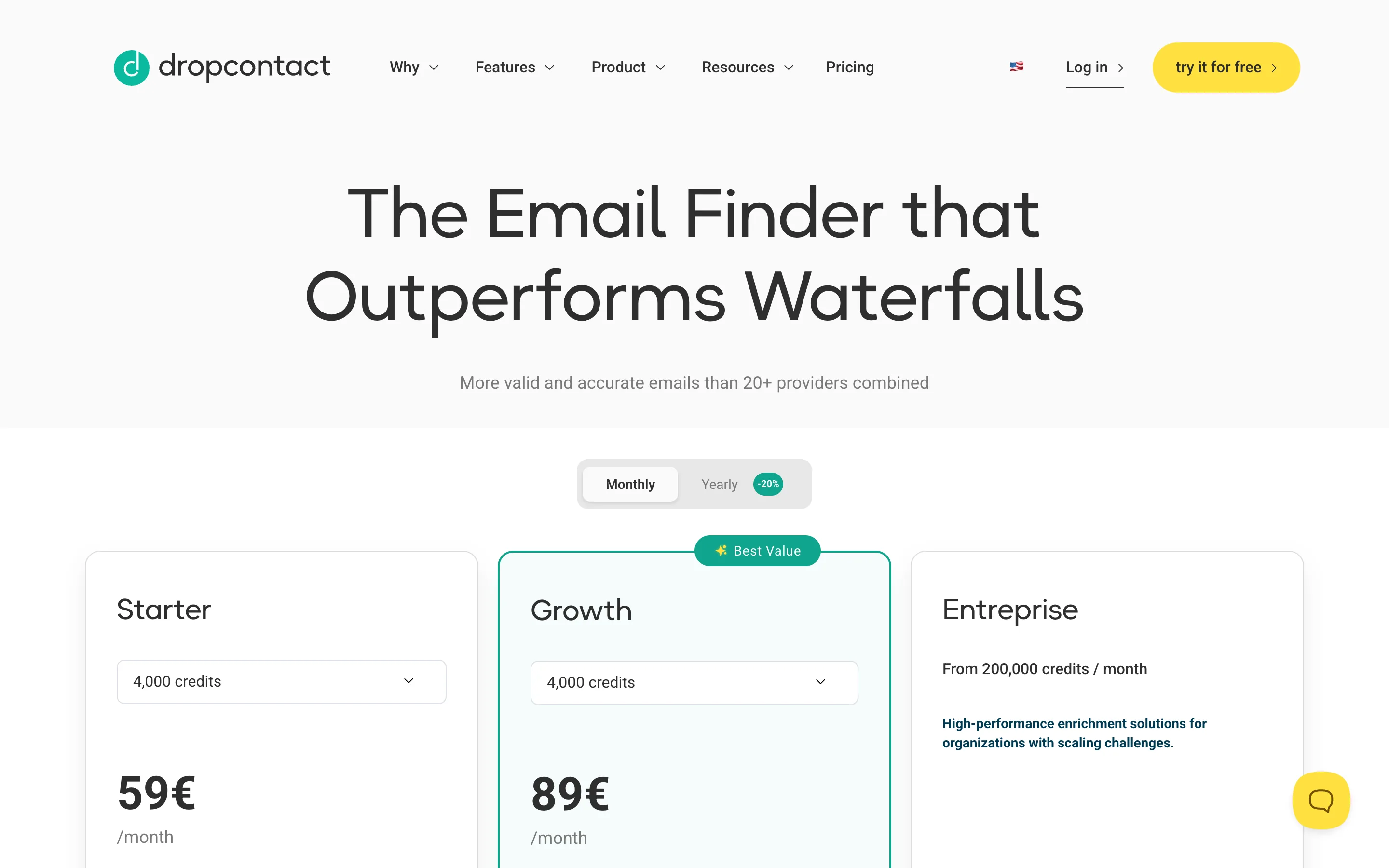
Dropcontact démarre à 19 €/mois pour 500 crédits sans report, ou 29 € avec report, un crédit par contact traité. Le calcul d'entrée tombe autour de 0,038 € le contact sur le Starter sans report à 19 €, 2,5× environ les 0,015 € du Start d'Enrow, lui aussi sans report, et le remboursement n'allège ça que sur les emails qu'il ne trouve pas. Aucun tarif au téléphone : il n'y a pas de vrai produit de téléphone.
vs Enrow: la vraie différence, c'est enrichir d'un côté, trouver de l'autre. Dropcontact complète des lignes que vous avez déjà ; Enrow trouve et vérifie de nouveaux contacts en temps réel, à 0,015 € l'email vérifié, et fournit des numéros de portable européens au lieu de bouts de signatures.
Chaque mois, vous recevez 50 crédits neufs sur votre compte. Sans carte bancaire, et ils ne partent que sur des résultats vérifiés. Comparez Enrow à l'outil que vous quittez.
Comparatif côte à côte
Verdict final
Derrick est un outil bien fait : plus de 100 données croisées, versées dans un tableur pour quelques euros par mois. Pour un enrichissement ponctuel dans Google Sheets, il a sa place. Les limites arrivent après : le prix au crédit cache le coût réel dès qu'on compte les lignes vides et les emails qui bouncent, et il n'y a pas de numéro de portable européen vérifié. Enrow est le bon remplacement : emails et numéros de portable européens vérifiés, trouvés en temps réel, dès 15 €/mois, à 0,015 € l'email vérifié, facturés seulement quand le résultat est bon. Ce n'est pas un outil tout-en-un — ni base à parcourir, ni colonne « technologies utilisées », ni campagnes d'envoi — et c'est un choix : ne faire que de la donnée, c'est justement ce qui la rend fiable. Et personne d'autre ici ne fait la dernière chose : un clic dans l'extension Chrome transforme un profil LinkedIn en fiche contact complète et vérifiée, numéro compris, déposée dans votre CRM. Prenez les 50 crédits gratuits que vous recevez chaque mois, et jugez sur vos propres résultats.
Chaque mois, vous recevez 50 crédits neufs sur votre compte. Sans carte bancaire, et ils ne partent que sur des résultats vérifiés. Comparez Enrow à l'outil que vous quittez.
FAQ
Notre méthodologie
J'ai fait le test moi-même : une seule liste de contacts B2B réels, passée dans chaque outil la même semaine, puis réellement envoyée en boîte de réception pour mesurer ce qui bounce vraiment. J'ai regardé quatre choses — combien de contacts chaque outil retrouve, combien d'emails bouncent à l'envoi, ce que coûte au final un contact utilisable une fois les mauvais résultats déduits, et si l'outil trouve des numéros de portable européens obtenus légalement. Personne ne m'a payé pour figurer ici : ni lien affilié, ni emplacement sponsorisé, et la première place n'était pas à vendre. Les prix des concurrents, je les ai relevés sur leurs pages officielles le 06/07/2026.
utilisateur illimité
Prêt à passer à la vitesse supérieure
sans cb
aucun setup requis