zoominfo alternatives
Top 13 ZoomInfo Alternatives & Competitors in 2026
So we tested thirteen alternatives. The yardsticks were the things that actually decide an outbound budget: match rate, bounce on a live send, real cost per valid contact, and geographic coverage, especially legally-sourced EU phones. One list, run through every tool the same week.
13 tools tested
updated October 2, 2026
18 min read
Actualizado el 2 de octubre de 2026
The alternatives at a glance
Enrow is the best overall ZoomInfo alternative for teams that want verified emails and EU phones and want to pay only for valid results, from $17/month with no annual contract, about $0.0087 per valid email and $0.35 per valid phone on Pro ($87 for 10,000 credits = 250 phones). If your job is a full enterprise platform with intent, Cognism is the closest like-for-like swap at that end. For an all-in-one database and sequencer instead, Apollo or Snov fits. North American mobiles are Lusha's turf; sticker-price self-serve lookups go to RocketReach or ContactOut. Each of those is built for a different job. The rest own their niches below.
ZoomInfo is the biggest name in B2B data, built like it: a huge database, intent signals, org charts, and a contract to match. Its pay-as-you-go API, gtm.ai, charges $0.38 a record at the $1,000 tier, sliding to $0.25 only once you spend $25,000, with mobiles left out. The platform itself starts at $3,000 for a twelve-month term on AWS Marketplace, one user and 2,000 export credits a year, so $1.50 per contact exported, and that's the floor, not the norm: the median Vendr deal sits around $33,500 a year.
Most teams hunting ZoomInfo alternatives don't need the whole platform. They need accurate emails and phones without a five-figure commitment.
That's the gap Enrow fills. Verified emails plus GDPR-cleared EU phones, with nothing billed until the result checks out, from $17/month, no annual contract, no sales call.
Because a credit only spends on a valid result, the sticker is close to the real cost: about $0.0087 per valid email and $0.35 per valid phone on Pro.
Line that up against $0.38 a record and it isn't close: a valid email on Enrow Start is $0.017, about 22x less. On a complete record, an email plus a European mobile costs 41 Enrow credits, about $0.70 on Start. gtm.ai won't sell you that mobile self-serve at any price, and that $0.70 is under half what the $3,000 platform tier charges for one exported row, with no seat and no twelve-month term underneath it. Bounce sat under 1% on my live send (observed, not a guarantee).
Then the workflow shortcut. From a LinkedIn or Sales Navigator profile, Enrow's Chrome extension puts the full verified contact, every field, into HubSpot, Salesforce or Pipedrive in a single click, creating the record or updating the one that already exists there, with no third tool to save it in first and no push rules to configure.
The twelve tools below each win a niche. Pick by the job you actually have.
Why teams look for ZoomInfo alternatives
ZoomInfo is powerful. People still leave, and it comes down to three things. If you're an enterprise that genuinely uses intent and org-chart data, technographics included, across a big team, ZoomInfo can hold. If you're mostly paying for the data, keep reading.
Conflict of interest disclosure
Let me put the bias on the table. Enrow is an email and phone finder, most of the ZoomInfo alternatives here are broader data tools, and I've ranked my own product first. I own it. Judge everything below against that.
And in the same breath, the concession: ZoomInfo does plenty Enrow doesn't, and so do several names on this list. Intent data and buyer signals are ZoomInfo's turf, along with Cognism and Seamless, not ours. Outreach campaigns run through Emelia, Apollo or Snov instead.
We don't warm mailboxes and we don't hand you a cold prospecting database to filter and export. None of that is a missing feature we're embarrassed about. We'd sooner find and verify a contact from scratch than resell someone else's stored list behind a slider.
What I'll defend is the single job Enrow was built for: finding and verifying accurate, fresh contact data, full stop. If you need intent signals, a filterable database, campaigns, or a whole suite, a tool below serves you better, and I'll point you at it without flinching.
The most accurate email and phone data you can get, with no five-figure contract attached: that's the whole reason Enrow exists.
The 13 best ZoomInfo alternatives
1. Enrow
#1
I built this after one too many enrichment bills where I paid up front, kept a fraction, and still ate bounces on the first send.
The split with ZoomInfo is clean, and it starts with how you buy. ZoomInfo is a twelve-month contract priced on seats and credit tiers: $3,000 at its cheapest published contract, for 2,000 exports and one user, with the Vendr median around $33,500 a year. Enrow is self-serve from $17/month, month to month, and it charges only when the result is valid.
No valid email, no charge. That one difference changes what a budget actually buys, because you stop paying a platform fee for data you use in bursts.
Both of us return contact data, but ZoomInfo hands you a record off a stored database while Enrow finds each contact fresh, running 10+ checks before an address counts, including multiple SMTP passes and catch-all checks across servers in different regions.
Then there's the freshness gap. ZoomInfo's database is big and it's refreshed on a cycle, which means records drift between refreshes, and on a cold list you'll hit people who changed roles months ago.
Enrow does real-time lookups instead, so the contact is found and verified the moment you ask, not pulled from a snapshot.
On phones, Enrow returns direct dials in any country, and that includes what a US-first platform can't cover: EU mobile and direct-dial numbers.
On a batch of Munich and Milan contacts, that meant a live mobile ringing on a VP's desk instead of a dead extension routed to reception.
Catch-all emails get verified and delivered too, not flagged "risky" and quietly dropped, which is how a lot of tools keep their bounce numbers looking clean.
On the live send, one thing jumped out. Bounce sat under 1%, and the EU mobiles reached the person named on the profile, not an old reception line long since reassigned. Discovery ran around 60% on a mixed list.
One caution to be straight about: that sub-1% is an observed average, not a contract.
The workflow is where the gap really shows. Open a LinkedIn or Sales Navigator profile, hit Enrow's Chrome extension, and the whole verified record, email and phone and every other field, lands in HubSpot, Salesforce or Pipedrive on a single click. Not as a blind insert, though. Enrow runs a create-or-update: it looks the person up, completes the record it finds, and only creates one when nothing matches. That spares whoever owns your CRM the merge queue that a push-to-CRM tool otherwise fills up week after week, and it keeps every synced system pointed at the same contact ID. Nothing pasted, nothing to reconcile later.
ZoomInfo's own extension pushes a LinkedIn contact into Salesforce or HubSpot as well, one export credit a push. What it sends is the stored record, as old as the last refresh; Enrow finds and verifies the contact at the moment you click.
One more thing, for the AI-agent crowd. Enrow ships an official MCP server (the repo is github.com/EnrowAPI/enrow-mcp), so you can call the email finder and verifier, plus the direct-phone finder, straight from Claude, Cursor or Windsurf. Fresh, verified emails and phones pulled into an agent workflow, still pay-per-valid. Small thing today.
Handy if you're building.
- +Pay only for a valid result; a miss never costs a credit (ZoomInfo is a flat annual license)
- +Direct-dial phones in any country, EU included
- +10+ verification checks per email; catch-all verified and delivered, not dropped
- +Native CRM integrations: Clay, HubSpot, Salesforce, Pipedrive, plus webhooks, and a genuinely good API
- +The Chrome extension exports the full verified contact, every field, from a LinkedIn or Sales Navigator profile into HubSpot, Salesforce or Pipedrive in one click, with no third tool in between and no push rules to set up
- +Self-serve from $17/month, month to month, no quote call, no annual lock-in
- –No searchable database, and that's a choice, not an oversight. A stored index decays between refreshes, so you'd be reaching people who already moved on. Enrow queries live at the moment you ask, which is why it lands more often. Source your lists in LinkedIn or Sales Navigator and enrich from there.
- –No intent data or technographics. You get LinkedIn-level company facts, nothing on tech stacks or buying signals.
- –No outreach sequencing, and we won't add it. Send with Emelia first, then La Growth Machine, then lemlist.
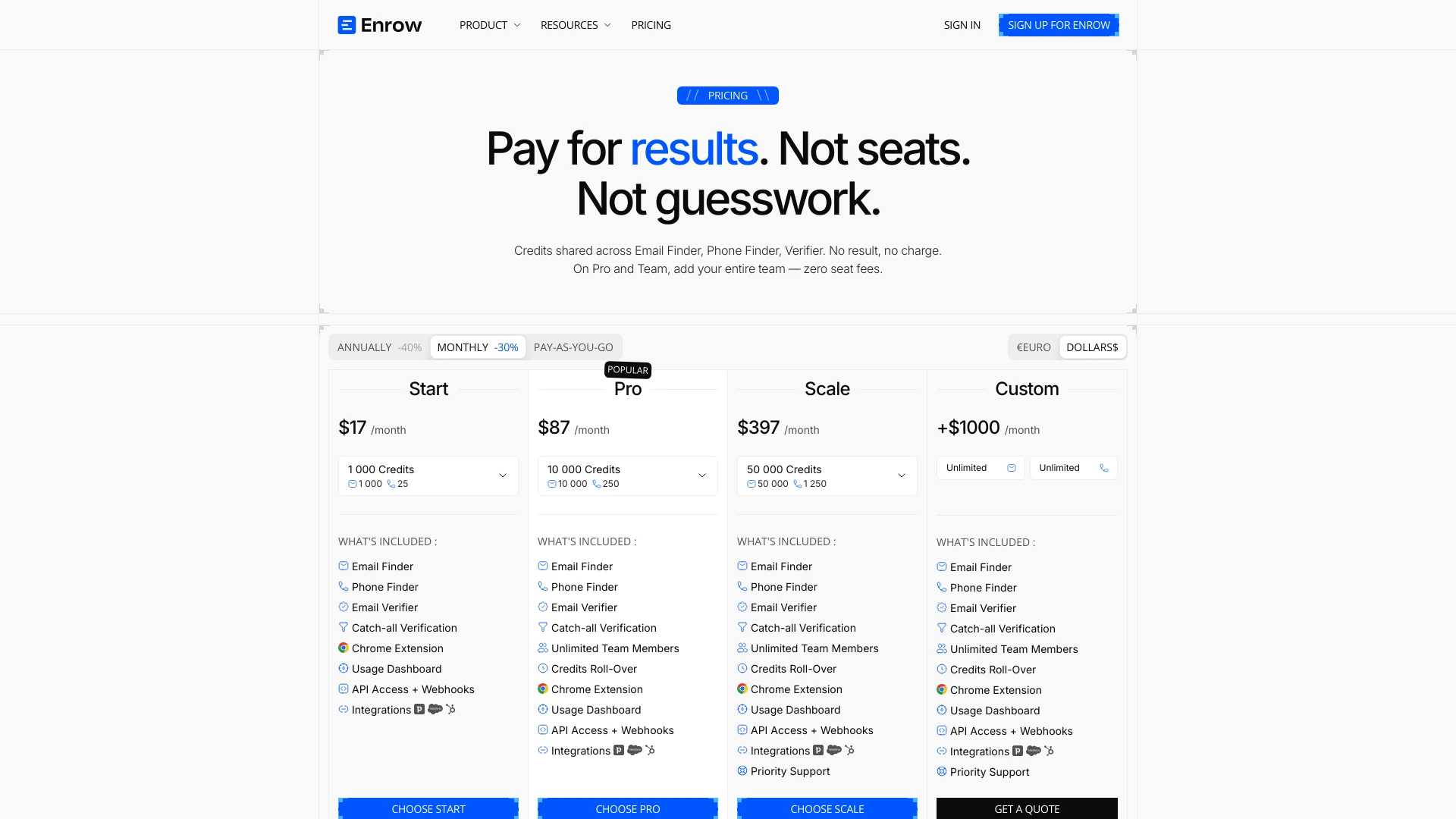
Subscription in three tiers. Start from $17/mo (1,000 credits, monthly only) and $47 for 4,000. Pro from $87/mo (10,000 credits), $167 for 20,000, $247 for 30,000. Scale from $397/mo (50,000 credits) up to $1,397 for 200,000.
Commit annually and Pro and Scale shed about 10%, which puts 10,000 near $78/mo and 50,000 near $357/mo. The credit math is one line: an email costs 1 credit, a phone costs 40, a verification 0.25, catch-all is in the price, and nothing bills unless the result is valid.
Read that against a plan and 10,000 credits is 10,000 emails or 250 phones. Pro and Scale roll unused credits forward. Free: 50 free credits every month, recurring, no card.
A credit never spends unless the result is valid, so the sticker and the real cost are the same number here. The cleaner comparison base is Pro: $87 for 10,000 credits, meaning 10,000 valid emails at about $0.0087 each or 250 valid phones at about $0.35 each. Start remains the smaller $17 entry tier.
Hold those two numbers.
Now put ZoomInfo's beside them. Its pay-as-you-go unit is on gtm.ai: $0.38 a record at the $1,000 tier, $0.25 only once you reach the $25,000 tier, mobiles excluded at every tier. Its cheapest platform contract, $3,000 for 2,000 exports across twelve months, is $1.50 per contact exported. Both sides bill on the record you keep rather than the attempt, so the comparison is clean. Measured against Enrow's entry tier, not its cheapest: $0.017 per valid email versus $0.38, about 22x, and versus $1.50, about 88x; even gtm.ai's $0.25 top tier sits about 15x above it. A full contact with a European mobile, 41 credits, lands near $0.70 on Start. No self-serve gtm.ai tier sells you that mobile at all, and $0.70 is still under half of one platform export.
And there's no seat to buy and no year to commit, which is the other half of the gap. Every self-serve tool below either bills per attempted search or per revealed row (many of which miss or bounce, so the sticker badly understates the real cost) or charges more credits per phone.
Don't take my word for any of it. Point Enrow at your own ZoomInfo target list and read the bounce rate yourself. 50 free credits every month, recurring, no card.
2. Emelia.io
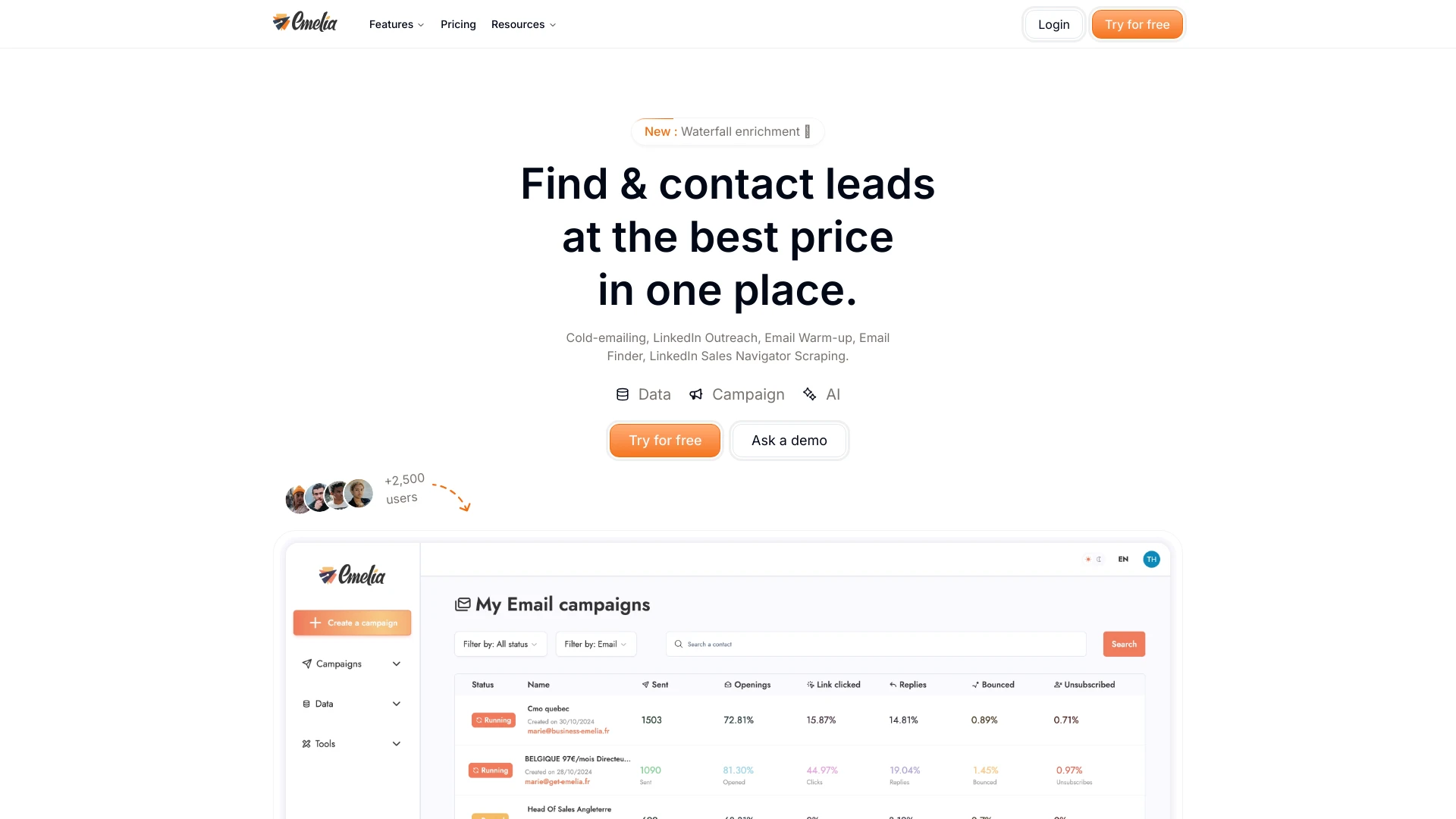
Reach for this when you'd rather not bolt a separate sender onto your finder.
Emelia is where finding and outreach live together: an email finder with waterfall enrichment, a verifier, LinkedIn Sales Navigator scraping, then cold email and LinkedIn sequences with warm-up built in. ZoomInfo is an enterprise data-and-signals platform; Emelia is a lightweight find-and-send tool for a small team.
For a startup or agency that wants one login instead of a data platform plus a sequencer, that's the niche it fills, and it's a fraction of ZoomInfo's price.
But it's a sequencing tool first, and the data side shows it. The finder is fine, and credits burn on results, not blind searches. Yet Emelia's center of gravity is sending, not data depth. Phone coverage is thin.
The heavier finder and enrichment credits sit on add-ons rather than the base plans, so a heavy data user pays twice.
Full disclosure. Emelia is the partner we point people to for sequencing, because we don't build it and won't. So this isn't a head-to-head, it's the other half of the stack. The cleanest setup pairs them: Enrow for the verified emails and EU phones, Emelia to send.
The thing I liked in the sequencer was how warm-up and sending sat right next to the found contacts, no export step in between. But for the data itself, match rate, EU phones, price per valid, Enrow is the layer you'd feed it, not the other way round.
- +Find, verify, enrich and send in one place (cold email + LinkedIn + warm-up)
- +Credits charged on results found, not per blind search
- +Waterfall enrichment and Sales Navigator scraping built in
- +A fraction of ZoomInfo's cost, self-serve
- –Thin phone coverage; it's not a dialing tool
- –Email-finding and enrichment credits lean on add-ons, so heavy data users pay extra
- –It's an outreach platform first, so the data depth trails the pure finders
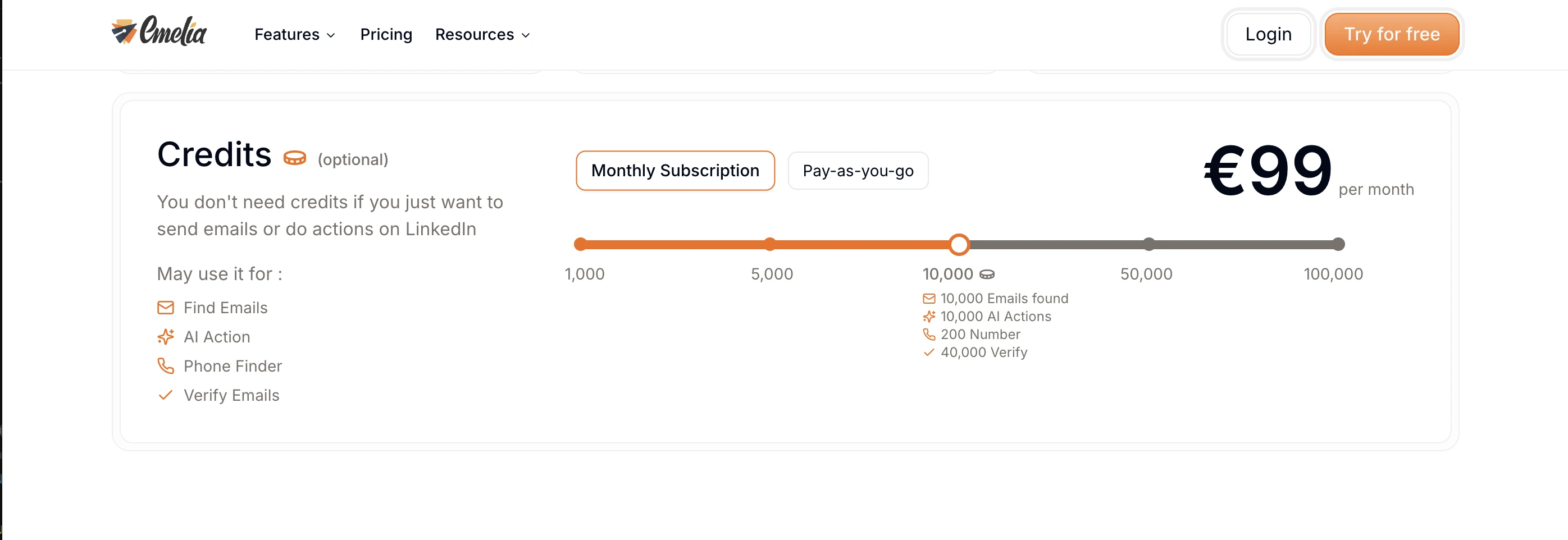
Emelia pricing (EUR +20% to USD) starts around $44/mo (Start: 3 mailboxes, 500 one-time credits), with email-finder and phone credits bought separately. It bills finder credits on the result found like Enrow, so the meter is honest, but its entry runs a little above Enrow's $0.017 per valid email at matched volume, and there's no EU direct-dial product behind the thin phones.
vs Enrow: Emelia sends and Enrow doesn't, so pair them. For the data itself Enrow is the deeper, fresher source, with EU phones Emelia barely covers and pay-per-valid on every credit.
3. Hunter.io
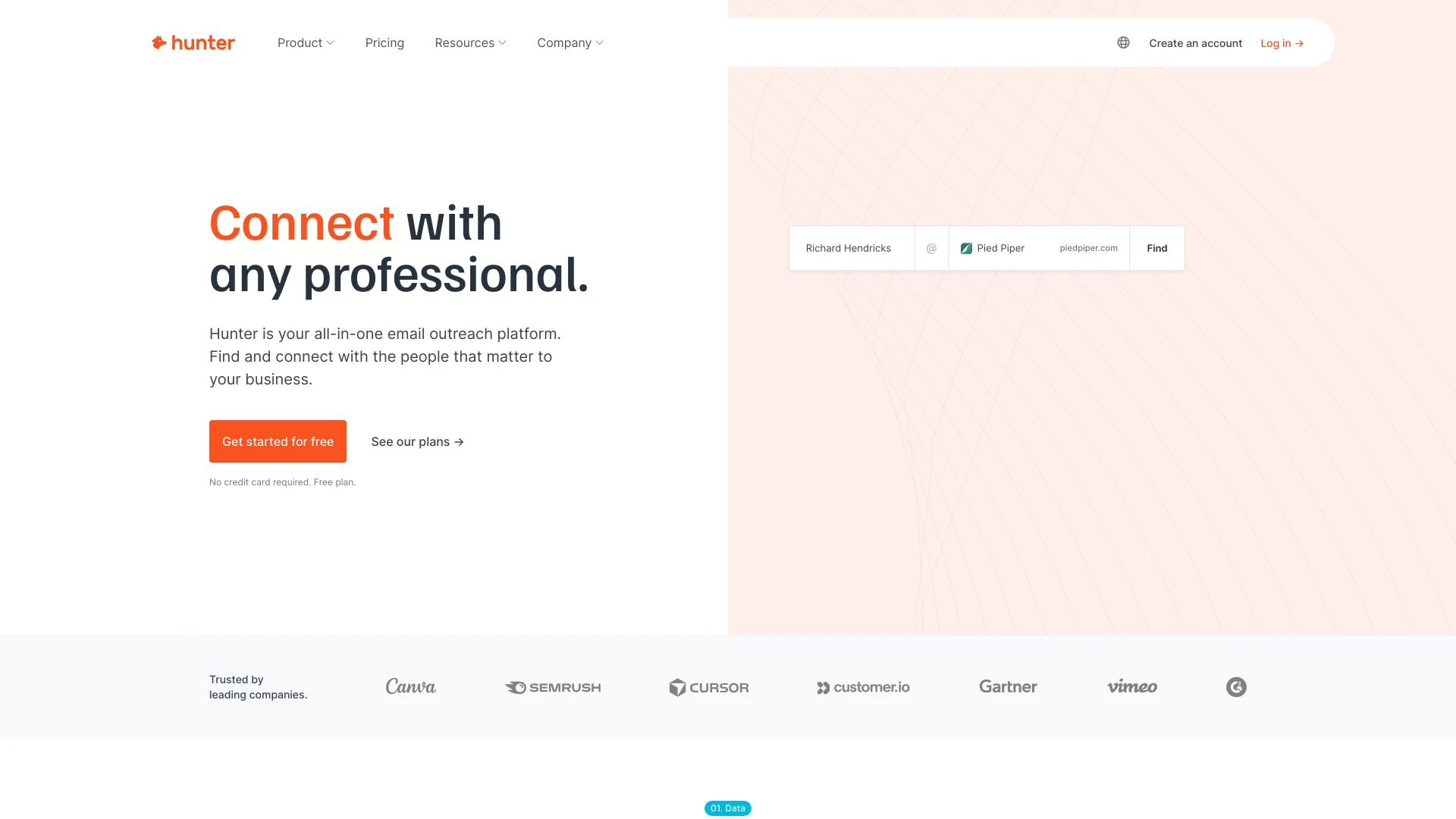
Good fit if all you want is emails off a domain and a free tier to kick the tires.
Hunter is a B2B email finder and verifier. Feed it a domain or a name and a company and it returns addresses with a confidence score and a note on where it saw the pattern. Next to ZoomInfo it's tiny, and that's the point.
Where ZoomInfo sells a platform, Hunter sells a simple email job with a real free plan and self-serve pricing. For a small team that just needs work emails off known domains, it's an easy on-ramp.
The wall is what Hunter's billing does to your bill. Hunter charges a credit for the attempt, not the verified result: run a lookup and the credit is spent whether it hands back a clean address, a low-confidence pattern guess, or nothing at all.
Our working assumption for a per-search finder is that about 30% of searches return an email, so you pay for roughly three searches to land one address, before anything tells you whether it delivers.
Its data is crawled and pattern-matched, so smaller companies come back thin or stale, the same staleness problem ZoomInfo has, on a smaller budget. And there are no phone numbers at all.
Running a few domains through Hunter, the search was fast and the source citations were handy. But Enrow charges nothing for a miss, runs 10+ verification checks before an address counts, and adds the EU phones Hunter doesn't have.
Same self-serve simplicity, more accurate data, and phones in the mix.
- +Simple, fast domain and email search with source citations
- +Genuine free plan (50 credits/month)
- +Self-serve pricing, easy on-ramp
- +Mature CRM and tool integrations
- –Charges per attempted search, not per valid result, so misses and low-confidence guesses still spend credits
- –Crawled, pattern-guessed data goes thin for smaller firms
- –No phone data at all
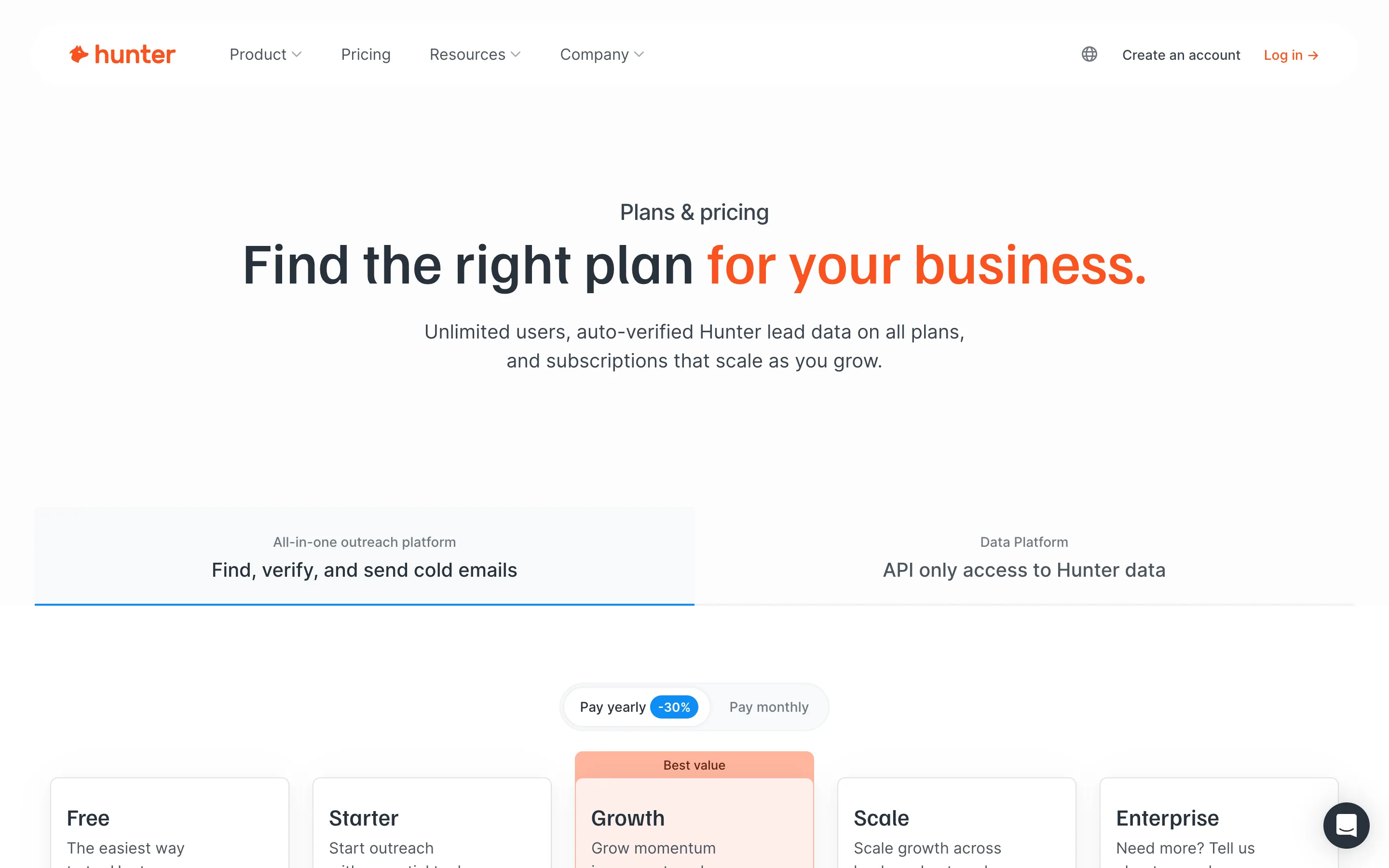
Hunter pricing (EUR 1:1 USD) opens at $49/mo for 2,000 credits, with a free 50-credit tier. But Hunter charges per attempted search, not per valid result, so at our working assumption of a ~30% find rate, each email found really costs about $0.082, roughly 4.8x Enrow Start ($0.017) and 9.4x Pro ($0.0087). Hunter returns no phones at all.
vs Enrow: Hunter bills the attempt, not the result, and returns no phones. Enrow's meter only counts a valid result, so a miss never costs you, verifies harder with 10+ checks, and adds the EU phones and one-click full-contact CRM export Hunter doesn't have.
4. Apollo
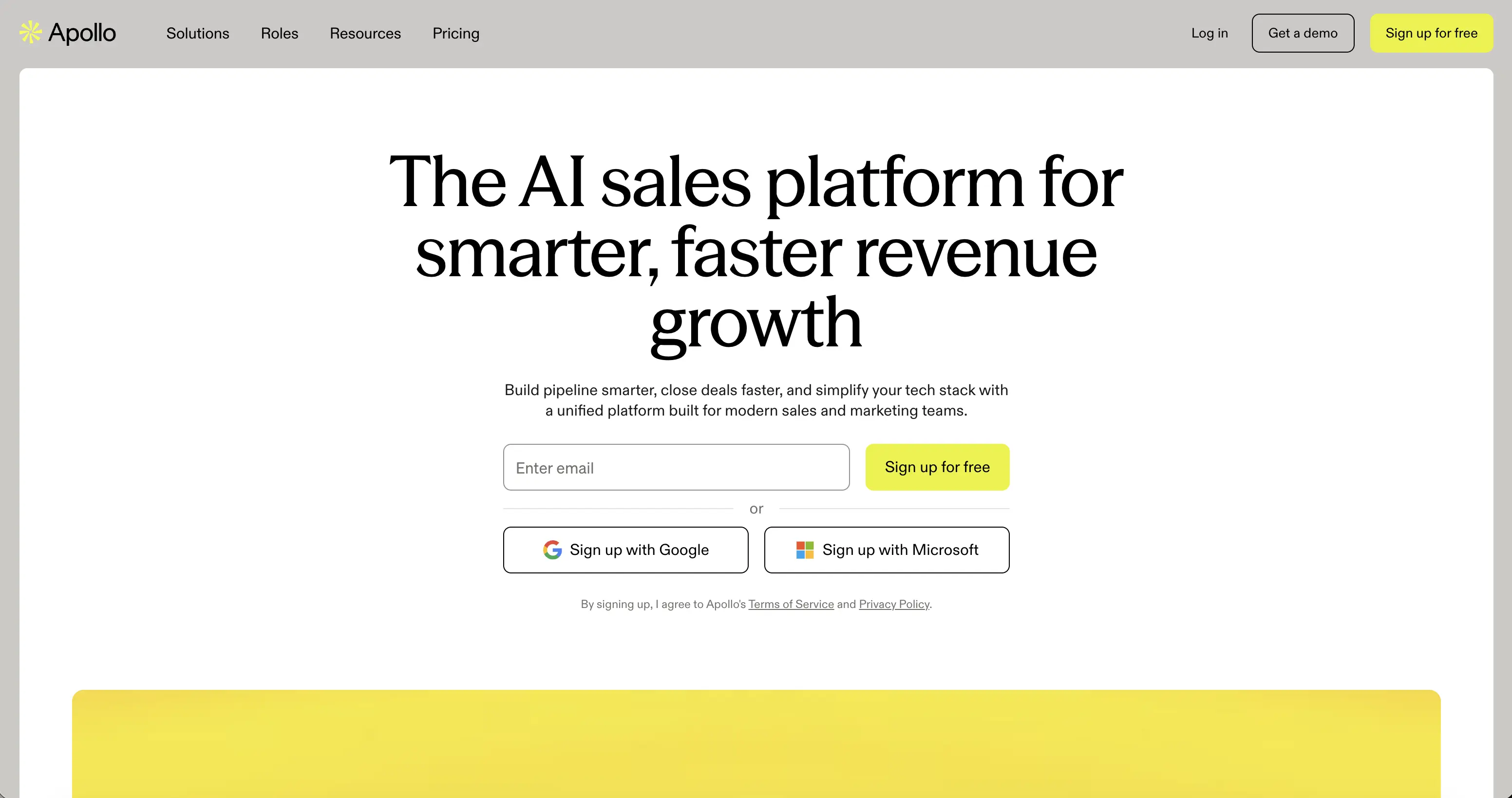
Where you land if you want ZoomInfo's breadth at self-serve prices.
Apollo pairs a huge B2B database with sequencing and enrichment, plus a Chrome extension, all on one seat-based subscription. It's the tool most people mean when they say "cheaper ZoomInfo": similar breadth, a real free tier, and public per-seat pricing you can buy monthly instead of a negotiated twelve-month license.
For a lot of small teams it's genuinely enough to run outbound end to end, and it holds a 4.7/5 on G2 across thousands of reviews.
The cost of that breadth is data freshness and how credits work. Apollo's records sit in a stored index that refreshes on its own clock, so a name you pull today may already have moved on, the same drift that dogs ZoomInfo, just cheaper.
Credits are per seat, mobile numbers eat into them, and export caps and data-accuracy gripes are the two things you'll read most in reviews. It's a workflow tool where the data is a component, not the whole point.
In Apollo, getting from a filter to a live sequence without leaving the tool is fast, no argument there. But when I checked the data against a live send, real-time won.
Enrow finds and verifies each contact fresh, delivers EU direct dials Apollo's database doesn't reliably cover, and only the valid ones ever hit your bill, no per-seat math. If the all-in-one sticker-sensitive is your job, Apollo covers it, and Enrow feeds it the clean data layer.
- +Large B2B database with sequencing and enrichment in one place
- +Public, self-serve per-seat pricing with no annual term (ZoomInfo's cheapest published year is $3,000)
- +Generous free tier (900 credits/year per seat)
- +Handles sourcing and enrichment, with sending built in
- –Stored database, so data ages and accuracy is a common complaint
- –Credits are per seat and don't roll over; a mobile costs 8x an email, and unused credits die each month
- –Export caps and data-quality gripes are the recurring reviews
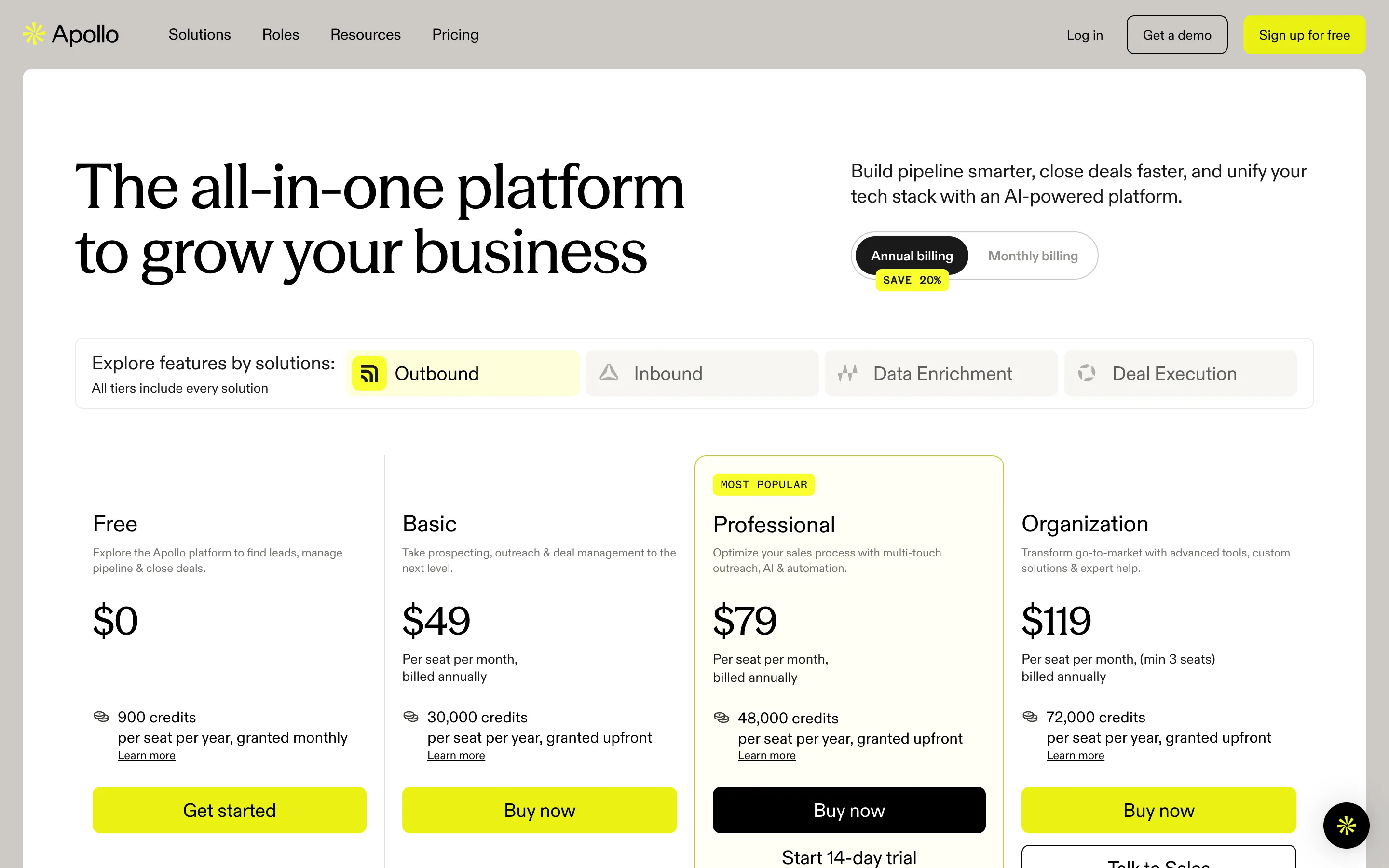
Apollo pricing (USD, per seat) begins at Basic $49/seat/mo annual ($65 monthly) for ~2,500 unified credits, an email at 1 credit and a mobile at 8, none rolling over. At a realistic ~78% utilization that's about $0.033 per valid email, roughly 2x Enrow Start ($0.017) and 3.8x Pro ($0.0087), and the mobiles are stored and US-leaning with no GDPR EU direct-dial product.
vs Enrow: Apollo is the all-in-one, Enrow the data layer. Enrow's $0.0087 Pro email undercuts it, nothing expires unused, and its real-time data and EU direct dials beat a stored DB on a live send, with no per-seat fees stacking up.
5. Cognism
The closest like-for-like at the enterprise end, and the usual ZoomInfo swap in Europe.
Cognism is built for the same enterprise buyer as ZoomInfo: a large B2B database with phone-verified mobile numbers (their "Diamond Data"), strong European coverage, and intent data on the Pro tier.
It's the name that comes up most as a ZoomInfo replacement for teams selling into Europe, because its EU coverage and compliance story are genuinely stronger than a US-first platform's.
It sits around 4.6/5 on G2, and 1 credit reveals a contact that keeps updating unless they change jobs, which is a nice touch.
The friction is the buying model and the freshness question, same as ZoomInfo. Pricing is quote-only, so there's no self-serve entry and no public number to compare, you talk to sales and sign an annual contract.
And the underlying data is still a snapshot that decays until the next update cycle. It's a heavyweight platform, priced and sold like one, just a bit cheaper than ZoomInfo on Vendr, on average.
When I dialed a batch of Cognism's phone-verified mobiles, they were legitimately good for a database, and the EU coverage held up.
But Enrow gets you EU direct dials in real time, no annual contract and no quote call, pay-per-valid from $17/month, plus one-click full-contact export into your CRM. For the enterprise all-in-one with intent, Cognism fits; for the fresh, honestly-billed data layer, Enrow does.
- +Phone-verified mobiles with strong European coverage
- +Intent data on the Pro tier
- +Enterprise-grade compliance and support, GDPR-focused
- +Usually cheaper than ZoomInfo on negotiated deals
- –Quote-only pricing, no self-serve or public numbers
- –Annual contracts, not a pay-as-you-go meter
- –A revealed record is a snapshot; it drifts until the next update
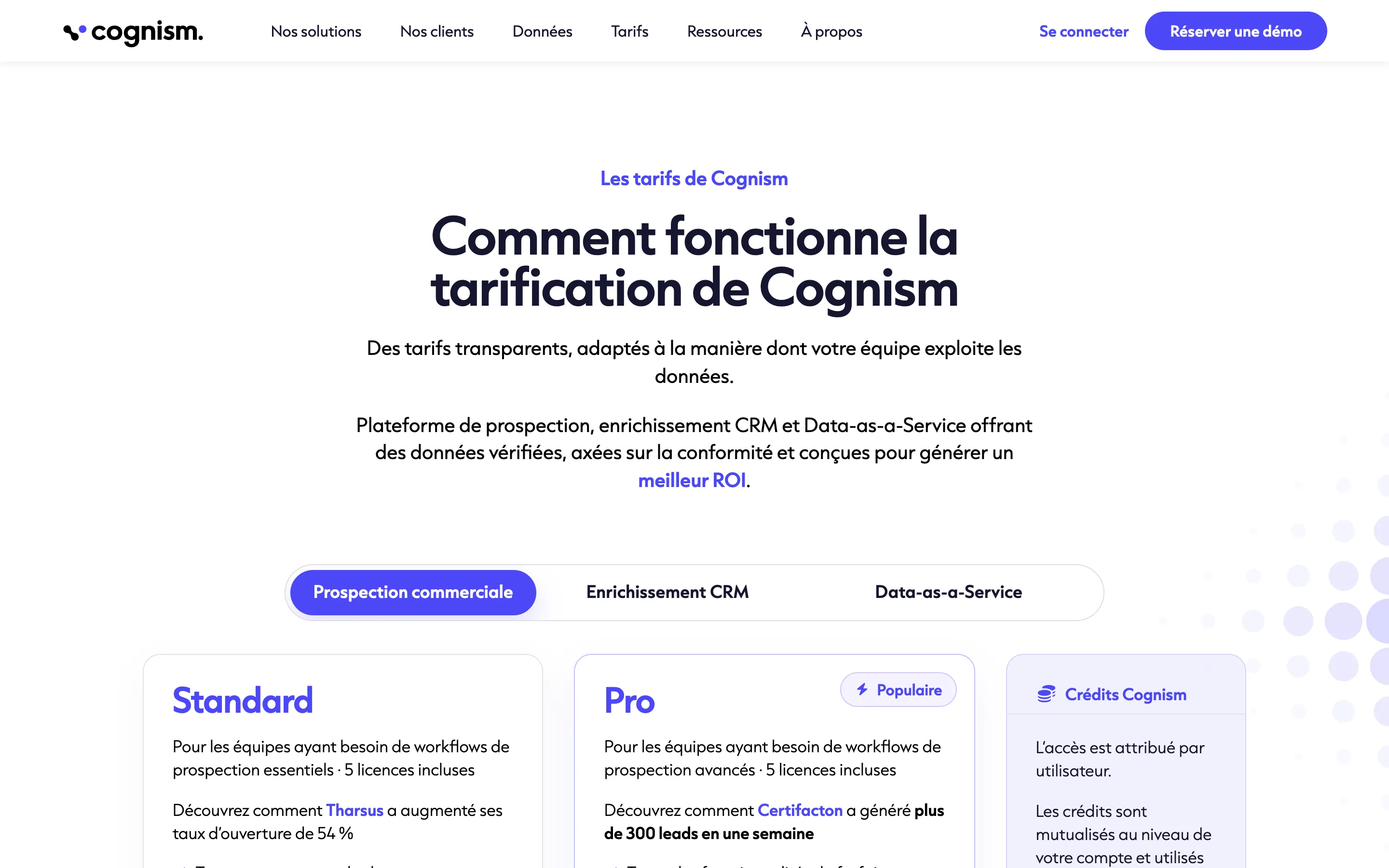
Cognism pricing is quote-only, no public numbers, on annual contracts, with Vendr putting negotiated deals around a median of $36,000/year. Cognism publishes nothing per contact, so there's no honest $/email to compute, and a $36k median across a year still dwarfs Enrow's $0.017 per valid email at any realistic volume, on a stored database where a share of reveals are stale.
vs Enrow: Cognism is an enterprise platform behind a sales call with no per-valid meter; Enrow is self-serve from $17/month, real-time, pay-per-valid, with Pro at about $0.0087 per valid email plus EU direct dials and one-click full-contact CRM export.
6. Lusha
Worth a look when North American mobile quality is the whole job.
Lusha's reputation is built on phone numbers, and for North American direct dials it earns it, this is the one rival on the list I'd genuinely point you to for mobiles.
One credit reveals a verified email; a phone number costs 5 credits, drawn from the same monthly pool, with a browser extension and CRM integrations. Where ZoomInfo sells you the whole platform to get at phones, Lusha is a sticker-price, self-serve way to get mobiles without a contract.
The trade-offs are geography and the database model. Lusha is US-strong and thinner in Europe, so EU direct dials aren't its home turf, and the records come from a stored index that lags reality until the next update.
Phones cost 5x an email out of the same pool, so heavy dialing burns a credit pool fast. It's a reveal tool, priced per credit on a subscription, not a real-time verification engine.
On a US list, Lusha's mobile hit rate was good.
But on my EU contacts it thinned out, which is exactly where Enrow is built to win: direct dials in any country (Europe included), 10+ verification checks on the emails, pay-per-valid billing, and the full contact pushed into your CRM in one click.
- +Strong North American mobile-number quality
- +Verified email at 1 credit; direct-dial reveal available
- +Chrome extension and CRM integrations
- +Free plan to test (40 credits/month), self-serve
- –US-strong, thinner EU direct-dial coverage
- –Data comes off a stored index, so some reveals are already out of date
- –A phone reveal costs 5 credits from the same pool, so dialing burns credits fast
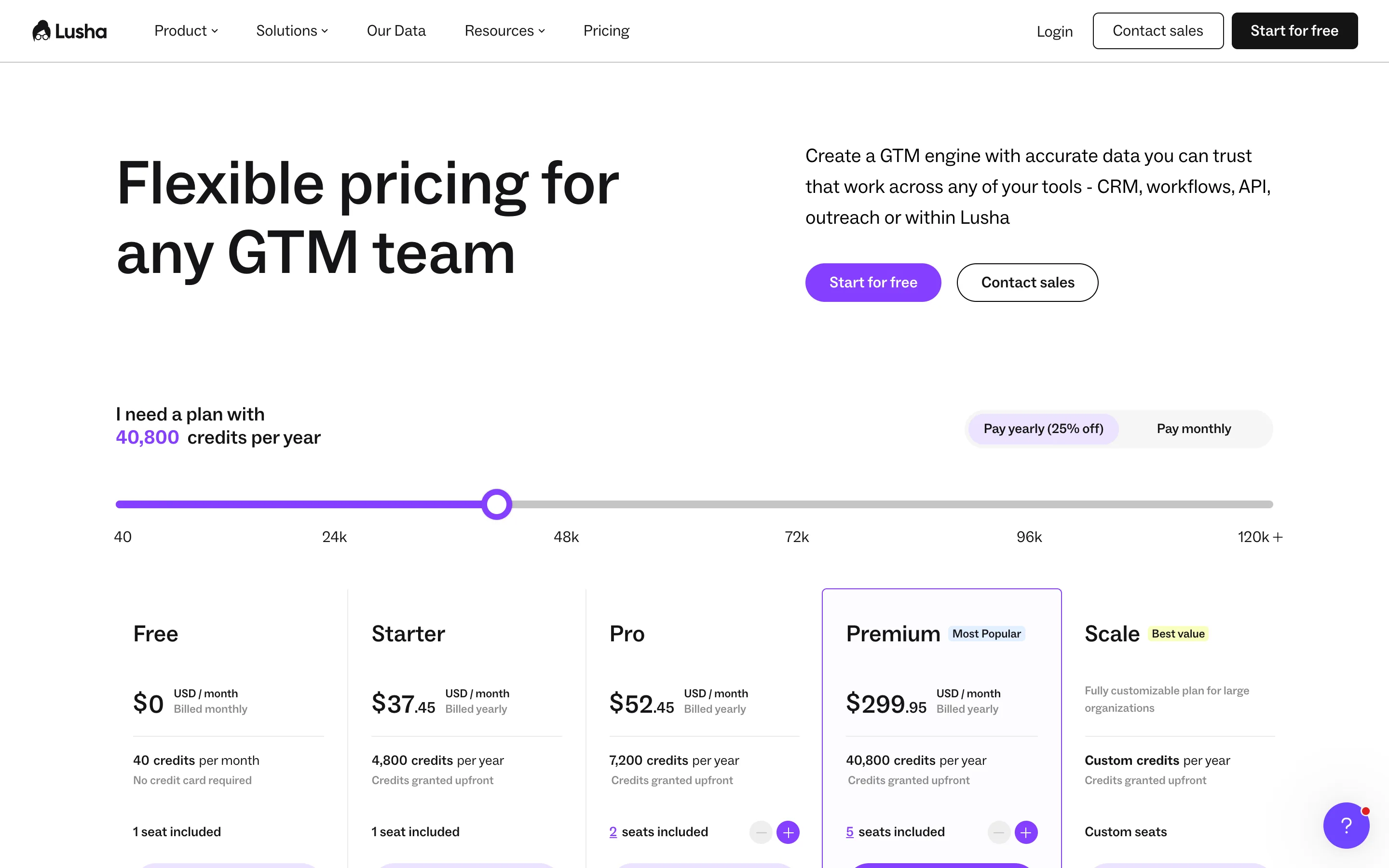
Lusha pricing (USD) enters at Starter $49.90/mo billed monthly ($37.45/mo billed annually) for 400 credits/month (Free 40/month), a verified email at 1 credit and a phone at 5. On the monthly plan that's about $0.12 per email and roughly $0.62 per phone, above Enrow's $0.017 email and $0.35 Pro phone, also monthly, on a stored database where a share of reveals are stale on a live send.
vs Enrow: Lusha wins North American mobiles; Enrow wins EU direct dials, real-time email verification, a lower cost per valid phone, and pay-per-valid billing rather than a 5-credit reveal that spends whether the number connects or not.
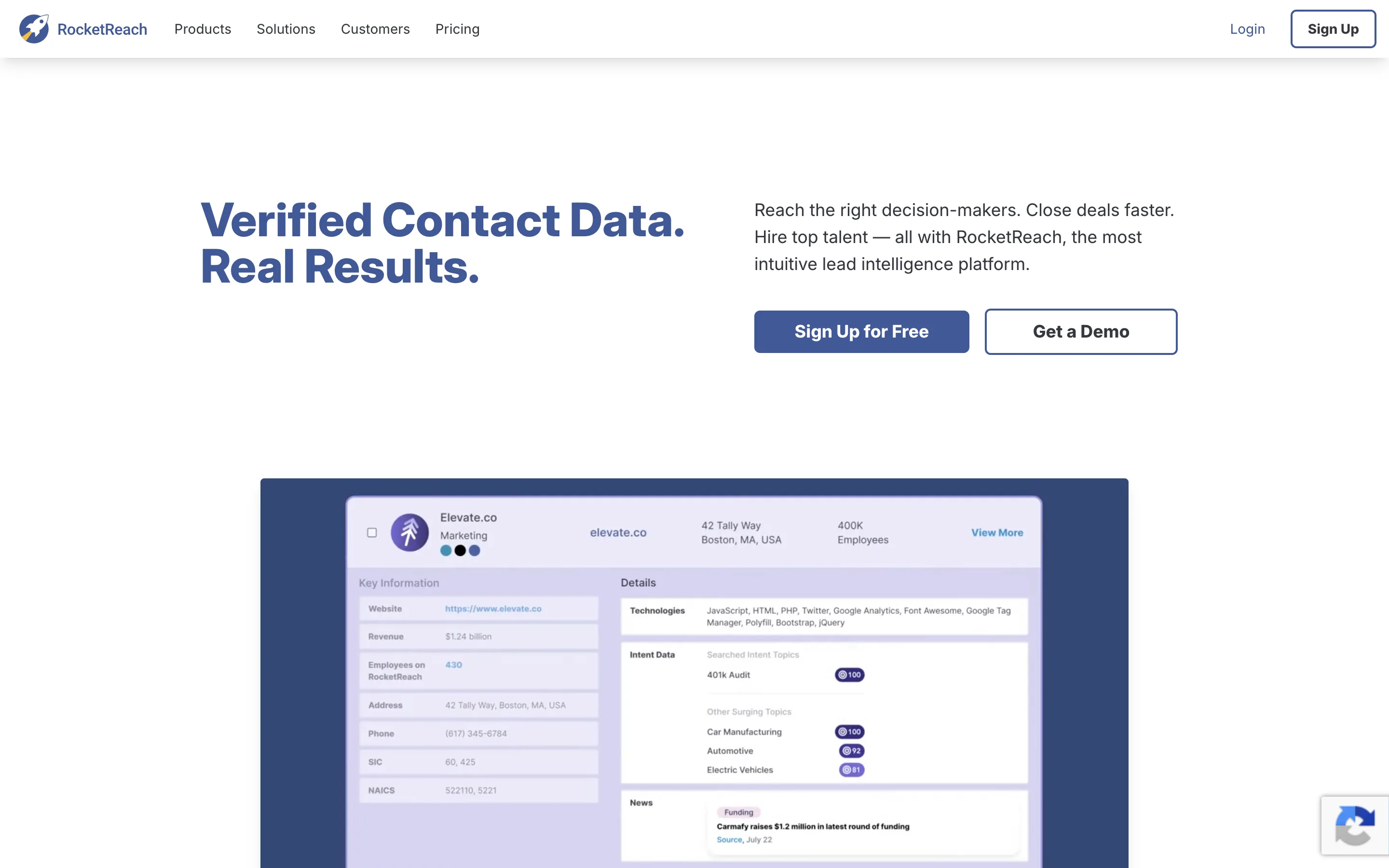
7. RocketReach
The sticker-price self-serve pick for one-off lookups and light enrichment.
RocketReach is a big contact-lookup database with a browser extension, priced per lookup and export rather than a platform license. Annual plans advertise unlimited email and phone lookups with export caps as the real limit, and entry pricing is low.
Where ZoomInfo is a five-figure commitment, RocketReach is a $33/month self-serve tool for a rep who just needs to find a contact now and then. It's a fast on-ramp with no sales call.
The trade-offs are depth and freshness. Like ZoomInfo, RocketReach serves records off a stored index, so a portion are out of date the moment you export them.
The "unlimited lookups" framing is real but the export caps bind harder than the lookups do, and accuracy is decent for individual contributors rather than deep enterprise coverage. There's no real-time verification engine or EU-phone compliance story here.
When I needed a couple of contacts fast, RocketReach's clean interface and headline sticker did the job.
But Enrow finds and verifies fresh in real time, covers EU phones, only bills when a result is valid, and drops the full contact into your CRM in one click rather than metering exports. For sticker-price lookups it's handy; for a real outbound data layer, Enrow is the sharper tool.
- +Headline entry sticker, self-serve, no contract
- +Unlimited-style email and phone lookups on annual plans
- +Large contact database with a browser extension
- +Bulk lookup and enrichment available
- –Lookups pull from a snapshot, so a slice of them are already stale
- –Export caps are the real limit, not the lookups
- –No real-time verification or EU-phone compliance story
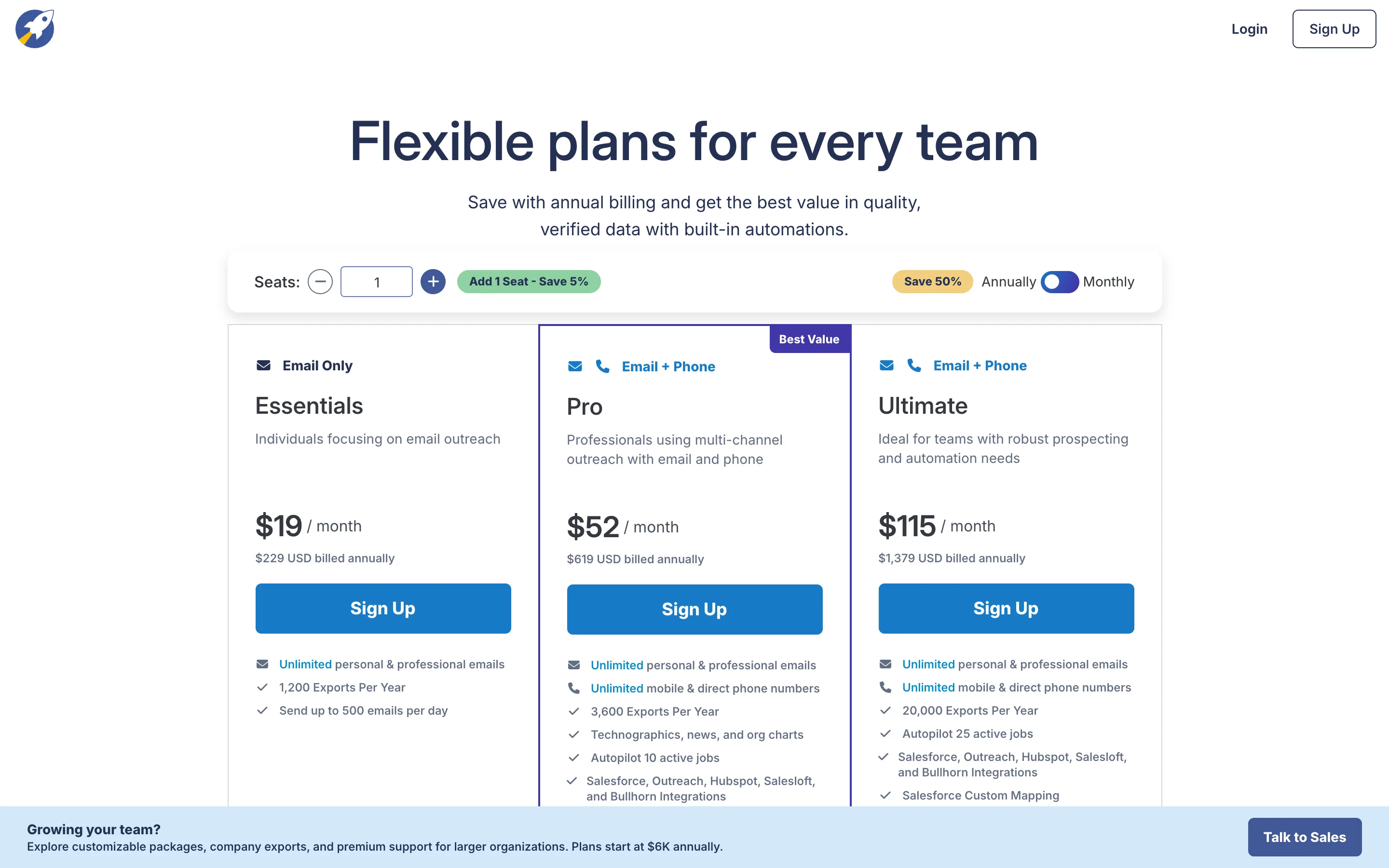
RocketReach pricing (USD) is priced from Essentials $33/mo billed annually (unlimited email lookups, 1,200 exports/year), metered on lookups and exports, not verified valids. At our working assumption of ~30% of lookups returning an email, you pay for roughly three lookups per email found, pushing the real number past $2 an email on the monthly plans, an order of magnitude above Enrow's $0.017.
vs Enrow: RocketReach is a sticker-price stored-database lookup tool metered on exports; Enrow is real-time, pay-per-valid at about $0.017 per valid email, with EU phones and one-click full-contact CRM export.
8. Seamless.AI
For US teams chasing raw volume who don't mind scrubbing it afterward.
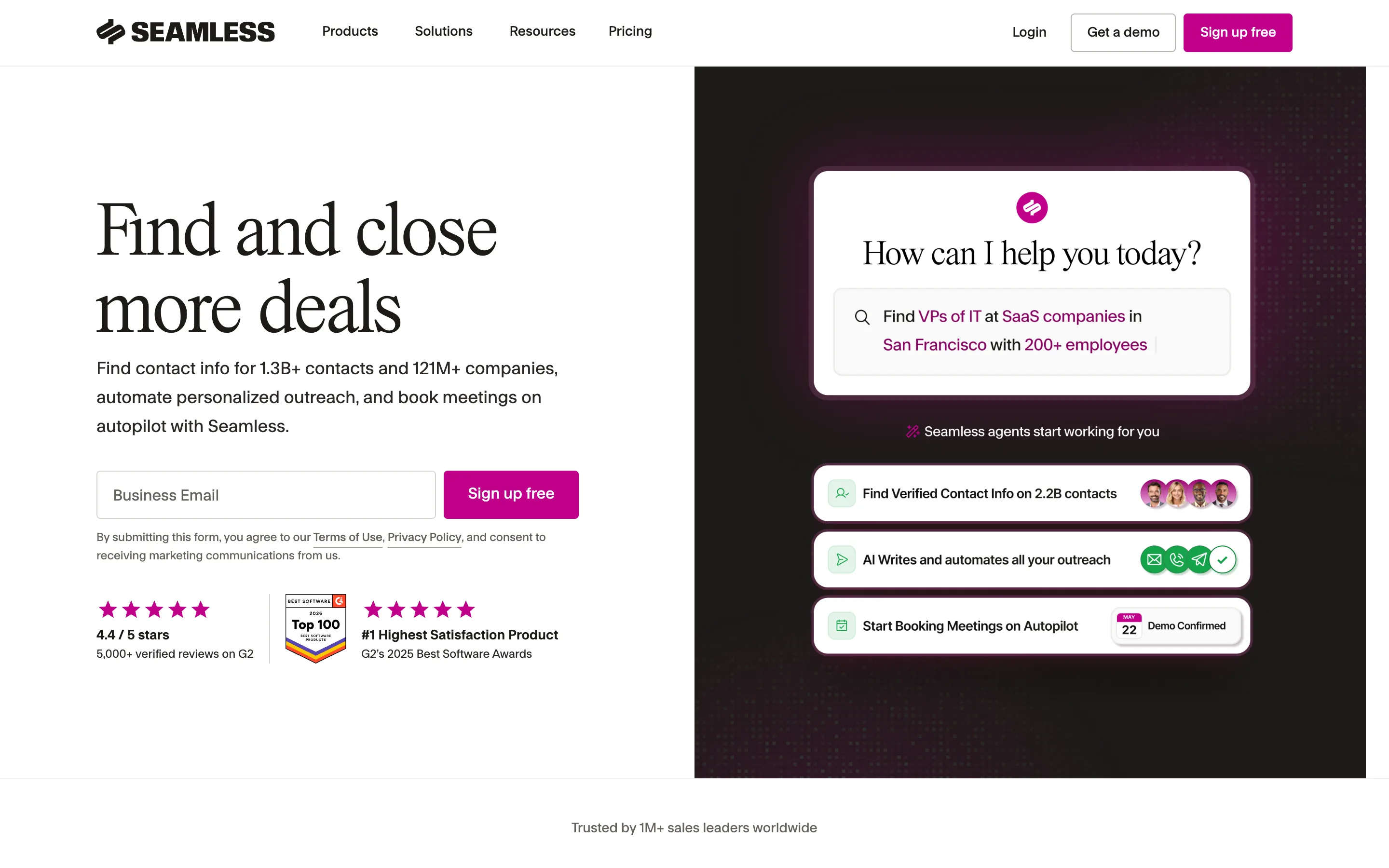
Seamless.AI markets itself as a real-time search engine that scrapes the web for contacts, with emails, phones, insights and enrichment, sold on tiered plans by company size. It leans into high volume, "unlimited"-style messaging, and a US-heavy database.
Next to ZoomInfo it's a cheaper, more aggressive data play, and for a US team that wants a lot of contacts fast, the volume is the draw.
The catch is quality and the buying model. Seamless is the tool you'll see the most mixed reviews on for accuracy, and a chunk of what it returns needs a second verification pass before you send.
Pricing is quote-only and sold by a sales rep, with auto-renewal terms people complain about, so the "unlimited" framing has strings. EU coverage and compliance aren't its story either.
Seamless did surface contacts quickly, and the raw volume is real. But on my list the accuracy was uneven, which is the whole problem Enrow is built around.
Enrow verifies with 10+ checks before an address counts, delivers EU direct dials, charges only when a result is valid instead of on a research credit, and exports the full contact into your CRM in one click. Volume is easy; verified volume is the hard part.
- +High US contact volume, AI-driven search
- +Enrichment, plus job-change and buyer-intent signals at higher tiers
- +Chrome extension and integrations
- +Free license: 50 one-time credits to test
- –Data accuracy is the most common complaint; expect a second verification pass
- –Quote-only pricing with auto-renewal terms people flag
- –US-leaning; weak EU coverage and compliance story
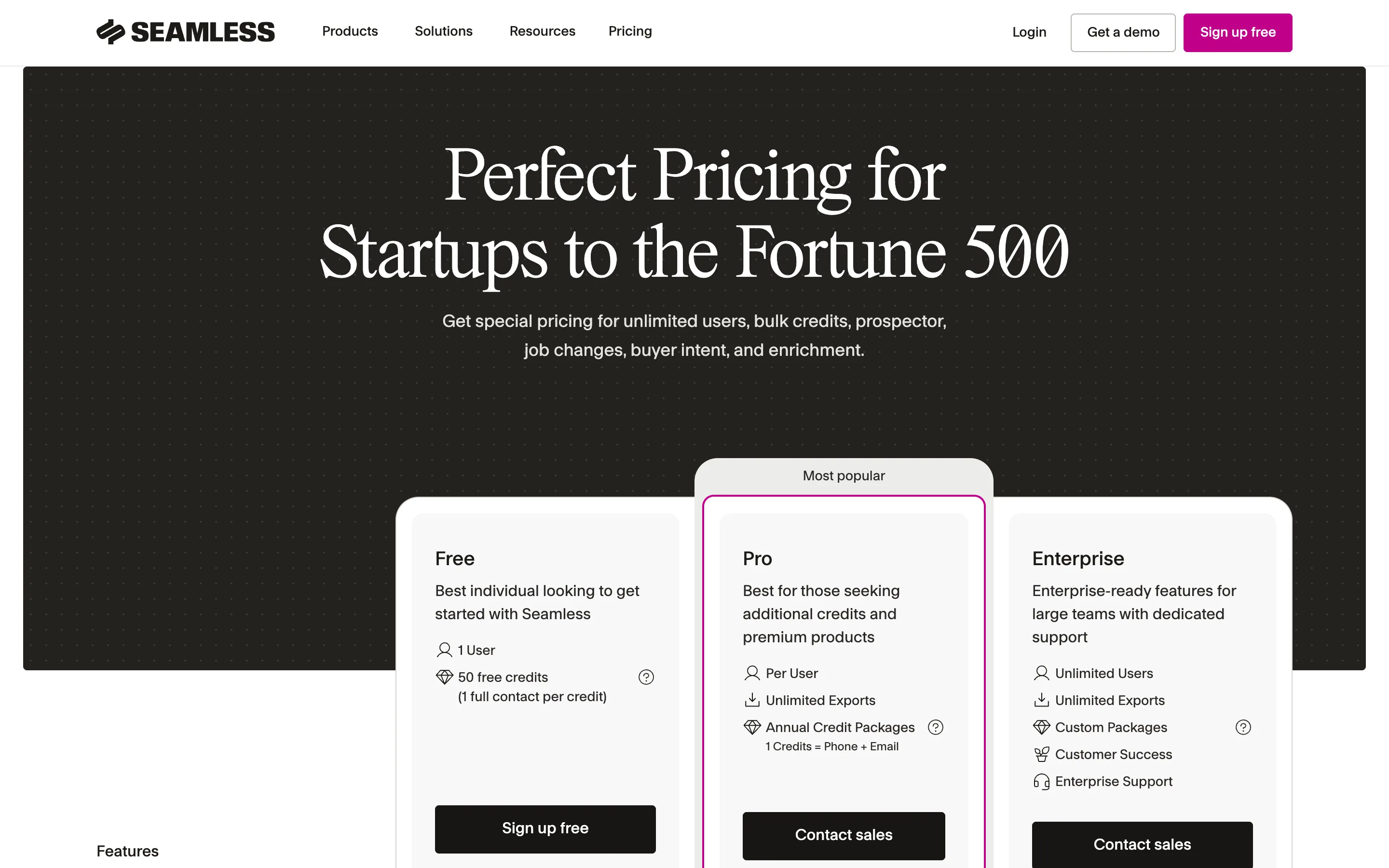
Seamless.AI pricing is quote-only, sold by tier on company size, no public numbers, and a credit is spent per research attempt whether or not the contact checks out. Our working assumption is that ~30% of searches return an email, so roughly three researches go into each email found, with accuracy its most common complaint, so the real cost sits well above any per-credit figure a rep quotes.
vs Enrow: Seamless sells volume behind a sales call and spends a credit whether the contact checks out or not; Enrow verifies each result with 10+ checks, only charges once that result is valid, at about $0.017 per valid email, and adds EU phones and one-click full-contact CRM export.
9. UpLead
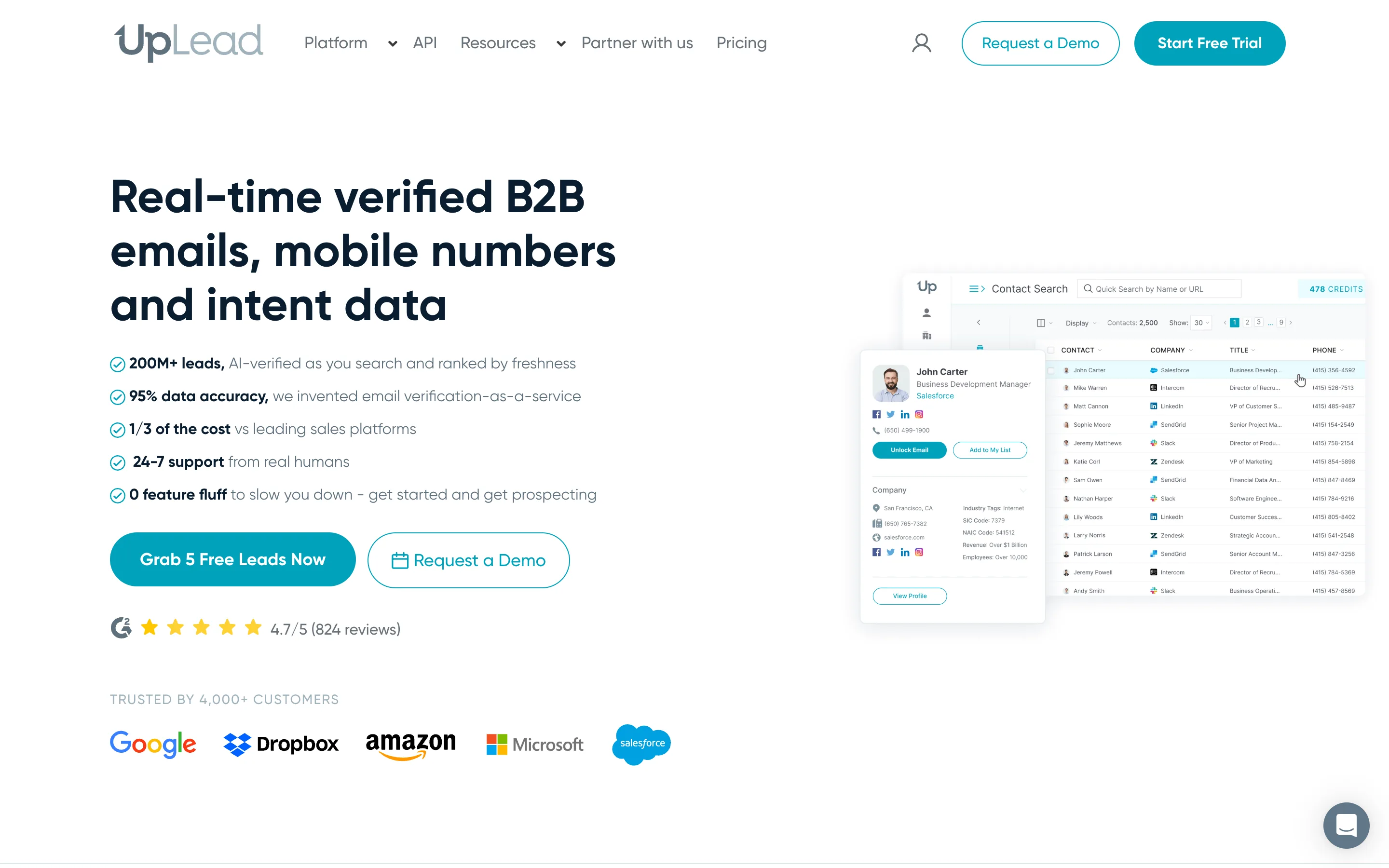
For teams that want a filterable database but refuse to pay for junk records.
UpLead is a searchable B2B database that verifies emails in real time at the point of export and backs it with a 95% accuracy guarantee, crediting you for bad data. One credit reveals a contact with a verified email and a mobile direct dial.
Where ZoomInfo is enterprise, seat-priced and sold by the year, UpLead is self-serve with public per-credit pricing and a cleaner accuracy promise, and it holds a 4.7/5 on G2. For a US team that wants to filter and export a clean list, it's a tidy middle ground.
The trade-offs are volume and geography. Credits are limited and the per-contact price is higher than the pure finders, so heavy volume adds up fast. It's US-strong and thinner in Europe, and while it verifies at export, it's still a stored database underneath, so coverage depth trails the enterprise platforms.
Phones are bundled into the same credit as the email.
Exporting a UpLead list, the verified-at-export step kept my bounce low and the accuracy guarantee is a genuine differentiator.
But Enrow finds each contact fresh in real time rather than verifying a stored record, has EU phone coverage UpLead can't match, only bills once a result is valid, and exports the full contact into your CRM in one click.
For US list-building it's clean; for fresh EU-inclusive data, Enrow goes further.
- +Real-time email verification at export, 95% accuracy guarantee
- +Searchable, filterable US database
- +One credit reveals a verified email and a mobile direct dial
- +Self-serve public pricing with no seat license or annual term
- –Limited credits; per-contact cost is higher than pure finders
- –US-strong, thinner EU coverage
- –Stored database underneath, so depth trails enterprise platforms
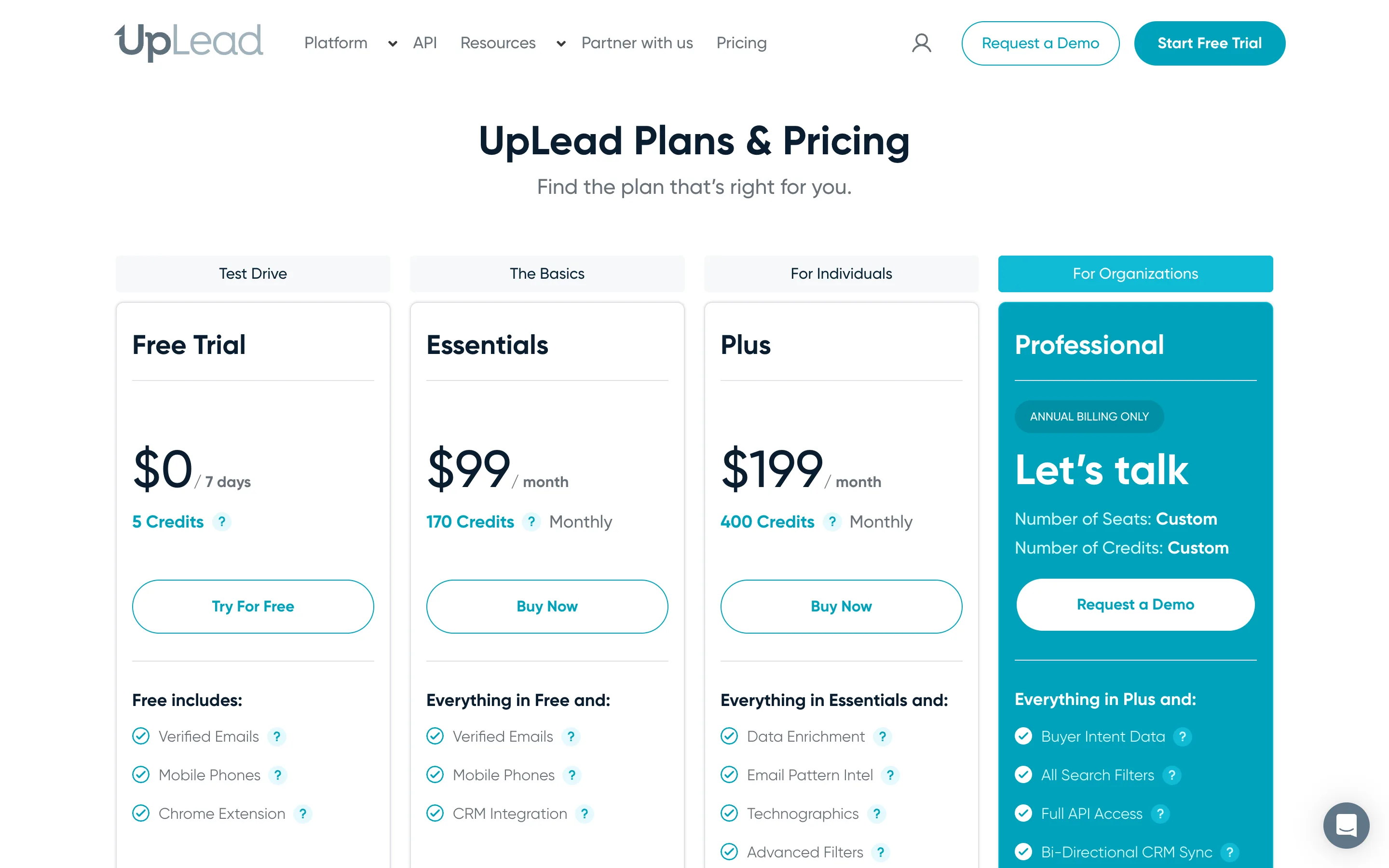
UpLead pricing (USD) runs from Essentials $74/mo billed annually for 2,040 credits/year ($99/mo monthly for 170), one credit revealing a verified email and a mobile, about $0.44 a credit. The credit goes on the reveal, not on a verified result, so at our working assumption of a ~30% find rate on emails, each email found really costs about $1.45, more than 80x Enrow's $0.017 per valid email, on a US-strong stored database. A mobile on the same credit stays near $0.44, since we only apply that rate to emails.
vs Enrow: UpLead verifies a stored record at export and bundles a US mobile per credit; Enrow finds and verifies fresh in real time, adds EU direct dials UpLead can't match, and only charges when the result is valid.
10. ContactOut
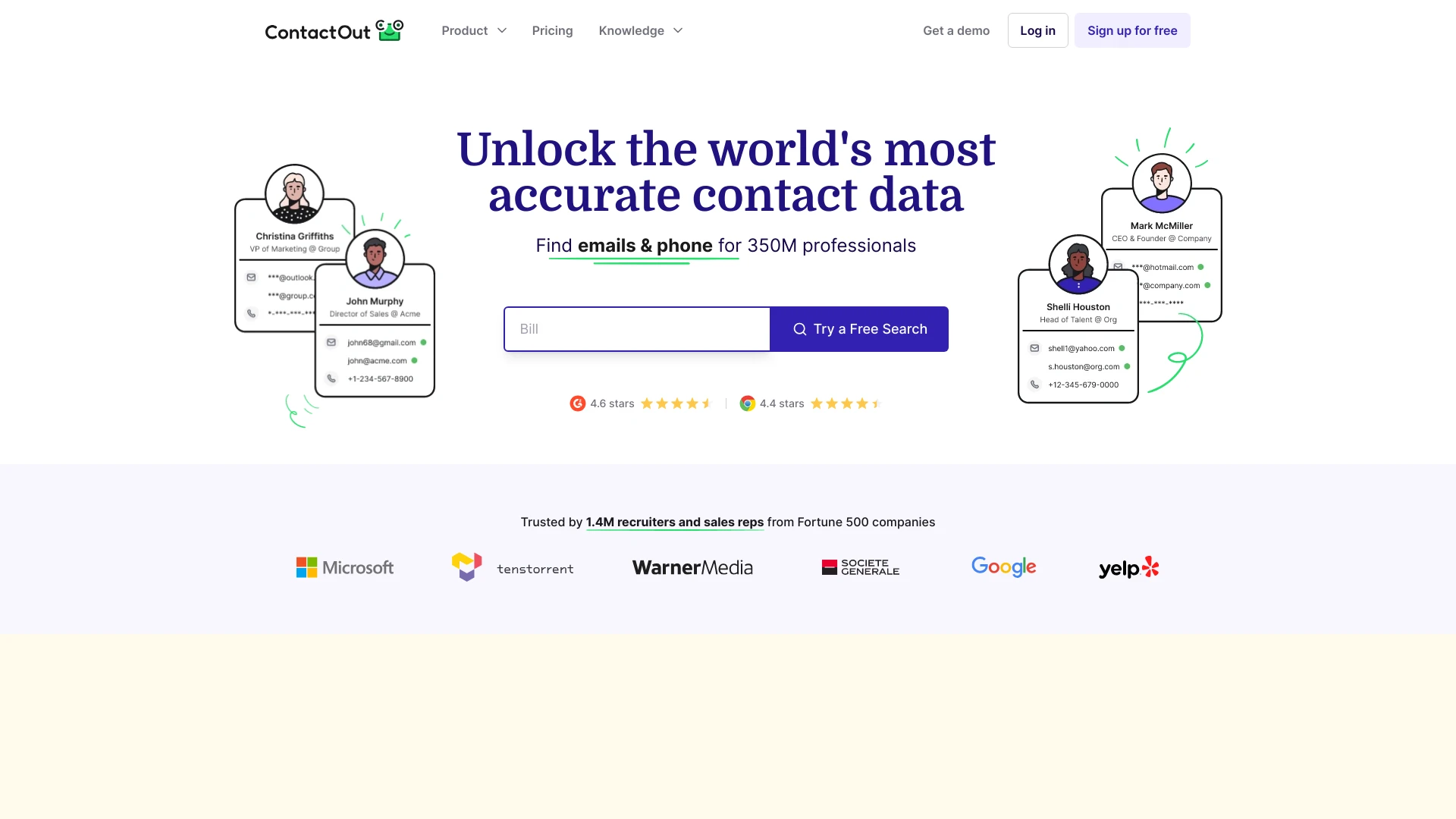
Built for sourcing humans, not closing deals.
ContactOut's strength is a large profile database with both work and personal emails, plus a LinkedIn Chrome extension and a search portal. Its niche is recruiting: surfacing personal emails to reach people their employer's inbox won't.
Next to ZoomInfo it's cheaper and more focused, metered by daily and monthly quotas rather than a five-figure license. The personal-email angle is the real difference.
For B2B sales the cons stack up. The profiles come off a stored index that only refreshes periodically, so a chunk of them lag reality by the time you reach out.
Phones sit behind higher tiers, EU coverage is weaker than US, and the export caps bind harder than the lookups do. Testing it, the personal emails reached people a work-email tool never would, useful for recruiters, off-target for outbound sales.
For a sales motion, Enrow finds verified work emails and EU direct dials fresh in real time, charges only when they're valid instead of metering exports, and drops the full contact into your CRM in one click. It's a sales data layer, not a recruiter's export list.
- +Large profile database, work and personal emails
- +Strong LinkedIn Chrome extension and search portal
- +Sticker-price self-serve entry compared with ZoomInfo
- +Genuinely proven for recruiting
- –Export-capped quota model, not a clean per-valid meter
- –Phones locked behind higher tiers; EU coverage weaker than US
- –Stored database, so data ages between refreshes
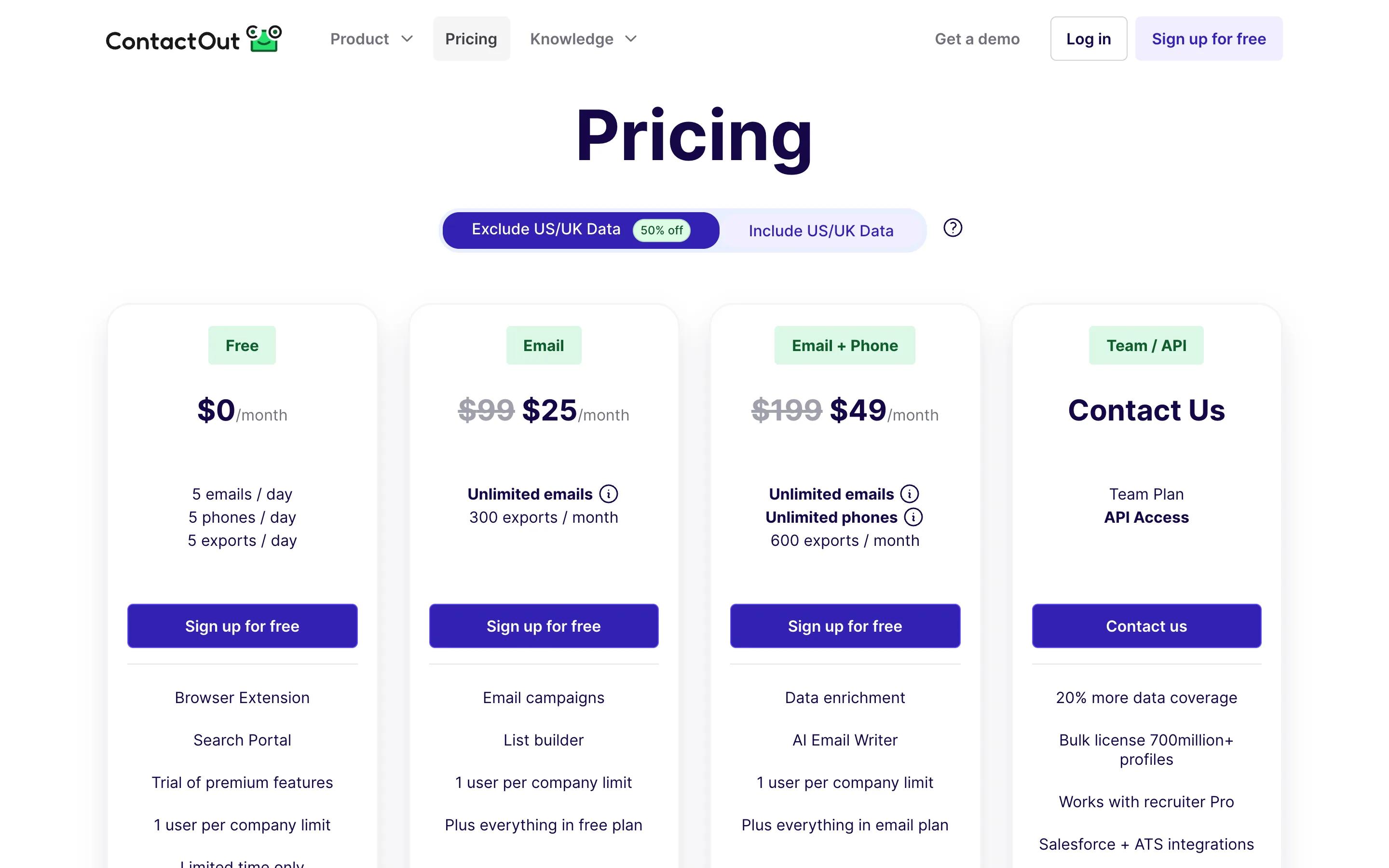
ContactOut pricing (USD) opens with Email $39/mo billed annually (a 2,000/mo fair-use cap, 3,600 exports/year), with Email + Phone at $79/mo annual. The export cap is the meter: Email + Phone works out to roughly $0.13 per exported contact, above Enrow's $0.017 per valid email, and it's a stored database with no verified-only billing, so a stale export still spends the cap.
vs Enrow: ContactOut is a recruiter's export database metered on exports; Enrow is a real-time sales data layer with EU phones, pay-per-valid billing at about $0.017 per valid email, and one-click full-contact CRM export.
11. Snov.io
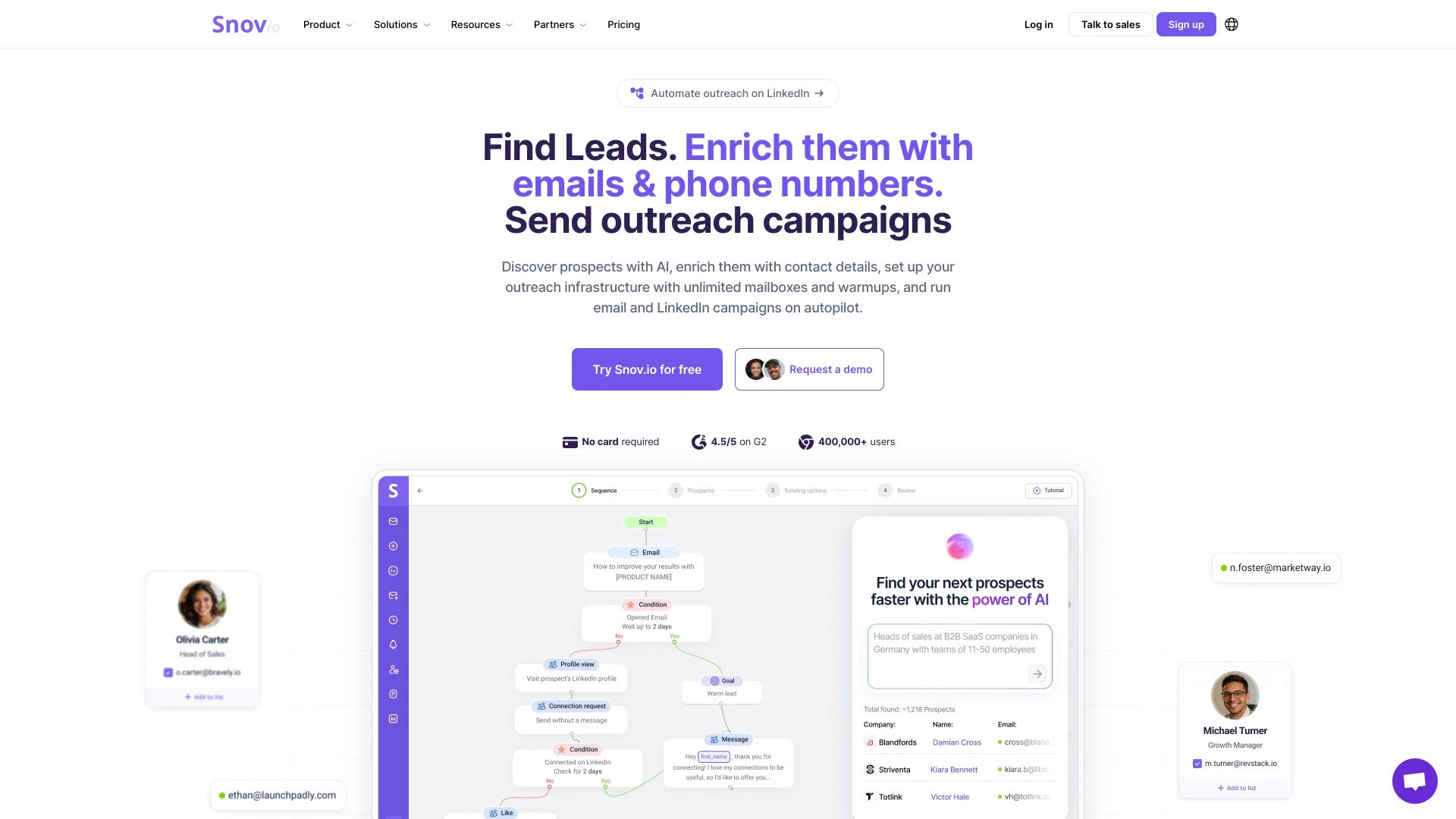
When you want to search, find, verify and send from one place, on the sticker-price.
Snov.io is a full sales-outreach stack: a searchable B2B database plus an email finder and verifier, backed by drip campaigns and a CRM, with LinkedIn automation built in. Next to ZoomInfo it's a self-serve, sticker-price all-in-one.
ZoomInfo sells enterprise data and signals; Snov lets a small team build the list and find-and-verify contacts, then run the sequence, all on a headline subscription. Its niche is the team that wants one tool instead of three and will trade some data depth for that breadth.
That trade is real. Snov leans on a stored index, and an index decays between refreshes, so finder accuracy on a live list trails the specialists, ZoomInfo's problem at a lower price.
A credit spends when you reveal or save a prospect from that database, not on a verified deliverable, so a stale row you reveal still costs you and then bounces.
You also pay for a lot of product you may never touch if all you need is verified emails, and there's no EU phone play here.
In Snov, the prospect search and campaign builder living in one tool made it easy to go from filter to first email. But a chunk of the found emails on my list needed a second verification pass. That's the database tax.
Enrow finds each contact fresh in real time, verifies it with 10+ checks, and adds the EU phones Snov skips. You give up the built-in sequencer, but for the data itself it's the cleaner, fresher source.
- +Searchable B2B database plus finder and verifier in one place
- +Drip campaigns, CRM and LinkedIn automation built in
- +Unlimited team seats on paid plans
- +Sticker-price, self-serve; annual billing knocks 25% off
- –Database-sourced data goes stale, so accuracy on a live list trails pure finders
- –It's a lot of platform if you only need verified emails
- –No EU phone coverage; LinkedIn automation is a paid add-on
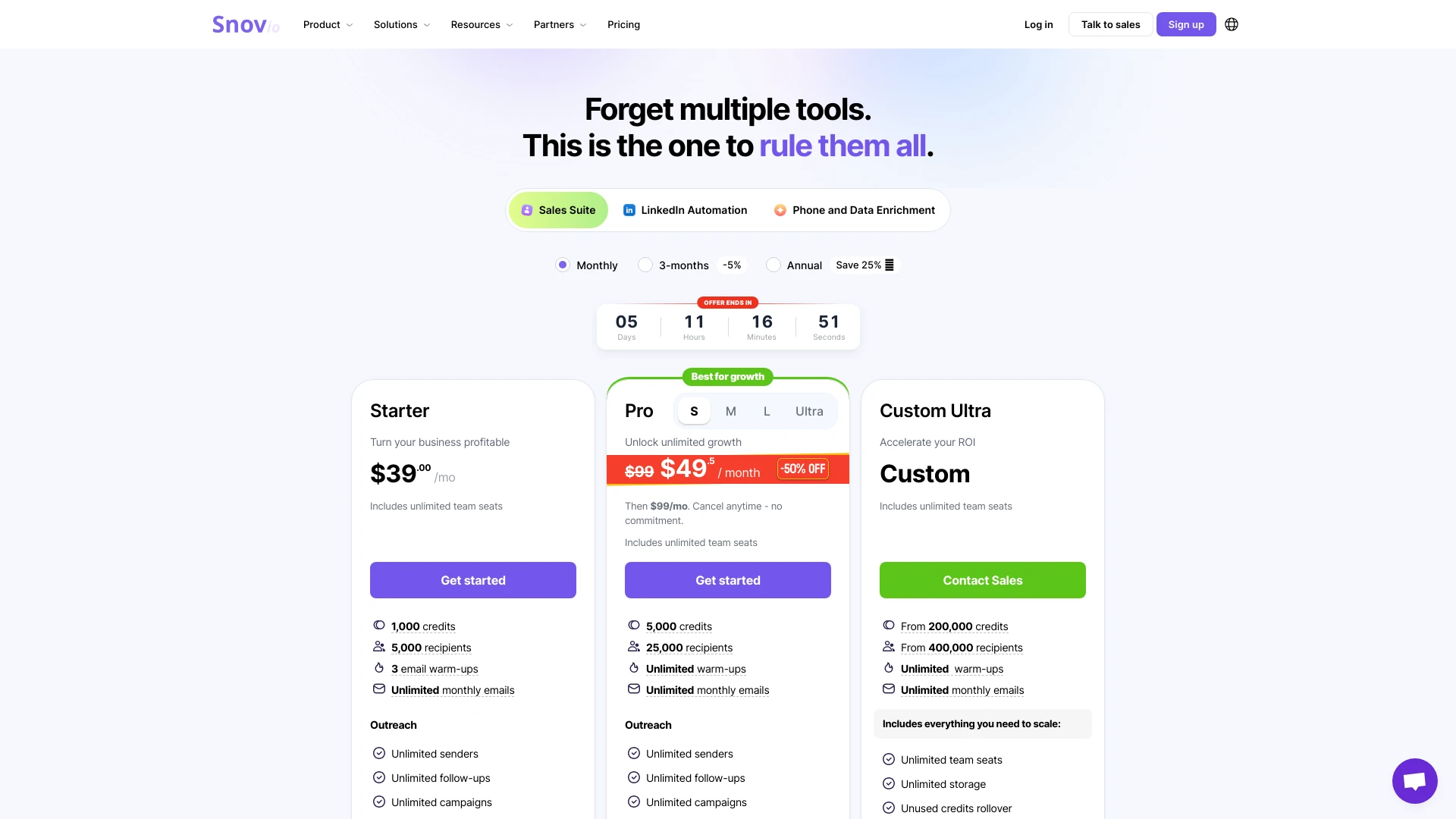
Snov.io pricing (USD) kicks off at Starter $39/mo for 1,000 credits (about $29/mo annual), but a credit spends on saving or revealing a prospect, not a verified deliverable. Take our working assumption of a ~30% find rate on emails, add stale-row bounce and no rollover, and each valid email costs more than three times the $0.039 sticker, several times Enrow's $0.017. Phones are a separate token add-on with no EU direct-dial story.
vs Enrow: on real cost per valid email Enrow's $0.017 sits well under Snov's, which runs past three times its own sticker once you strip the missed attempts and stale rows. Enrow finds each contact fresh in real time, only charges for a result that checks out, and adds EU phones Snov doesn't sell. Snov bundles a sender and a database Enrow doesn't; that's the trade.
12. Kaspr
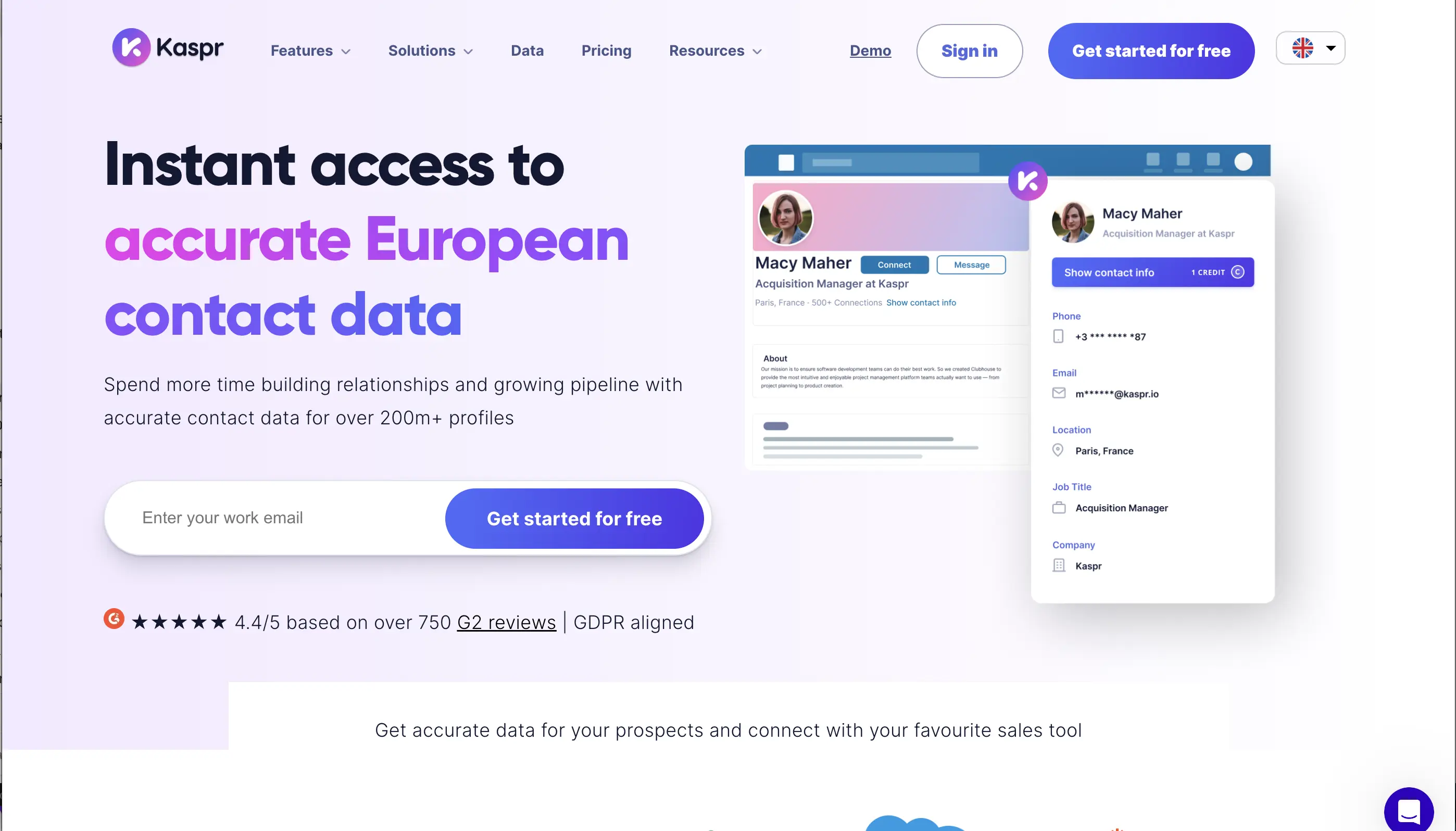
The LinkedIn-extension pick for reps who live in Sales Navigator.
Kaspr is a LinkedIn Chrome extension that pulls emails and phone numbers off profiles, with B2B email credits it markets as unlimited, though the terms fair-use cap them at 10,000 emails per account per month, plus a metered pool of phone and direct-email credits.
For a rep working a Sales Navigator list one profile at a time, it is fast and self-serve, with a headline sticker, which is the opposite of ZoomInfo's platform sell. It leans European, which some teams want, and it's owned by Cognism, so the data has a decent pedigree.
The limits show up at scale and on the meter. It's per user, so a team adds up.
Phone and direct-email credits are capped per seat, EU phone quality is decent but not documented the way it should be, and it's an extension workflow at heart, not a bulk data engine or an API-first tool.
Whether unsuccessful lookups burn a credit isn't clearly stated, which is exactly the ambiguity pay-per-valid removes.
Working a Sales Navigator list one profile at a time, Kaspr's extension is genuinely handy.
But Enrow finds and verifies in bulk and one-by-one, covers EU phones, bills clearly on valid results only, and drops the full contact into your CRM in one click rather than just surfacing it in a side panel.
- +B2B email marketed as unlimited, in practice fair-use capped at 10,000 per account per month
- +Fast LinkedIn Chrome extension for emails and phones
- +European coverage is a strength; self-serve and sticker-price
- +Free plan to start (15 email, 5 phone credits/month)
- –Per-user pricing that adds up on a team
- –Phone and direct-email credits capped per seat
- –Whether failed lookups are charged isn't clearly stated
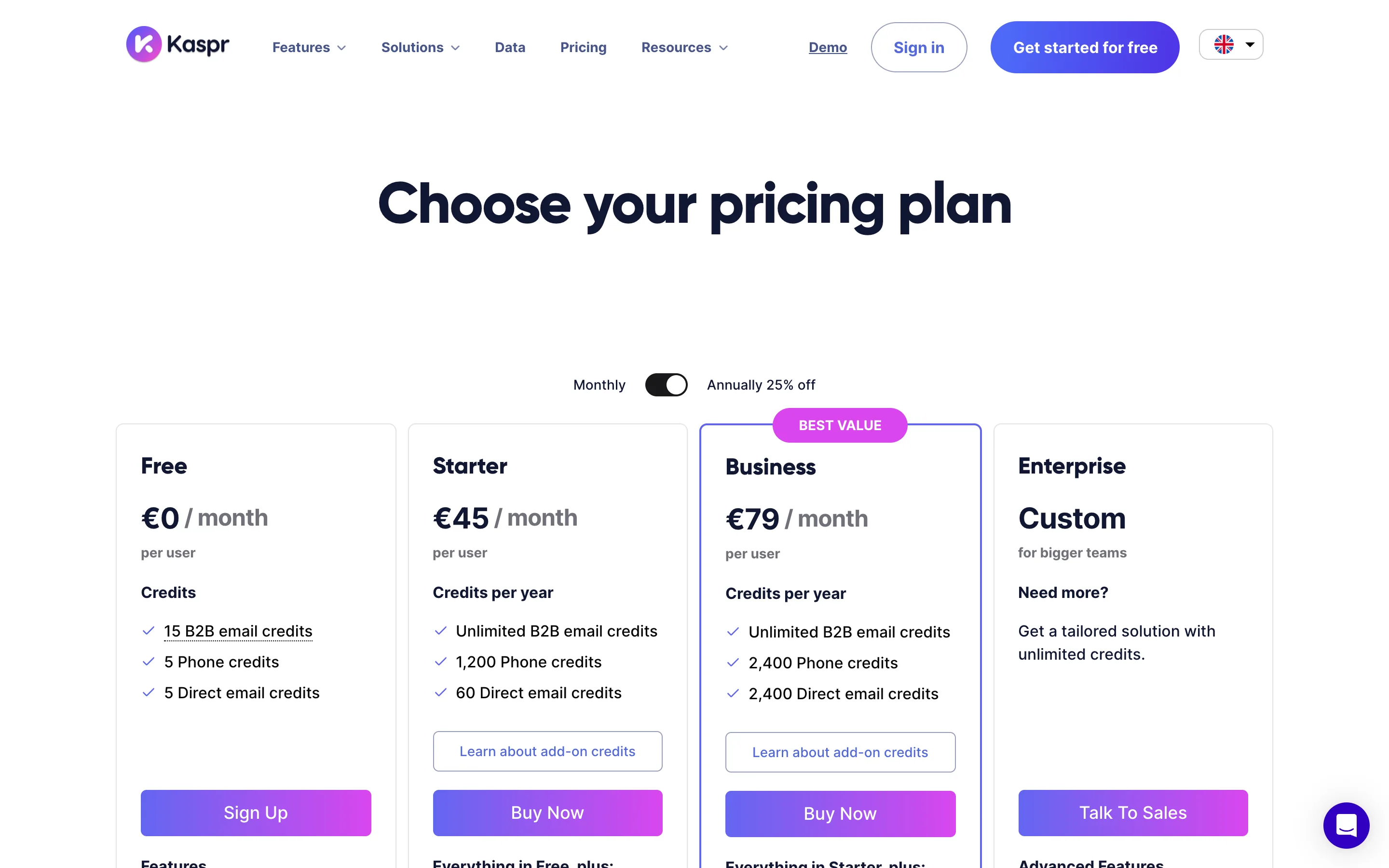
Kaspr pricing (in euros, per user) clocks in at Starter €59/user/mo (B2B email marketed as unlimited but fair-use capped at 10,000/account/month, 100 phone credits/month). There's no clean $/email meter, and its 100 phone credits work out to about €0.59 per phone only if you burn the full ration and every lookup lands, with failed-lookup charging unclear, while Enrow's Pro phone benchmark stays lower and never charges per seat.
vs Enrow: Kaspr is a per-seat LinkedIn extension with fair-use email and a metered phone ration; Enrow is a per-credit data engine with a real API, EU phones, one-click full-contact CRM export, and pay-per-valid billing that never charges for a miss.
13. Findymail
The clean pick if all you want is US cold-email addresses and honest billing.
Findymail is a B2B email finder built for outreach, and it bills the right way: on the found result, not the search, so a miss doesn't cost you. Point it at a LinkedIn list or a domain and it returns verified business emails.
On pure US email accuracy it's genuinely strong, one of the better finders in the category, and I'll say that plainly. Where ZoomInfo is a platform, Findymail is a focused, sticker-price finder that does one job well.
The wall is geography and reach. Findymail returns no phone numbers for EU contacts, GDPR closes that off for them, so for a Europe-focused team it's effectively email-only. Its phone numbers cover the US only.
And you're locked into a subscription where credit rollover caps at 2x your monthly allowance, so buy ahead for a big quarter and watch the surplus die at renewal.
Feeding Findymail a LinkedIn list, the pay-per-found meter kept the bill honest and the US email accuracy held up. But Enrow matches that billing and then adds what Findymail can't, GDPR-cleared EU phones, catch-alls delivered instead of dropped, and the one-click full-contact export into your CRM.
Same honest meter, wider reach.
- +Bills on the found result, not per search
- +Strong, accurate US B2B email finding
- +SOC 2 Type 2, GDPR compliant, EU-hosted
- +Native HubSpot, Salesforce, Pipedrive, Instantly and lemlist integrations
- –No EU phone data (GDPR); phone numbers cover the US only
- –Credit rollover caps at 2x your monthly allowance
- –Subscription-only, no meaningful free plan
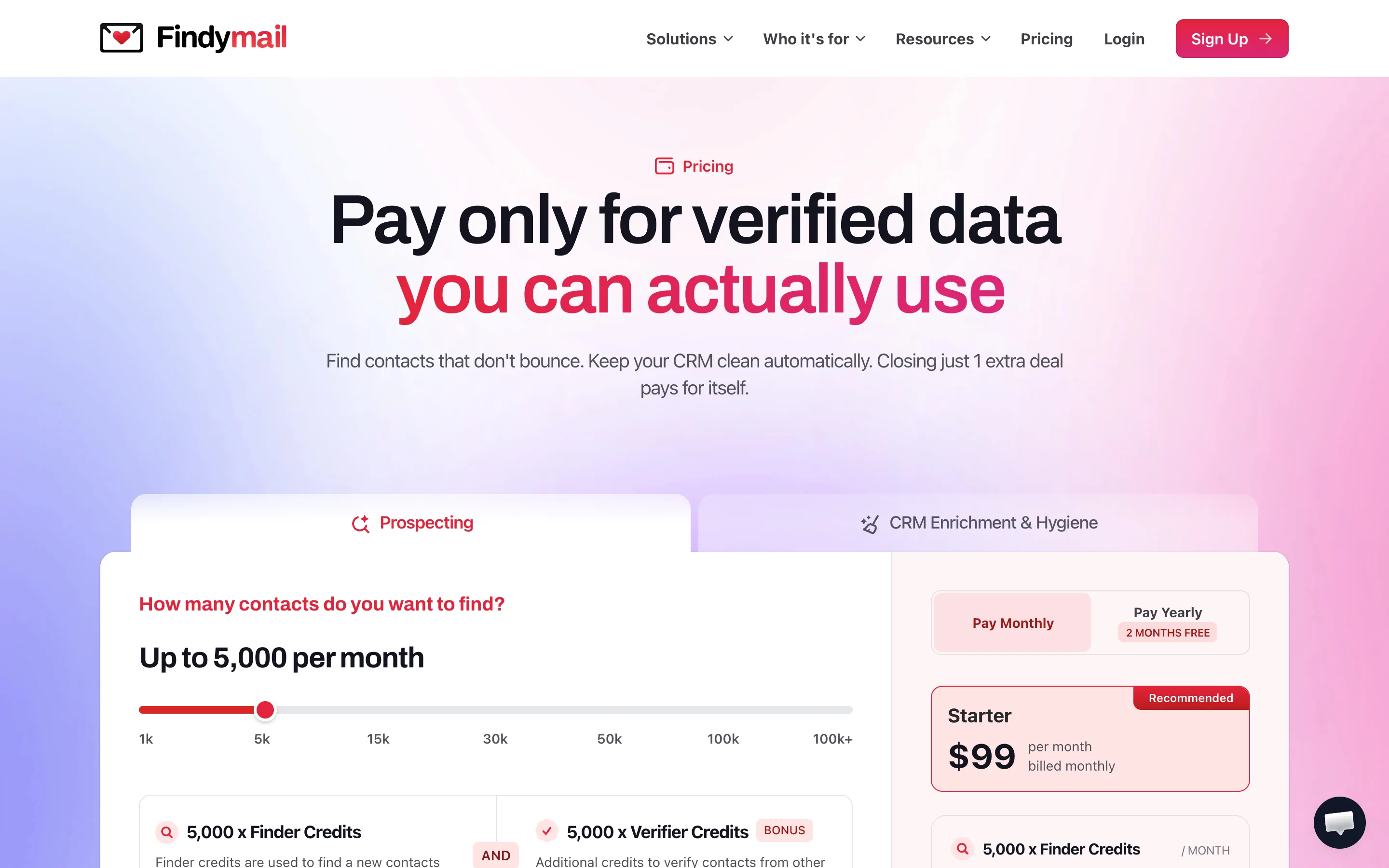
Findymail pricing (USD) starts from $49/mo for 1,000 finder credits (headline tier $99/mo for 5,000), billed only on a found result, so the sticker tracks the real cost. That's about $0.049 per valid email, roughly 2.9x Enrow's $0.017 for the same 1,000, and it never beats Enrow at matched volume. A phone costs 10 credits, but Findymail returns zero EU mobiles (GDPR), so that figure never applies on a European list.
vs Enrow: both bill on results, but per valid email Enrow is cheaper at every volume, roughly 2.9x at the 1,000-email entry ($0.017 vs $0.049). Enrow also adds GDPR-cleared EU phones Findymail can't return, delivers catch-alls instead of dropping them, and does the one-click full-contact CRM export, opening at $17 where Findymail's floor is $49.
Don't take my word for any of it. Point Enrow at your own ZoomInfo target list and read the bounce rate yourself. 50 free credits every month, recurring, no card.
Side-by-side comparison
Final Verdict
Strip ZoomInfo to the part most teams actually use, accurate email and phone data, and Enrow does it for a fraction. Self-serve from $17/month against a twelve-month term that starts at $3,000 and climbs into five figures, found fresh in real time, with nothing billed until a result is valid, about $0.0087 per valid email on Pro. Both bill on the record you keep, so the comparison is clean: $0.38 for one ZoomInfo record at gtm.ai's $1,000 tier, mobiles excluded, or $1.50 an export on its cheapest platform contract, against $0.017 for a valid Enrow email or about $0.70 for a full contact with a European mobile. No seat, no year, no credits expiring on renewal day. And the workflow piece: one click turns a LinkedIn profile into the full verified contact, phone included, already in your CRM, without a detour through another tool or push rules to configure. Enrow isn't ZoomInfo, though, no database, no intent, no org charts, no sequencing. An enterprise running on those signals is buying a different product. But if you're mostly paying enterprise money for the email and phone data, that's the spend Enrow replaces.
Don't take my word for any of it. Point Enrow at your own ZoomInfo target list and read the bounce rate yourself. 50 free credits every month, recurring, no card.
FAQ
How we evaluated these tools
No sponsor bought a spot here and no link on this page pays me a cent, so the order answers to the test, not a paycheck. I ran it myself: one list of real B2B targets, pushed through every tool in the same week, then fired at a live inbox to see what actually bounced. Four things set the ranking — match rate, bounce on that live send, real cost per valid contact once the billing tricks come off, and geographic reach, with legally-sourced EU phones counting most. Pricing and features come from each vendor's own pages as read on 2026-07-02, with ZoomInfo, Seamless.AI and Apollo checked again on 2026-09-30 and Lusha on 2026-10-05.
¿listo para dejar de perder el tiempo?
Conectado en minutos.
Data verificada en segundos.
sin tarjeta
sin configuración