lusha alternatives
Top 8 Lusha Alternatives & Competitors in 2026
The yardsticks are the ones that actually decide a phone budget: phone match rate, how many revealed numbers connect versus bounce, real cost per valid phone rather than per credit, and geographic reach, legally-sourced EU direct dials above all. One list. Every tool, same week.
9 tools tested
updated October 2, 2026
15 min read
Actualizado el 2 de octubre de 2026
The alternatives at a glance
Enrow is the best overall Lusha alternative for teams that dial and want GDPR-cleared EU direct dials with nothing charged unless the number is valid. Plans start at $17/month, and Pro works out to about $0.35 per valid phone ($87 for 10,000 credits = 250 phones). Cognism is built for a different buyer — the enterprise that wants a giant browsable EMEA database and will sign an annual quote for it. Kaspr is the Lusha-style LinkedIn-extension route with stored-data caveats for SMB; RocketReach and SignalHire cover wide reach across roles and recruiting; Wiza handles Sales Navigator list exports; Apollo bundles the whole find-and-send suite; LeadMagic fits a code stack. Each owns a niche below; none beats the overall pick.
Lusha pulls a direct dial off a LinkedIn profile in two clicks. That's the draw.
The catch is the meter and whether the number rings: a phone reveal costs 5 credits, so a 400-credit Starter plan works out to about 80 phones a month, and each revealed number is a stored database row that can be stale. Its own pages cite 86% phone accuracy with no regional split, and its docs call coverage stronger in English-speaking markets; reps report it sliding hard in continental Europe. The best Lusha alternative for teams that dial is Enrow — a real Direct Phone Finder with GDPR-cleared EU direct dials, found and verified in real time. You only pay when the number checks out, from $17/month.
A phone is 40 credits charged only on a valid result, so at Pro that's about $0.35 per valid phone ($87 for 10,000 credits = 250 phones). Then the workflow. Enrow's Chrome extension pushes the full contact from a LinkedIn or Sales Navigator profile straight into HubSpot, Salesforce or Pipedrive in one click, every field filled and the email and phone verified live at the moment of export, EU direct dial included. Enrow is #1; the alternatives below each win a narrow niche, with Lusha itself kept as the baseline to measure against. None is the better overall buy.
Why teams look for Lusha alternatives
Plenty of reps stay on Lusha's quick extension; the ones who leave cite three things most often. If your calling is mostly US/UK and you value the extension speed above all, Lusha can hold. If you dial into Europe, or you're tired of paying to reveal numbers that bounce, keep reading.
Conflict of interest disclosure
Let me be direct about the setup. Enrow finds and verifies phones and emails, this piece ranks phone finders, and I've ranked mine first — I own it, so weigh the rest accordingly. Now the limits, said out loud.
Enrow isn't a searchable database; if you want to browse and filter millions of contacts by title and region, Cognism, Lusha, RocketReach and Apollo all give you that and we don't.
We don't run outreach sequences either — Apollo does, and for cadences I'd send you to Emelia, La Growth Machine or lemlist. No technographics, no intent signals.
Those are boundaries we drew on purpose, and I won't pretend the database tools secretly resell our data or that we quietly match everything they ship.
Where I won't budge is the narrow thing Enrow is built to do well: return the freshest, most accurate emails and phones, and stop there. A browsable database, a sequencer, or one suite that does it all isn't what we build.
A tool below suits you better and I'll happily point you at it. But if the job is a European direct dial that actually connects, sourced legally and priced so a miss costs nothing, that focus is exactly why Enrow exists.
The 8 best Lusha alternatives
1. Enrow
#1
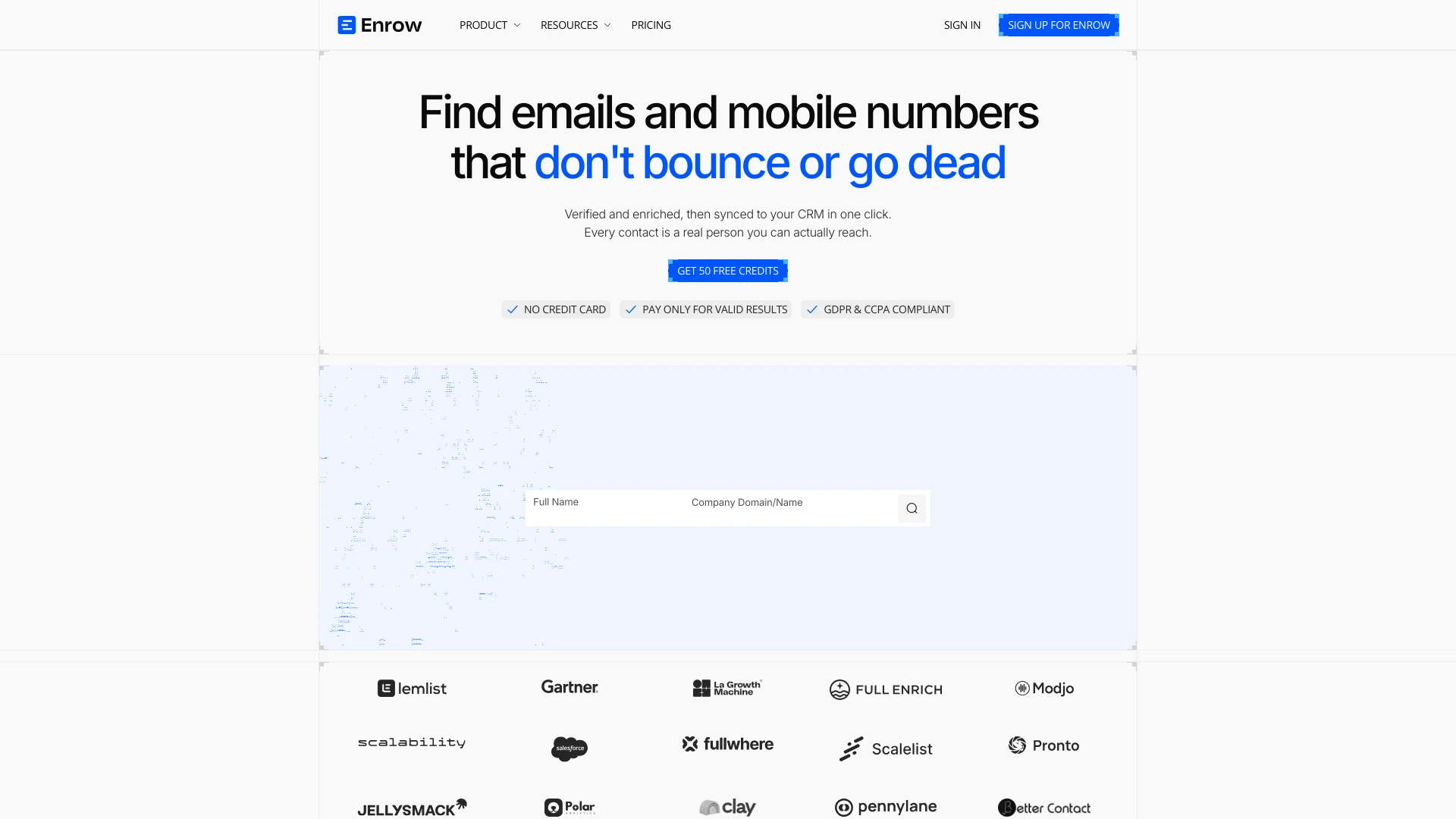
The tool I built because I was tired of paying to reveal numbers that turned out wrong.
The split with Lusha starts with where the number comes from.
Lusha reveals a row from a stored database, a snapshot taken whenever that record was last touched. Enrow finds and verifies each direct dial in real time, on the spot, so you're not calling a number someone abandoned two carriers ago.
That's not a marketing distinction; on a live European list it's the difference between a phone that rings the right desk and one that dead-ends. And Enrow sources EU mobile and direct-dial numbers, the exact geography where Lusha's accuracy slides.
Then there's what a phone costs. Lusha bills a reveal at 5 credits whether the number is good or not. Enrow prices a phone at 40 credits, and the meter only ticks if the number turns out valid, so a miss costs nothing.
Do the arithmetic at the same volume and it lands in Enrow's favor. For 250 phones a month, billed monthly, Enrow Pro is $87 (10,000 credits, about $0.35 per valid phone, no seat fee, unused credits rolling over). Lusha needs Pro topped up to 1,400 credits, $159.90 a month for 280 reveals, and some of those rows won't connect. You stop paying to find out a number is dead.
Emails come off the same engine. Enrow runs 10+ verification checks on every address, multiple SMTP passes and catch-all checks across servers in different regions, before it counts as valid, and catch-alls get delivered rather than flagged "risky" and dropped.
On my live send bounce sat under 1% (observed average, not a contractual promise) and discovery ran around 60% on a mixed list.
And there's the workflow edge. A rep sitting on a LinkedIn or Sales Navigator profile hits Enrow's Chrome extension once, and the full contact, every field, email and direct dial verified at that moment, lands in HubSpot, Salesforce or Pipedrive. No copy-paste. No checking first whether the person is already in there either, because the push is a create-or-update: an existing record gets the new number written onto it, a new name gets its own card.
Lusha's extension pushes to a CRM as well, to about ten of them, and creates or updates the record depending on an admin's settings. It sends the stored database fields it revealed. Enrow sends a contact checked live at export, EU direct dial included.
One more, for the AI-agent crowd. Enrow ships an official MCP server and API (the repo is github.com/EnrowAPI/enrow-mcp), so you can call the email finder, verifier and Direct Phone Finder straight from Claude, Cursor or Windsurf. Fresh, verified phones pulled into an agent workflow, still pay-per-valid. Small thing today.
Handy if you're building.
- +GDPR-cleared EU direct dials, found and verified in real time
- +Nothing is charged for a miss; only a valid result draws down the balance
- +10+ verification checks per email; catch-all verified and delivered, not dropped
- +The Chrome extension exports the full contact, every field verified live at export, from a LinkedIn or Sales Navigator profile into HubSpot, Salesforce or Pipedrive in one click, as a create-or-update
- +Native CRM integrations: Clay, HubSpot, Salesforce, Pipedrive, plus webhooks, a strong API and an official MCP server
- +Credit rollover on Pro and Scale; no per-seat fees, and up to 10 team members on Pro, unlimited on Scale
- –No searchable database, and that's the design. A stored list goes stale, so you end up dialing people who already moved on; Enrow fetches and checks each number live, which is why the hit rate holds up. Source your lists in LinkedIn or Sales Navigator.
- –No outreach sequencing, and it's not coming. Run your cadences in Emelia first, then La Growth Machine, then lemlist.
- –No technographics or intent data. You get LinkedIn-level company detail, nothing on tech stacks or buying signals.
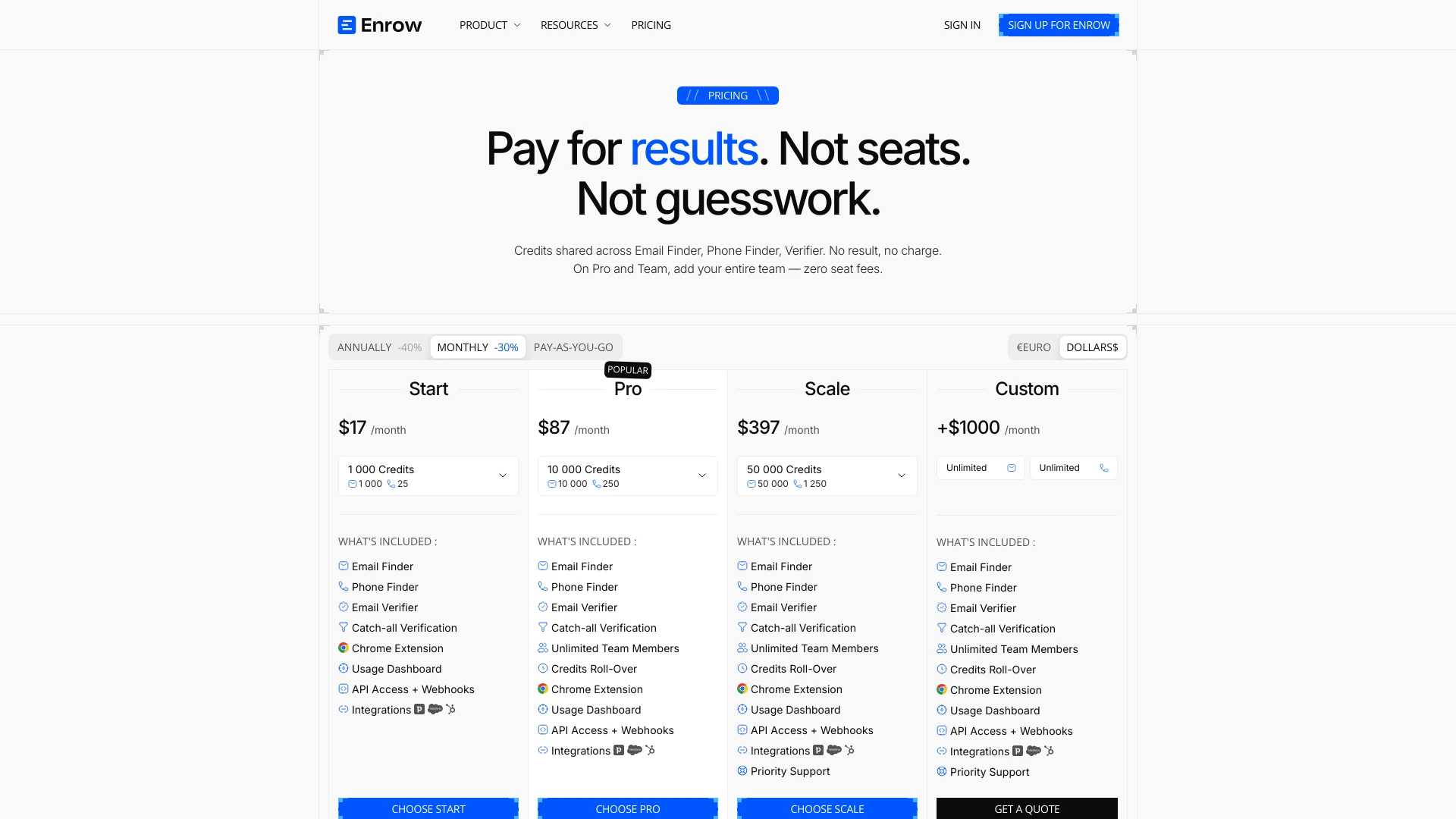
Three subscription tiers. Start from $17/mo (1,000 credits, monthly only) and $47 for 4,000. Pro from $87/mo (10,000 credits), $167 for 20,000, $247 for 30,000. Scale from $397/mo (50,000 credits) up to $1,397 for 200,000.
Take annual on Pro or Scale and roughly 10% comes off, so 10,000 lands near $78/mo and 50,000 near $357/mo. The credit math: 1 email is 1 credit, a phone is 40, verification 0.25, catch-all folded in, and the meter only moves on a valid result.
That puts a 10,000-credit plan at 10,000 emails or 250 phones. Balances roll over on Pro and Scale. Free: 50 credits every month, no card.
A credit only spends on a valid result here, so the number on the price page is already the real number. The cleaner comparison base is Pro: $87 for 10,000 credits, meaning 10,000 valid emails at about $0.0087 each or 250 valid phones at about $0.35 each. Start remains the smaller $17 entry tier.
Hold the phone number, because every tool below either bills to reveal a number that may bounce or gates phones behind a pricier tier, and more than one turns unreliable once you're calling into Europe. That's where the gap opens.
Don't take my word for the phone numbers — feed Enrow a slice of your own dial list and watch what validates. 50 free credits, refreshed every month, no card.
2. Cognism
Built for a different buyer: the enterprise that wants a browsable EMEA database.
Cognism is the tool built for the exact weakness in Lusha's phone story: compliant, verified EMEA mobile data at scale. Its Diamond Data set is human-verified cell numbers, and Diamonds on Demand lets their research team source and verify a number on request.
Where Lusha's European accuracy slides, Cognism is the strongest database answer, with real GDPR and CCPA processes behind it. For a large sales org dialing across the UK, DACH and the Nordics, that compliance and phone verification is the reason it wins deals.
The cost of that is exactly what you'd expect: it's an enterprise database, sold annual and by quote. Third-party estimates put it at a ~$15K-25K/year platform fee plus roughly $1,500-2,500 per seat/year, so a typical 5-seat team lands around $22,500/year and up, with the Elevate tier well into five figures.
There's no self-serve free tier, no light monthly plan, and you're buying seats and a data package, not a pay-per-valid meter. And it's still a stored database, so a share of records drift out of date.
Credit where it's due: Cognism's phone-verified mobiles were the best database phones I tested, and across EMEA they connected. Then the split with Enrow.
Cognism is a large compliant database you commit to annually; Enrow fetches and checks each number live and keeps the meter still until a result is valid, no seat math, a $17 floor. Different shapes. A browsable EMEA database at enterprise scale is Cognism's turf.
Numbers priced strictly on what turns out valid, with full-contact export straight to your CRM, is Enrow's.
- +Phone-verified mobile numbers (Diamond Data), the strongest compliant phone set I tested
- +Genuine GDPR/CCPA processes, strong for EMEA outreach
- +Large database with intent data and sequencing add-ons
- +Diamonds on Demand can source a specific number on request
- –Enterprise pricing only, by quote; a typical 5-seat deal is estimated around $22,500/year and up
- –No self-serve free tier or light monthly plan; you buy seats and a package
- –Still a stored database, so a share of records go stale
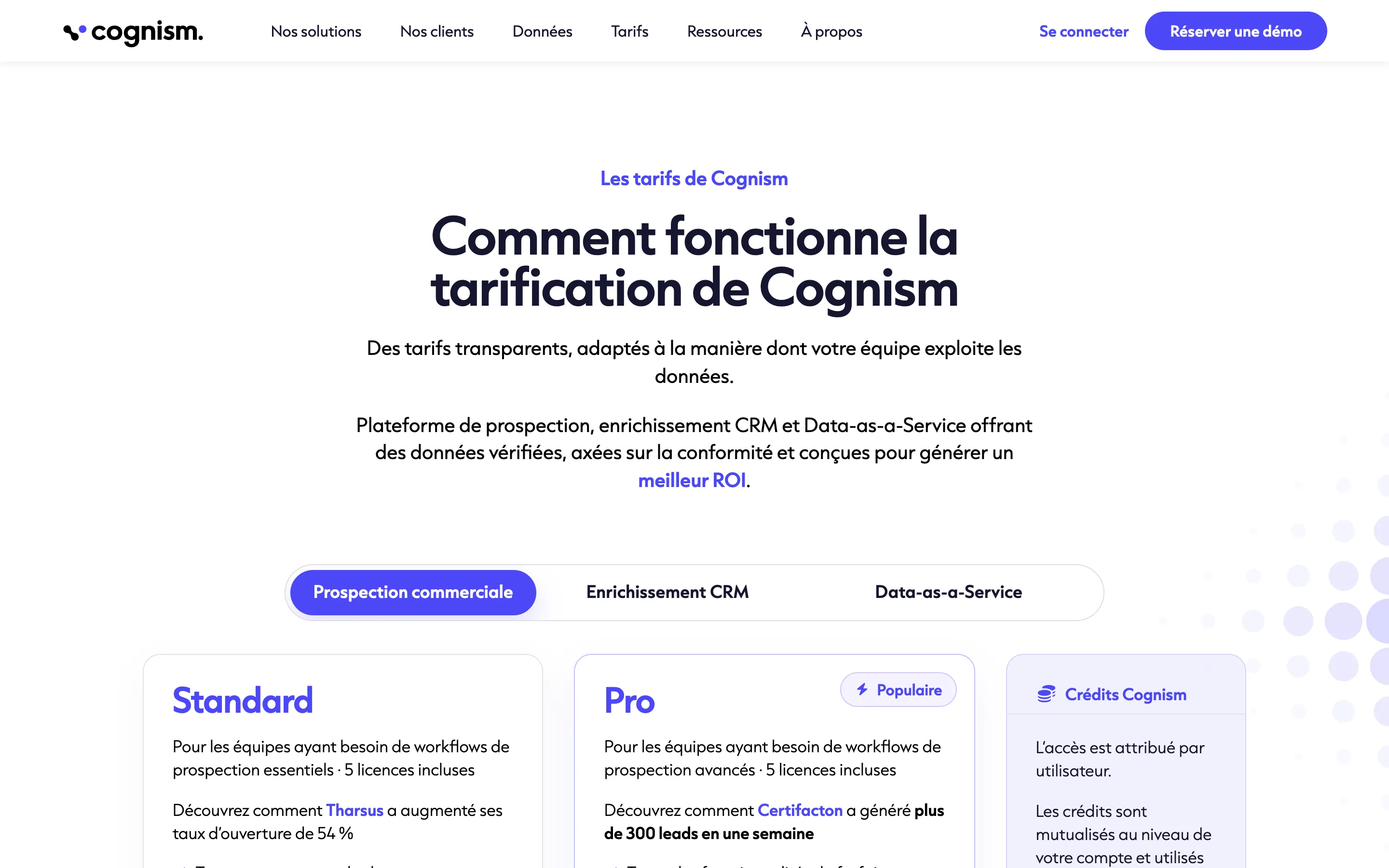
Cognism pricing is custom only, billed annually by quote — third-party estimates put a typical 5-seat deal around $22,500/year and up. There's no per-credit rate, so no clean $/valid-phone; on that mid-market deal the effective cost per usable mobile sits comfortably above Enrow's $0.35 Pro benchmark once you divide the annual fee by realistic volume.
vs Enrow: Cognism wins raw EMEA depth and human-verified mobiles at enterprise scale, but Enrow finds each number live and only charges for the hits, with no annual commitment, no seat fees, a $17 floor, and one-click full-contact CRM export Cognism doesn't match.
3. Lusha
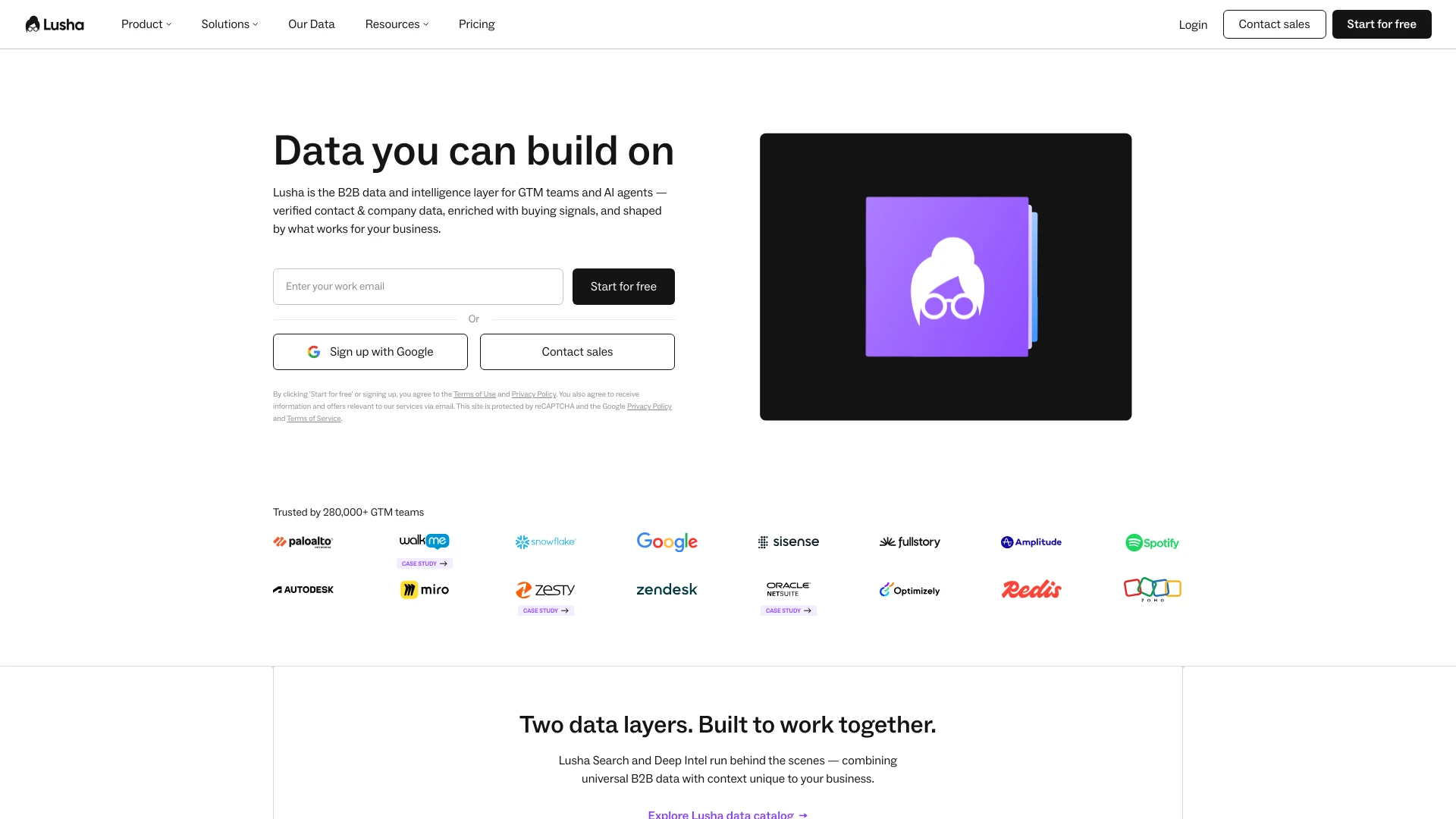
The tool this article is measured against, so here it is on its own terms.
Lusha does one thing quickly: click the extension on a LinkedIn profile and it reveals a work email, often with a direct dial or mobile, straight from its database. That speed is real, and it's why reps like it.
The database is broad, and the integrations into HubSpot, Salesforce and Pipedrive are there too. The free tier lets a new user try it without a card, and for US and UK calling, a lot of the numbers land.
Two things eventually push callers out: the phone economics and the freshness. A phone reveal costs 5 credits, so the credit counts on the pricing page divide by five the moment you're dialing. A 400-credit Starter plan is about 80 phones a month.
Every revealed number is a stored row that may be stale. Lusha's 86% phone-accuracy claim carries no regional split, its docs say coverage is stronger in English-speaking markets, and practitioners report it weaker across continental Europe and APAC. You pay to reveal whether the number is good or not.
Honestly, for a US rep who wants a number in two clicks, Lusha is fine, and I'd say so. The trouble is the parts that matter most to a European caller.
Enrow finds and verifies each EU direct dial in real time and only charges when the number turns out valid, so a number that fails verification is never billed.
Same two-click speed from the extension, and what reaches your CRM is the whole contact verified at the moment of export, not the stored fields of a reveal.
- +Fast, well-designed browser extension; a number in two clicks
- +Broad B2B database with solid US/UK/Canada coverage
- +Native HubSpot, Salesforce and Pipedrive integrations
- +Free tier with no card
- –Phone reveals cost 5 credits each, so real phone volume is a fifth of the headline credits
- –Stored-database rows go stale; you pay to reveal whether the number is valid or not
- –Accuracy slides outside the US/UK/Canada, continental Europe and APAC especially
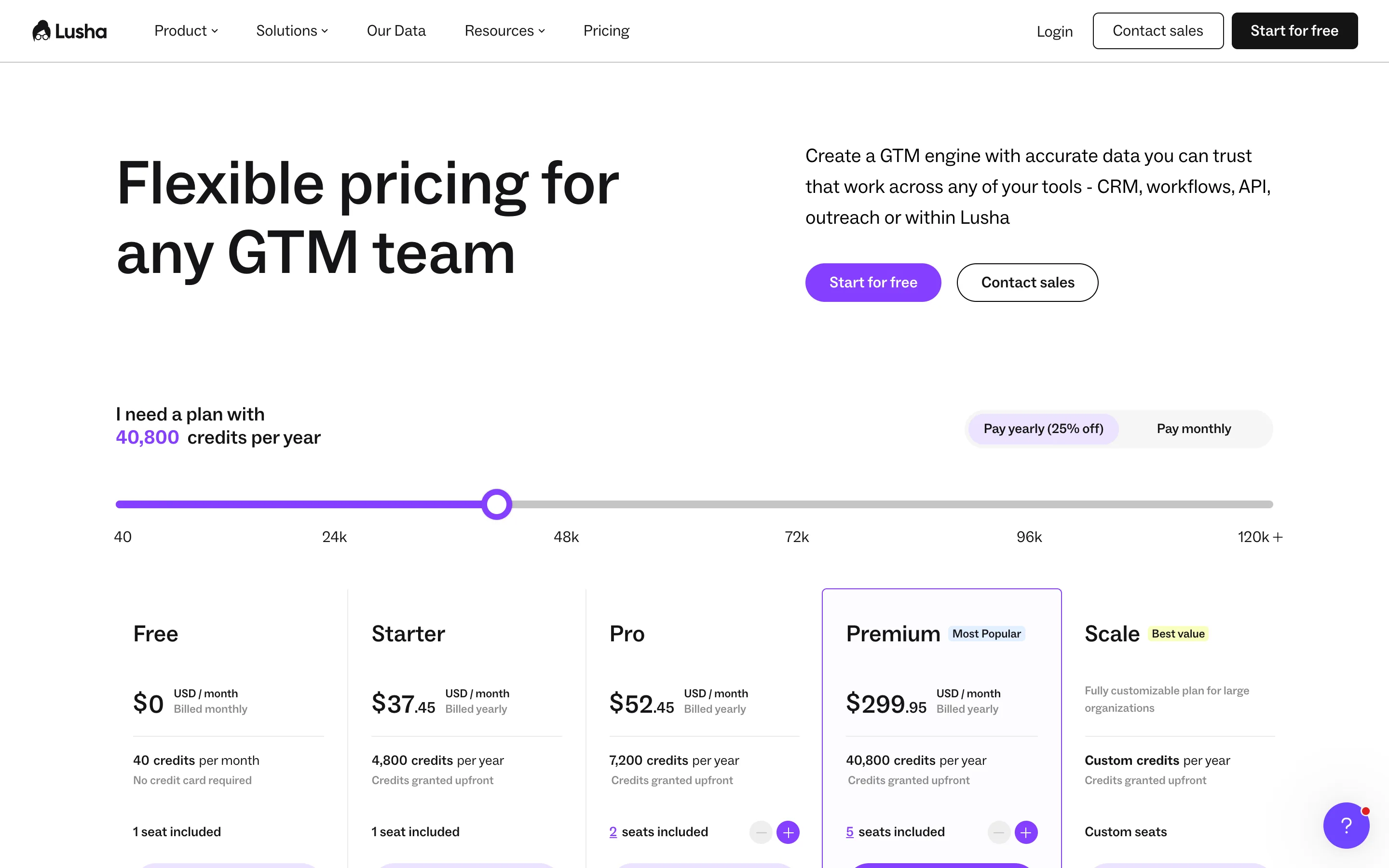
Lusha pricing (USD) is billed per account, with sales stepping in beyond five users. It starts at $49.90/mo for Starter (400 credits, $37.45/mo billed annually), with a free 40-credit tier; Professional is $69.90 for 600 credits ($52.45 annually) and Premium $399.90 for 3,400 ($299.95). One credit reveals an email, a phone reveal costs 5, and email plus phone together up to 6 — so on monthly billing Starter's 400 credits buy 80 phones at about $0.62 each, and after the stale rows that don't connect (worse in Europe) the real Starter number lands near $0.89-1.25 per valid phone. Hold the volume and billing period equal and Enrow stays well ahead: 250 phones a month on monthly billing means Lusha Pro at 1,400 credits, $159.90/mo, about $0.82-1.14 per valid phone, against $87 for Enrow Pro ($0.35 per valid phone), which bills only the valid numbers, charges no seat fee and rolls unused credits over. Lusha's monthly plans carry unused credits over up to twice the allowance; annual plans reset them at the end of the cycle.
vs Enrow: Enrow only spends a credit when the number checks out valid, where Lusha charges to reveal a stored row regardless, so at 250 phones a month its ~$0.35 sits well under the ~$0.82-1.14 of Lusha Pro. Enrow also finds each number fresh, covers EU direct dials where Lusha weakens, and exports the full contact to your CRM in one click. Lusha ships a browsable database Enrow doesn't; that's the trade.
4. Kaspr
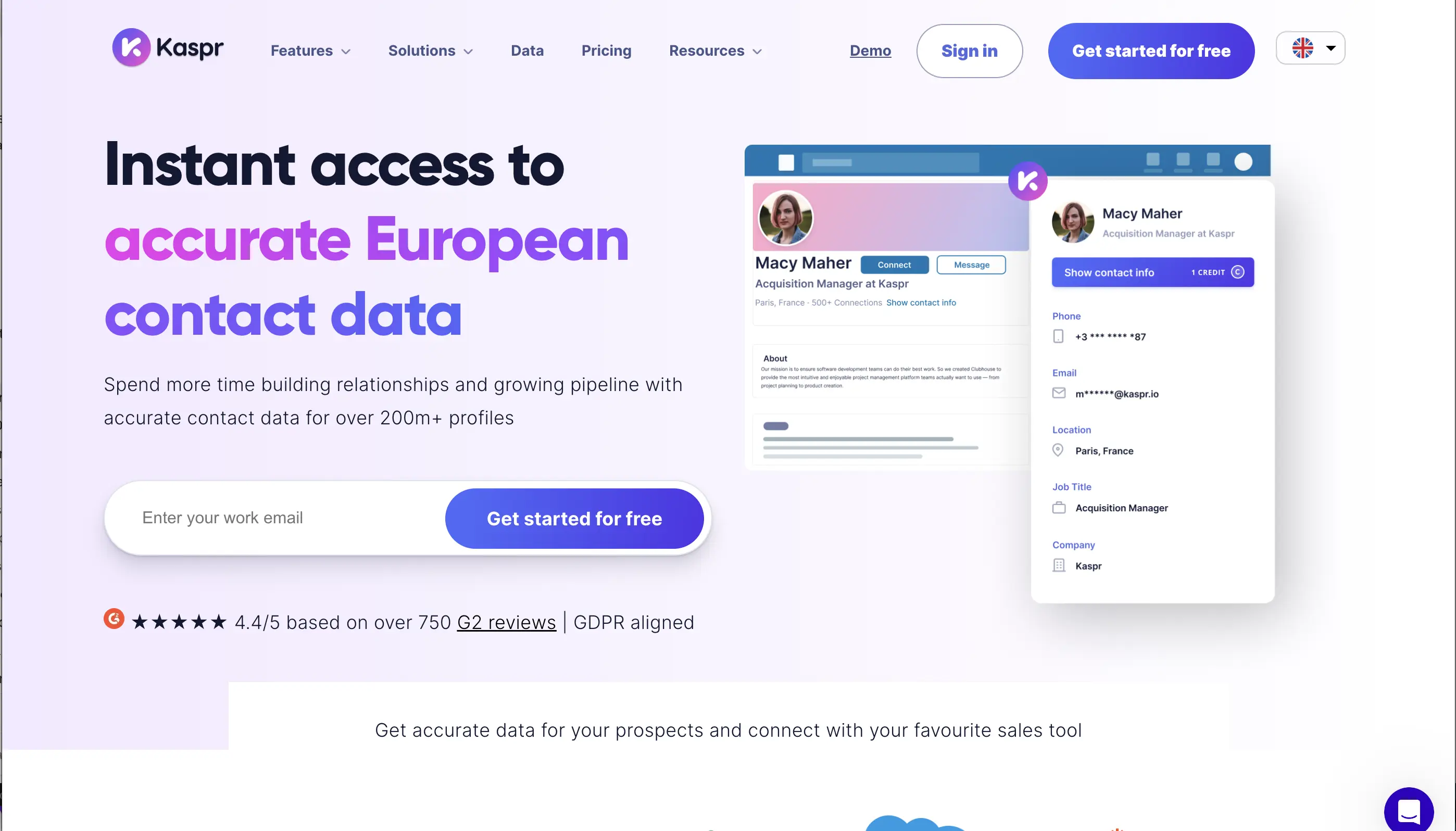
The SMB LinkedIn-extension pick, and a close cousin of Lusha.
Kaspr is a LinkedIn extension in the same mold as Lusha: land on a profile and reveal a phone and email from its database, then push it to your CRM.
It leans European in its data and meters phones on a separate phone-credit allowance, which is its whole pitch before the stored-reveal haircut.
For a small team that works LinkedIn and wants numbers without an enterprise contract, it's a simple month-to-month entry, and the free plan (with an invite mechanic) gives you a handful of phone credits to try.
The limits echo Lusha's, only scaled down. It's a stored database, so numbers age and accuracy wobbles, and though it markets EU coverage, the verification depth trails a purpose-built phone engine. Credits and plan ceilings are modest, and heavy dialers outgrow it fast.
And it's a reveal tool, so you pay whether the number connects or not.
A week in, the appeal was clear: the setup is light and the extension is quick, a sensible way for an SMB to try outbound calling. Then the ceiling.
Enrow verifies each EU direct dial live. A credit only spends once the number is confirmed, and your CRM gets the full contact card instead of a single revealed field.
Kaspr works if LinkedIn speed is the whole brief; for European numbers you can trust, priced so a bad one never costs you, Enrow is the sturdier pick.
- +Month-to-month plans, aimed squarely at SMB
- +Fast LinkedIn extension with EU-leaning data
- +Free plan with a few phone credits (via invite mechanic)
- +Native CRM and Zapier integrations
- –Stored database, so numbers age and accuracy varies
- –Reveal billing: you pay whether the number connects or not
- –Modest plan limits; heavy dialers outgrow it
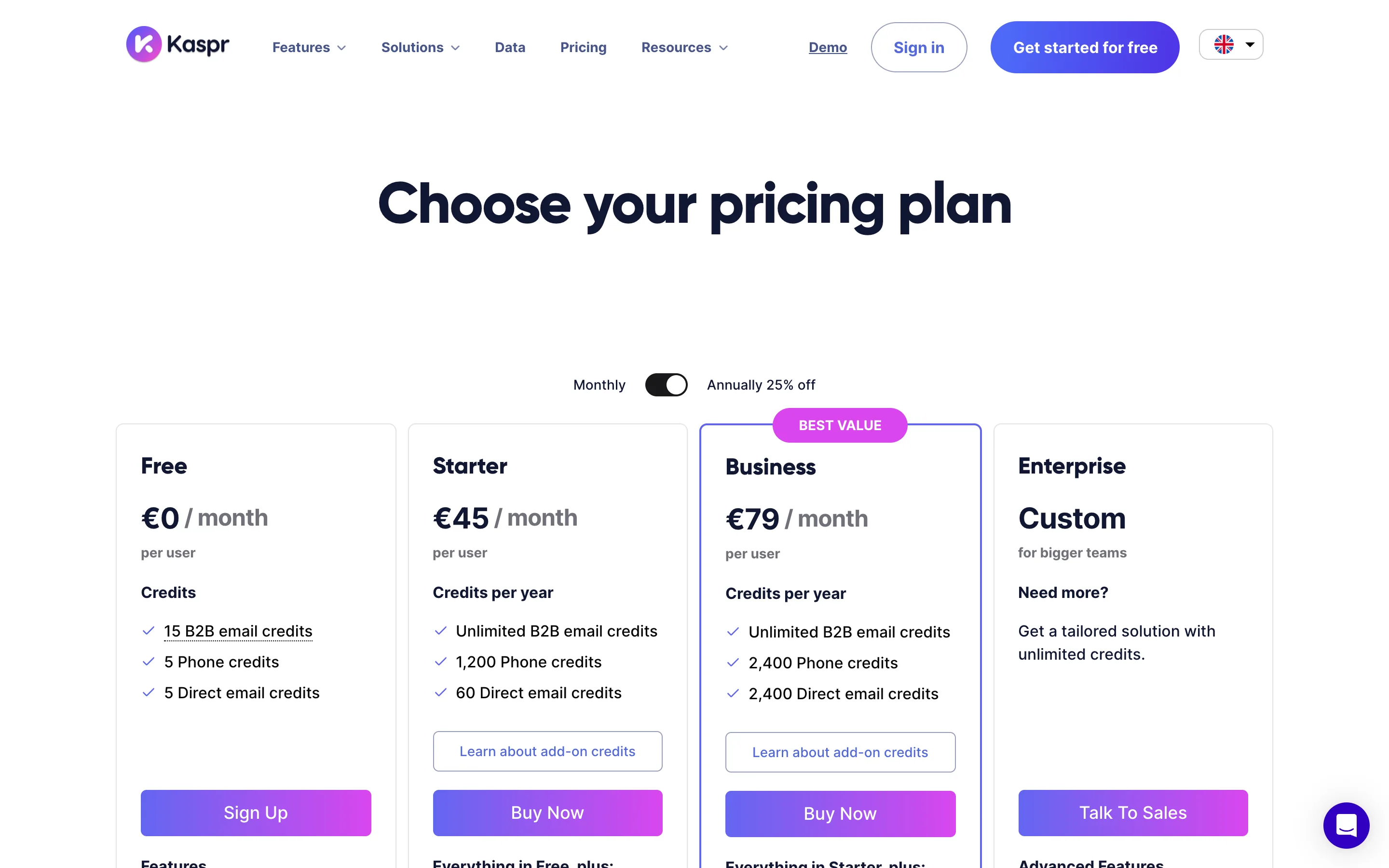
Kaspr pricing (in euros, per user) starts at €59/user/month for Starter, with 100 phone credits a month and a limited free plan (5 phone credits). It charges to reveal a stored row whether it connects or not, so ~€0.59 per revealed phone on the sticker becomes near €0.84-1.18 per valid phone once you strip the stale rows — squarely in Lusha's range.
vs Enrow: Kaspr is a Lusha-style extension for SMB, with EU-leaning data and a phone-credit plan, but underneath it's the same stored database billed the moment you reveal. Enrow flips that: live-verified EU dials, priced so only the valid ones cost you anything, then the whole verified contact drops into your CRM in a click.
5. RocketReach
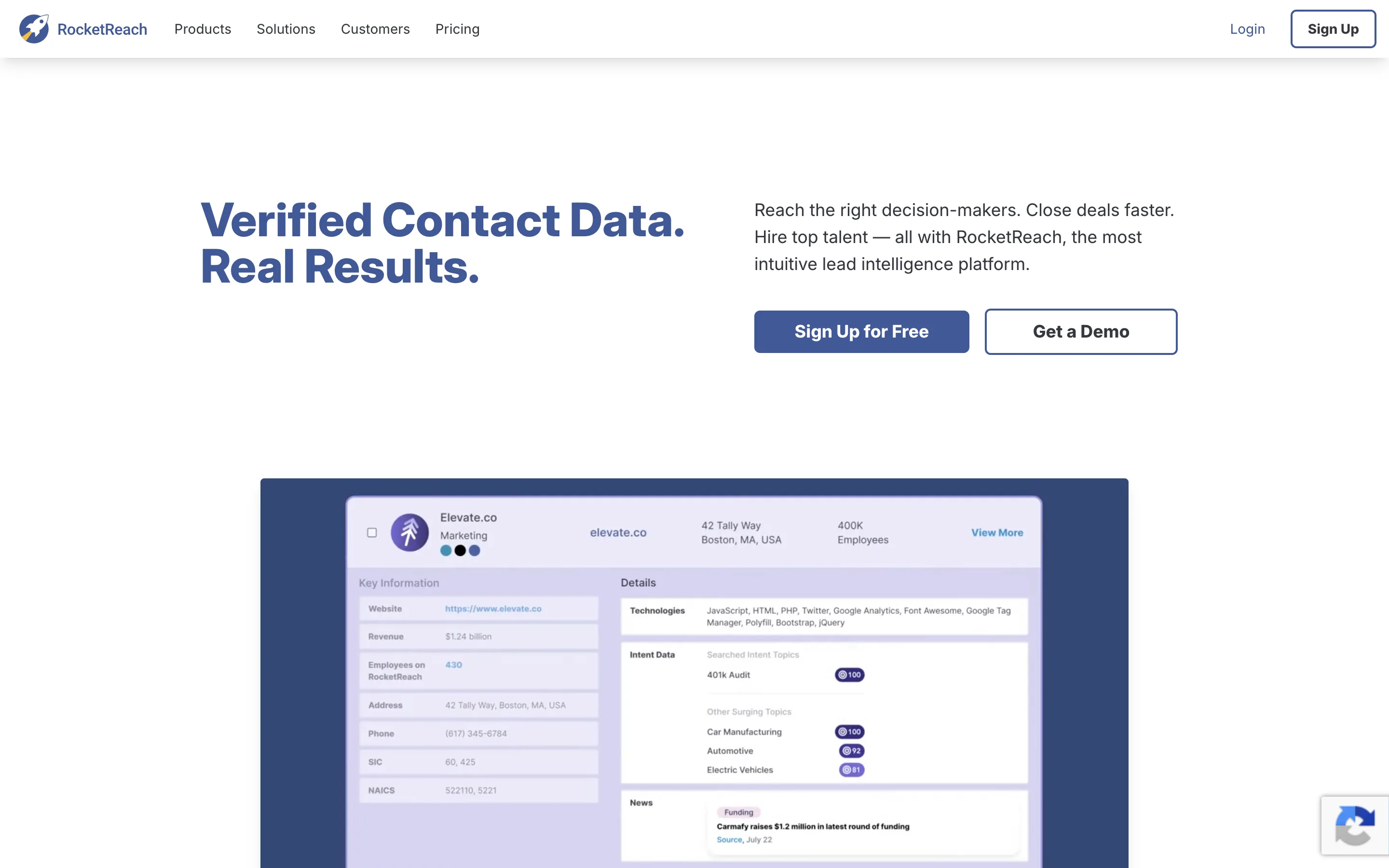
Worth a look if database breadth matters more to you than EU phone precision.
RocketReach is a wide contact database, strong on reach: it covers a huge range of people and roles, and each lookup can return an email, a phone or a full profile.
For teams that need to reach beyond a narrow ICP, sourcing across functions and geographies, that breadth is the draw, and the entry sticker is only a sticker. Where Lusha is extension-first, RocketReach is more of a database-and-lookup tool you also drive from a browser add-on.
Where it gives ground is phones and freshness. They're gated, and the data underneath is a stored database. The sticker-price Essentials tier is email-only; you need Pro at $119/user/month (or $75/mo billed annually) for phone numbers, and it's per-user.
Reviews flag data-accuracy variance, and like every database here, the mobile data is only as fresh as the last time it was updated. There's no EU-specific compliance story to match Cognism or Enrow.
The reach did impress me — RocketReach surfaced people other tools missed. The calling test told the other half of the story: a share of the mobiles were off, and nothing speaks to legally-sourced EU numbers.
Enrow trades breadth for freshness: it won't surface as many people cold, but the direct dials it returns are verified live, and a miss costs nothing. Use RocketReach for reach; for numbers that actually ring in Europe, Enrow.
- +Very broad database, strong reach across roles and geographies
- +One lookup returns email, phone or full profile
- +Email-only tier priced below its own phone tier
- +Mature integrations and API on higher tiers
- –Phones gated to Pro ($119/user/mo, $75/mo annual); Essentials is email-only
- –Per-user billing; annual plans trade metered lookups for unlimited lookups + capped yearly exports
- –Stored database, accuracy varies; no EU compliance story
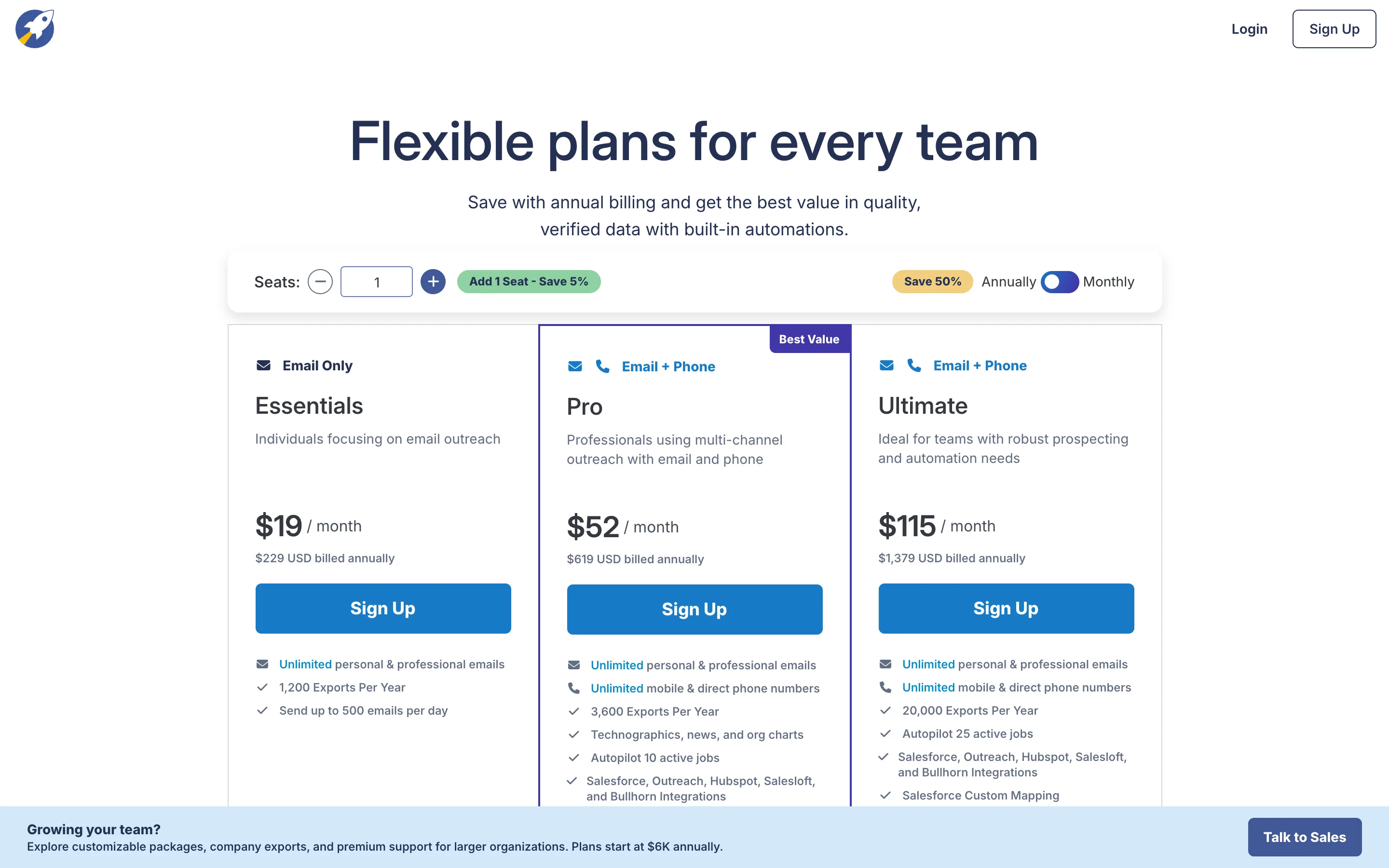
RocketReach pricing (USD, per user) is email-only on Essentials at $69/mo; phones need Pro at $119/mo ($75/mo annual). Emails are billed per search, and at the ~30% find rate I assume for every per-search tool (my working figure, not RocketReach's), Essentials' $0.69 a search becomes about $2.30 per email found. Phones I count as billed on found, so that 30% doesn't touch them: Pro's 250 monthly lookups put a returned number near $0.48, and once you count only the numbers that connect (50-70% of stored rows, the same assumption as for the other database tools) the real monthly cost lands near $0.68-0.95 per valid phone, or about $0.36-0.50 on annual (unlimited lookups, 3,600 exports a year).
vs Enrow: RocketReach wins raw reach. On phones, Enrow's ~$0.31 annual-Pro rate sits under RocketReach's $0.36-0.50 on annual, and on email Enrow never bills a search that finds nothing. Every Enrow dial is verified live rather than a stored US row with no compliance story, with no per-seat lock-in and one-click full-contact CRM export.
6. SignalHire
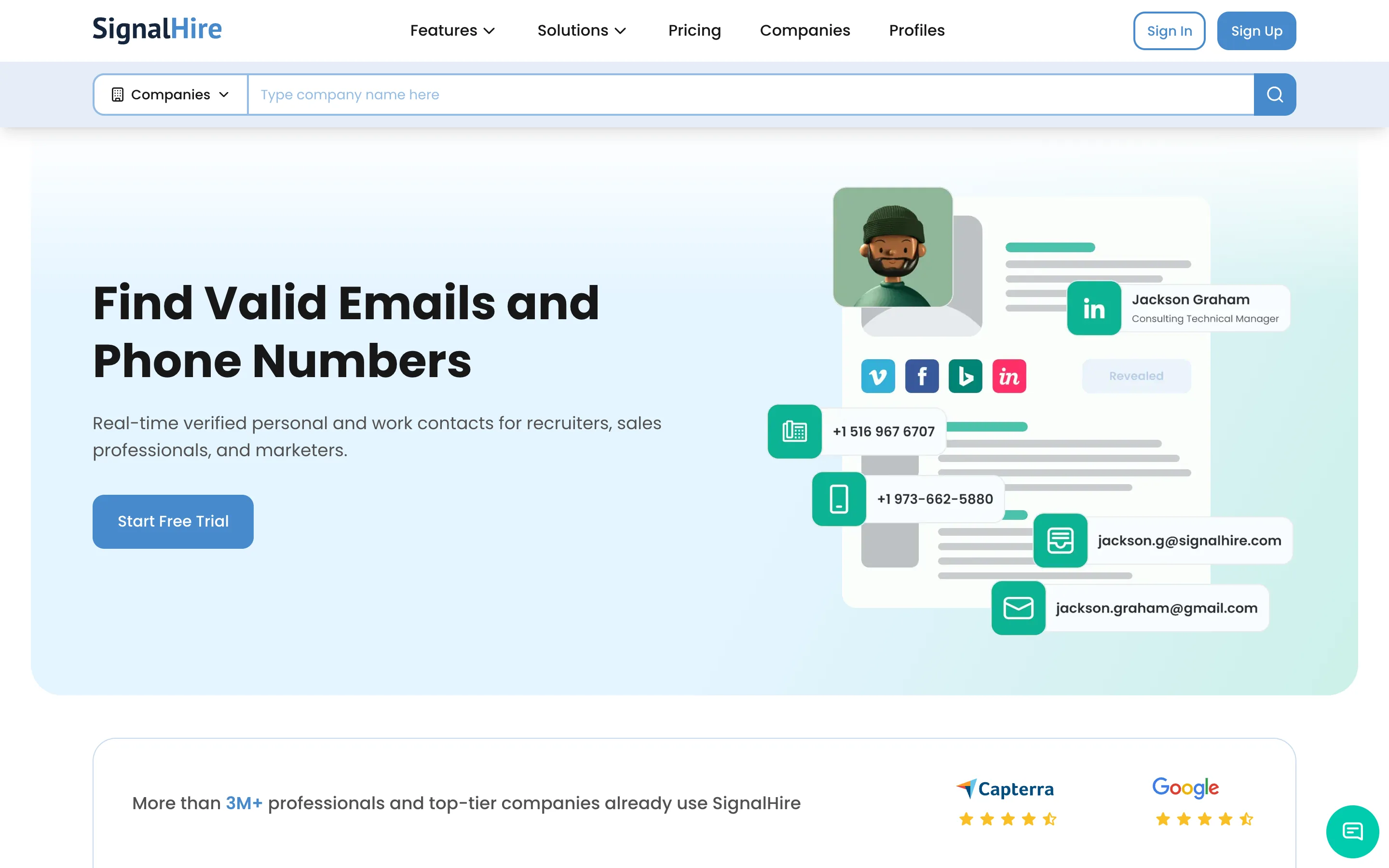
Made for recruiters who want personal alongside work contacts.
SignalHire reveals full contact sets, work email, personal email and direct phone when it has them, which makes it a favorite with recruiters who need to reach candidates off-hours, not just at the office.
Each credit reveals a contact, and it sells separate email and phone plans so you can size to your motion. For talent teams working candidates rather than B2B accounts, that personal-contact angle is something the pure sales tools don't emphasize.
The catch is that it's a stored-database reveal tool with the usual freshness and compliance caveats. The personal-data angle that helps recruiters also raises compliance questions for EU B2B use, and there's no GDPR direct-dial story like Cognism's or Enrow's. Accuracy varies by region as with every database here.
I found it useful precisely where it's aimed, recruiting, where a personal mobile beats a switchboard. For B2B sales into Europe it's the wrong shape. Enrow is built for compliant B2B direct dials, verified in real time, with no charge on a miss.
If you're sourcing candidates, SignalHire's personal contacts have a place; if you're a sales team dialing European buyers, Enrow is the compliant, fresher choice.
- +Returns work + personal emails and phone in one reveal
- +Popular with recruiters for off-hours candidate contact
- +Separate email and phone plans to size the spend
- +Browser extension and API
- –Stored-database reveal; freshness and regional accuracy vary
- –Personal-data angle raises EU B2B compliance questions
- –No GDPR direct-dial story; regional phone accuracy varies
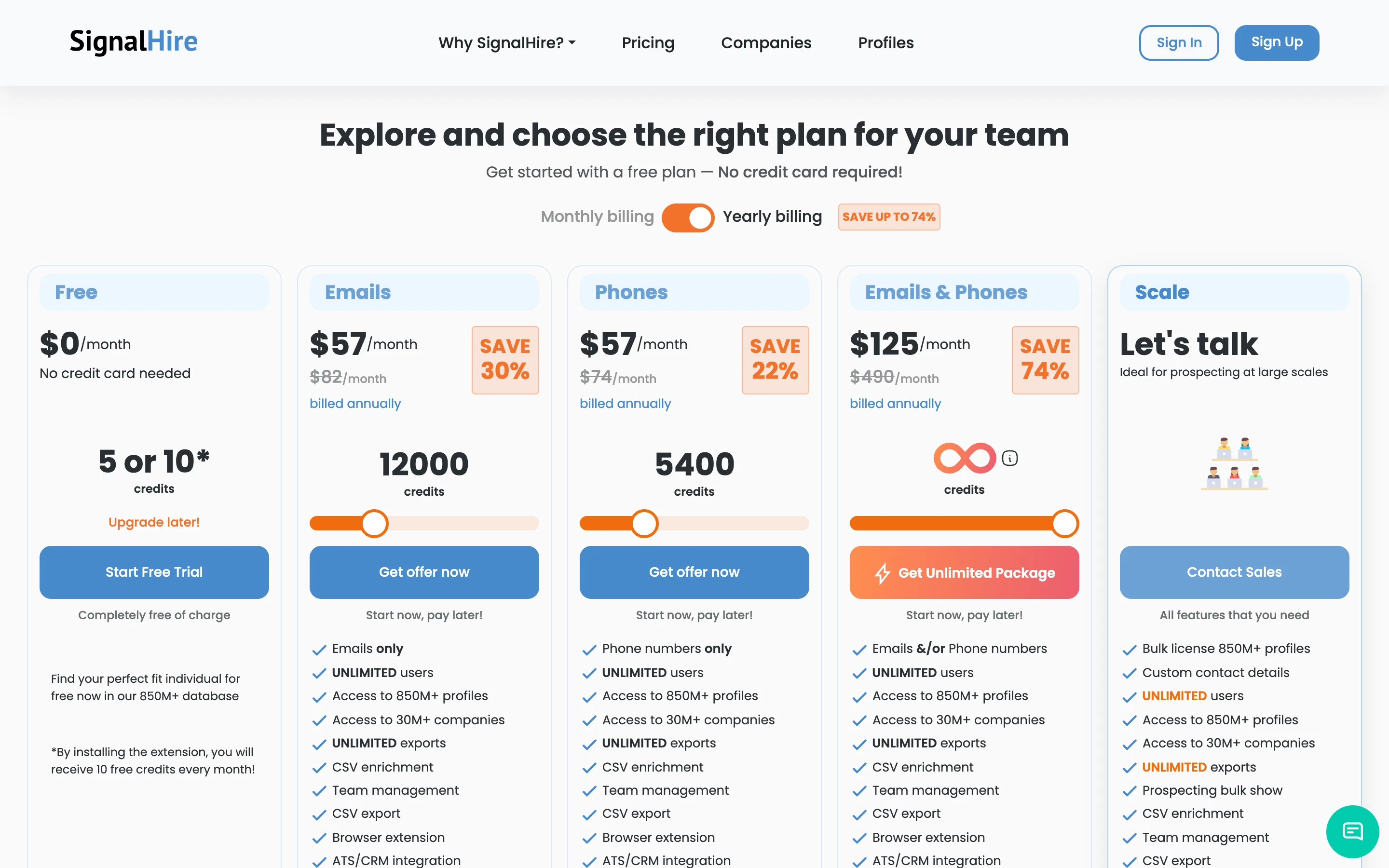
SignalHire pricing (USD) runs $69/mo for the phone plan (about 435 phone credits), roughly $0.16 per revealed phone on the sticker. But these are stored rows from a personal-data source, which for European B2B dialing is less a grey area than a wall, so once you count only the numbers you can legally place the real cost climbs well past the $0.16 headline, on data with no GDPR direct-dial basis.
vs Enrow: SignalHire's edge is personal contacts for recruiting, a different job. For compliant B2B direct dials it's the wrong shape: Enrow verifies each number live at about $0.31 per valid phone on annual Pro, never charges for a number that fails verification, and one-clicks the full verified contact into your CRM.
7. Wiza
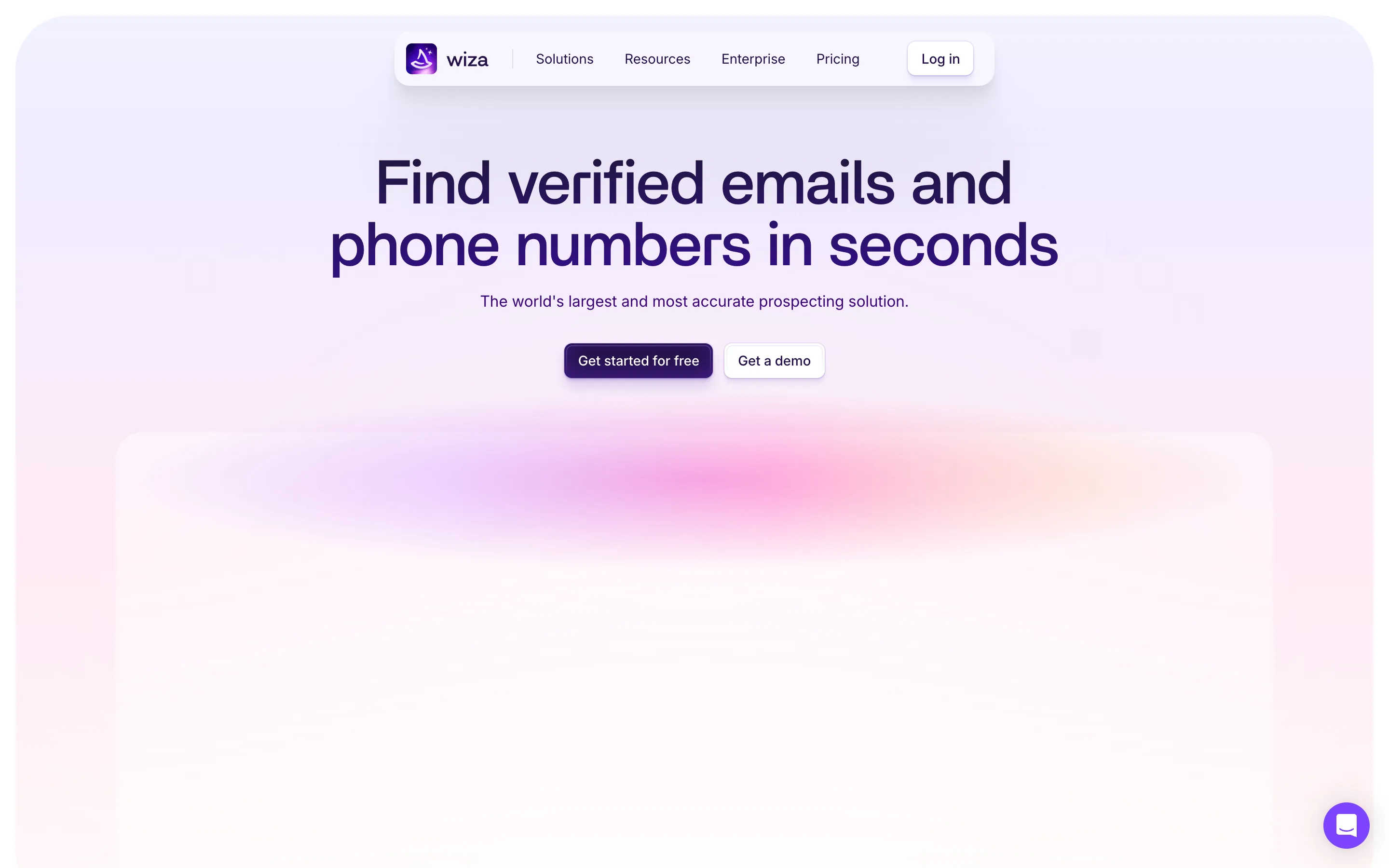
This one earns its place if your day is bulk-exporting Sales Navigator lists.
Wiza is built around Sales Navigator: run a search, and Wiza turns the result into an exportable list with emails and, on the right plan, phone numbers.
For a team that sources in Sales Nav and wants to bulk-export enriched lists into a sequencer or CRM, that's a clean, specific job, and Wiza does it well. It's more of a list-export engine than a per-profile reveal extension.
The rub is that phones cost more and freshness is database-bound. The base plan is email-only at $83/user/month; phone numbers require the next tier at $166/user/month, per user. It enriches against stored data, so mobile accuracy varies, and there's no EU direct-dial compliance story.
It's a fine scraper-and-exporter, not a verification engine.
Where it shone for me was exactly the bulk Sales Nav export, fast and tidy. Where it fell short was the phones, both cost and reliability, and the lack of any EU compliance angle.
Enrow's Chrome extension works the single-profile path (full verified contact into your CRM in one click), and its API/bulk flow handles volume, with real-time verification, EU dials, and nothing charged on a miss. For list scraping Wiza is purpose-built; for phones you don't pay for until they're confirmed, Enrow.
- +Purpose-built for Sales Navigator list scraping and export
- +Clean bulk enrichment into CRM and sequencers
- +Straightforward per-user pricing
- +Good for turning a Sales Nav search into an outreach list fast
- –Phones require the $166/user/mo tier; base plan is email-only
- –Stored-data enrichment, so mobile accuracy varies
- –No EU direct-dial compliance story; per-user billing
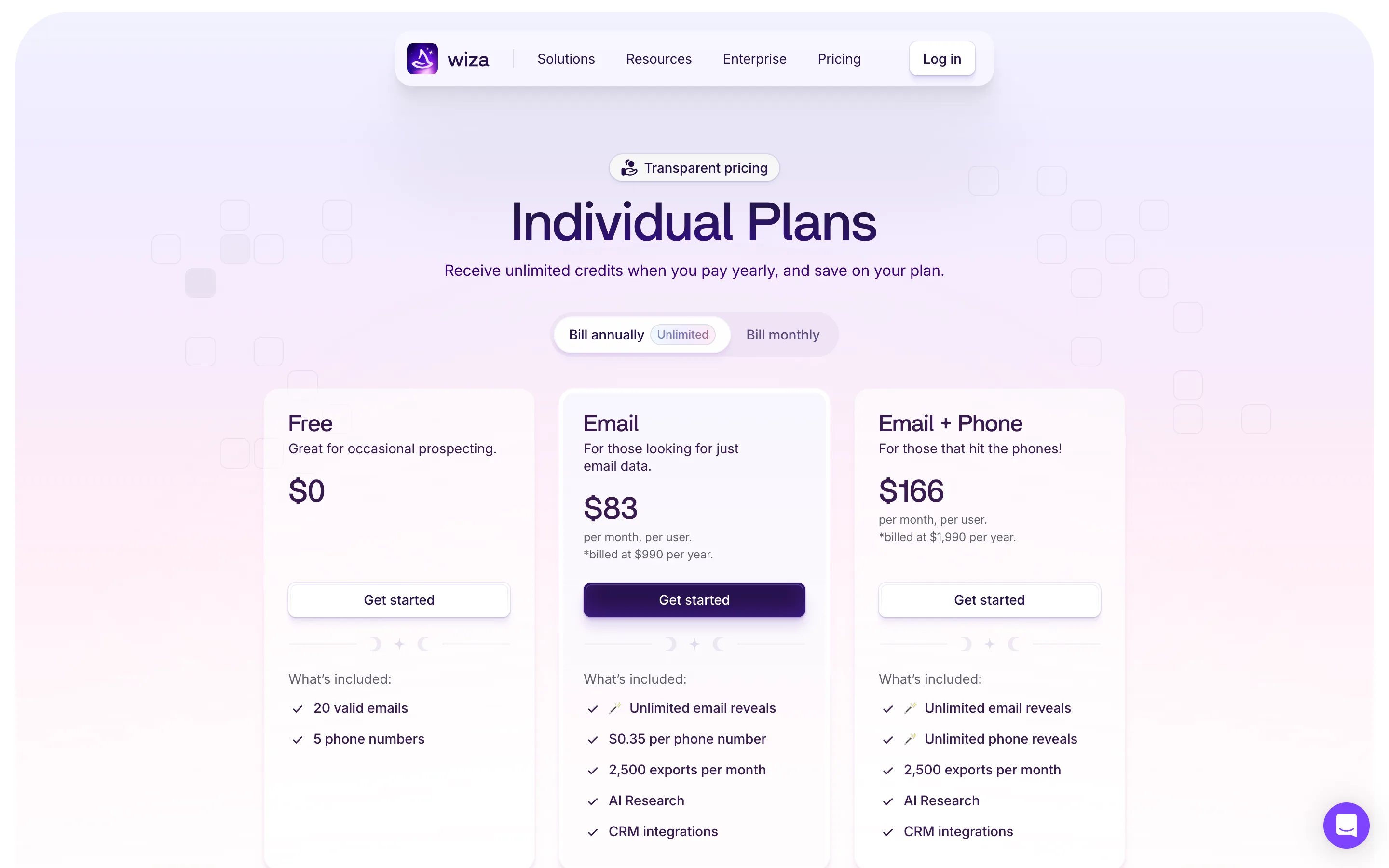
Wiza pricing (USD, per user) is email-only at about $83/user/mo; phone numbers require the next tier at ~$166/user/mo. Phone overage runs about $0.35 each against stored data, so once you knock off the numbers that won't connect the real cost lands near $0.50-0.70 per valid phone, stacked on top of the per-user email tier you already pay.
vs Enrow: Wiza is the Sales Nav bulk-export specialist; Enrow is the verification-and-phone engine that runs after it: no per-seat phone premium, no stored rows, each number fetched and checked live, with the meter silent on a miss, then exported as a full verified contact in one click. Use Wiza to build the list, and let Enrow verify and phone-enrich it.
8. Apollo

The one to buy if you want the whole find-and-send suite, phones included.
Apollo pairs a huge B2B database with sequencing, enrichment, a Chrome extension and a dialer, all on one seat-based subscription. Against Lusha it's a broader play: it doesn't just reveal a number, it sources the contact, queues the sequence and puts the dialer in the same tab.
For a team that wants everything in one place and treats phones as one feature among many, that consolidation is the appeal, and the free tier is generous.
The cost of that breadth is freshness and how the credits work.
Apollo is a stored database, so a share of records sit stale, and every phone reveal draws 8 credits from a shared per-seat pool, 2,500 credits a month on Basic, with add-on credits from about $0.025 each (roughly $0.20 a phone).
A team that dials hard burns that pool on mobiles faster than the email use suggests. Export caps and data-accuracy gripes are the two things you'll read most in the reviews. It's a workflow tool where the data is a component, not the point.
To Apollo's credit, getting from a filter to a live call inside one tool is quick. Then I checked the mobiles against a live dial, and both the per-seat ration and the stored-data staleness showed.
Enrow fetches and verifies each number live and returns EU direct dials Apollo's database doesn't reliably cover. Nothing is billed until a result is valid, and there's no per-seat math. Apollo is the suite; let Enrow feed it the clean phone layer underneath.
- +Large B2B database with sequencing, enrichment and a dialer in one place
- +Chrome extension and CRM integrations
- +Generous free tier (900 credits/year per seat)
- +One tool to source, enrich, sequence and call
- –Stored database, so data ages and accuracy is a common complaint
- –Phones draw 8 credits each from a shared per-seat pool (2,500/mo on Basic) that expires monthly with no rollover; add-on credits from ~$0.20 a phone
- –Export caps and data-quality gripes recur in reviews
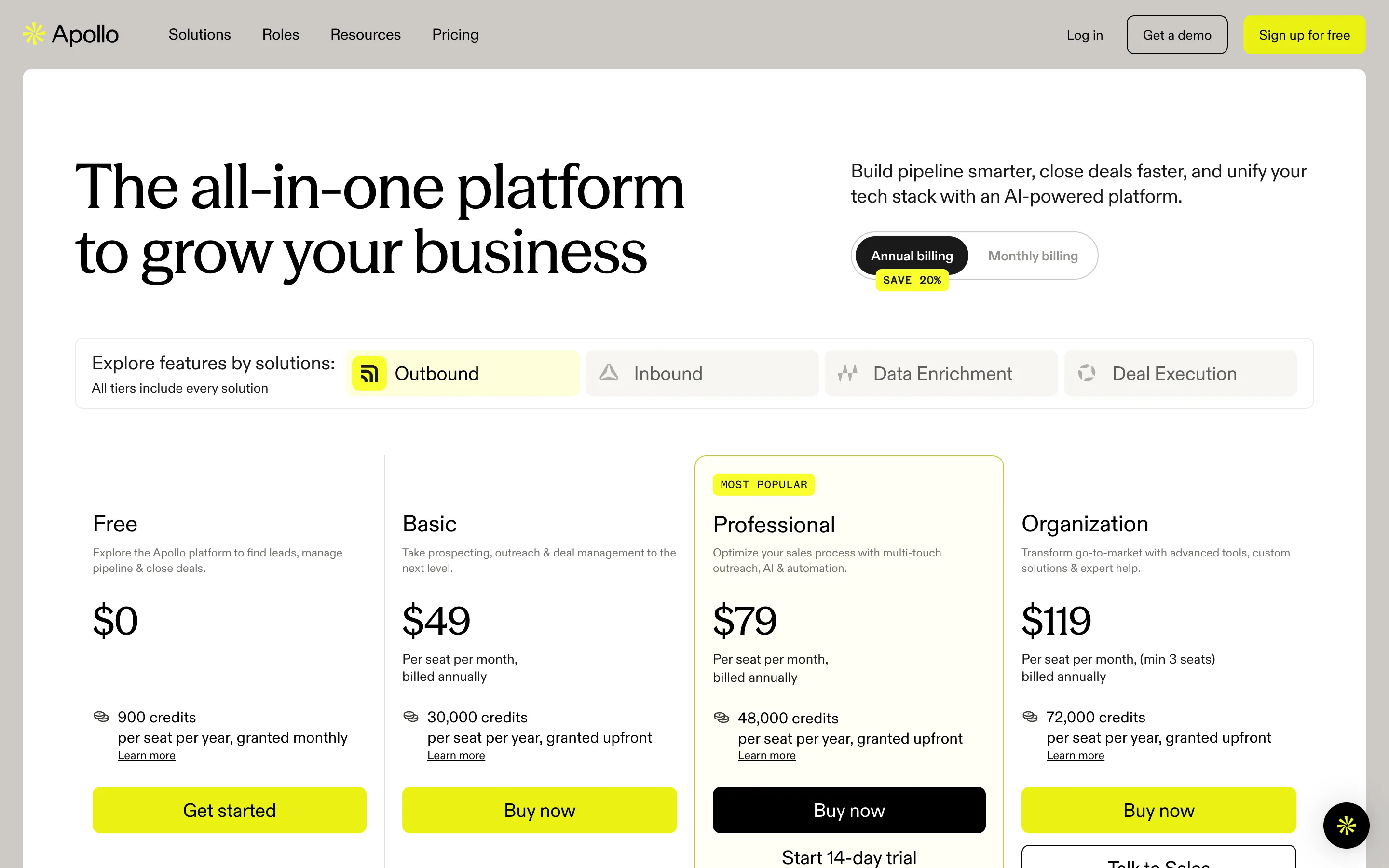
Apollo pricing (USD, per seat) starts at $65/seat/mo for Basic (2,500 credits, free tier 900/year), one unified pool where a phone reveal costs 8 credits. That's about $0.21 per revealed phone on the sticker, but credits expire monthly with no rollover and the mobiles are US-leaning stored rows with no EU direct-dial documentation — so on a continental-Europe list the real cost per valid phone climbs above Enrow's $0.35 benchmark, not under it.
vs Enrow: Apollo is the all-in-one; Enrow is the phone-and-data layer. Enrow's real-time data is verified live and charged only when a number actually works, with no per-seat fees, so run both if you want the suite and the clean numbers.
9. LeadMagic
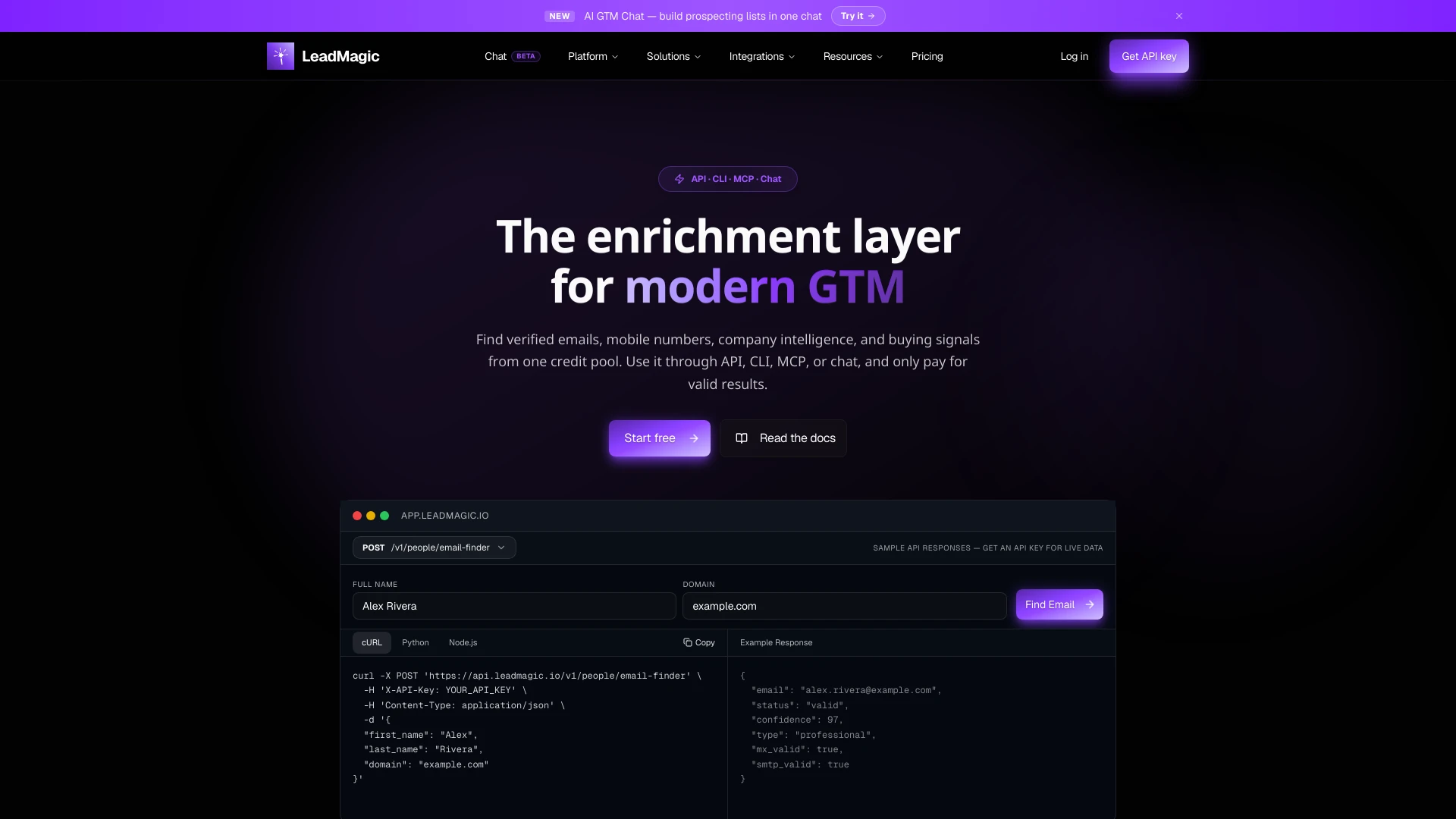
For the case where your "tool" is a pipeline.
LeadMagic is API-shaped: 15+ enrichment endpoints (email, mobile, company, profile, job-change) drawing from a single shared credit pool, plus a CLI and an MCP server for AI-agent workflows. Credits deduct only on successful results, which is the right default.
Against Lusha's clickable extension, LeadMagic is the mirror image: endpoints you script against. Its niche is RevOps and developers who'd sooner write a script than reveal numbers one profile at a time.
Two things to know: it's an API, not a product you'd hand a rep, and the EU phone story isn't published. Mobiles cost 5 credits each, pay-per-valid, but EU/GDPR phone coverage isn't documented, so European reliability is a question mark.
Non-developers will stall on it, and rollover only kicks in above the entry Basic plan.
I gave it a week of pipeline runs. The shared pool keeps the accounting honest and pay-per-valid is the right call. But it's plumbing, not something a caller opens.
Enrow's API is just as scriptable and its MCP server pulls verified data into Claude or Cursor, and on top of that ships a real UI and a Chrome extension a rep can drive, plus EU direct dials. Programmable, without making everyone a developer.
- +Pay-per-valid; zero charge on a failed match
- +15+ endpoints from one shared credit pool, mobile finder included
- +Developer tooling: API, CLI/TUI, MCP server
- +Clean, tidy credit accounting
- –No rollover on the entry Basic plan
- –Mobiles cost 5x an email; no published EU/GDPR phone coverage
- –It's an API, not a browsable UI, so non-developers will struggle
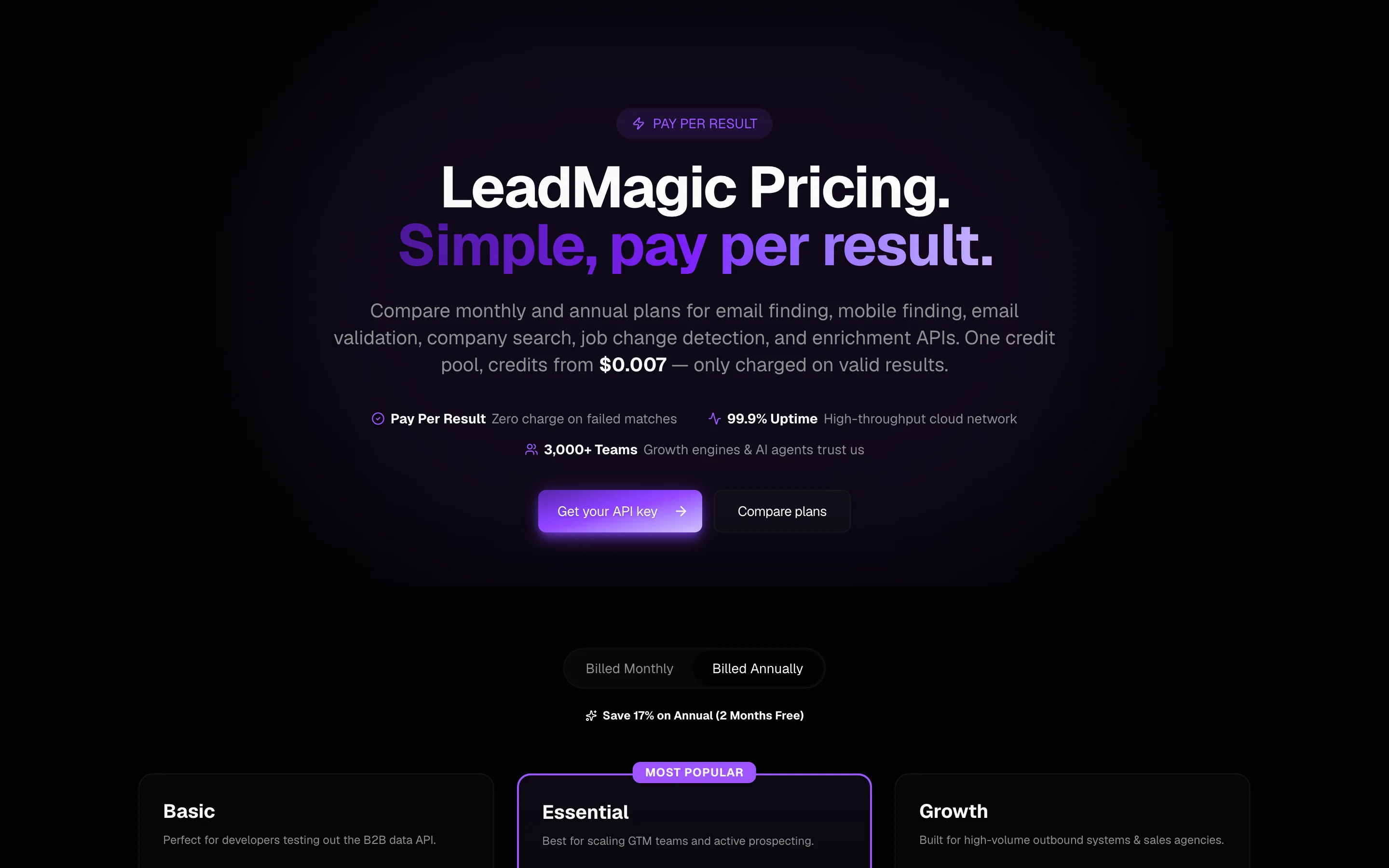
LeadMagic pricing (USD) starts at Basic $49/mo (2,000 credits), with Mobile Finder at 5 credits each and credits deducted only on a successful result — so Basic's pool buys 400 mobiles at roughly $0.12 on a raw-credit basis. But it publishes no EU/GDPR phone coverage, so once you count only the EU dials you can legally place, the real cost per usable EU phone is a multiple of that sticker.
vs Enrow: both are pay-per-valid with real APIs and MCP servers, but Enrow's phones are live-verified direct dials in any country, Europe included, from about $0.35 down to $0.31 on annual Pro and every one yours to call, plus a rep-friendly UI and one-click full-contact CRM export LeadMagic's endpoints don't have.
Don't take my word for the phone numbers — feed Enrow a slice of your own dial list and watch what validates. 50 free credits, refreshed every month, no card.
Side-by-side comparison
Final Verdict
On the one job that decides a phone budget — a direct dial that rings, sourced legally in Europe, paid for only when it's valid — Enrow takes it. At 250 phones a month it's about $0.35 per valid phone on Enrow Pro against ~$0.82-1.14 on Lusha Pro once you strip the reveals that bounce, because the Enrow meter stays quiet until a number is confirmed, while Lusha charges to reveal a stored row regardless. Add the CRM step: one click moves the full contact, email and direct dial checked live at that moment, from a LinkedIn or Sales Navigator profile into HubSpot, Salesforce or Pipedrive. Enrow isn't an all-in-one, though — no searchable database or in-app sequencing and dialing, and no intent data; for a giant browsable EMEA database an enterprise will pay for, Cognism wins. But when the job is a verified phone that connects, priced so a miss never costs you, that narrow focus is exactly what Enrow was built to win.
Don't take my word for the phone numbers — feed Enrow a slice of your own dial list and watch what validates. 50 free credits, refreshed every month, no card.
FAQ
How we evaluated these tools
Nobody paid for a spot here and no link on this page earns me a cut. I ran it myself: one contact list, every tool, same week — then I picked up the phone and dialed the numbers to hear which ones reached a real person and which ones were dead. Four things set the order: how many usable direct dials each tool handed back, how many actually connected instead of ringing out when I called live, the real cost per valid phone once you strip away the credit math, and geographic reach — legally-sourced EU direct dials above all, since that's exactly where Lusha goes thin. Competitor pricing and features come straight from each tool's official pages, checked 2026-07-02 (Lusha's re-checked 2026-10-05).
¿listo para dejar de perder el tiempo?
Conectado en minutos.
Data verificada en segundos.
sin tarjeta
sin configuración