alternatives à clodura.ai
Les 11 meilleures alternatives à Clodura.ai pour les équipes commerciales B2B en 2026
Les critères : le taux de contacts trouvés, le taux de bounce sur un vrai envoi, le coût réel d'un contact vérifié, et la couverture géographique — surtout les numéros de portable européens obtenus légalement. Ce qui décide vraiment d'un budget de prospection.
11 outils testés
mis à jour le 6 octobre 2026
16 min de lecture
Mis à jour le 6 octobre 2026
Les alternatives en un coup d'œil
Enrow est la meilleure alternative globale à Clodura.ai pour les équipes qui veulent des emails et des numéros de portable européens vérifiés et ne payer que les résultats valides, à partir de 15 €/mois. Apollo ou Snov si vous préférez garder le tout-en-un avec un outil de campagnes intégré ; ZoomInfo et Seamless du côté des grandes bases d'entreprise ; UpLead pour une base US avec garantie de précision ; Hunter, Findymail et Prospeo pour une recherche d'emails ciblée ; LeadMagic si votre « outil » est en fait un pipeline. Et Clodura reste sur la liste comme point de comparaison.
Clodura.ai réunit une base de 600 millions de contacts, un SDR piloté par IA, des campagnes et un vérificateur d'emails, le tout sur une seule réserve de crédits. Beaucoup de fonctionnalités pour le prix.
Mais une base stockée vieillit, et un crédit part, que la ligne soit utilisable ou non : le prix affiché d'environ 0,018 € l'email revient en réalité à 0,05 à 0,09 € le contact utilisable.
La plupart des gens qui cherchent une alternative à Clodura.ai veulent simplement des emails et des numéros justes, sans cette taxe.
C'est précisément ce que fait Enrow : les deux trouvés en temps réel, numéros de portable européens compris, facturés seulement quand le résultat est vérifié — environ 0,0075 € l'email valide, à partir de 15 €/mois.
Et une chose qu'aucun autre outil de cette page ne sait faire : un clic sur un profil LinkedIn ou Sales Navigator, et l'extension Chrome écrit la fiche complète et vérifiée, numéro compris, directement dans HubSpot, Salesforce ou Pipedrive. Les dix autres couvrent chacun un créneau.
Aucun n'est un meilleur choix sur la donnée.
Pourquoi les équipes cherchent des alternatives à Clodura.ai
Clodura est un bon endroit pour piloter sa prospection depuis un seul écran, et pourtant les équipes partent — le plus souvent pour trois raisons. Si toute votre prospection vit dans un tout-en-un et qu'une base vous convient, Clodura tient la route. Sinon, lisez la suite.
Transparence : notre conflit d'intérêts
Cartes sur table : j'ai fondé Enrow, Enrow vend de la donnée email et téléphone, et je l'ai classé premier d'une liste d'outils de données. Pondérez mon avis en conséquence.
Maintenant la concession, parce qu'elle est réelle : Clodura fait des choses qu'Enrow ne fait pas du tout, et plusieurs outils de cette page aussi. Nous ne lançons pas de campagnes ni de cadences ; Clodura, Apollo et Snov, si. Pas de SDR IA chez nous.
Nous ne chauffons pas les boîtes mail, et nous n'avons pas de base de prospects à filtrer et exporter à froid, comme le font Clodura, ZoomInfo, Seamless et UpLead. Chacune de ces absences est un choix.
Nous préférons construire et vérifier chaque contact au moment où vous le demandez, plutôt que de vous louer l'accès à un stock de lignes qui vieillissent.
Là où je ne cède pas, c'est sur la donnée elle-même. Enrow fait une seule chose — trouver et vérifier des contacts frais — et tout dans le produit sert cet objectif. Besoin d'un SDR IA, de séquences ou d'une suite complète ?
Un outil plus bas répond mieux à ce besoin, et chaque section vous dit lequel. Besoin des emails et des numéros les plus précis que vous puissiez acheter ? Cette obsession-là, c'est tout le projet d'Enrow.
Les 11 meilleures alternatives à Clodura.ai
1. Enrow
#1
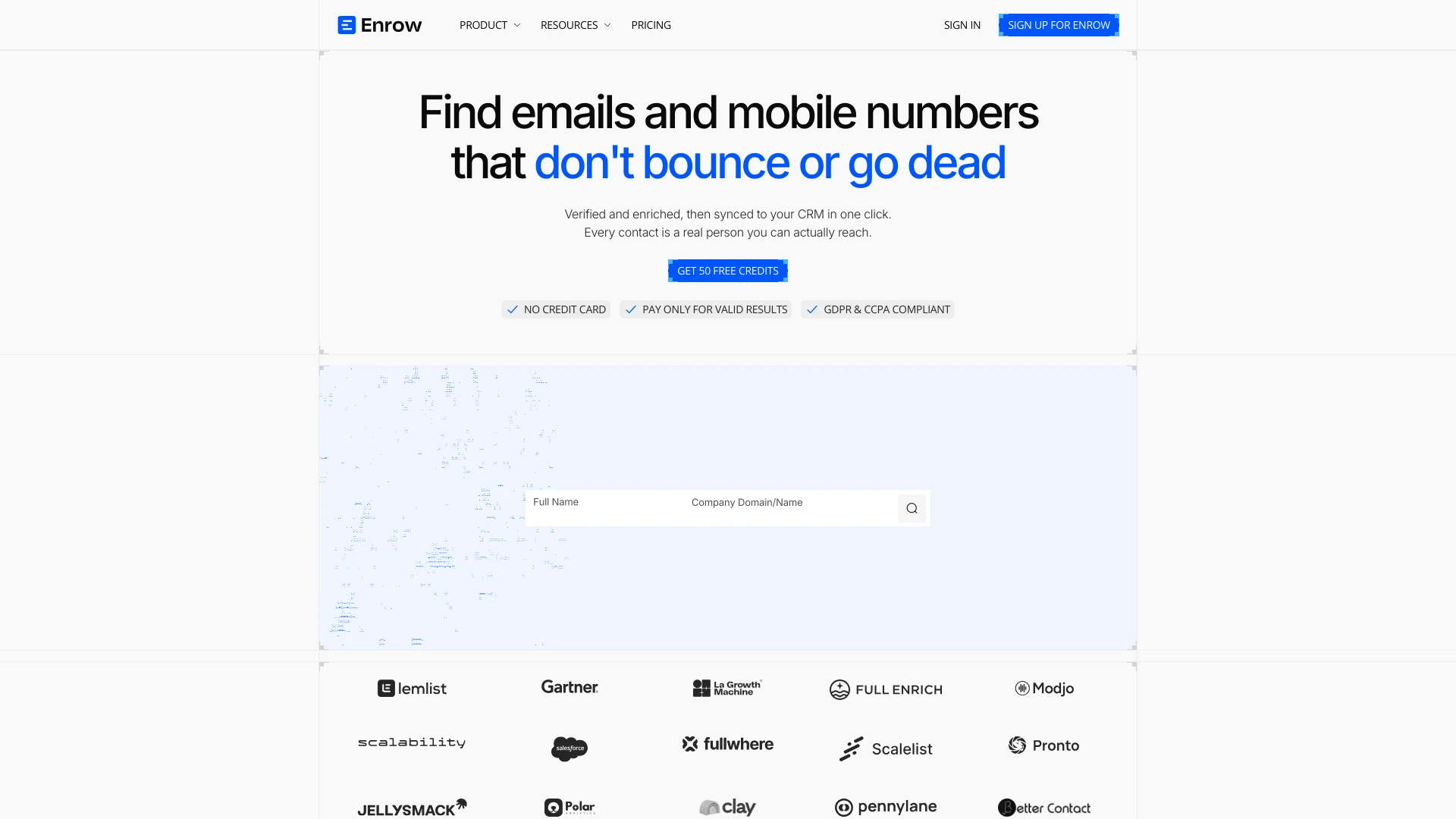
Enrow existe parce que les factures d'enrichissement me faisaient payer la recherche, pas le résultat : des milliers de recherches facturées, une fraction trouvée, et des bounces par-dessus.
L'écart avec Clodura est net, et il commence par la donnée elle-même. Clodura agrège 600 millions de contacts, tirés de dizaines de fournisseurs, dans une seule base stockée. Les gens derrière ces lignes continuent de bouger.
Les lignes, elles, ne bougent pas — donc une partie de toute liste froide est déjà fausse. Enrow trouve chaque contact en temps réel, puis lui fait passer plus de 10 vérifications — plusieurs tests SMTP, plusieurs contrôles catch-all depuis des serveurs situés dans différentes régions — avant qu'une adresse ne compte.
C'est toute la différence entre un nom qui était juste au trimestre dernier et un nom juste aujourd'hui. Et vous ne payez que lorsque le résultat est valide. Pas d'email valide, pas de facture. Vous arrêtez de financer les suppositions et les recherches vides.
Ensuite, la facturation. C'est là que le prix affiché et le prix réel se séparent. Clodura fonctionne avec une seule réserve de crédits où un numéro coûte 10 crédits contre 1 pour un email, et un crédit est consommé, que la ligne se révèle utilisable ou non.
Du coup, le plan d'entrée à 90 € pour 5 000 crédits, ce n'est pas 5 000 contacts propres.
Appliquez le taux de contacts trouvés et utilisables que les équipes constatent sur de la donnée agrégée, environ 20 à 35 %, et le coût réel tourne plutôt autour de 0,05 à 0,09 € l'email utilisable, pas les 0,018 € que le prix affiché laisse croire.
Enrow n'applique aucune des deux taxes qui reviennent sur cette page. Une recherche ratée ne coûte rien. Une adresse qui échoue à la vérification n'est jamais facturée. Les crédits se reportent sur Pro et Scale, donc rien n'expire inutilisé au renouvellement.
Son prix affiché est son coût réel : 75 € pour 10 000 emails valides, soit environ 0,0075 € l'unité, avec jusqu'à 10 utilisateurs sur Pro, sans limite sur Scale, et aucune facturation par utilisateur.
Les numéros ?
Clodura puise dans plus de 20 sources et la qualité varie selon la géographie. Enrow trouve des numéros de portable dans tous les pays, Europe comprise.
Sur ma liste de test, ça voulait dire une directrice commerciale lyonnaise qui décroche son propre portable, au lieu d'un appel qui s'arrête à un standard. Les emails catch-all sont vérifiés et livrés eux aussi, pas étiquetés « risqués » et mis de côté.
Un dernier atout, pour ceux qui travaillent avec des agents. Enrow fournit un serveur MCP officiel (le dépôt est github.com/EnrowAPI/enrow-mcp), donc Claude, Cursor ou Windsurf peuvent appeler la recherche d'emails, le vérificateur et le Direct Phone Finder sans quitter la conversation.
Les emails et les numéros, frais et vérifiés, arrivent directement dans un flux IA, toujours facturés au résultat valide. Pratique si votre prospection vit déjà dans un agent.
Sur le vrai envoi, une chose a sauté aux yeux. Le bounce est resté sous 1 %, et les portables européens tombaient sur de vrais postes, pas sur une ligne morte. Le taux de contacts trouvés tournait autour de 60 % sur une liste mixte.
Une réserve, pour être honnête : ce « sous 1 % » est une moyenne constatée, pas un contrat.
Et il y a un atout pratique qu'aucun autre outil ici n'égale. Ouvrez un profil LinkedIn ou Sales Navigator, cliquez une fois, et l'extension Chrome dépose la fiche complète et vérifiée — email, numéro de portable, tous les champs remplis — dans HubSpot, Salesforce ou Pipedrive. Pas de copier-coller.
Pas de fiche à moitié remplie. L'extension de Clodura, elle, remonte des contacts depuis sa base et les pousse dans ses propres cadences. Elle n'assemble pas une fiche contact complète et vérifiée dans votre CRM comme le fait celle d'Enrow.
- +Payé seulement sur un résultat valide ; une recherche ratée ne coûte jamais un crédit (Clodura dépense des crédits sur des lignes parfois périmées)
- +Numéros de portable dans tous les pays, Europe comprise
- +Plus de 10 vérifications par email ; les catch-all sont vérifiées et livrées, pas mises de côté
- +Intégrations CRM natives : Clay, HubSpot, Salesforce, Pipedrive, plus des webhooks, et une API et un serveur MCP vraiment aboutis qui permettent à Claude, Cursor ou Windsurf de récupérer des emails et des numéros vérifiés directement dans un agent, au résultat valide
- +L'extension Chrome transforme un profil LinkedIn ou Sales Navigator en fiche CRM complète et vérifiée en un clic, tous les champs remplis (aucun des dix rivaux ici ne sait le faire)
- +Report des crédits, aucune facturation par utilisateur, jusqu'à 10 utilisateurs sur Pro et sans limite sur Scale
- –Pas de base à parcourir, volontairement. Les 600 millions de lignes stockées de Clodura sont justement ce qui vieillit ; Enrow construit chaque contact à la demande, et c'est pour ça que les résultats tiennent. La constitution des listes se fait dans LinkedIn ou Sales Navigator, puis vous enrichissez.
- –Pas de séquences ni de SDR IA, et rien de prévu. Pour la partie envoi : Emelia d'abord, puis La Growth Machine, puis lemlist.
- –Pas de données sur les technologies utilisées. Les informations sur l'entreprise s'arrêtent au niveau de LinkedIn.
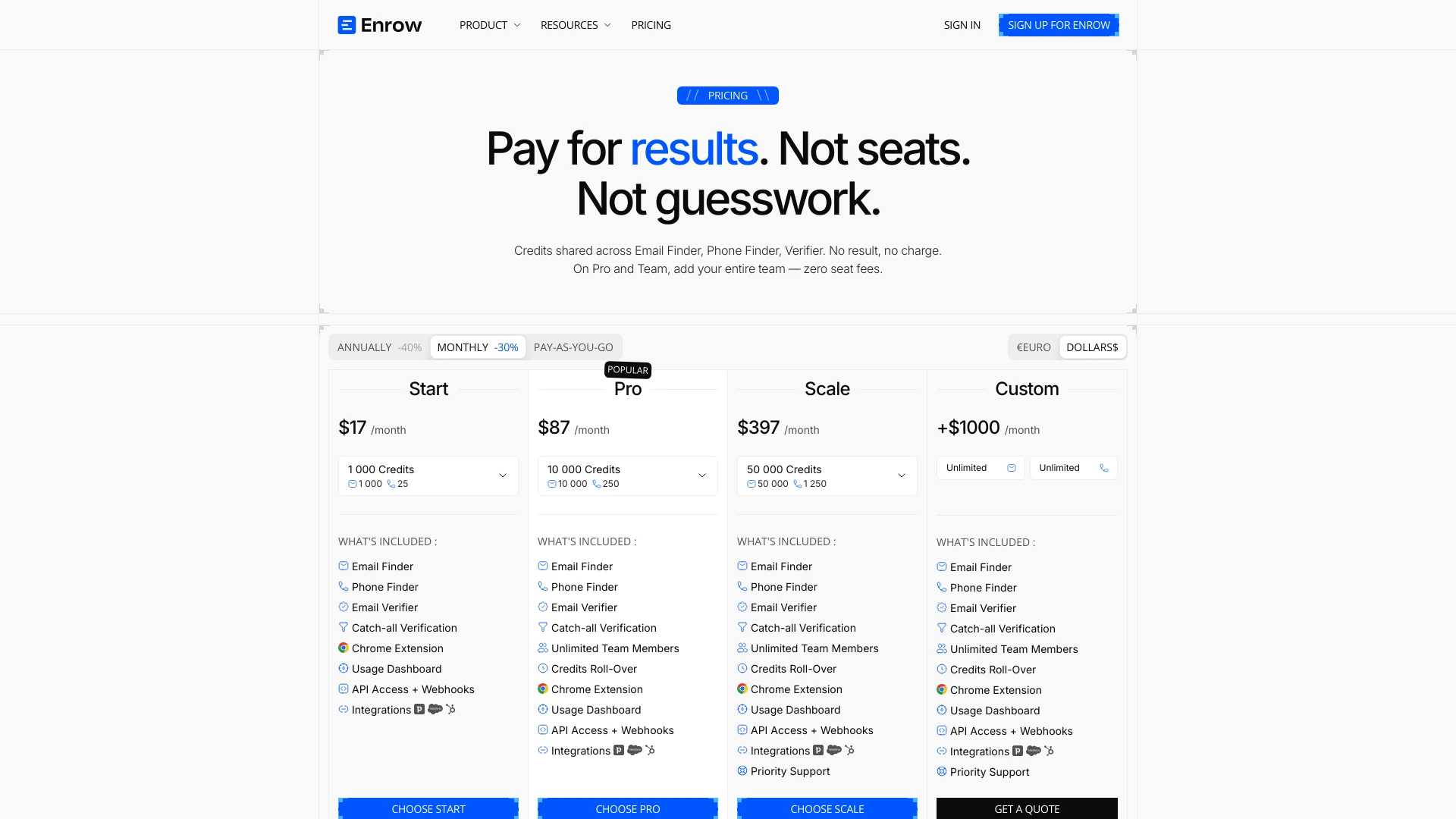
Trois paliers. Start est à 15 €/mois pour 1 000 crédits (au mois uniquement), 42 € pour 4 000. Pro va de 75 €/mois pour 10 000 crédits à 150 € pour 20 000 et 220 € pour 30 000.
Scale démarre à 360 €/mois pour 50 000 et monte jusqu'à 1 250 € pour 200 000. Pro et Scale baissent d'environ 10 % en engagement annuel, ce qui met les 10 000 crédits autour de 68 €/mois et les 50 000 autour de 324 €/mois.
Le barème : 1 email = 1 crédit, 1 numéro de portable = 40 crédits, une vérification 0,25, catch-all comprise, et seuls les résultats valides sont facturés.
Ramené au résultat vérifié, ça fait 0,015 € l'email sur Start, 0,0075 € sur Pro à 10 000, 0,0072 € sur Scale, et le numéro à 0,60 € sur Start ou 0,30 € sur Pro (un mois à 10 000 crédits couvre 250 numéros).
Les crédits se reportent sur Pro et Scale. Aucune des deux pénalités de cette page ne s'applique ici : rien n'est facturé pour une recherche qui ne trouve rien, et aucun crédit n'expire.
Le prix affiché est le coût réel. Gratuit : 50 crédits chaque mois, renouvelés, sans carte.
L'offre gratuite d'Enrow n'est pas un essai d'une semaine : 50 crédits arrivent chaque mois, renouvelés, sans carte. Donnez-lui les contacts que Clodura n'arrête pas de rater, et comptez ce qui revient valide.
2. Apollo
Vous voulez la forme tout-en-un de Clodura avec un nom plus connu derrière ? C'est Apollo.
Apollo est le tout-en-un que la plupart des équipes essaient en premier : une grande base stockée, des campagnes, de l'enrichissement et une extension Chrome sur un abonnement par utilisateur.
Comme Clodura, il réunit la recherche, la donnée et l'envoi dans un seul compte, et il a même un vrai plan gratuit. Là où Clodura mise sur l'angle SDR IA, Apollo mise sur l'ampleur et un prix en self-service. Chercher, enrichir et envoyer sans assembler plusieurs outils, pour pas grand-chose.
Mais c'est le même modèle de fond que Clodura, et il bute sur la même limite. Apollo puise dans un index stocké, et un index ne connaît que ce qui était vrai au dernier crawl : une partie de toute liste froide a donc filé sans prévenir.
Les crédits sont par utilisateur et partagés entre emails, numéros et exports, si bien qu'un gros volume d'appels vide aussi le budget email, et les plafonds d'export sont plus stricts que ceux des recherches. Les reproches sur la précision de la donnée dominent les avis.
À l'usage, une chose ressort : chercher et envoyer dans le même onglet, c'est vraiment pratique.
Mais Enrow va chercher chaque contact en temps réel, le vérifie avec plus de 10 contrôles, facture au résultat valide et non par utilisateur, ajoute des portables européens là où ceux d'Apollo se font rares, et pousse la fiche complète dans votre CRM en un clic. Le confort est le même, la donnée plus propre.
- +Tout-en-un : base, campagnes, enrichissement et extension sur un même utilisateur
- +Vrai plan gratuit (900 crédits par an)
- +Grande base de contacts américains
- +Self-service, facile à démarrer
- –Donnée stockée qui vieillit en base
- –Crédits par utilisateur partagés entre emails, numéros et exports ; ils expirent à chaque cycle et les plafonds d'export sont serrés
- –La couverture en portables penche vers les États-Unis et s'amenuise en Europe
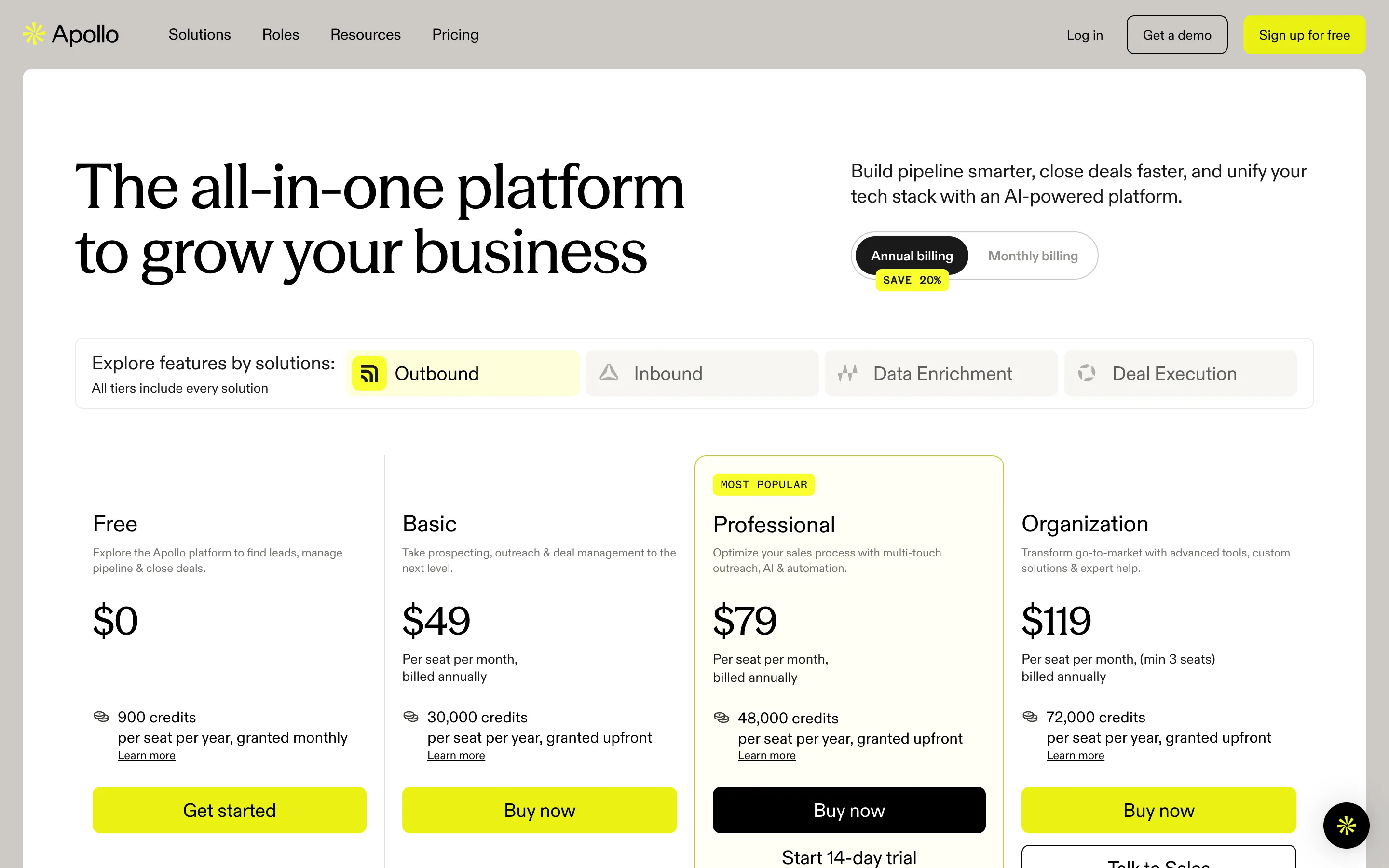
En euros, par utilisateur : Basic à partir de 45 €/utilisateur/mois en annuel (environ 30 000 crédits/an), autour de 59 € au mois. Les crédits sont partagés entre email, numéro et export et expirent à chaque cycle ; un numéro coûte 8× un email.
La licence Basic à 0,024 € le crédit sur le papier revient à environ 0,030 € l'email valide une fois comptés les crédits qui expirent inutilisés, et la facture se multiplie ensuite par le nombre d'utilisateurs.
vs Enrow: Apollo facture par utilisateur sur des crédits qui expirent ; Enrow ne facture que sur un résultat valide (0,015 € sur Start, 0,0075 € sur Pro, environ 2× et 3,8× moins cher), reporte les crédits sur Pro et Scale, et ajoute les portables européens. Côté CRM, Apollo y arrive aussi, mais par un chemin détourné. Son extension range d'abord le contact dans Apollo, et rien ne part vers HubSpot, Salesforce ou Pipedrive tant qu'un admin n'a pas relié le seul CRM qu'autorise un compte Apollo et posé des règles de push. Même là, le push par défaut transmet huit champs sur HubSpot et Pipedrive, et l'URL LinkedIn n'en fait pas partie. Enrow, lui, écrit la fiche complète et vérifiée depuis le profil même.
3. ZoomInfo
C'est le poids lourd des données d'entreprise détaillées et des signaux d'achat à grande échelle.
ZoomInfo est le plus gros nom de la donnée B2B, et il est bâti comme tel : une énorme base de contacts et d'entreprises, des signaux d'intention, des données sur les technologies utilisées, des organigrammes, et des modules d'engagement commercial en plus.
Là où Clodura est un tout-en-un à prix affiché, ZoomInfo est la version grands comptes de la même idée, tarifée et vendue en conséquence. Pour faire tourner données d'intention et organigrammes sur beaucoup d'utilisateurs, c'est la plateforme la plus sérieuse. Peu d'outils l'égalent à cette échelle.
Le frein, c'est le ticket d'entrée et la même question de fraîcheur. Contrairement à ce qu'on lit souvent, ZoomInfo affiche bien des prix, deux même. Sur sa fiche AWS Marketplace, la plateforme coûte 3 000 $ pour douze mois, un seul utilisateur et 2 000 crédits d'export, soit environ 2 730 €. Sur gtm.ai, son API en paiement à l'usage, la fiche revient à 0,38 $ au palier de 1 000 $, environ 0,35 €, et aucun palier ne comprend les numéros de portable. Au-delà, on repasse par un commercial, sur un contrat annuel facturé par utilisateur et à la consommation.
Et dessous, c'est toujours de la donnée entreposée : des lignes captées il y a des mois. Chercher et filtrer ne coûte rien, le crédit part à l'export de la fiche — que la personne soit encore en poste ou non, et les crédits non consommés expirent à la fin du contrat. Sur les contacts européens en particulier, la couverture et la conformité se compliquent.
En creusant les données d'entreprise, j'ai été impressionné par leur profondeur. Le ticket d'entrée aussi, mais dans le mauvais sens.
Enrow vous donne des emails et des portables européens frais et vérifiés en direct, sans contrat annuel ni appel commercial, au résultat valide dès 15 €/mois, plus une extension qui dépose la fiche contact complète et vérifiée dans votre CRM en un clic.
Pour les données d'intention et les organigrammes d'entreprise, ZoomInfo convient. Pour la couche de données précise sans engagement de douze mois ni licence à payer, c'est Enrow.
- +Données d'entreprise très détaillées, signaux d'intention et organigrammes
- +Grande base, taillée pour les grands comptes
- +Intégrations solides et outillage de workflow
- +Conformité et support sérieux dans le haut de gamme
- –Plateforme à partir de ~2 730 €/an pour un utilisateur et 2 000 exports, engagement de douze mois, facturation par utilisateur, et une médiane Vendr autour de 30 000 € par an ; l'API gtm.ai, à l'usage, ne vend aucun portable
- –Lignes entreposées qui vieillissent, crédits non consommés qui expirent
- –La couverture et la conformité en Europe se compliquent
Deux tarifs sont publics, et ils méritent d'être mis à plat. Sur sa fiche AWS Marketplace, ZoomInfo demande 3 000 $ pour douze mois, un utilisateur et 2 000 crédits d'export, soit environ 2 730 € (USD ÷ 1,1, revérifié le 30/09/2026). La mécanique des crédits, elle, est claire : chercher, filtrer et consulter les résultats de base ne coûte rien, le crédit part à l'export d'une fiche. Ce contrat plateforme revient donc à 3 000 $ pour 2 000 exports, soit 1,50 $ la fiche — environ 1,36 € le contact exporté. Au-dessus, c'est un contrat négocié par utilisateur et à la consommation, dont les paliers montent vite (médiane Vendr autour de 30 000 € par an), et les crédits non consommés expirent. L'autre tarif est celui de gtm.ai, l'API de ZoomInfo en paiement à l'usage : 0,38 $ la fiche au palier de 1 000 $, soit environ 0,35 €, et 0,25 $ (environ 0,23 €) seulement au palier de 25 000 $. Aucun palier ne comprend les numéros de portable.
vs Enrow: comparons à périmètre égal. Chez Enrow, un contact complet avec portable européen coûte 41 crédits, soit environ 0,62 € sur Start — contre 1,36 € pour un export sur le contrat plateforme de ZoomInfo, donc plus du double pour la même fiche, et ce portable, gtm.ai ne le vend à aucun palier en libre-service. Si vous ne voulez que l'email, c'est 0,015 € sur Start et 0,0075 € sur Pro, environ 23 fois moins que la fiche gtm.ai à 0,35 €. Ajoutez le mode d'achat : 2 730 € engagés sur douze mois pour un utilisateur d'un côté, 15 €/mois sans engagement ni licence de l'autre, facturés seulement sur un résultat valide, avec les portables européens conformes RGPD et la fiche vérifiée déposée dans le CRM en un clic.
4. Seamless.AI
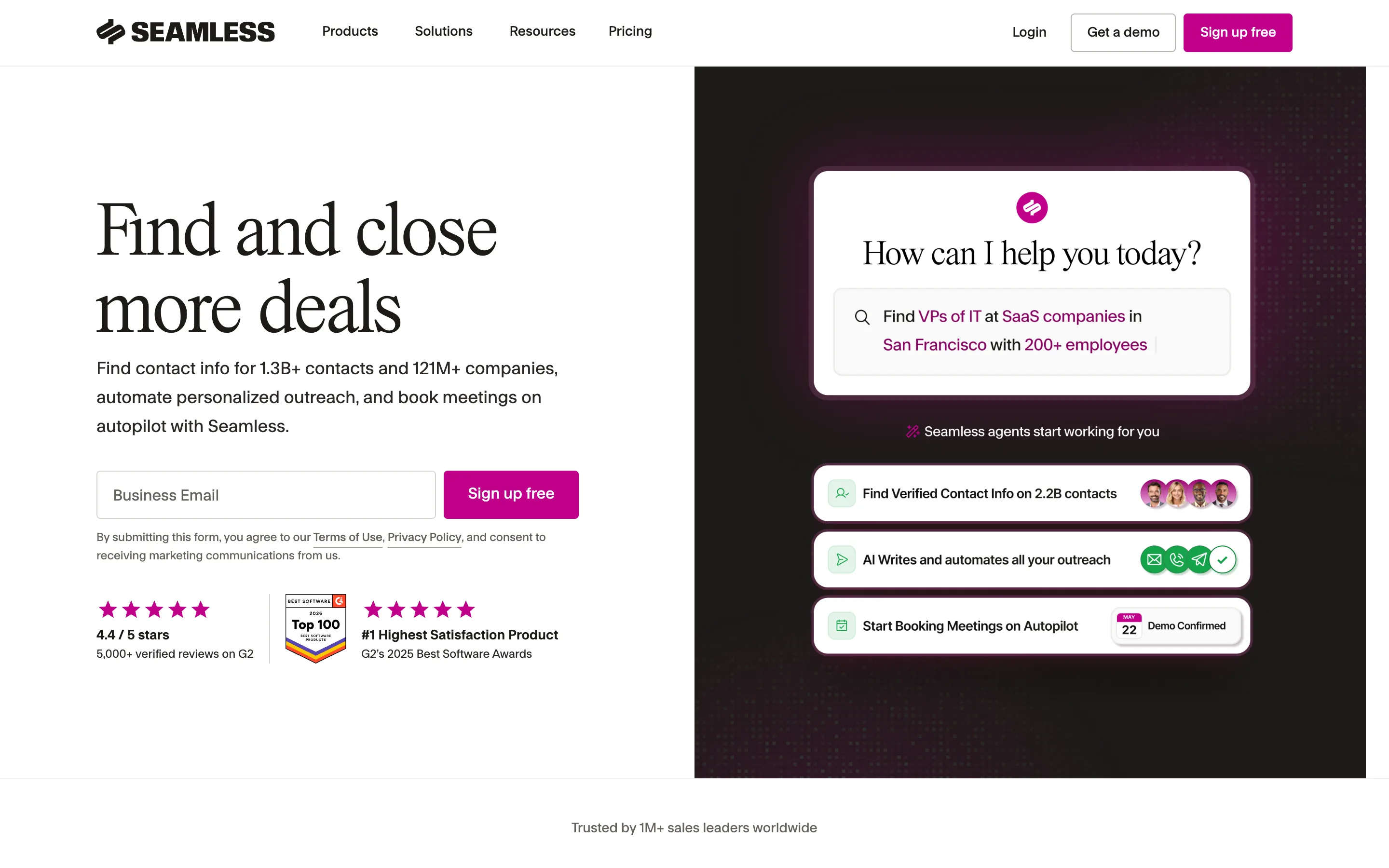
C'est un gros moteur de contacts US, pour les équipes que revérifier les résultats ne dérange pas.
Seamless.AI se présente comme un moteur de recherche de contacts en temps réel plutôt qu'une liste figée, avec une grande base US et des forfaits façon « illimité ». Comme Clodura, c'est un outil de base et de recherche, et il mise à fond sur le volume.
Une équipe centrée sur les États-Unis qui veut beaucoup de recherches sans compter ses crédits à chaque geste y verra un attrait.
Le hic, c'est la qualité de la donnée et un prix sur devis. La recherche « en temps réel » ressort quand même des lignes agrégées, et la précision sur un vrai envoi est inégale : une partie de ce qui revient demande une deuxième vérification.
Le prix passe par un commercial, avec des crédits qui expirent. La couverture européenne est mince. Les relances commerciales sont insistantes. C'est un outil de volume où le problème de qualité se révèle après l'export.
Le nombre de contacts qu'il fait remonter est élevé. Mais beaucoup n'ont pas tenu sur ma liste.
Enrow trouve et contrôle chaque contact au moment de la requête, lui fait passer plus de 10 vérifications avant de le compter, ajoute des portables européens conformes RGPD que Seamless ne fournit pas vraiment, facture au résultat valide, et remet le contact complet dans votre CRM en un clic.
Vous obtenez moins de lignes brutes, mais bien plus de lignes qui arrivent vraiment.
- +Grande base de contacts US, présentée comme de la recherche en temps réel
- +Positionnement de forfait « illimité »
- +Extension Chrome et intégrations CRM
- +Fait remonter de gros volumes rapidement
- –Précision inégale ; les résultats demandent souvent une revérification
- –Prix sur devis, crédits qui expirent et relances commerciales pesantes
- –Couverture européenne mince
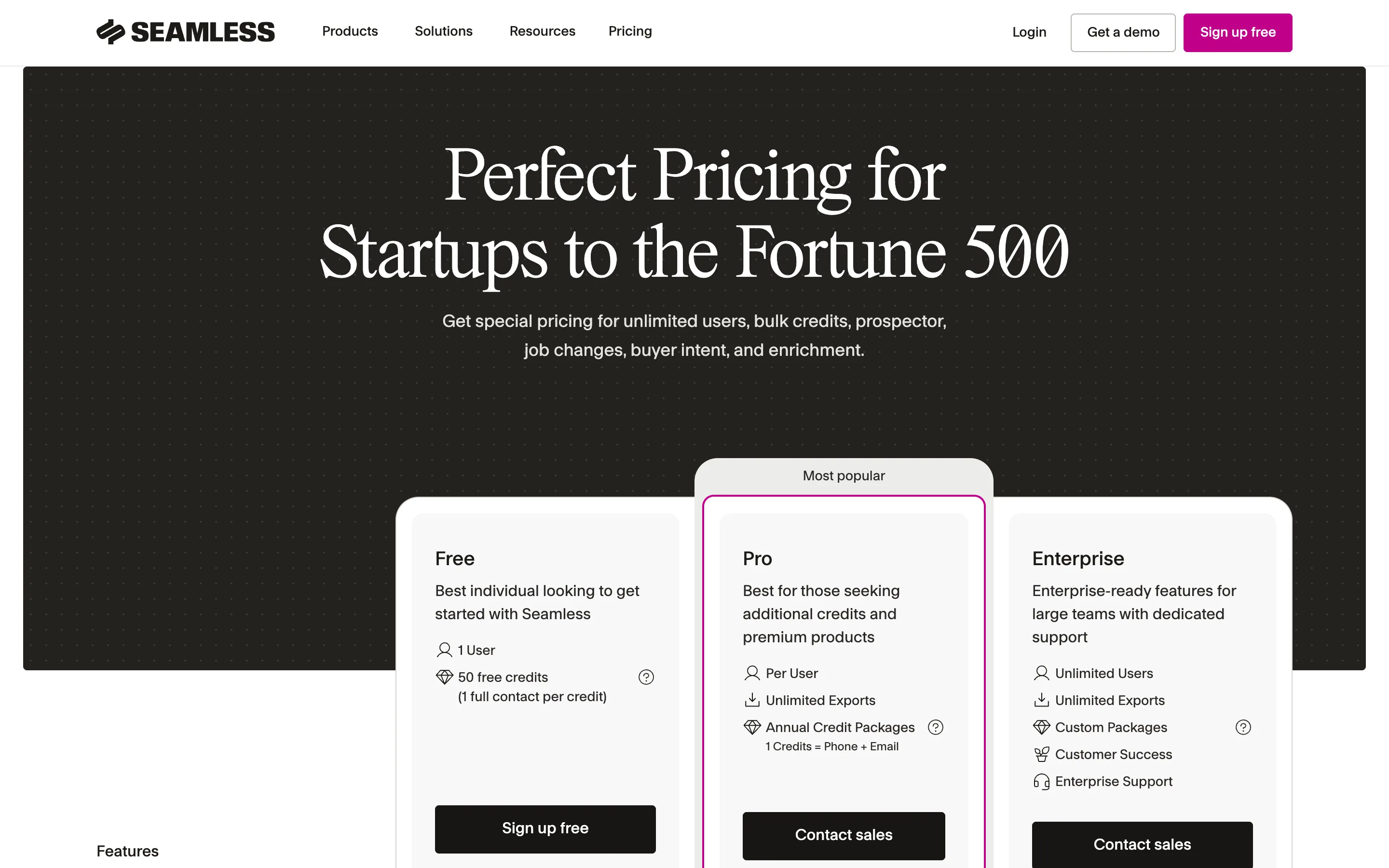
Vente par des commerciaux, sans chiffres publics clairs : une offre gratuite donne des crédits quotidiens, les forfaits payants passent par un devis avec des packs de crédits qui expirent. Un crédit part sur la recherche, pas sur un résultat confirmé, et sans taux de réussite publié (~30 % supposé) le coût réel d'un contact à qui écrire tourne autour de 4× le tarif au crédit, une fois retirés les ratés, les bounces et les packs qui expirent.
vs Enrow: Seamless fait remonter du volume que vous devez ensuite vérifier ; Enrow vérifie avant de compter et ne facture que sur un résultat valide (0,015 € sur Start, 0,0075 € sur Pro), avec les portables européens et l'export CRM en un clic.
5. UpLead
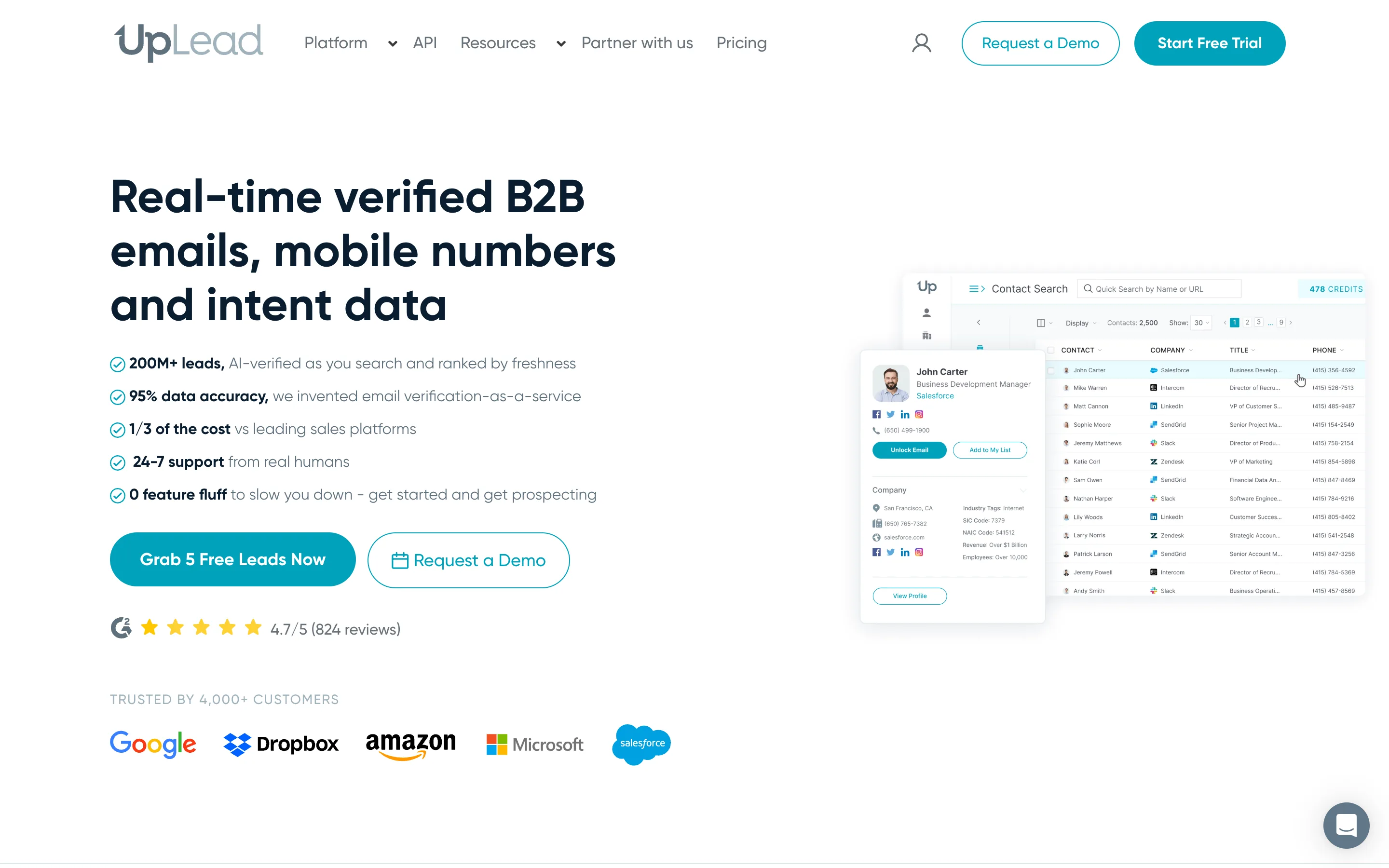
C'est la base US filtrable qui vérifie au moment de l'export.
UpLead est une base B2B consultable avec plus de 50 filtres, une vérification d'emails en temps réel au moment de l'export, et une garantie de précision affichée à 95 % qui vous recrédite une mauvaise adresse.
Là où Clodura regroupe toute une suite d'outbound, UpLead se limite à la donnée : parcourir, filtrer, vérifier, exporter. Vous voulez une liste US propre sur laquelle bâtir, avec une promesse de qualité attachée ? Ça tombe bien.
Les limites, c'est la géographie et le modèle. UpLead est fort aux États-Unis et plus mince en Europe, et ça reste une base : la fraîcheur suit le cycle de rafraîchissement, même avec la vérification à l'export. Les crédits sont par forfait et ne vont pas loin à gros volume.
Pas d'outil de campagnes, pas de SDR IA ici — ce qui va très bien si vous ne vouliez que de la donnée.
L'étape de vérification à l'export et la garantie qui recrédite assurent la fiabilité de la liste, et c'est à saluer.
Mais Enrow construit chaque ligne à la volée au lieu de ressortir une ligne stockée, couvre les portables européens, facture au résultat valide, et envoie toute la fiche vérifiée dans votre CRM en un clic.
On garde la même honnêteté sur la qualité, avec une source plus fraîche et une vraie couverture européenne.
- +Base US consultable avec plus de 50 filtres
- +Vérification en temps réel à l'export, garantie de précision à 95 % (recrédit)
- +Interface propre, en self-service
- +Données d'intention disponibles sur les paliers supérieurs
- –Fort aux États-Unis, couverture européenne plus mince
- –Un crédit part sur la révélation, pas sur une personne encore en poste ; les lignes ne sont fraîches que jusqu'au dernier crawl qui les a mises à jour
- –Les crédits ne vont pas loin à gros volume
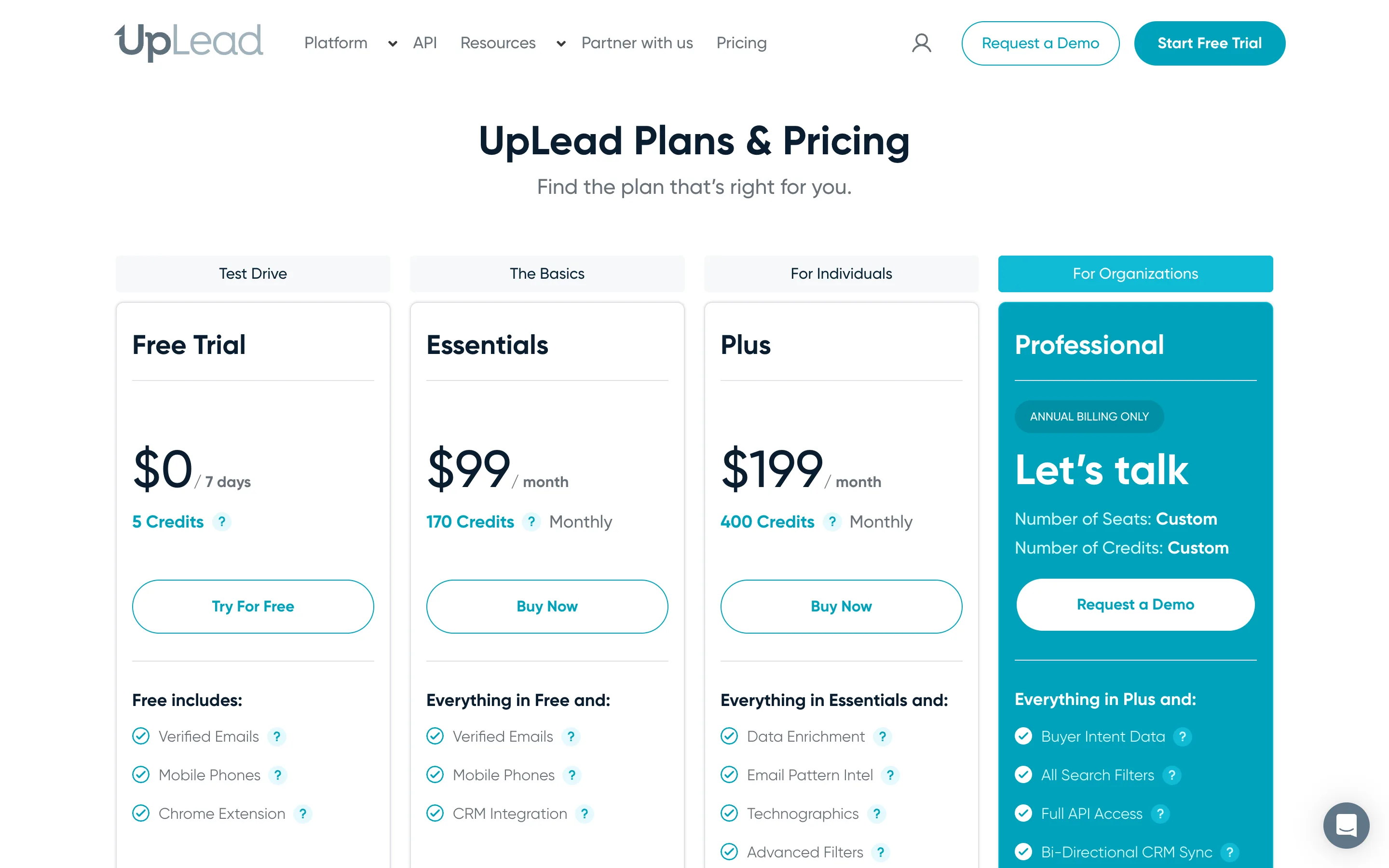
En euros : Essentials à partir de 90 €/mois pour 170 crédits au mois (environ 67 €/mois en annuel), et un crédit révèle un contact vérifié à l'export. Un crédit part sur la révélation, pas sur une personne encore en poste : ça met la révélation à 0,53 €, déjà 34× les 0,015 € d'Enrow au même volume d'entrée, et plutôt 1,77 € le contact utilisable si l'on ne compte que les ~30 % de lignes encore en poste.
vs Enrow: UpLead vend des révélations depuis une base stockée ; Enrow trouve et vérifie en direct et ne facture que sur un résultat valide (0,015 € à 1 000, 0,0075 € sur Pro), une recherche ratée ne coûtant rien, portables européens compris.
6. Snov.io
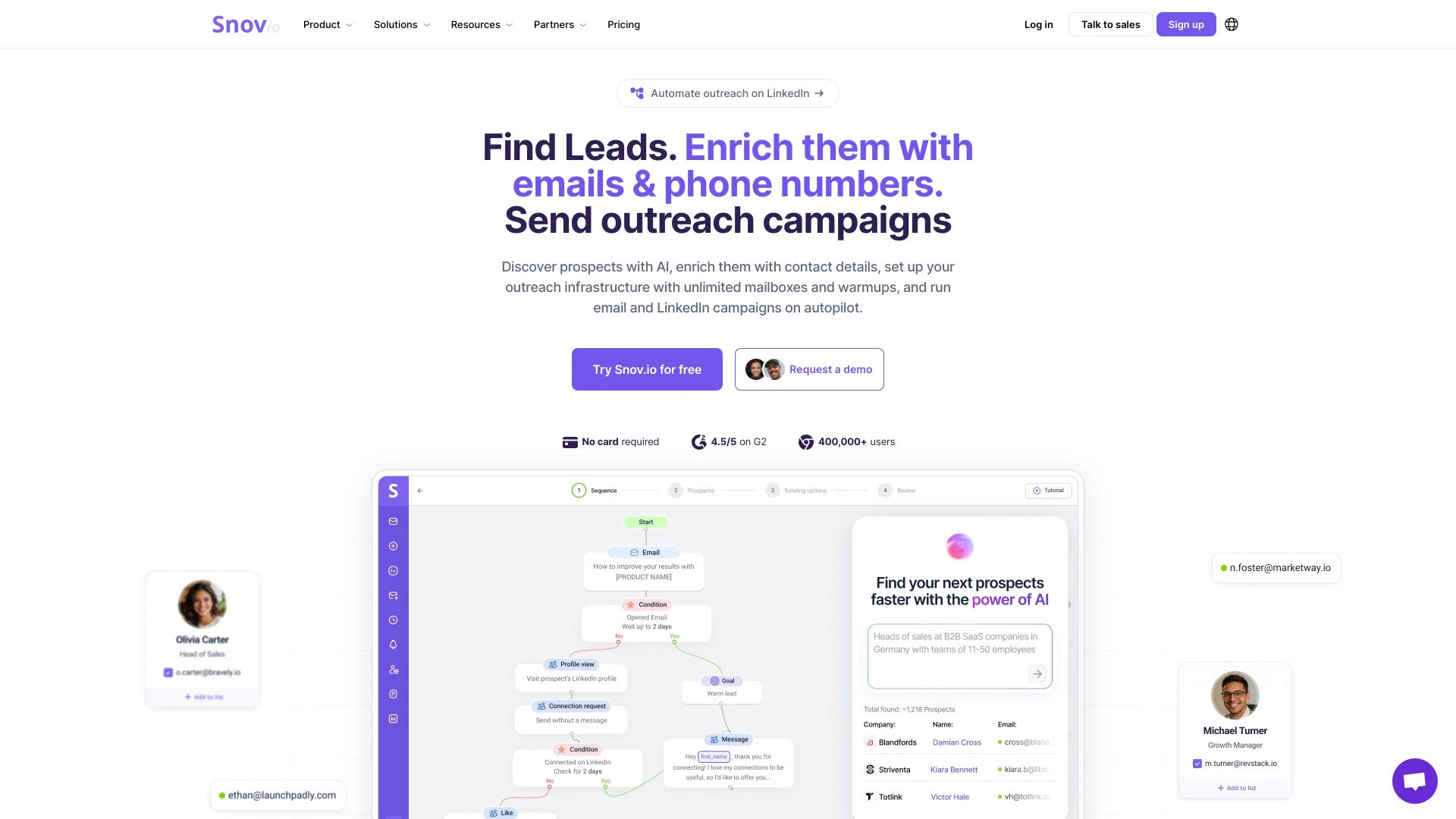
C'est le remplaçant le plus proche si vous voulez garder le tout-en-un pour moins cher.
Snov.io est une suite d'outbound complète, très proche de Clodura : une base B2B consultable, une recherche d'emails et un vérificateur en plusieurs étapes, plus des campagnes automatisées, un CRM et de l'automatisation LinkedIn.
Même promesse aussi : un seul abonnement au lieu d'un outil de recherche, d'un logiciel d'envoi et d'un CRM. Là où il se démarque de Clodura, c'est par un prix plus simple et un modèle de crédits qui n'est pas lié à un SDR IA dont vous ne vous servirez peut-être pas.
Son créneau : l'équipe qui veut l'ampleur de Clodura pour moins cher.
Le compromis est réel. Snov s'appuie sur une base stockée, et une base stockée se périme : la précision de la recherche sur une liste réelle reste en dessous de celle des spécialistes, le même problème de fraîcheur que Clodura.
Il est aussi facturé à la recherche plutôt qu'au résultat valide, et c'est là que part l'argent.
Une recherche consomme un crédit, qu'elle trouve quelque chose ou non, la plupart ne trouvent rien, et la donnée de Snov est assez faible pour qu'une partie des quelques adresses obtenues bounce en plus.
Vous payez aussi tout un outillage auquel vous ne toucherez peut-être jamais si vous ne voulez que des emails vérifiés. Les numéros sont hors des crédits email, dans un système de jetons vendus à part (environ 0,018 € le jeton, valables 90 jours à peu près).
Recherche de prospects et éditeur de campagnes dans un seul outil : facile de passer du filtre au premier email. Mais une partie des emails trouvés sur ma liste demandait une deuxième vérification. C'est la taxe de la base, et Clodura la paie aussi.
Enrow va chercher chaque contact frais au moment où vous le demandez, le vérifie avec plus de 10 contrôles, et ajoute les portables européens que Snov laisse de côté. Vous perdez l'outil de campagnes intégré. Mais sur la donnée elle-même, c'est la source la plus propre et la plus fraîche.
- +Base B2B consultable, plus recherche et vérification d'emails au même endroit
- +Campagnes automatisées, CRM et automatisation LinkedIn intégrés
- +Nombre d'utilisateurs illimité sur les forfaits payants
- +Réduction de 25 % sur l'annuel
- –Facturé à la recherche tentée sur une base périmée et faible : vous payez la recherche, environ 7 sur 10 ne trouvent rien (taux de réussite ~30 % supposé), et une partie du reste bounce
- –Les crédits repartent de zéro chaque mois : tout ce que vous ne dépensez pas est perdu
- –Beaucoup de fonctionnalités superflues si vous n'avez besoin que d'emails vérifiés
- –Les numéros passent par des jetons vendus à part (0,018 €/jeton, ~90 jours), sans couverture européenne ; l'automatisation LinkedIn est une option payante
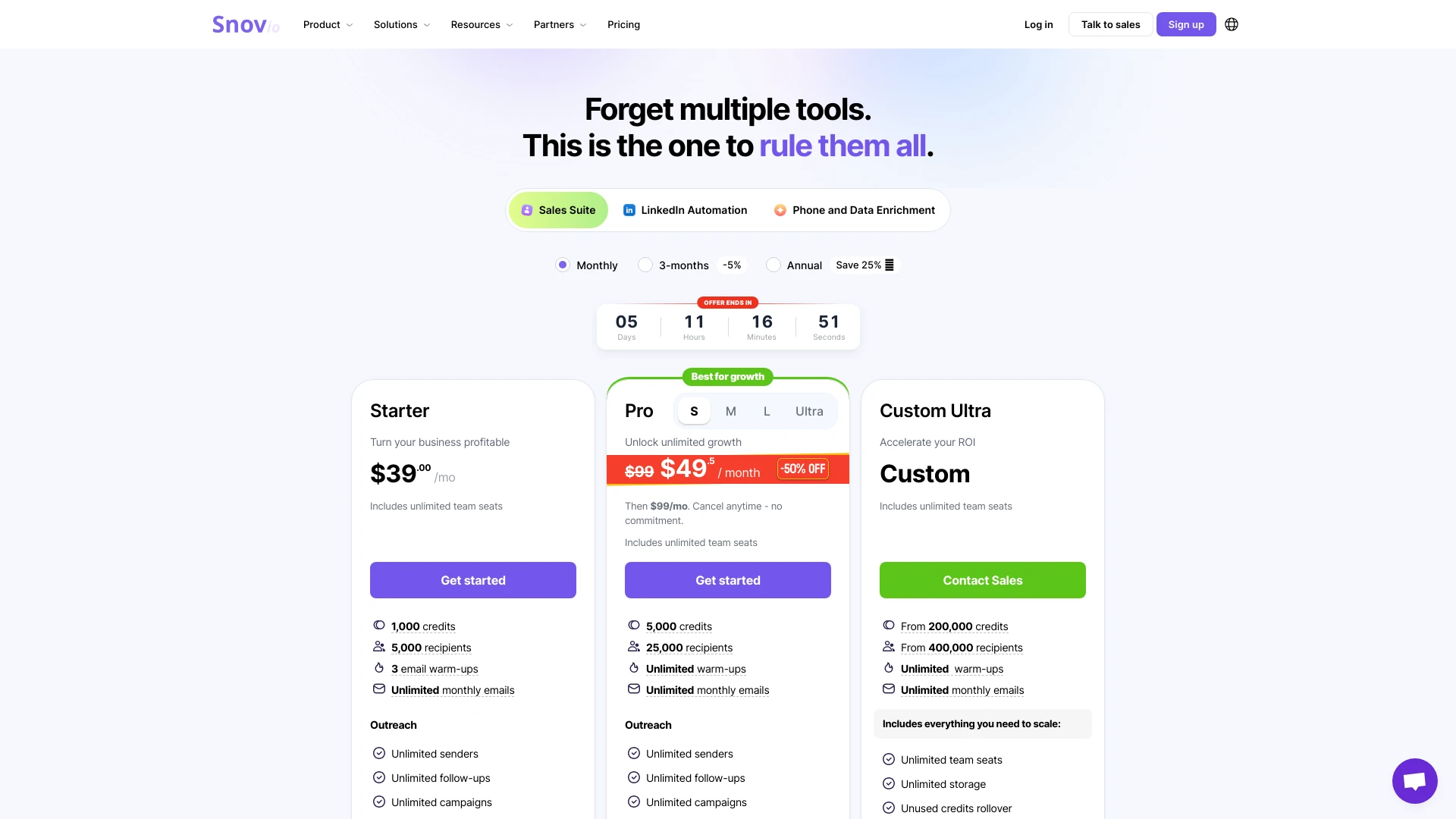
En euros : Starter à partir de 35 €/mois pour 1 000 crédits ; l'engagement annuel fait baisser la facture de 25 %. Mais Snov facture la recherche tentée, pas le résultat : sans taux de réussite publié (~30 % supposé) et avec des crédits qui repartent de zéro chaque mois, les 0,035 € affichés par recherche valent en réalité environ 0,15 € l'email trouvé, près de dix fois les 0,015 € d'Enrow au même volume. Les numéros passent par des jetons vendus à part (0,018 €/jeton, ~90 jours), sans couverture européenne.
vs Enrow: Snov intègre un outil d'envoi et une base qu'Enrow n'a pas ; mais Enrow ne facture que sur un résultat valide (0,015 € à 1 000, 0,0075 € à 10 000), reporte les crédits à partir du Pro, met les portables européens dans le même système et fait l'export de la fiche complète vers le CRM que Snov laisse de côté.
7. Hunter.io
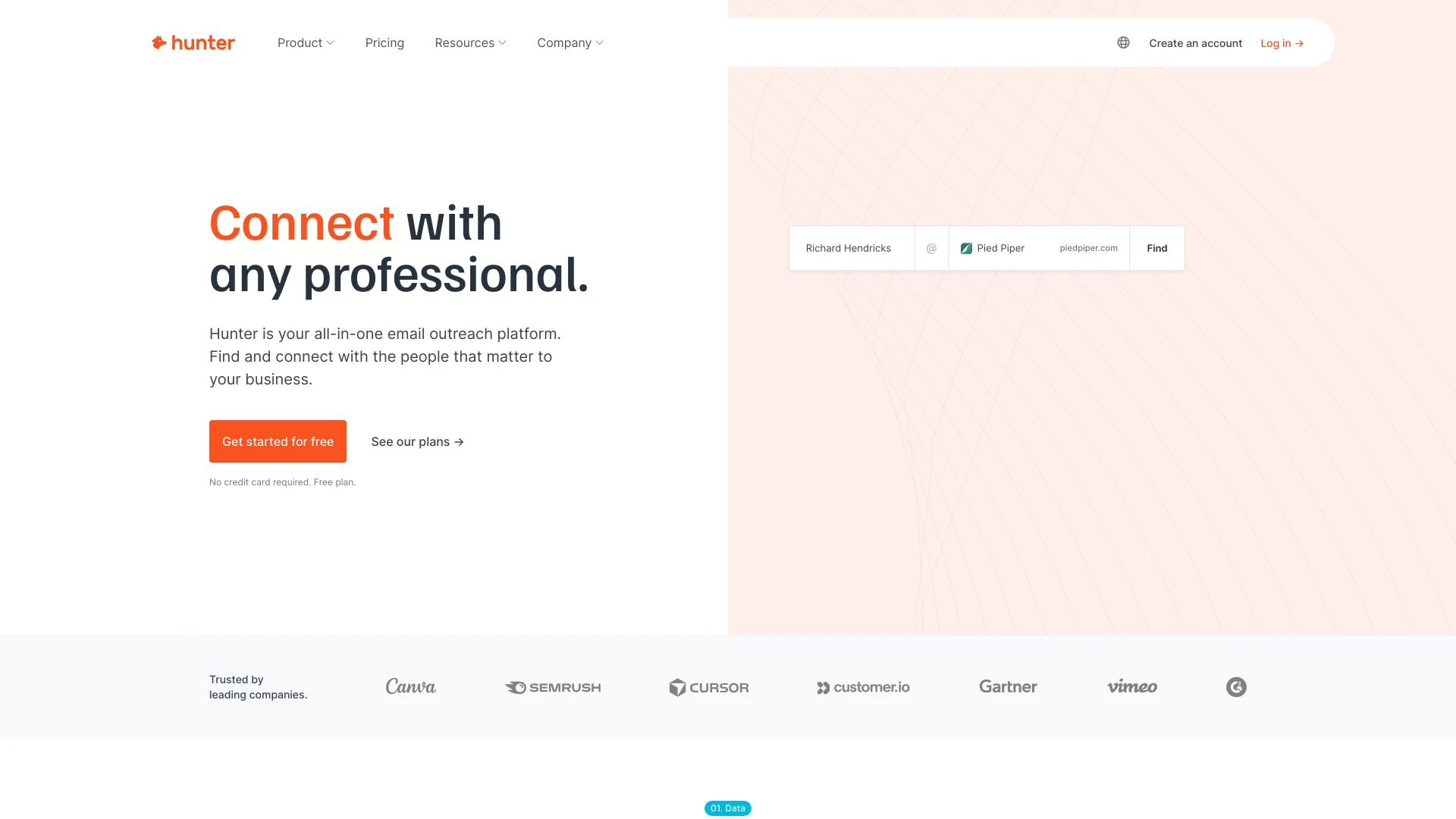
Des emails à partir d'un domaine, sans toute la suite ? Voilà l'argument de Hunter.
Hunter est un outil de recherche et de vérification d'emails éprouvé, en self-service. Donnez-lui un domaine, ou un nom et une entreprise, et il renvoie des adresses avec un indice de confiance et une source qui montre où il a vu le format.
Là où Clodura vous tend une machine d'outbound complète, Hunter fait bien un travail ciblé et reste discret. Il se branche à la plupart des CRM et a un vrai plan gratuit. Sur de simples recherches d'emails par domaine, difficile de le prendre en défaut.
Hunter facture la tentative. Chaque recherche de l'Email Finder consomme un crédit, qu'elle trouve une adresse ou non.
Hunter ne publie pas de taux de réussite. Je compte donc avec mon propre chiffre de travail : environ 30 % des recherches renvoient un email. Autrement dit, chaque email trouvé vous coûte plus de trois recherches payées. Sa donnée vient d'un crawl du web et d'une reconnaissance de format, donc les petites entreprises sont mal couvertes.
Et il n'y a aucun numéro de téléphone. Aucun. Si l'appel fait partie de votre prospection, Hunter est un demi-outil, et ça n'a rien de l'ampleur tout-en-un de Clodura.
Les sources sur chaque adresse sont vraiment utiles pour faire confiance à une supposition. Mais Enrow ne fait pas l'impasse sur les numéros, puisqu'il les trouve vraiment : des numéros de portable dans tous les pays. Hunter n'en a aucun.
Enrow fait aussi passer plus de 10 vérifications pour qu'une adresse supposée ne compte jamais, cherche chaque contact frais au lieu de reconnaître un format, et écrit la fiche contact complète et vérifiée dans votre CRM en un clic.
- +Recherche par domaine et par nom, avec les sources
- +Produit éprouvé, nombreuses intégrations (CRM et autres outils)
- +Vrai plan gratuit (50 crédits/mois)
- +Simple, en self-service, vite pris en main
- –Facturé à la recherche tentée, trouvée ou non : avec notre hypothèse de ~30 %, la plupart des recherches reviennent vides
- –Les crédits repartent de zéro chaque mois : ceux qui restent sont perdus au renouvellement
- –Aucune donnée téléphonique
- –La donnée issue du crawl et du format s'appauvrit sur les petites entreprises
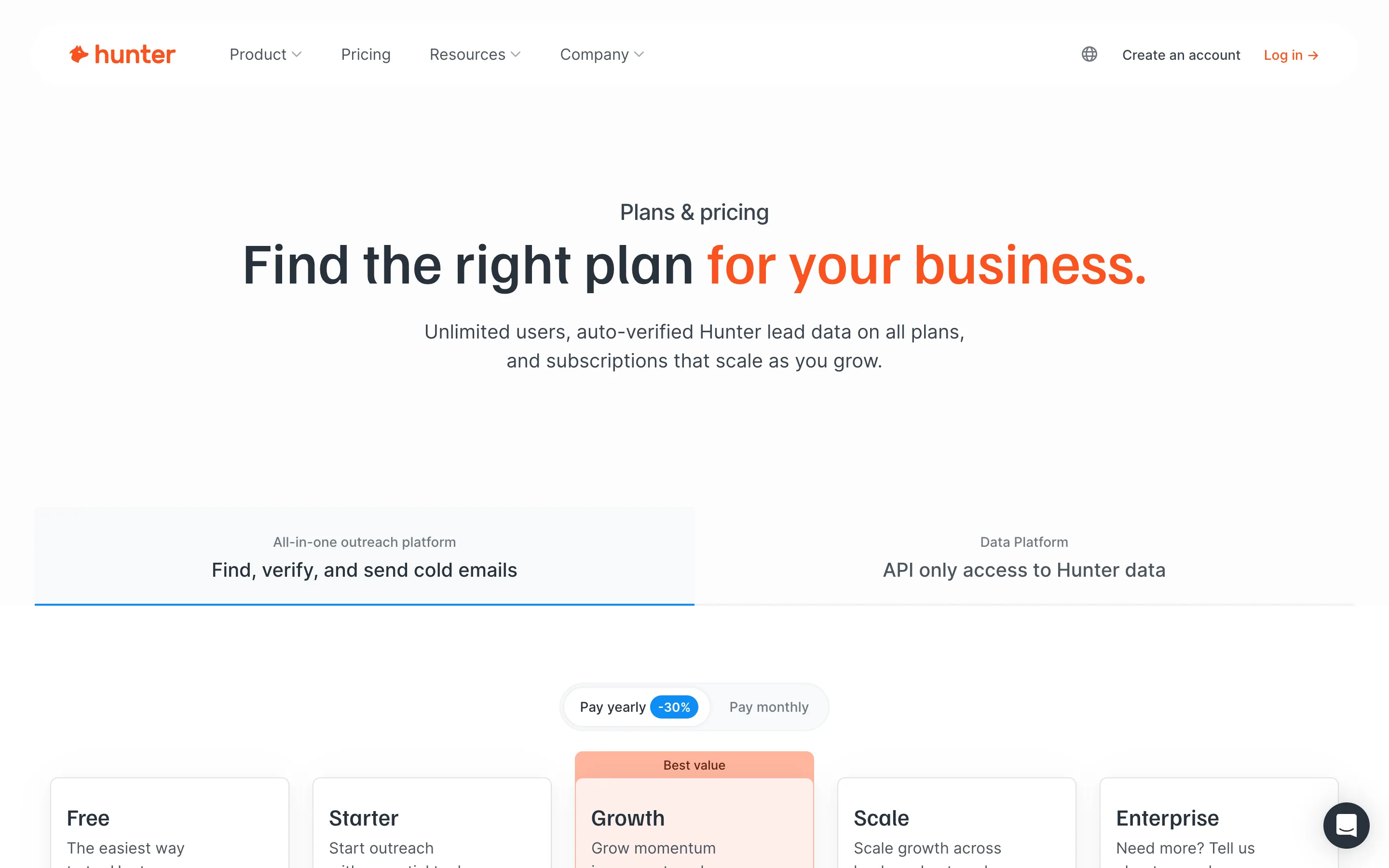
En euros, 1:1 avec le dollar : Starter à partir de 49 €/mois pour 2 000 crédits, avec un plan gratuit à 50 crédits/mois. Mais Hunter facture chaque recherche tentée, trouvée ou non, et les crédits repartent de zéro chaque mois. Divisez les 0,0245 € d'une recherche par ces ~30 % (notre hypothèse, pas un chiffre de Hunter) : l'email trouvé revient à environ 0,082 €. Comptez les crédits perdus à chaque remise à zéro et vous arrivez à environ 0,105 €, à peu près 7× les 0,015 € d'Enrow sur Start et 14× les 0,0075 € sur Pro.
vs Enrow: Hunter facture la tentative, pas le résultat, et n'a aucun numéro ; Enrow ne facture que sur un résultat valide, donc une recherche ratée ne coûte rien, avec des portables européens et la fiche complète déposée dans le CRM en un clic en plus.
8. Prospeo
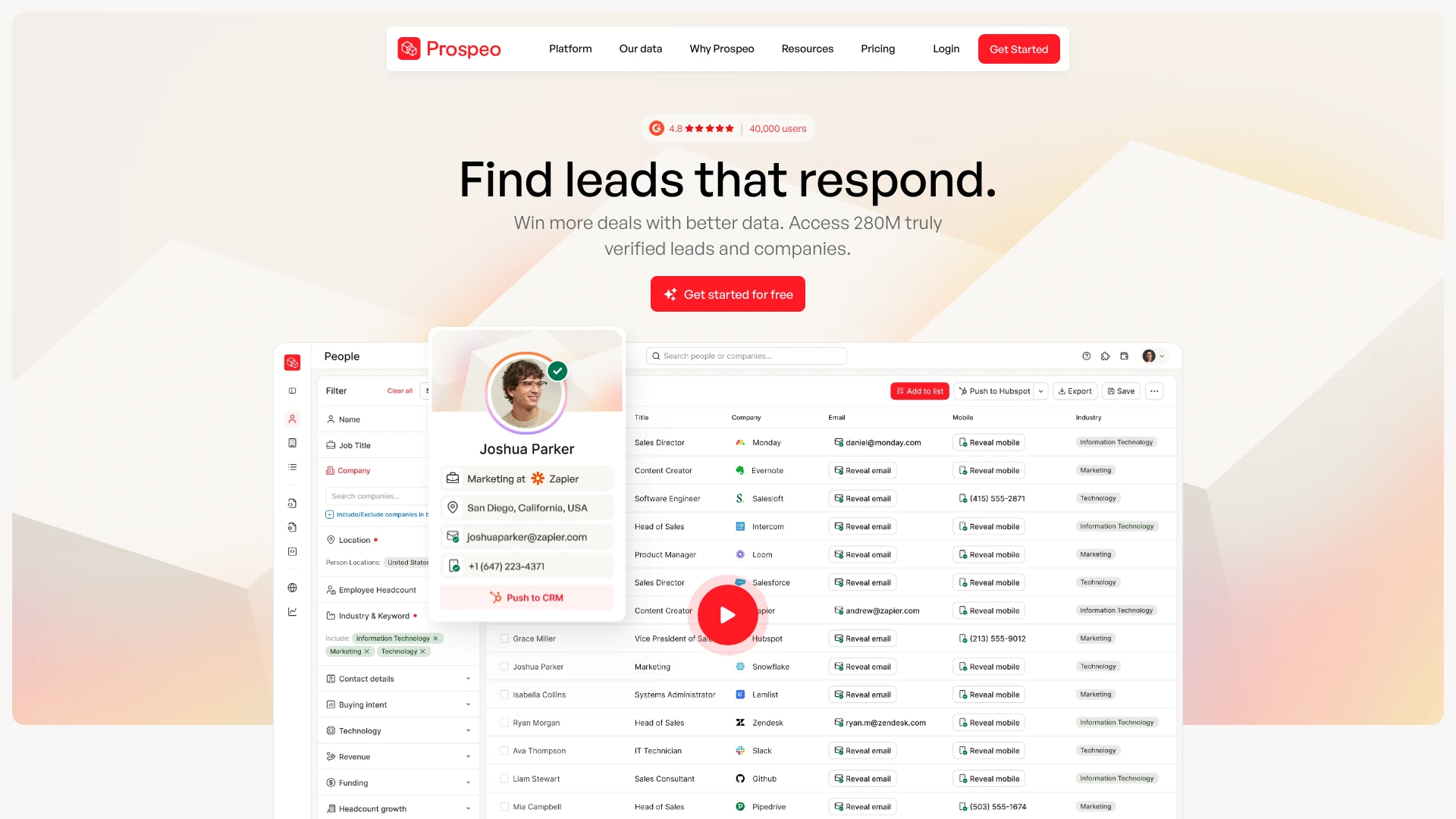
C'est le prix d'appel pour de l'email à partir de LinkedIn.
Prospeo a une extension Chrome, un prix d'appel marquant, et la vérification incluse dans le même solde de crédits. Il compte 1 crédit par email trouvé et rien quand il ne trouve rien : contrairement à la réserve mixte de Clodura où les numéros coûtent 10×, les emails sont à tarif fixe.
Son créneau, c'est l'email LinkedIn à volume faible à moyen, où une recherche ratée vous coûte un prospect plutôt qu'un crédit — l'exact opposé d'une plateforme tout-en-un.
Le point faible, c'est la qualité et la régularité de la donnée. Dès que vous dépassez les petits volumes, les résultats deviennent inégaux, et les numéros coûtent 10 crédits sans couverture européenne documentée. Pas de report non plus : ce que vous ne dépensez pas chaque cycle est perdu.
Le taux de réussite irrégulier ne gonfle pas la facture, il faut le reconnaître. Il laisse simplement des trous dans la liste.
Lancée sur une courte liste de profils, l'extension répond vite, et l'offre gratuite permet de tester sans carte.
Mais Enrow ne facture jamais une recherche sans résultat non plus, fait passer plus de 10 vérifications avant qu'un email ne compte, et reporte les crédits sur Pro et Scale. La facturation est aussi honnête, le tarif plus bas et la liste mieux remplie.
- +1 crédit par email trouvé, 0 sur une recherche ratée
- +Recherche LinkedIn et par domaine avec une bonne extension Chrome
- +Vérification comprise dans le même solde de crédits
- +Plan gratuit (100 crédits/mois)
- –Qualité de la donnée inégale dès qu'on dépasse les petits volumes
- –Les numéros coûtent 10 crédits, sans couverture européenne documentée
- –Pas de report des crédits ; facturation par utilisateur
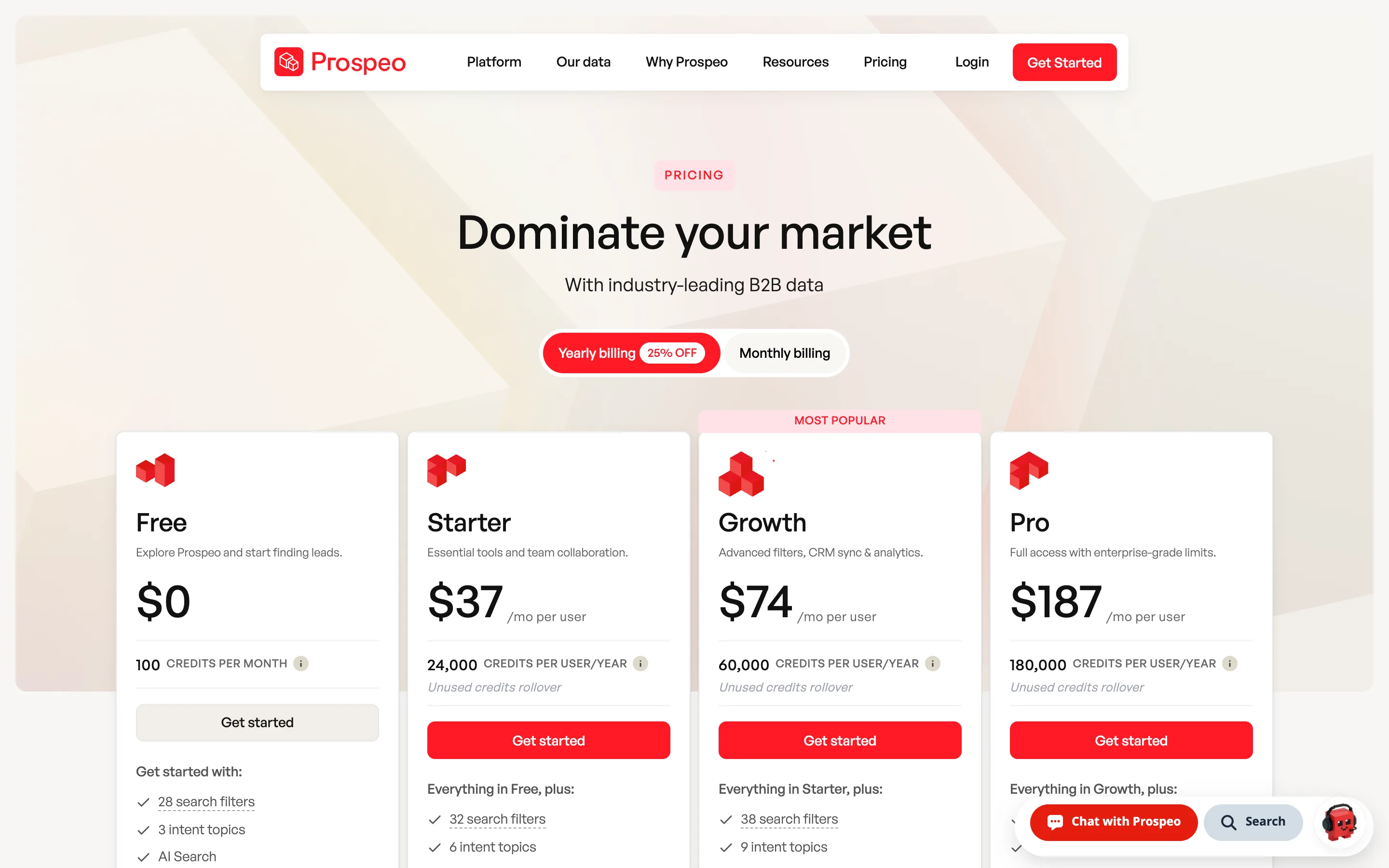
En dollars, par utilisateur : Starter à partir de 49 $/mois pour 2 000 crédits ; l'annuel revient environ 25 % moins cher. Prospeo ne débite un crédit que sur un email trouvé, donc son prix affiché est proche du coût réel : environ 0,0245 $ l'email valide, environ 1,4× les 0,017 $ d'Enrow au même volume. Les numéros coûtent 10 crédits, sans couverture européenne documentée, et les crédits ne se reportent pas.
vs Enrow: les deux ne facturent que sur une adresse trouvée, sans taxe de la tentative ; Enrow est simplement moins cher (0,017 $ l'email valide à 1 000, 0,0087 $ sur Pro), applique plus de 10 vérifications avant qu'un email ne compte et reporte les crédits, là où la facturation par utilisateur de Prospeo s'additionne vite en équipe.
9. LeadMagic
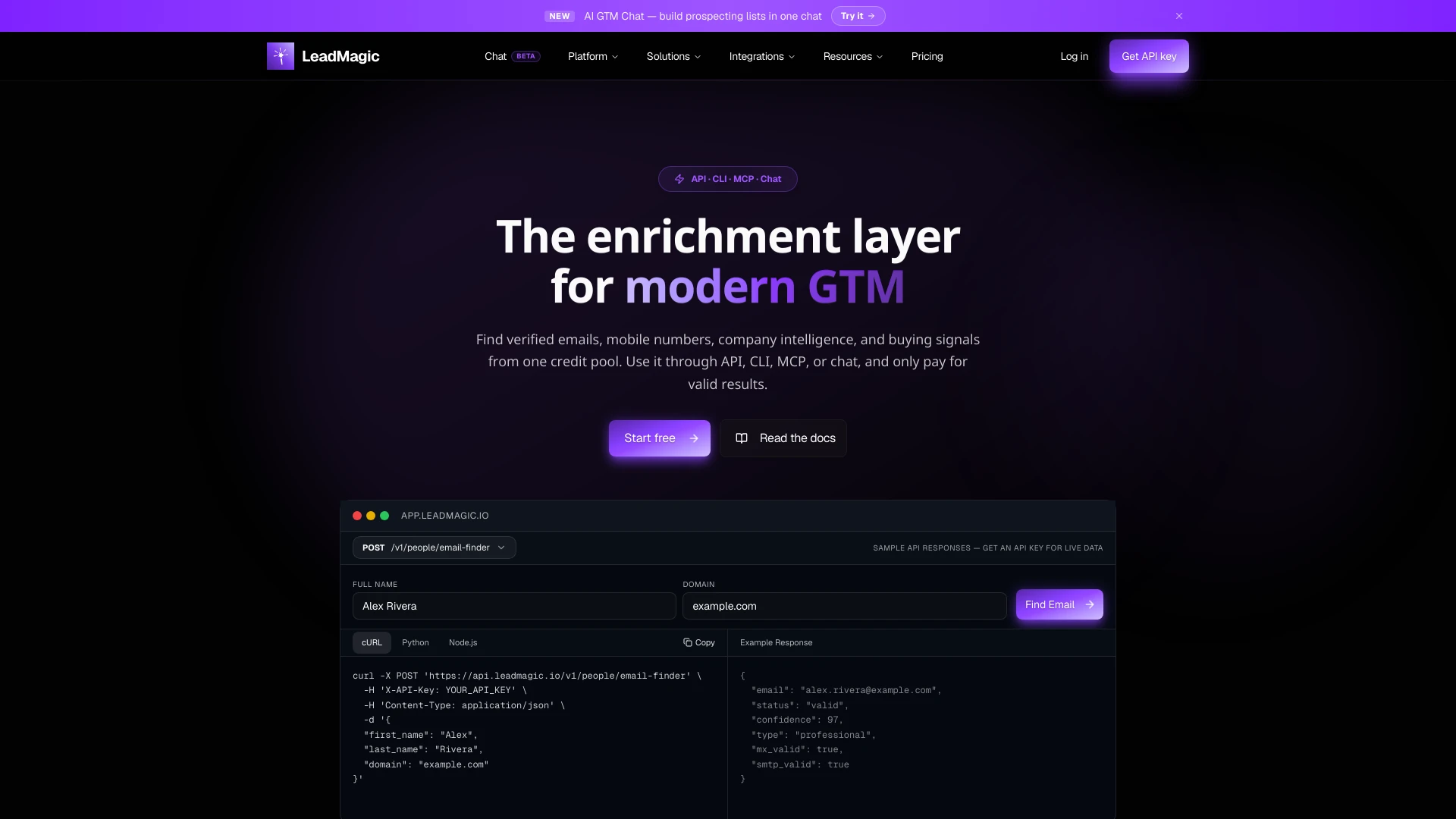
C'est le bon choix si votre « outil » est en fait un pipeline.
LeadMagic est pensé comme une API : plus de 15 points d'accès (email, portable, entreprise, profil, changement de poste) qui puisent tous dans la même réserve de crédits, plus une ligne de commande et un serveur MCP pour les flux d'agents IA.
Les crédits ne sont retirés que sur un résultat réussi, ce qui l'écarte complètement du modèle de suite de Clodura : vous achetez des appels de données, pas une plateforme. Son créneau, ce sont les équipes RevOps qui préfèrent écrire un script que cliquer dans une interface tout-en-un.
J'ai scripté un petit lot sur ses points d'accès avant d'écrire. Une seule réserve de crédits pour tout simplifie la comptabilité, et payer au résultat valide, c'est la bonne façon de faire. Mais c'est une API, pas un produit qu'on tend à un commercial. Un non-développeur va caler.
Les numéros coûtent 5 crédits chacun et la couverture téléphonique européenne/RGPD n'est pas communiquée, donc la fiabilité en Europe reste une inconnue. Le report des crédits ne démarre qu'à partir d'Essential.
L'API d'Enrow est tout aussi scriptable, et son serveur MCP se branche aux mêmes agents. Il fournit en plus une vraie interface et une extension Chrome que vos commerciaux peuvent réellement utiliser, des portables européens, et des crédits qui se reportent à partir de Pro.
Il reste programmable, sans obliger tout le monde à devenir développeur.
- +Payé au résultat valide, aucun frais sur une recherche ratée
- +Plus de 15 points d'accès sur une réserve de crédits commune
- +Outils pour développeurs : API, ligne de commande, serveur MCP
- +Recherche de numéros de portable incluse, sur la même réserve
- –Pas de report des crédits sur le forfait d'entrée Basic : les crédits inutilisés expirent au renouvellement
- –Les numéros coûtent 5× un email ; aucune information publiée sur la couverture européenne/RGPD
- –C'est plus une API qu'une interface à parcourir : un non-développeur va peiner
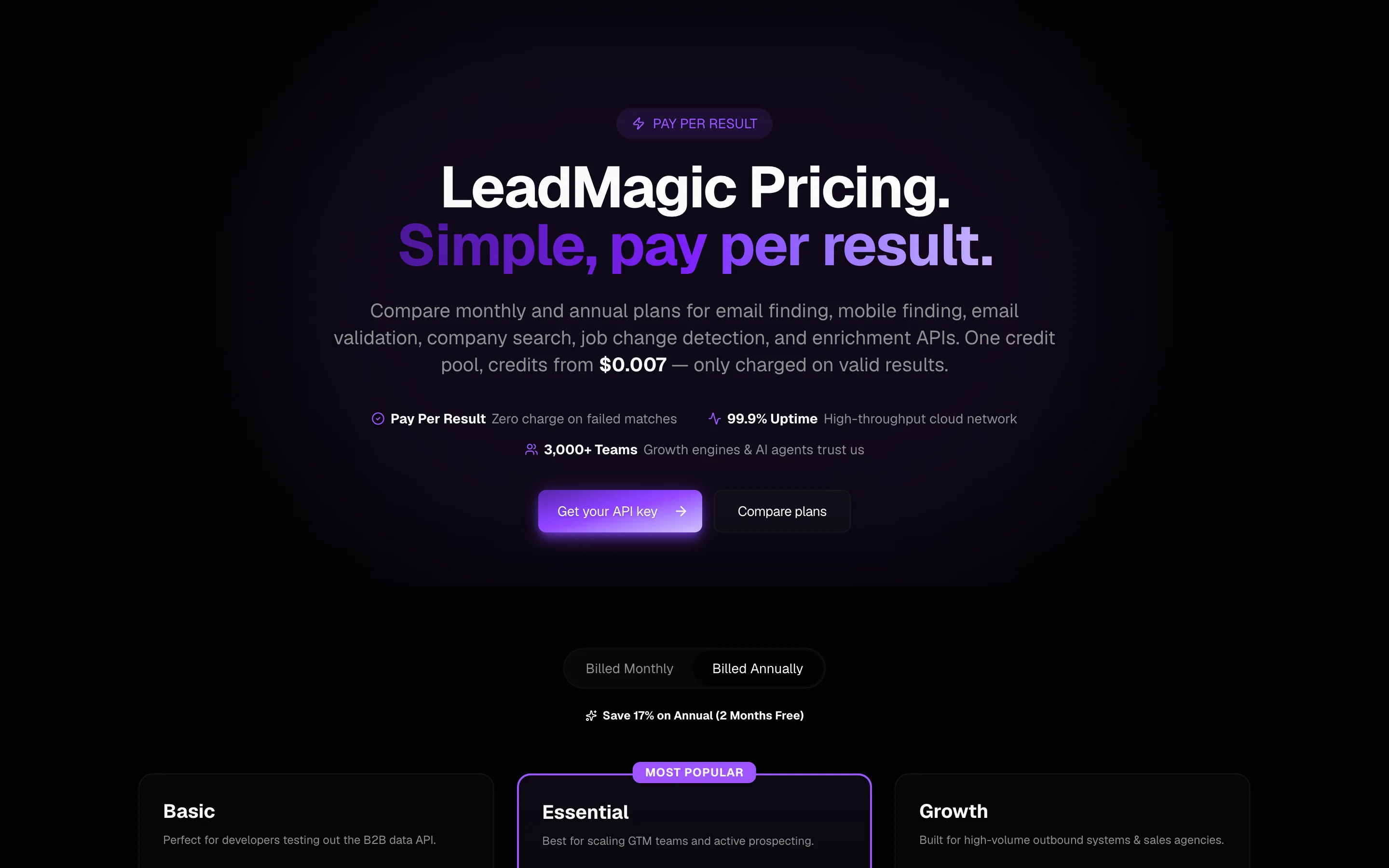
En euros : Basic à partir de 45 €/mois pour 2 000 crédits (email 1, portable 5, validation 0,25), retirés seulement sur un résultat réussi. Le prix affiché tourne autour de 0,0225 € l'email valide, mais l'absence de report sur Basic le fait monter à près de 0,029 € une fois les crédits perdus comptés, un peu moins du double des 0,015 € d'Enrow sur Start ; le report et un coût moindre arrivent à partir d'Essential.
vs Enrow: les deux facturent au résultat valide avec de vraies API ; mais les crédits Basic de LeadMagic expirent, alors qu'Enrow reste à 0,015 € sur Start et 0,0075 € sur Pro, ajoute une interface pour les commerciaux, des portables européens et la fiche déposée dans le CRM en un clic.
10. Clodura.ai
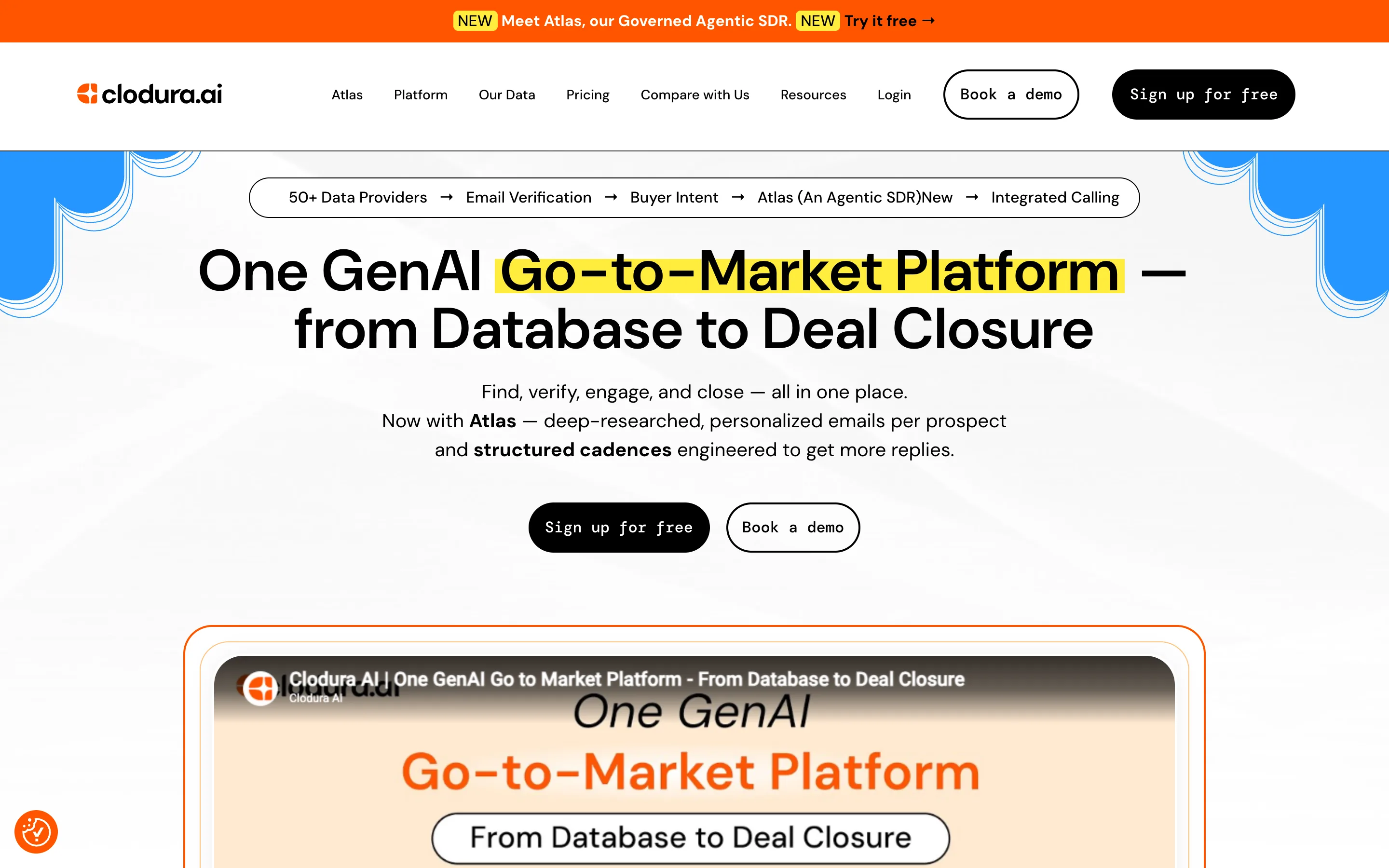
C'est le point de repère de cette liste : l'outil auquel les dix autres sont comparés.
Clodura.ai réunit toute la prospection outbound : une base de 600 millions de contacts, un SDR IA, des cadences, une recherche d'emails, un vérificateur et des numéros de portable, le tout sur un seul abonnement au crédit, sans limite d'utilisateurs.
Une petite équipe qui veut prospecter, relancer et envoyer sans changer d'onglet en a plus pour son argent que la plupart des outils spécialisés, et le plan Free Forever est un vrai moyen de l'essayer.
Le compromis, c'est celui dont parle toute cette liste. La donnée de Clodura est agrégée depuis plus de 50 fournisseurs dans une base stockée, et les avis pointent la fraîcheur et la précision téléphonique à grande échelle — l'éternel reproche des « infos périmées ».
Les numéros coûtent 10 crédits chacun, prélevés sur les mêmes crédits que vos emails, si bien qu'un mois à beaucoup appeler vide le budget de recherche, et un crédit est consommé, que la ligne se révèle utilisable ou non.
Si la donnée est ce sur quoi vous vous appuyez vraiment, la suite autour n'est qu'un surcoût.
Pour le prix, l'ampleur est impressionnante, et l'angle SDR IA est un vrai attrait pour une équipe légère. Mais sur ma liste, une bonne part des contacts avait vieilli, et les numéros étaient inégaux hors des États-Unis.
Enrow fait moins, volontairement (pas de base, pas d'outil de campagnes, pas de SDR IA), et fait mieux sur la donnée elle-même : en direct, plus de 10 contrôles, des portables européens, payés au résultat valide, et toute la fiche dans votre CRM en un clic.
- +Tout-en-un : base de 600M, SDR IA, cadences, recherche d'emails et vérificateur
- +Plan Free Forever (100 crédits/mois, utilisateurs illimités)
- +Prix d'appel marquant, vu l'ampleur de l'offre
- +Les crédits se reportent jusqu'à 2 mois
- –Base stockée et agrégée ; les avis pointent la fraîcheur et les lignes périmées
- –Les numéros coûtent 10 crédits chacun et puisent dans les mêmes crédits que les emails
- –Précision téléphonique inégale hors des États-Unis ; vous payez toute la suite pour utiliser la donnée
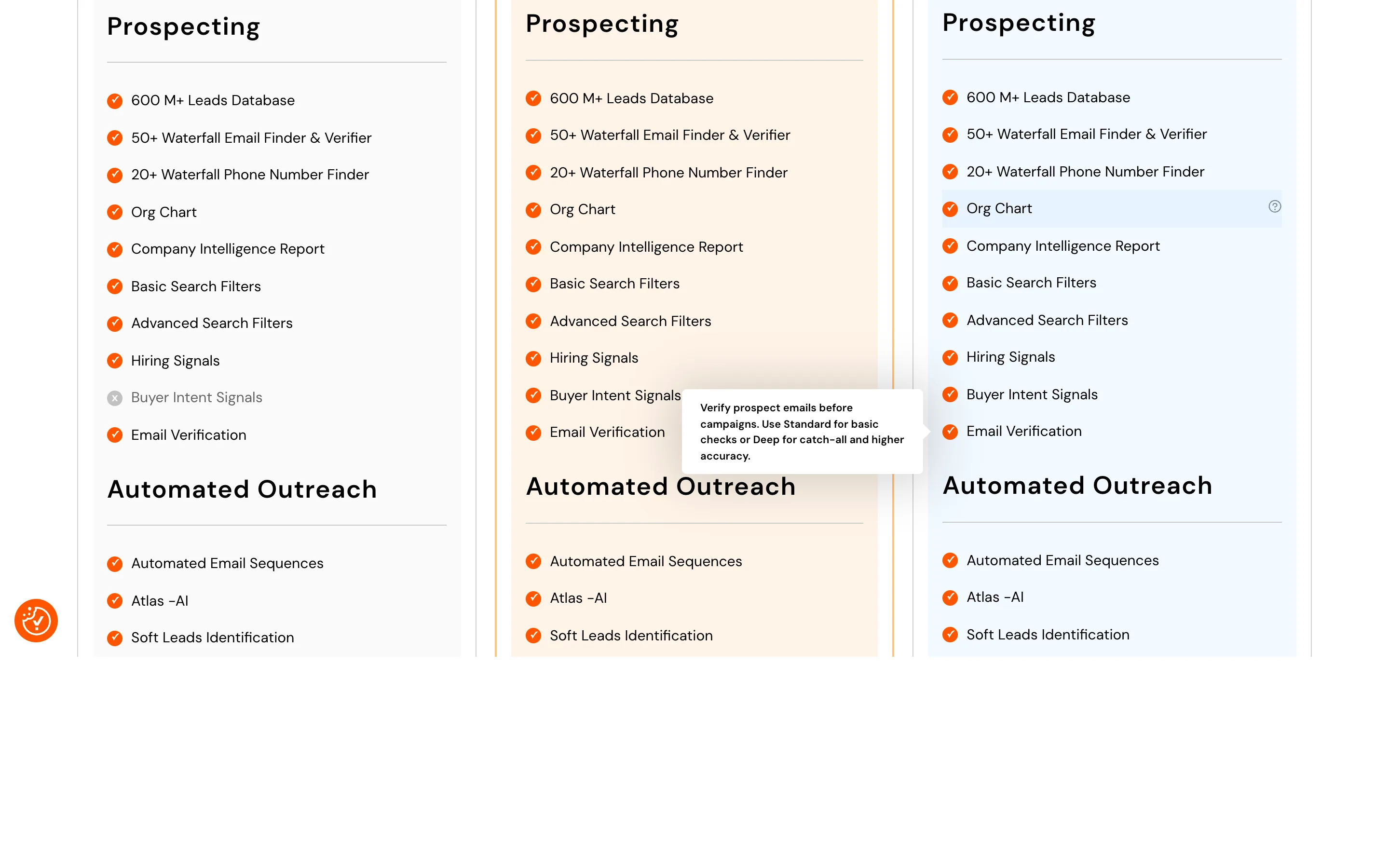
En euros, au mois (utilisateurs illimités) : Free Forever 0 € (100 crédits/mois), puis entrée payante à partir de 90 €/mois pour 5 000 crédits, jusqu'à environ 3 500 €/mois pour 250 000 via un curseur (paliers intermédiaires non publiés proprement). 1 email = 1 crédit, 1 numéro = 10 crédits, et les crédits se reportent jusqu'à deux mois.
Un crédit part sur la recherche, que la ligne soit utilisable ou non : sans taux de réussite publié (20-35 % de contacts utilisables supposés), le prix affiché de ~0,018 € au crédit revient en réalité autour de 0,05 à 0,09 € l'email utilisable. Les numéros à 10 crédits font au plus 500 appels sur le plan à 90 €, environ 0,18 € pièce, avant de retirer ceux qui n'aboutissent pas hors des États-Unis.
vs Enrow: la comparaison honnête n'est pas le prix affiché mais le coût réel par contact valide ; Enrow ne facture que sur un résultat valide, à ~0,0075 € l'email sur Pro, six à onze fois moins cher que Clodura sur ce qui arrive vraiment, avec des portables européens facturés seulement sur un numéro valide et l'extension qui transforme un profil en fiche CRM complète en un clic.
11. Findymail
C'est le choix sûr pour des adresses de cold email US et une facturation honnête.
Findymail est un outil de recherche d'emails B2B pensé pour la prospection, et il corrige les deux choses qui font partir de Clodura : pas d'énorme base stockée qui vieillit dans son coin, et pas de suite à payer autour. Il facture sur le résultat trouvé, donc une recherche ratée ne vous coûte rien.
Donnez-lui une liste LinkedIn ou un domaine, et il renvoie des emails professionnels vérifiés. Sur la pure précision des emails US, il est vraiment fort. C'est l'un des meilleurs outils de la catégorie, je le dis franchement.
Ce qui le freine, c'est la géographie et l'étendue de la couverture. Findymail ne renvoie aucun numéro pour les contacts européens — le RGPD le lui interdit — donc pour une équipe centrée sur l'Europe, ça se limite de fait aux emails. Ses numéros couvrent les États-Unis, et eux seuls.
Et le report des crédits plafonne à 2× votre quota mensuel : achetez d'avance pour un gros trimestre et le surplus expire au renouvellement.
Facturer au résultat garde les choses honnêtes, exactement ce que la réserve de crédits mixte de Clodura ne permet pas.
Mais Enrow égale cette facturation et ajoute ce que Findymail ne peut pas : des portables européens conformes RGPD, des catch-all livrées au lieu d'être mises de côté, et un seul clic qui déplace toute la fiche contact vérifiée d'un profil vers votre CRM. À honnêteté égale, la couverture est plus large.
- +Facture sur le résultat trouvé, pas un abonnement à une suite comme Clodura
- +Recherche d'emails B2B US précise et solide
- +SOC 2 Type 2, conforme RGPD, hébergé en Europe
- +Intégrations natives HubSpot, Salesforce, Pipedrive, Instantly et lemlist
- –Numéros américains seulement, rien en Europe (RGPD)
- –Le report des crédits plafonne à 2× le quota mensuel
- –Sur abonnement seulement, pas de vraie offre gratuite
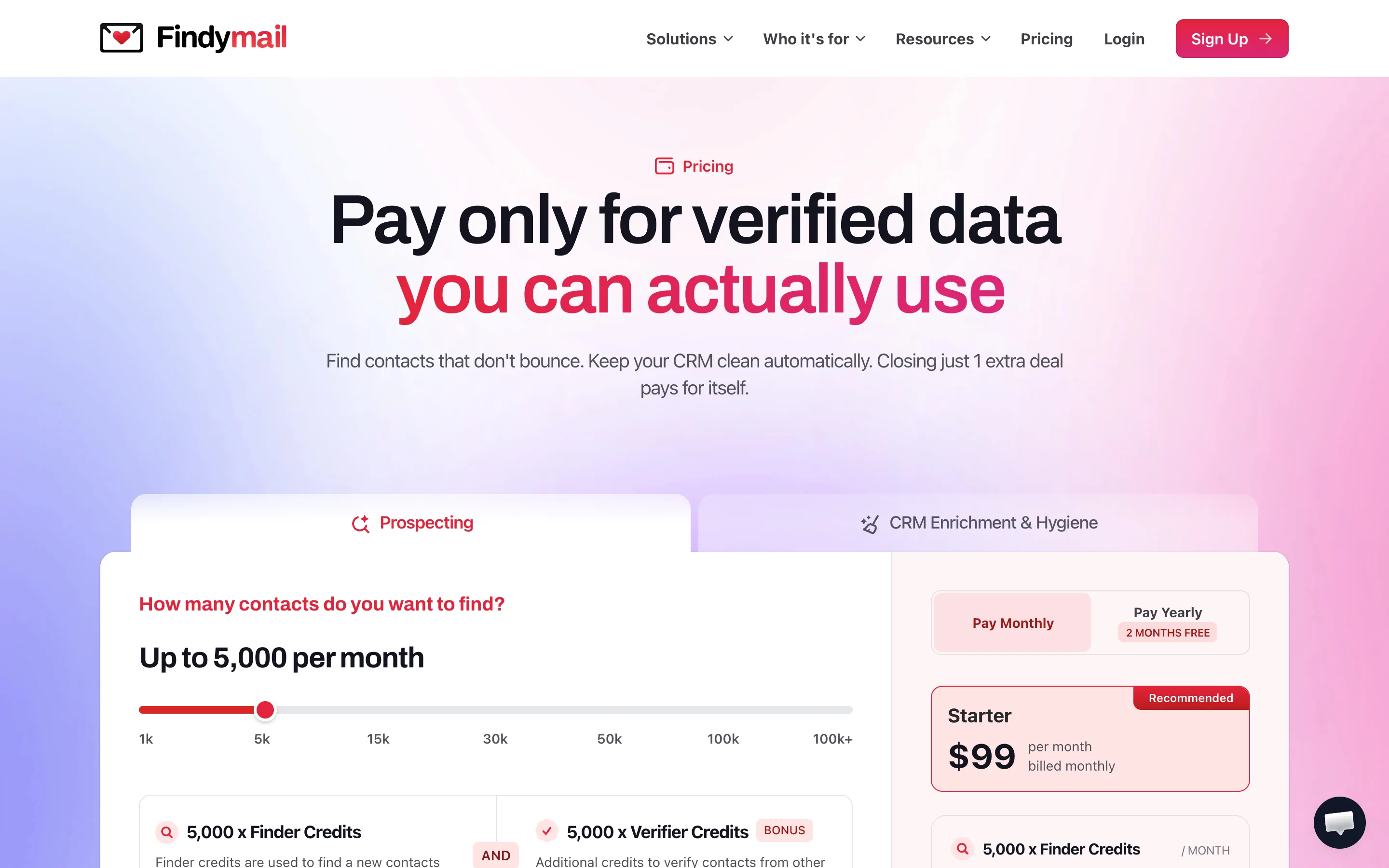
En euros, au mois : Basic à partir de 45 €/mois pour 1 000 crédits de recherche (plus 1 000 de vérification) ; l'annuel revient environ 16 % moins cher. Findymail facture sur le résultat trouvé et vérifié, donc son prix affiché est proche du coût réel : environ 0,045 € l'email valide à l'entrée, soit 3× les 0,015 € d'Enrow au même volume de 1 000. Les numéros coûtent 10 crédits, mais aucun n'est européen (bloqué par le RGPD).
vs Enrow: les deux ne facturent que sur des résultats, donc les deux prix affichés sont des coûts réels ; Enrow est simplement moins cher à chaque volume (0,015 € contre 0,045 € à l'entrée), et ajoute les portables européens conformes RGPD et la fiche complète déposée dans le CRM en un clic que Findymail ne peut pas fournir.
L'offre gratuite d'Enrow n'est pas un essai d'une semaine : 50 crédits arrivent chaque mois, renouvelés, sans carte. Donnez-lui les contacts que Clodura n'arrête pas de rater, et comptez ce qui revient valide.
Comparatif côte à côte
Verdict final
Mesurez ce qu'un budget d'outbound achète vraiment — des emails valides, des numéros qui décrochent, une facture qui ne compte que de vrais résultats — et Enrow gagne ce comparatif. La base de 600 millions de lignes agrégées de Clodura vieillit, si bien que son prix affiché de ~0,018 € au crédit revient à 0,05 à 0,09 € l'email utilisable ; Enrow ne facture que sur un résultat valide, ce qui met son coût réel près de 0,0075 € l'email, six à onze fois moins cher sur ce qui arrive vraiment, portables européens conformes RGPD compris. Et l'étape que personne d'autre ici ne franchit : un clic sur un profil LinkedIn ou Sales Navigator, et l'extension d'Enrow dépose la fiche complète et vérifiée, numéro compris, dans HubSpot, Salesforce ou Pipedrive. Pour être honnête : Enrow n'est pas un tout-en-un — ni base consultable, ni séquences, ni SDR IA. Faire tourner tout ça sous un seul compte, c'est le métier de Clodura ; rendre la donnée juste, c'est celui d'Enrow, et aucune plateforme d'envoi ne vaut mieux que les contacts qu'on lui donne.
L'offre gratuite d'Enrow n'est pas un essai d'une semaine : 50 crédits arrivent chaque mois, renouvelés, sans carte. Donnez-lui les contacts que Clodura n'arrête pas de rater, et comptez ce qui revient valide.
FAQ
Notre méthodologie
Aucun lien affilié sur cette page, et aucun sponsor n'a pesé sur le classement. J'ai fait le test moi-même : une même liste de contacts B2B réels, passée dans les onze outils la même semaine, puis un vrai envoi pour mesurer ce qui bounce une fois les emails partis. J'ai regardé quatre choses seulement : le taux de contacts trouvés, le taux de bounce, le coût réel par contact valide, et la couverture des numéros de portable européens obtenus légalement. Les prix et fonctionnalités viennent des pages officielles de chaque éditeur, relevés le 02/07/2026.
utilisateur illimité
Prêt à passer à la vitesse supérieure
sans cb
aucun setup requis