bettercontact alternatives
Top 9 BetterContact Alternatives & Competitors in 2026
We evaluated 9 alternatives on the four things that actually decide an outbound budget: match rate, bounce on a live send, real cost per valid contact, and EU phone coverage. Same list, same week, every tool.
9 tools tested
updated October 6, 2026
14 min read
Actualizado el 6 de octubre de 2026
The alternatives at a glance
for verified emails and EU direct dials you only pay for when they're valid, Enrow is the buy: $17/month in, about $0.0087 per valid email at Pro, roughly a fifth of BetterContact's real cost per valid at volume. BetterContact and FullEnrich are the waterfalls, worth it only for the last stubborn slice of a list. Emelia if you must send from the same login, Apollo if you want a dashboard for everything. Route by niche below; none of them is the better overall buy.
BetterContact chains 20+ vendors behind a slider and hands back the first valid hit. Clever for the last hard 5% of a list. But you don't know which vendor found the number, how fresh it is, and at volume a valid email runs about $0.04 — roughly 4.5–5× Enrow's rate.
The switch for most teams is Enrow: one high-signal source, real-time, 10+ verification checks, GDPR-cleared EU direct dials, charged only when the result is valid, from $17/month (~$0.0087 per valid email at Pro). Its Chrome extension drops the whole verified contact from LinkedIn into your CRM in one click.
And the free tier restocks: 50 credits, every month.
Why teams look for BetterContact alternatives
A waterfall is a fine tool for a narrow job, and people still leave it for the same three reasons. None of that gets cheaper on a bigger slider tier. The per-valid rate is close to flat.
Conflict of interest disclosure
Enrow is mine, and it sits at #1 on a list I wrote. So read on knowing the ranking was built by the person who benefits from it.
Here's the honest part I won't dress up: a couple of tools below do something Enrow deliberately doesn't. BetterContact and FullEnrich chain twenty-odd vendors in one call; Emelia sends your campaigns; Apollo runs a whole dashboard.
That's real scope, and if chaining every provider on earth is your one hard requirement, a waterfall is the right shape for it, by design.
We build none of that. One product, one obsession: the most accurate emails and direct dials you can buy, verified before you're charged, from a single high-signal source. That focus is the whole reason the data holds up.
A waterfall spreads its bet across the market and takes a cut for the routing; Enrow just finds the contact and gets it right the first time. The stack sits with two tools below. The data sits with us.
The 9 best BetterContact alternatives
1. Enrow
#1
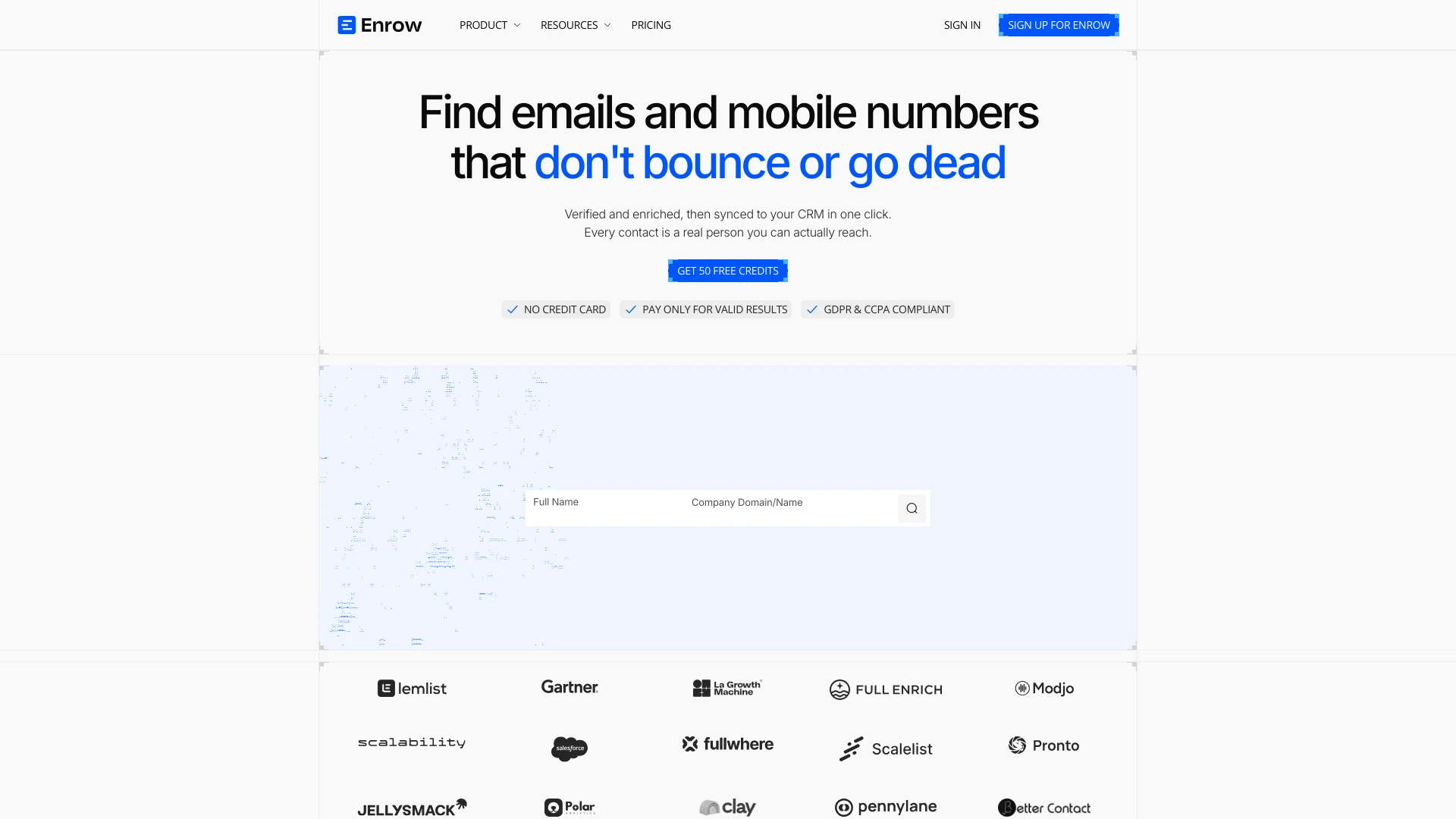
Full disclosure, twice over: this one is mine, and the waterfall category is part of why it exists. I got tired of paying a stack of vendors per lookup, only to find a fraction of the list and still eat the bounces. So I built the single source I wanted to buy from.
Here's the core difference. A waterfall is an orchestration layer. It doesn't own the data; it routes your request through other people's databases and resells the first hit with a margin on top. Enrow is the source.
We find the contact in real time and verify it ourselves, so there's no middleman markup and no mystery about where the record came from.
Verification is where the two models part ways. A waterfall trusts whichever vendor answered first. Enrow runs 10+ checks per address, multiple SMTP passes plus catch-all probes from servers in different regions, before anything counts as valid. Catch-alls come back verified and usable instead of flagged "risky" and binned.
On my mixed list, discovery ran around 60–70% and the live send bounced under 1%. Observed figures, not a contract.
Phones are where the stack gets vague and Enrow gets specific. Our Direct Phone Finder returns dials in any country, Europe included.
A waterfall hands you whatever a random provider had; we hand you a number we're cleared to source and priced only when it's valid.
Then the workflow trick no waterfall on this list does. From a LinkedIn or Sales Navigator profile, the Chrome extension writes the complete verified record into HubSpot, Salesforce or Pipedrive: email and direct dial, every field filled in. No copy-paste, no half-empty CRM card. And because the push creates or updates rather than blindly inserting, the contact keeps its identity. A duplicate row sits outside the lists and the workflows the original belongs to, and nobody notices until the campaign skips the person you wanted.
For the agent crowd there's an official MCP server too (the repo is github.com/EnrowAPI/enrow-mcp), so Claude or Cursor can call the finder and verifier directly; details on the API page.
- +Billed only on valid results; misses cost nothing
- +One high-signal source, real-time, no stack markup and no mystery provider
- +10+ verification checks per email; catch-alls verified and delivered
- +Direct dials in any country, Europe included
- +The full verified contact goes from a LinkedIn profile to HubSpot, Salesforce or Pipedrive in a single click
- +No per-seat fees; Pro and Scale credits roll over
- –No 20-vendor waterfall. Enrow is a single source, not an aggregator, so for the last stubborn slice of an obscure list a chained tool may squeeze out a hit Enrow can't; the trade is you keep clean per-valid economics on the other 90%.
- –No searchable database to browse. Stored databases age and you end up pitching people who already left; real-time lookup is the fix we chose, so list sourcing stays in LinkedIn or Sales Navigator.
- –No outreach sequencing, and we won't build it. Pair with Emelia, La Growth Machine or lemlist.
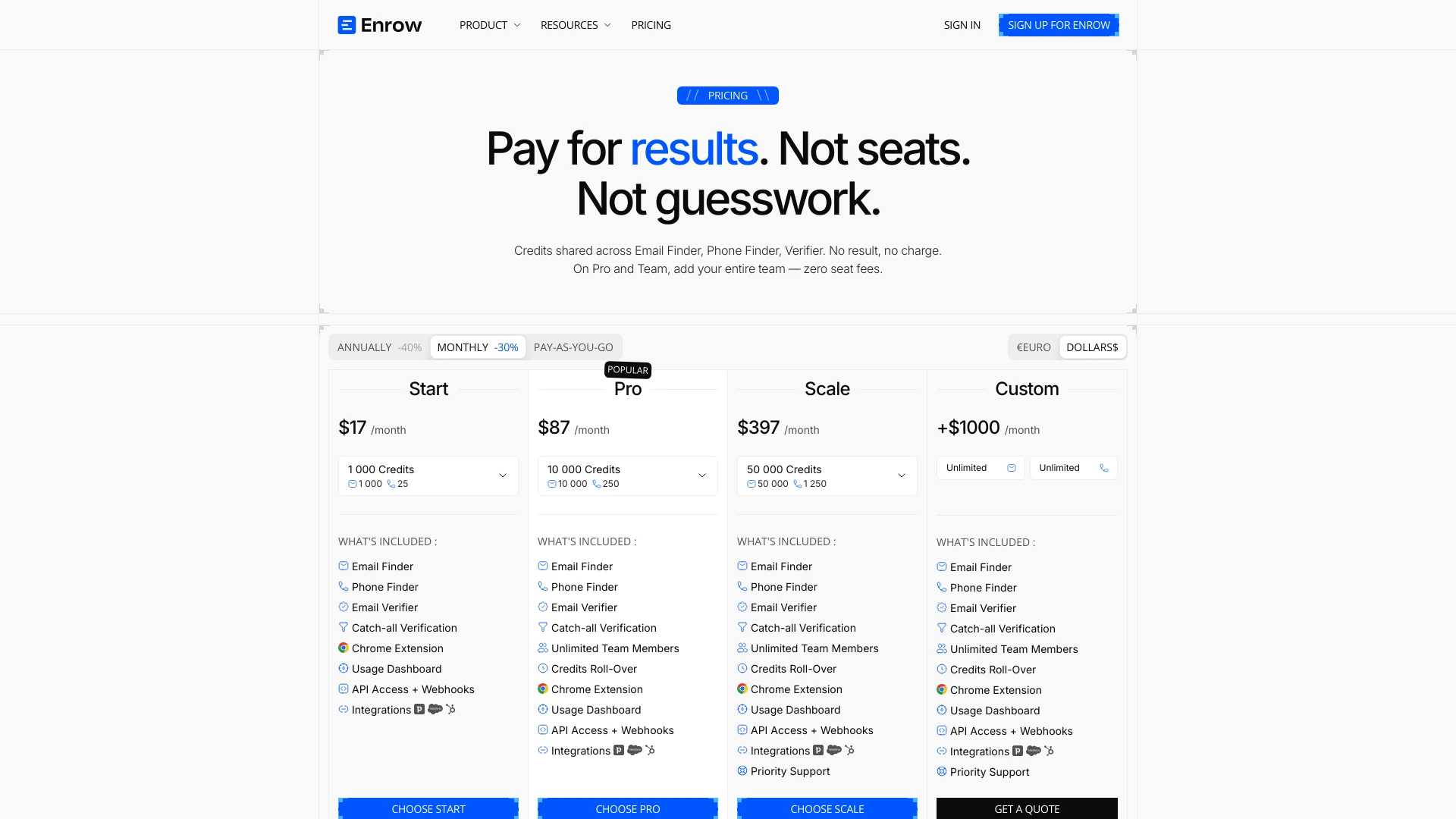
Three tiers, priced monthly. Start: 1,000 credits for $17 or 4,000 for $47 (monthly only). Pro: 10,000 for $87, 20,000 for $167, 30,000 for $247. Scale: 50,000 for $397, 80,000 for $597, 140,000 for $997, 200,000 for $1,397.
Going annual trims Pro and Scale by about 10%, which puts 10,000 near $78/mo and 50,000 near $357/mo.
One credit buys one email; a phone runs 40 credits; a verification is 0.25, catch-all included. Nothing is charged unless the result is valid, so the cleaner comparison base is Pro: $87 buys 10,000 valid emails or 250 valid phones, about $0.0087 per email or $0.35 per phone.
Start remains the $17 entry tier. Pro and Scale credits roll over.
That last combination is the whole point. Two things quietly inflate a bill elsewhere in this category: credits that expire at the end of the month whether you spent them or not, and lookups charged whether or not they find anyone. Enrow never takes the second, and on Pro and Scale it skips the first too.
A miss costs nothing, an address that fails verification is never billed, and on Pro and Scale the credits you didn't burn are still sitting there in thirty days. The number you see is the number you pay: $0.017 a valid email at Start, $0.0087 at Pro, $0.0079 at Scale. No adjustment, no asterisk.
Forget the $17 entry; the real argument is volume. A 20,000-email month costs $167 on Enrow. BetterContact's nearest slider step, 20,000 credits, is $799, monthly against monthly, and its per-valid email at that tier sits near $0.04 against Enrow's $0.0087.
Same job, roughly a fifth of the cost, twelve times a year.
The free tier refills on its own: 50 credits every month, no card, for as long as you want. And since credits only burn on valid results, none of the 50 die on a guess.
Every month, 50 fresh credits land in your account. No card, and they only spend on valid results. Test Enrow against the waterfall you're weighing.
2. Emelia
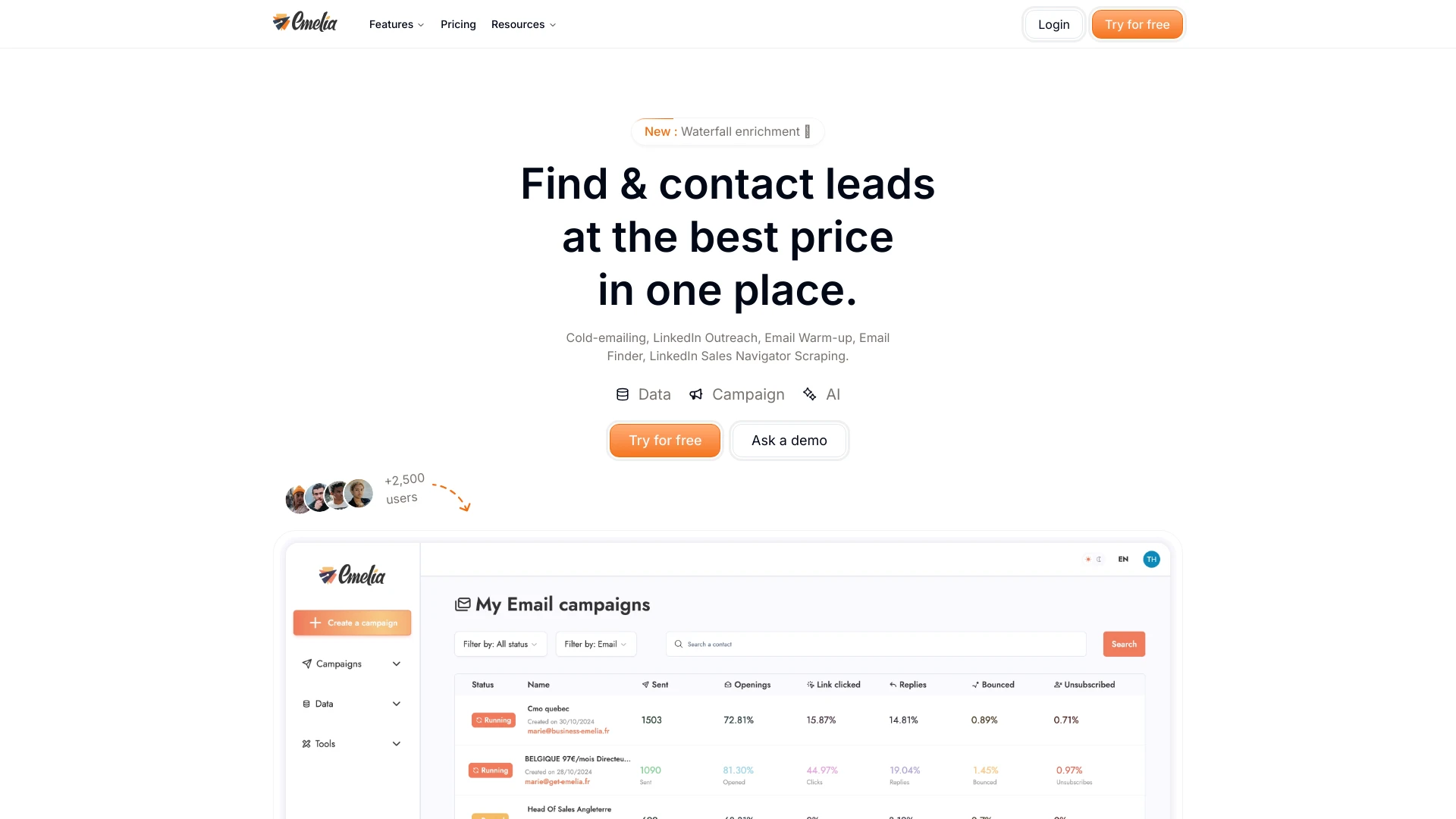
Emelia is a different job. It sends.
It's a sequencer with a finder and a waterfall attached: cold email, LinkedIn steps, warm-up, one login. BetterContact never played in that lane, and neither do we. Emelia is where we point people who ask us for sequencing.
As a data source it's respectable rather than the point. Finder credits burn on results found, phone coverage is thin, and heavier data use lands on add-on credit packs.
What stood out when I used it: running find and send from the same screen is genuinely convenient for a small team. The setup I actually recommend, though: Enrow finds and verifies, Emelia sends.
- +Find and send from one place (cold email + LinkedIn + warm-up); verification's built in
- +Finder credits charge on results found
- +Waterfall enrichment and Sales Navigator scraping included
- +Unlimited sending and contacts on paid plans
- –Thin phone coverage; not a dialing tool
- –Heavy data use pushes into add-on credit packs
- –Outreach-first, so data depth trails the pure finders
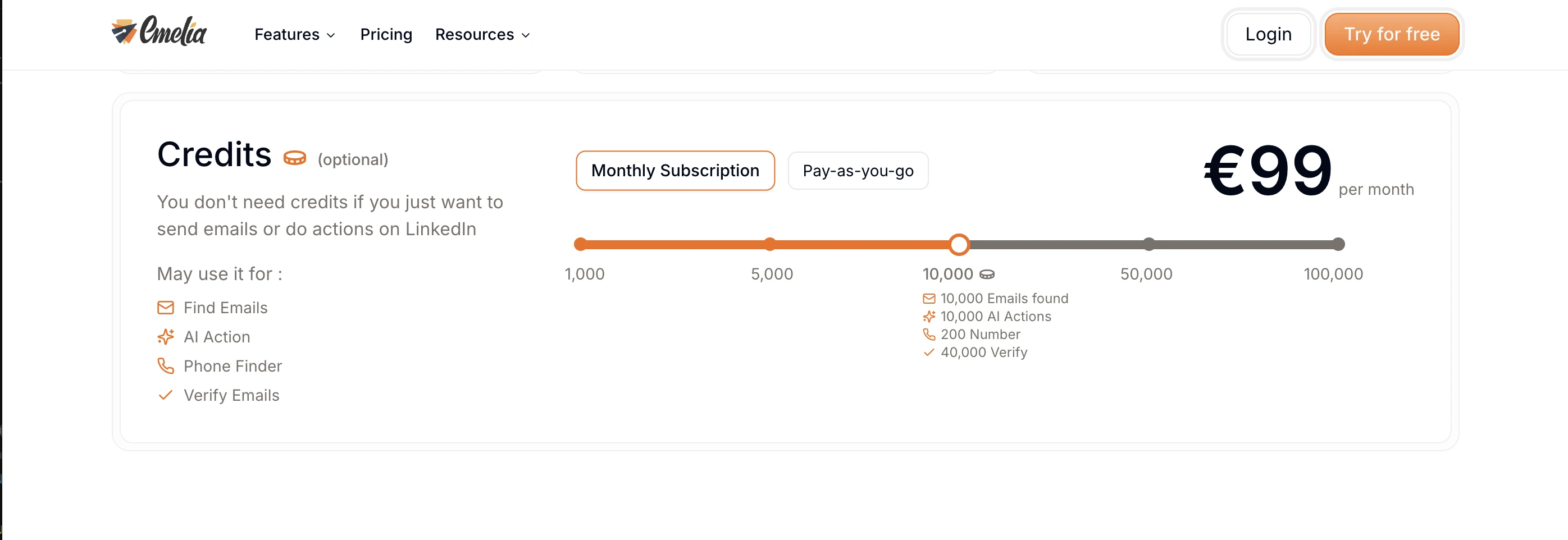
Converted from EUR (+20%), Emelia's Start runs about $44/month for 500 finder credits (3 mailboxes, 1 LinkedIn seat), with finder credits billed only on results found. Phones at 50 credits each are too thin to lean on.
vs Enrow: no contest on data, and Emelia wouldn't claim otherwise. Feed it Enrow's verified contacts at $0.0087 apiece and both tools do their best work.
3. FullEnrich
FullEnrich is BetterContact's closest structural twin. Same idea: route a contact through a cascade of external providers and return the first verified result, charging only when something lands.
Against BetterContact it's a near-swap, not a category jump. The differences are at the margins.
FullEnrich leans a little more email-first. It splits credit cost by data type (1 credit for a work email, 3 for a personal one, 10 for a mobile), and lets credits roll over for three months on monthly plans.
If you're already sold on the waterfall model and just want a cleaner email-led one, it's the obvious cross-shop.
But it's the same trade underneath. What stood out when I ran it: the coverage is good on hard contacts, and I still couldn't tell you which provider found any given email or how old that record was. You're paying a routing margin for opacity either way.
And at 10 credits a mobile, phones cost the same premium they do everywhere in this category, with no EU direct-dial guarantee behind them.
- +Waterfall through 15+ providers; strong coverage on hard contacts
- +Pay-per-verified: a miss costs nothing
- +Credits roll over (3 months monthly, 12 months annual)
- +Work / personal email split and reverse lookup
- –Same waterfall opacity: no visibility into which vendor found a record or how fresh it is
- –Mobiles cost 10 credits; no EU-specific direct-dial documentation
- –Stack markup means a higher per-valid rate than a direct source

FullEnrich opens at $29/month for 500 credits (Starter), charged only on a verified find, with credits rolling over three months. A work email runs about $0.055 at the 1,000-credit tier, roughly 3.2× what Enrow charges at Start ($0.017), and it stays three to five times higher at every volume, never once cheaper.
vs Enrow: two honest meters, two models. FullEnrich rents fifteen vendors and marks up the routing; Enrow is the source, at $0.0087 per valid email with EU dials, no per-provider mystery, and one-click full-contact CRM export a waterfall doesn't offer.
4. Apollo
Apollo is the usual answer when someone wants the whole motion in one tab: database, sequences, enrichment, a dialer, one subscription. It even runs its own waterfall enrichment on paid tiers.
Against BetterContact that's a category jump, not a swap. You're buying a workflow with data inside it, and for a small team that wants outbound end to end without stitching tools together, the pitch is real.
The bill for the breadth is the data. Apollo is a stored database, so records age the same way any resold source does, and its reviews circle two complaints on repeat: accuracy and export caps.
Getting from a filter to a live sequence in one sitting impressed me; checking those contacts against a live send is where real-time won. Mobiles draw 8 credits from the unified pool, so heavy dialing eats a plan fast. And whatever you haven't spent when the month flips is gone.
Apollo credits don't roll over.
- +Large B2B database with sequencing and enrichment, waterfall step included
- +Chrome extension and CRM integrations
- +Workable free tier (75 credits/seat/month)
- +One tool to source and enrich, with sending built in
- –Stored database, so records go stale and accuracy gripes recur in reviews
- –Unified credits are per seat; mobiles cost 8 credits each and exports draw down fast
- –Credits reset monthly with no rollover, so a normal month's leftovers evaporate
- –Export caps bite before the lookups do
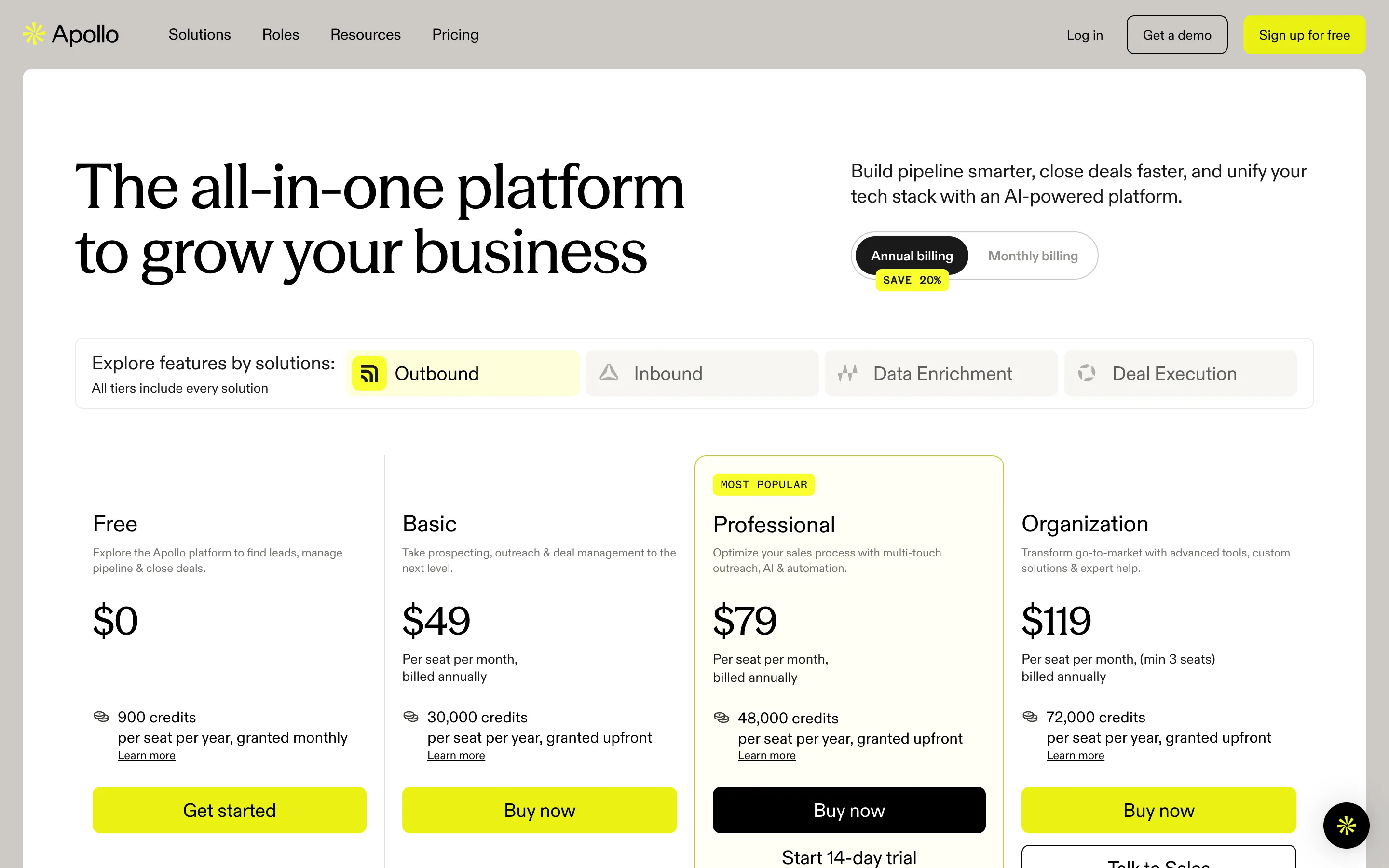
Apollo is priced per seat, from $65/seat/mo (or $49 annual) for Basic's 2,500 credits a month, one credit per verified email reveal, a mobile 8. Credits reset monthly with no rollover, so on the ~78% of a quota a real team burns, a valid email lands near $0.033, about 2× what Enrow charges at Start ($0.017) and 3.8× the Pro rate ($0.0087).
vs Enrow: buy Apollo for the cockpit if you want one, then let Enrow supply the layer it can't keep fresh. On emails it's a stored database against real-time, and expiring credits against credits that roll over on Pro and Scale. On phones it's a stored reveal against a verified EU direct dial billed only when valid.
5. LeadMagic
LeadMagic is for people whose "tool" is a pipeline.
It's API-shaped: 15+ enrichment endpoints (email, mobile, company, profile, job changes) drawing on one shared credit pool, with an MCP server for agent workflows. Credits deduct only on success, which is the right default and matches Enrow's philosophy. Where BetterContact hides its routing, LeadMagic exposes clean endpoints you call yourself.
It's also not something you hand a rep. There's no real UI to live in, and EU phone coverage is unpublished. Rollover starts one tier up, too. The docs read better than most tools' dashboards, which tells you exactly who it's for.
- +Pay-per-valid: failed matches cost nothing
- +15+ endpoints on one shared credit pool
- +Developer tooling: API and CLI, plus an MCP server
- +Mobile finder included in the same pool
- –No rollover on the entry Basic plan, so unspent credits die each month
- –Mobiles cost 5× an email, with no published EU/GDPR phone detail
- –API-first, so non-developers will stall
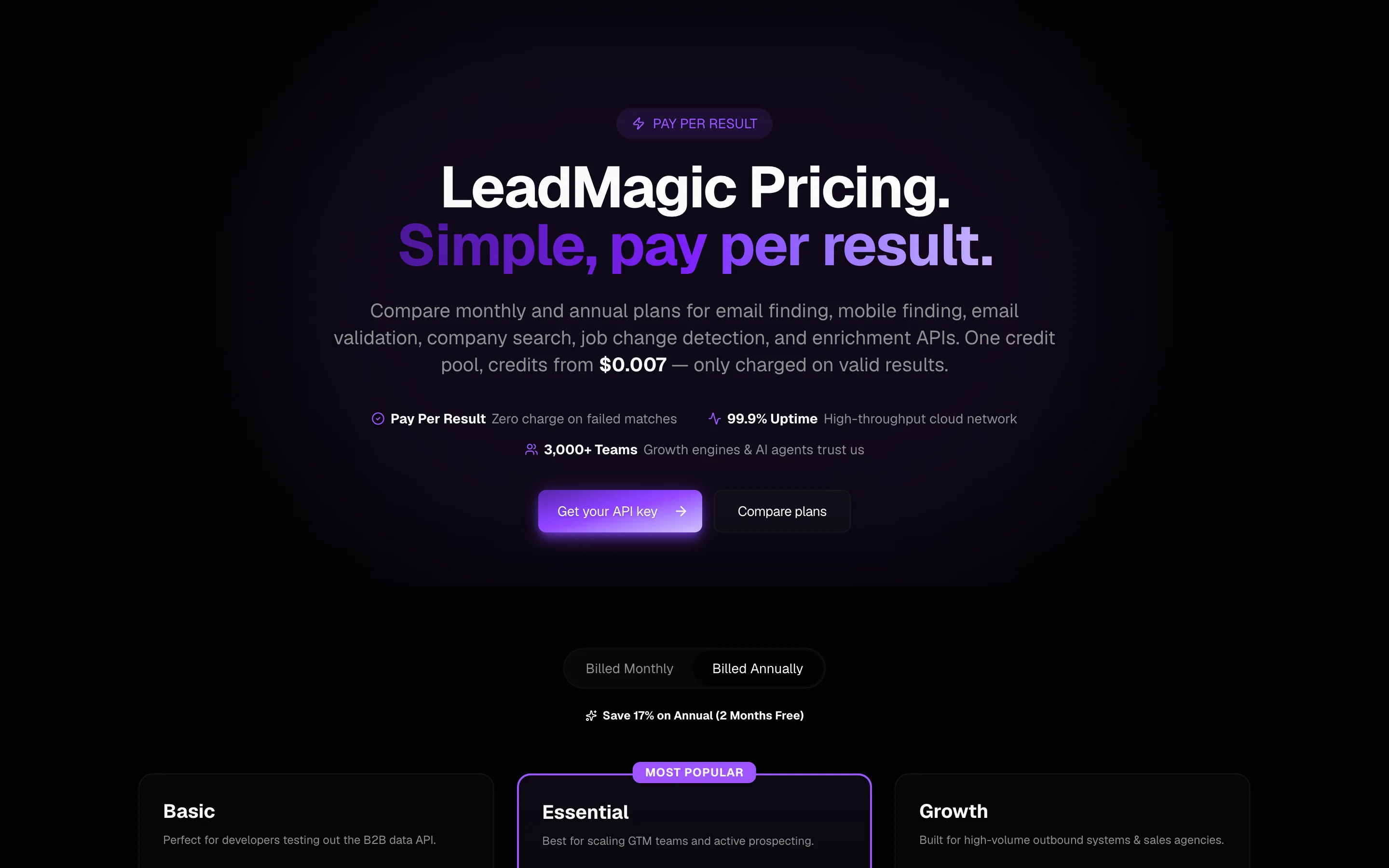
LeadMagic: Basic $49/month for 2,000 credits, emails 1 credit, mobiles 5, validation 0.25, deducted only on success. Basic's sticker is about $0.0245 a valid email, but Basic credits don't roll over, and once a normal month's leftovers lapse the real rate climbs toward $0.031, against Enrow's $0.017. EU phone coverage is unpublished.
vs Enrow: both charge on the same honest principle. Enrow bills a valid result only, after 10+ verification checks, rolls credits over on Pro and Scale, matches the API and MCP story, then adds the rep-facing product: a UI, the extension and one-click CRM export.
6. Prospeo
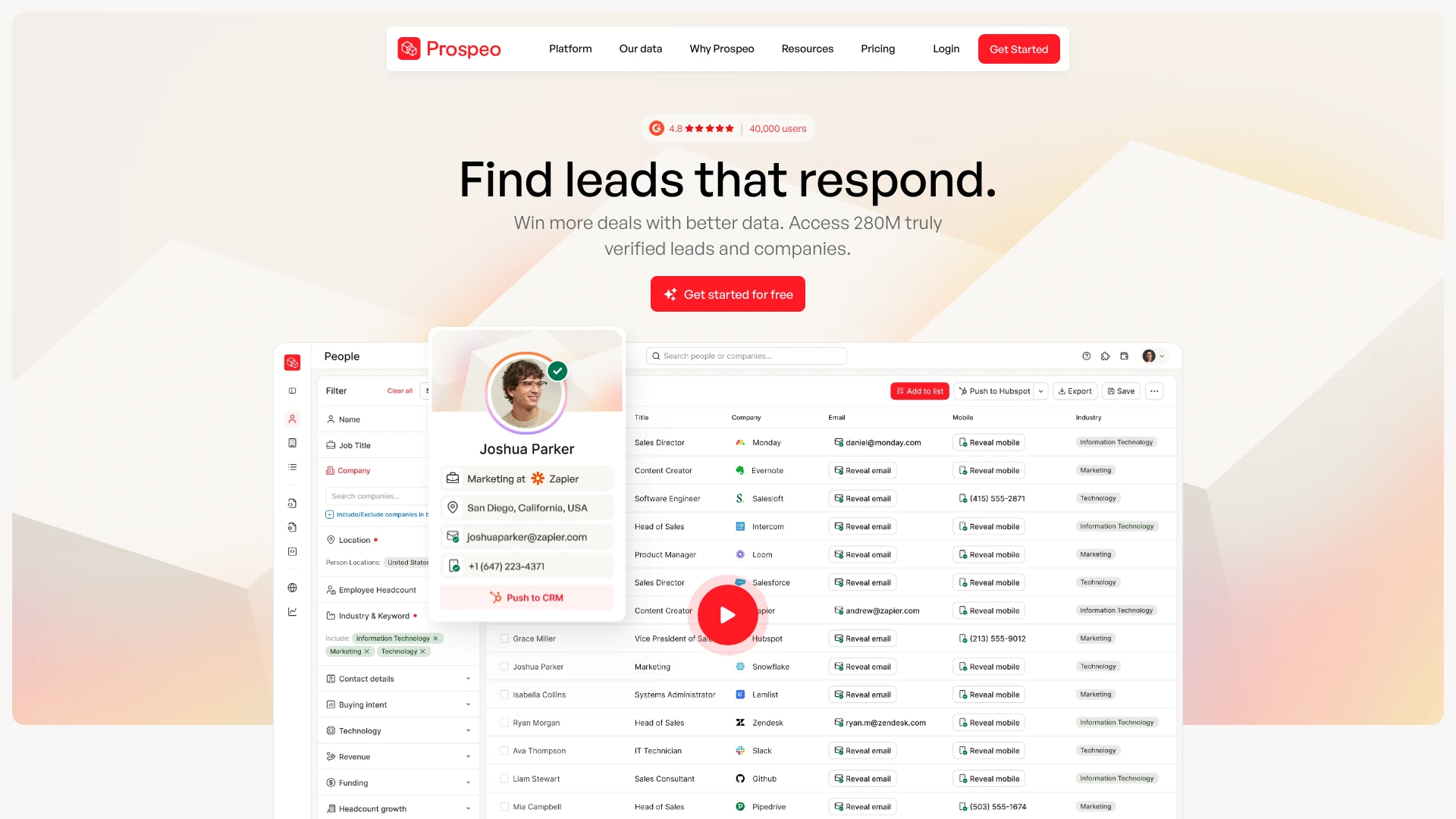
Prospeo's price is its whole pitch. Look past it.
On my list it found about 20% of the contacts. Enrow found 60–70%. Prospeo doesn't bill for the misses, one credit per found email and nothing for an empty, so that gap costs you reach, not money. It costs you all the same.
Four rows in five come back unfinished, and the list gets closed on somebody else's tool. A waterfall exists precisely to paper over misses like these, which is the honest reason Prospeo isn't in that league.
The rest is what you'd expect at the price point: quality gets uneven past small jobs, and phones cost 10 credits with no documented EU coverage. Pricing runs per user on top.
- +1 credit per found email, 0 on a miss
- +Quick Chrome extension for LinkedIn and domains
- +Verification included in the same credit pool
- +Free plan (100 credits/month)
- –Found about 20% of my test list; most contacts simply don't come back
- –Phones cost 10 credits with no documented EU story
- –Per-user pricing stacks on teams
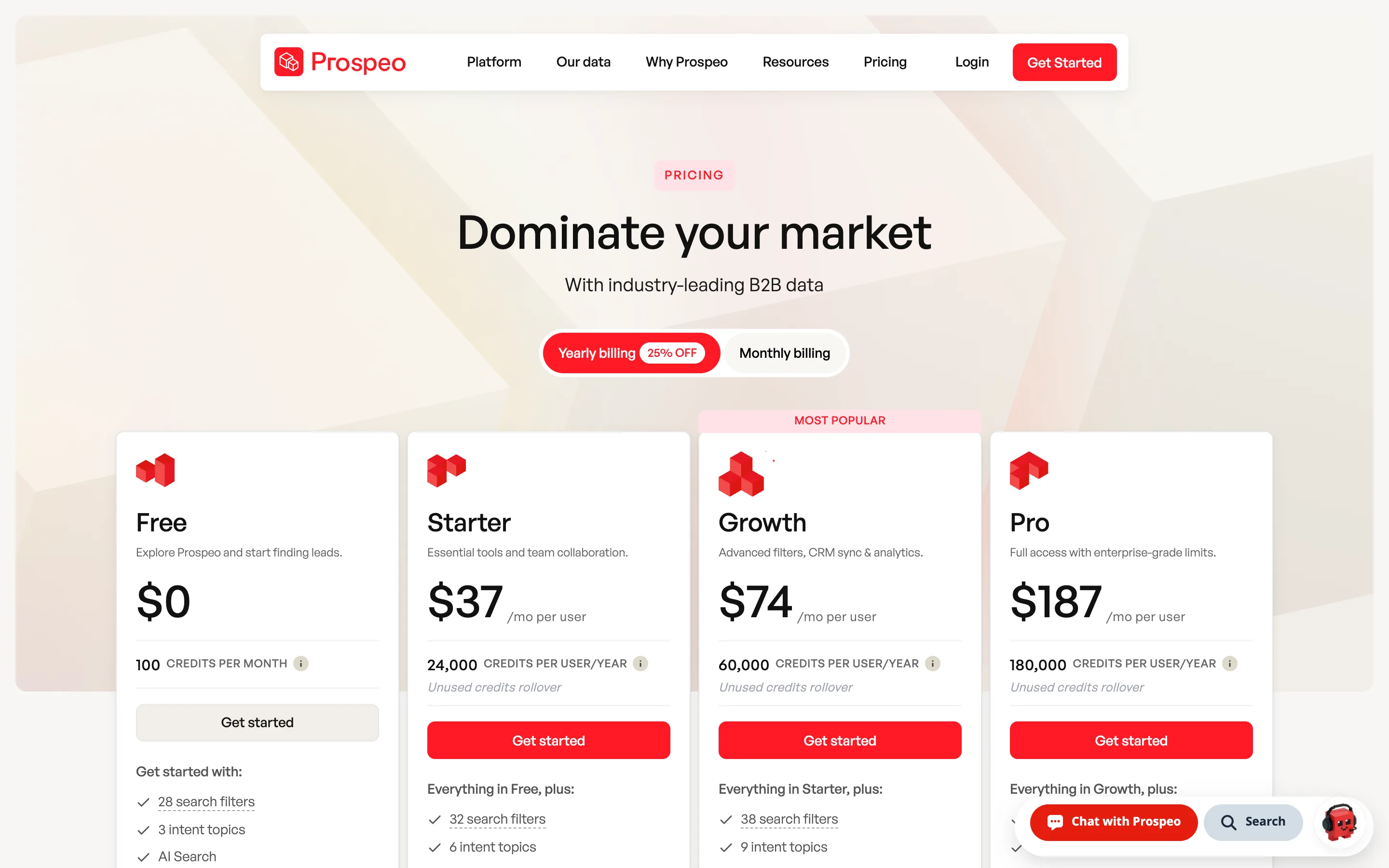
Prospeo: Free 100 credits/month, Starter $49/month for 2,000 credits per user, mobiles 10 credits. Charged on the found result, so nothing hides behind the credit price: about $0.0245 per valid email, already about 1.4× Enrow's Start-tier rate of $0.017 at the same volume. Phones work out near $0.245 with nothing documented behind them.
vs Enrow: the sticker already sits above Enrow, and the find rate is what separates them. Enrow's $0.0087 at Pro with 60–70% discovery buys a finished list; Prospeo's $0.0245 buys a fifth of one, and you still owe another vendor for the rest.
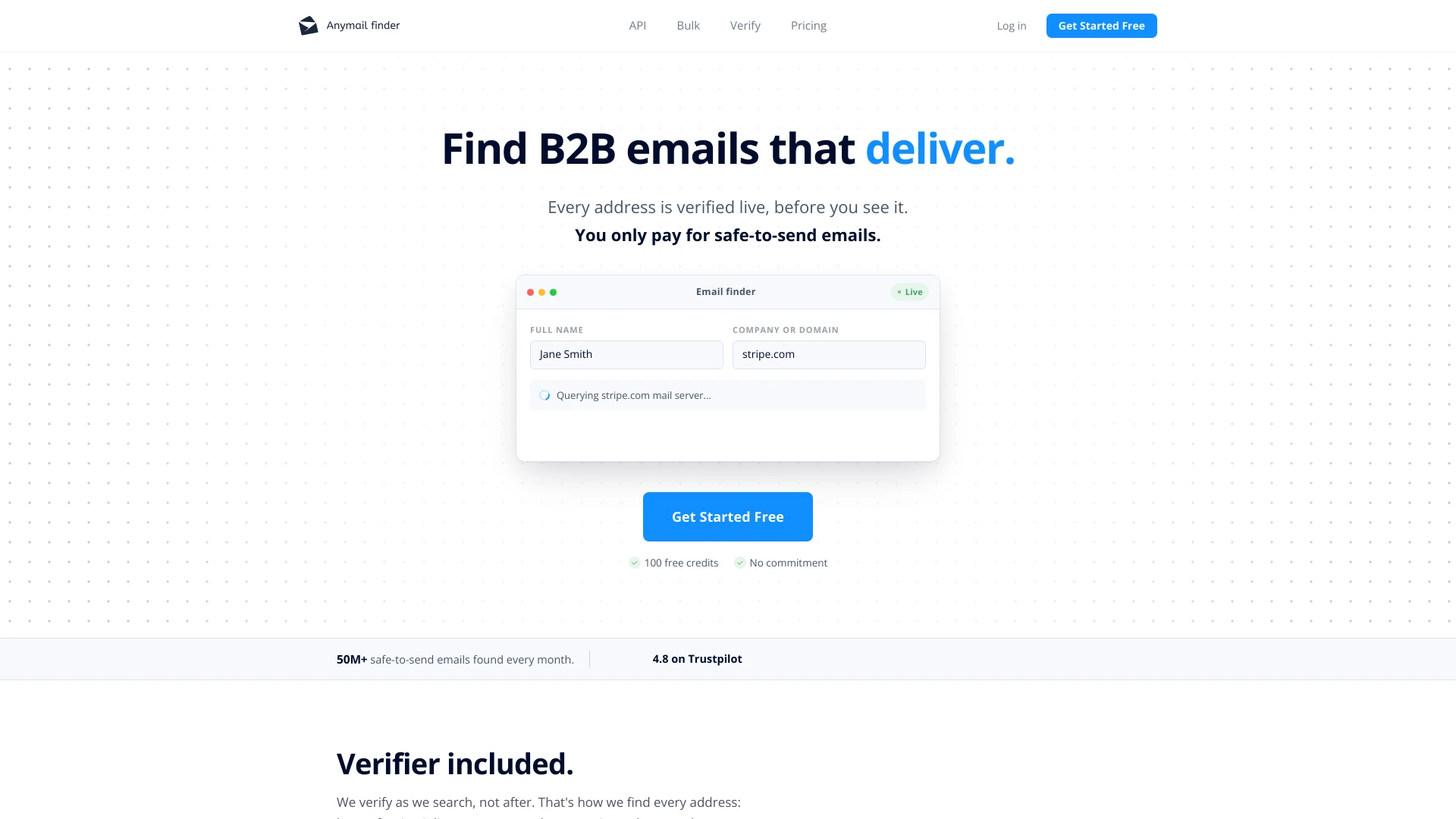
Anymailfinder fixes the meter and stops there.
Verified emails, charged only when the address passes verification, backed by a delivery guarantee. No phones, no waterfall. It doesn't push to a CRM either. A find costs 1 credit, checking an outside address 0.2, and unused credits roll over while you stay subscribed. The scope fits in one sentence.
On a messy list the unfound rows cost me nothing, which kept the bill clean and small.
- +Charged only for emails confirmed valid
- +97%+ delivery guarantee with credit-back on charged bounces
- +Credits roll over while subscribed
- +Look it up as a single email, in bulk, or straight through the API
- –Email-only, no phones at all
- –No waterfall, so hard contacts a stack would catch come back empty
- –No CRM push or full-contact export to speak of
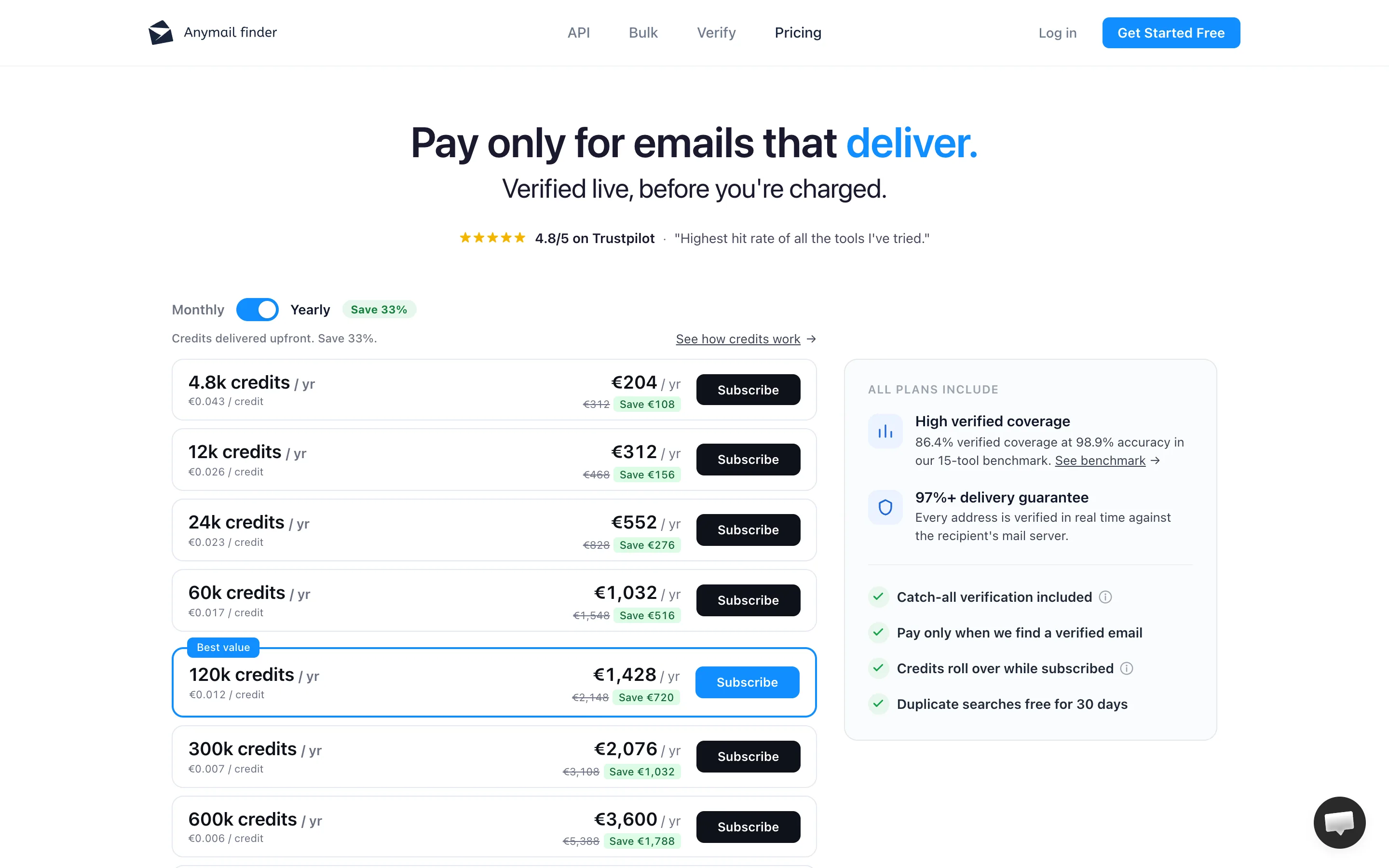
Anymailfinder (native USD) starts at $29/month for 400 credits, one credit per verified find, and the credit price is the only price there is. At $49 for 1,000 it works out to about $0.049 per valid email, roughly 2.9× Enrow's Start-tier $0.017 at that volume, and it's email-only.
vs Enrow: same billing philosophy, narrower product. Enrow matches the per-valid honesty, then adds the EU phones, the waterfall-beating direct match rate, and the one-click CRM export Anymailfinder never set out to build.
8. Findymail
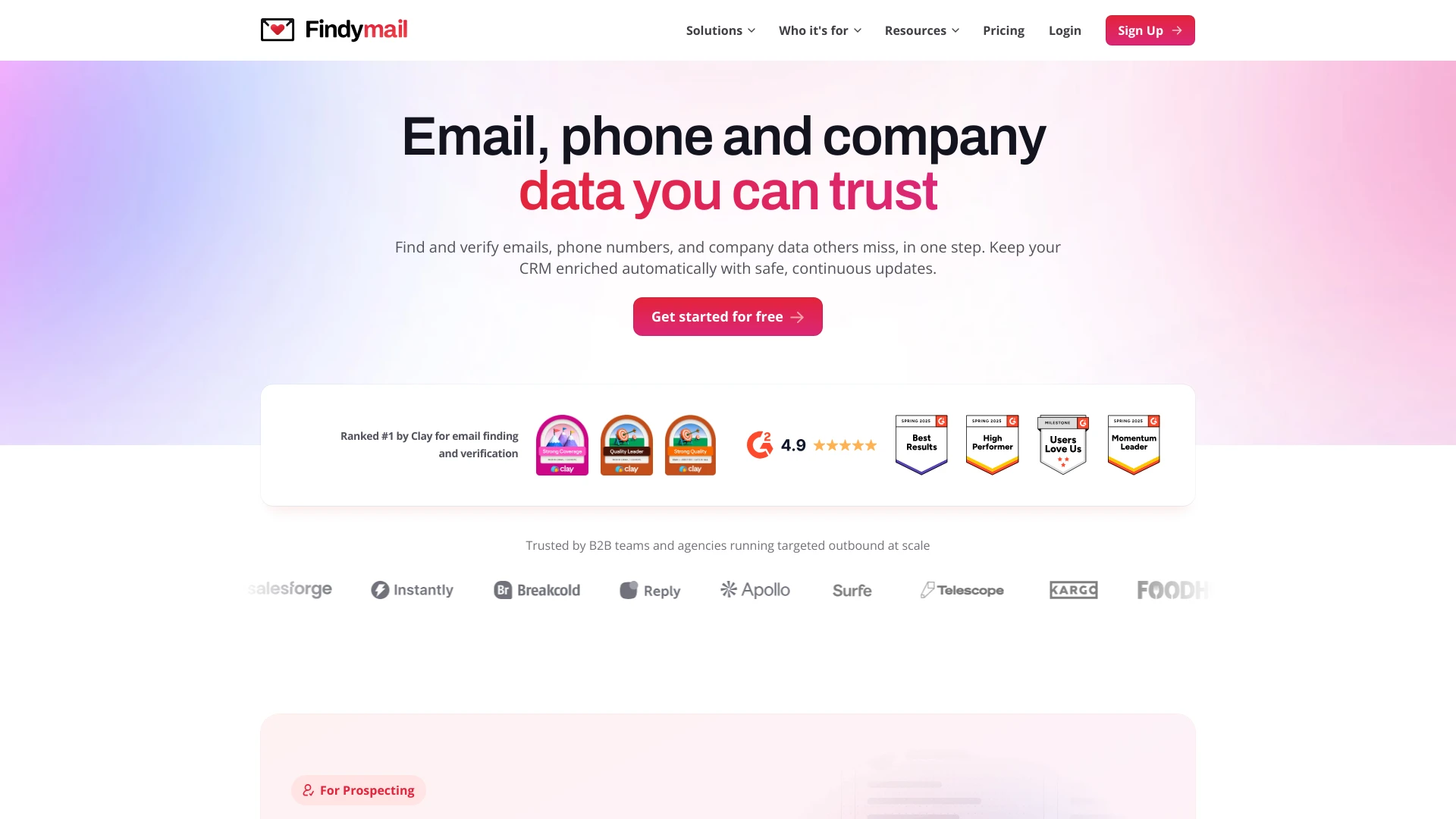
I'll give Findymail its due: it's a real email finder, and on US addresses the accuracy is genuinely strong. On email quality it's one of the better tools here, even though it prices above Enrow at matched volume.
It also bills the way a waterfall's credit pool should. Charged on the found, verified result, zero on a miss. Point it at a domain list or a LinkedIn export and what comes back tends to survive a live send.
We go deeper on the matchup in our Findymail breakdown.
The ceiling is geography. GDPR closed EU phones to Findymail, so for European calling it's a spectator; its phone data stops at US numbers. The floor is $49/month for 1,000 credits, and rollover caps at 2× your monthly allowance. There's no meaningful free plan either, just 10 trial credits.
On my list its US addresses held up; the French half of the file came back email-only.
- +Charged on found, verified results, so a miss costs nothing
- +Strong US B2B email accuracy
- +SOC 2 Type 2, GDPR-compliant, EU-hosted
- +Native HubSpot, Salesforce, Pipedrive, Instantly and lemlist integrations
- –Phone data is US-only; Europe is GDPR-blocked
- –Rollover caps at 2× the monthly allowance
- –No meaningful free plan; the floor is $49/month
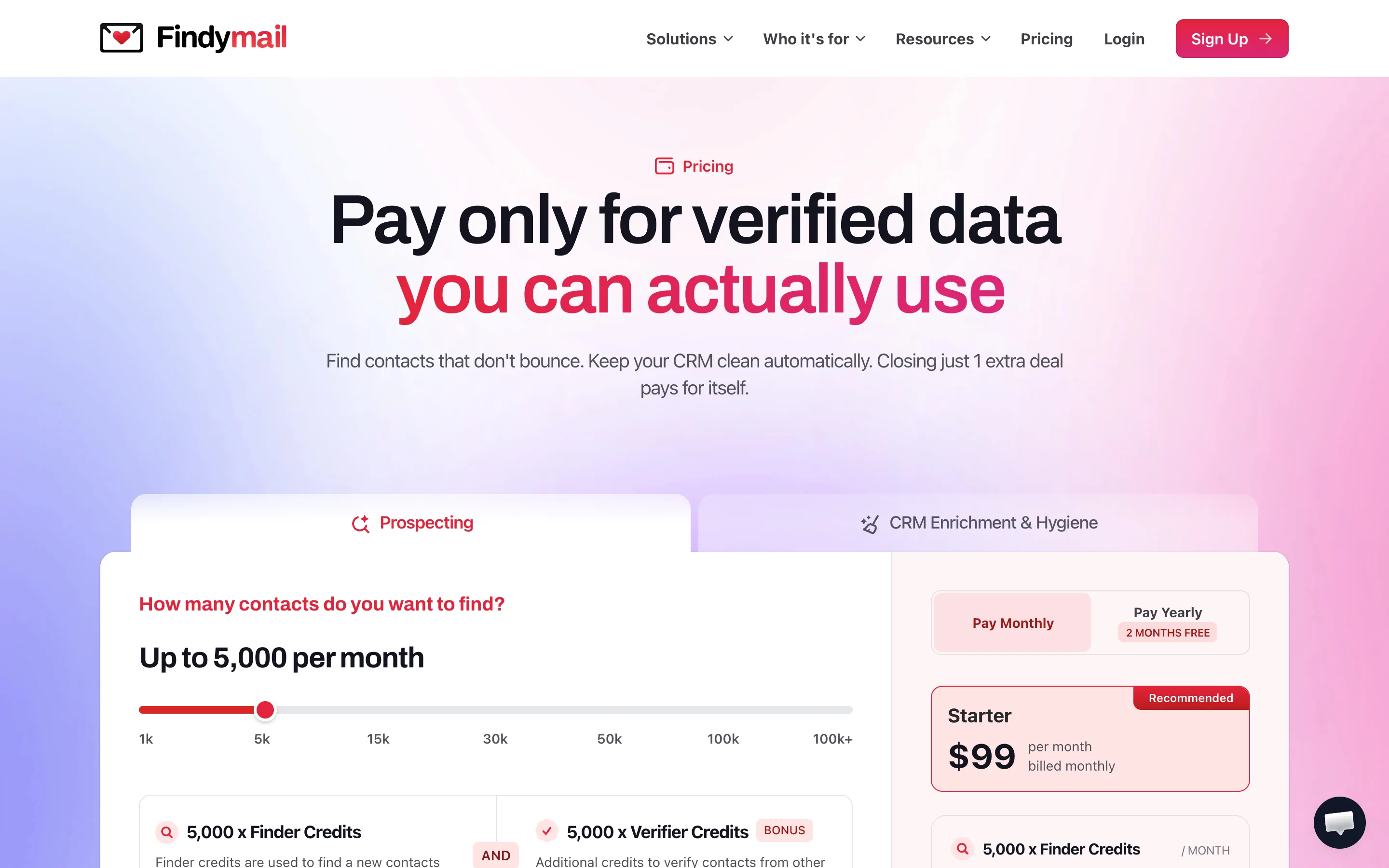
Findymail opens at $49/month for 1,000 finder credits, per-valid billing, phones 10 credits with rollover capped at 2× the monthly allowance. The $49 entry buys 1,000 emails, about $0.049 per valid email, roughly 2.9× the rate Enrow charges at Start ($0.017) for the same volume. It only closes the gap far up the ladder, and its phones exclude Europe entirely.
vs Enrow: same honest per-found meter, and Findymail is genuinely strong on US email, but it's the pricier tool at the entry most teams actually buy. Enrow opens at $17 instead of $49, prices a valid email at $0.0087 at Pro, and returns the EU direct dials Findymail legally can't.
9. Dropcontact
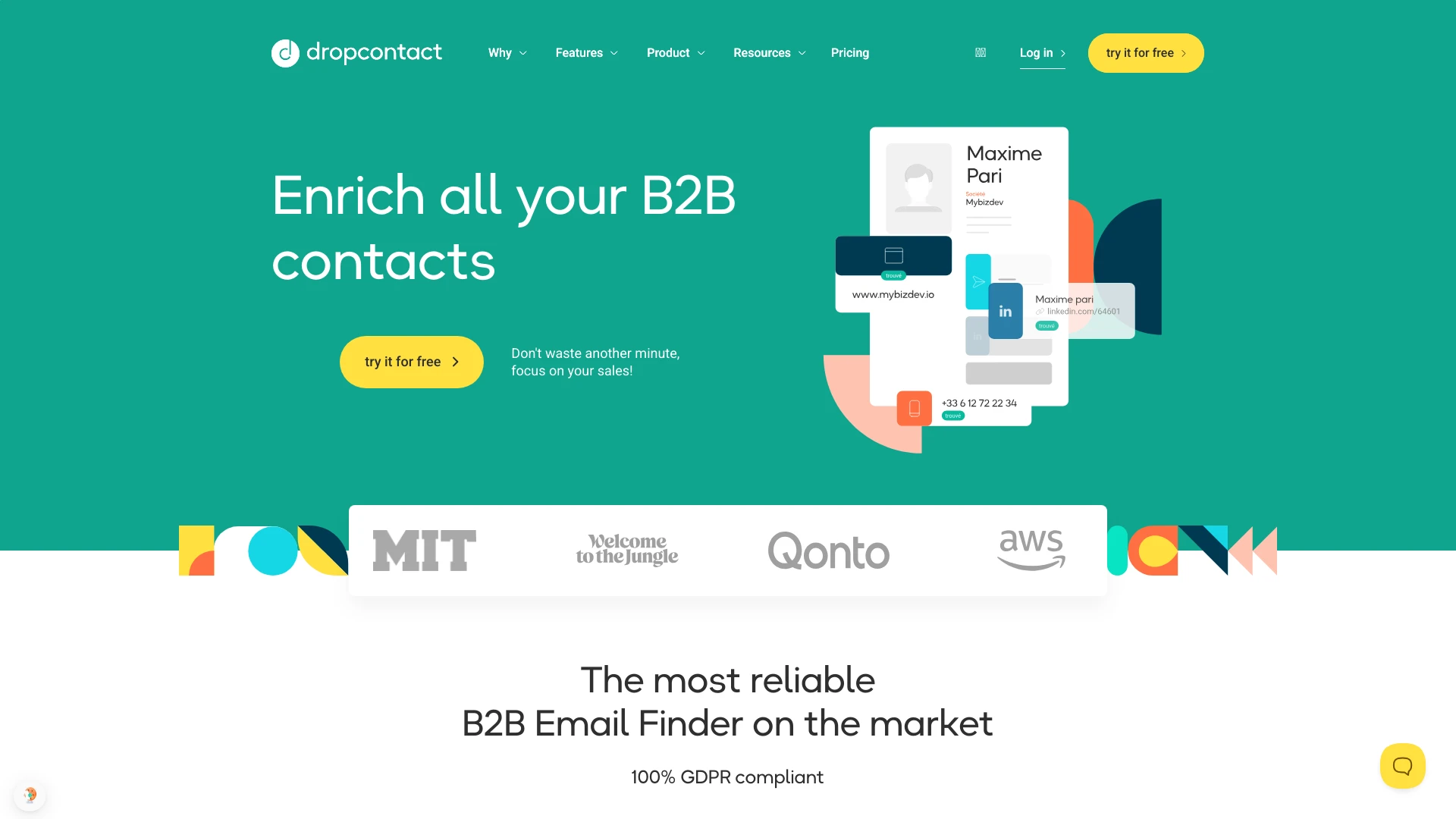
Dropcontact is the pick your DPO would make, and on EU email it's a real specialist, even if it prices well above Enrow at every matched volume.
Everything runs under GDPR on EU servers, and the data is computed fresh rather than pulled from a resold list. It also carries French firmographics (SIREN, VAT) most tools ignore. On emails it works pay-on-success: an address it can't find gets the credit reimbursed.
For cleaning a French or European CRM, it's a fair specialist, and our Dropcontact page runs the full comparison.
But read the job description. Dropcontact enriches rows you already have; it isn't built to hunt a contact from scratch the way a finder or a waterfall is. Phones only appear when one can be scraped out of an email signature, so there's no direct-dial product behind the promise.
It cleaned my French rows nicely and produced two phone numbers for a hundred contacts.
- +GDPR-first: EU servers, compliant by design
- +Pay-on-success on emails; unfound addresses are reimbursed
- +French firmographics (SIREN, VAT) built in
- +CRM-native enrichment for HubSpot, Pipedrive, Salesforce, Zoho
- –Enriches existing rows; not a real-time finder or waterfall for new contacts
- –Phones come only from signature scraping, no direct-dial product
- –Entry buys 500 credits at €19 without rollover or €29 with it; the €19 plan lands near €0.038 per email, about 2.5 times Enrow's Start rate (no rollover on either)
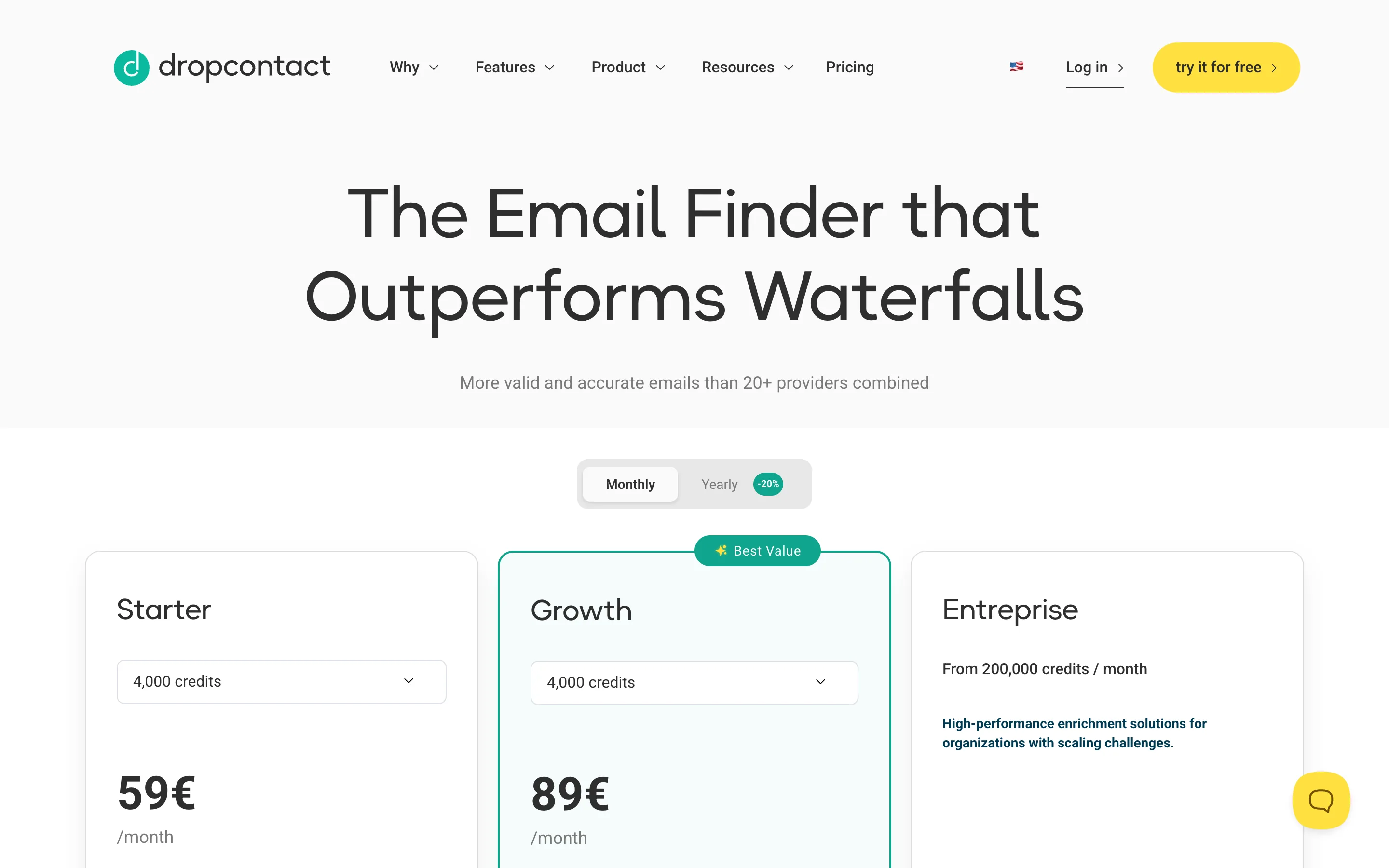
Dropcontact opens at €19/month for 500 credits without rollover, or €29/month for the same 500 on the rollover plan, one credit per found contact with misses reimbursed. That puts the entry at about €0.038 per email on the Starter without rollover, about 2.5 times what Enrow's Start tier, which doesn't roll over either, charges in euros at the same monthly billing, and it stays higher all the way up. There's no per-phone figure to quote because there's no real phone product.
vs Enrow: the honest framing is enrichment versus finding, and Dropcontact is the pricier meter at every matched volume. It completes rows you already own with EU firmographics and refunds emails it misses; Enrow finds and verifies new contacts in real time at €0.0075 per valid email at Pro, and returns EU direct dials instead of signature scraps.
Every month, 50 fresh credits land in your account. No card, and they only spend on valid results. Test Enrow against the waterfall you're weighing.
Side-by-side comparison
Final Verdict
Enrow wins this list for the routine 90%: verified emails and EU direct dials from one real-time source, from $17/month, charged only when the result is real. BetterContact's waterfall marks each valid email up to near $0.04 at volume, roughly five times Enrow's $0.0087, and you never learn which vendor found the record. The one trick no waterfall here matches: a single click in the Chrome extension turns a LinkedIn profile into a complete verified contact, phone included, sitting in your CRM. The honest limit is that Enrow isn't a 20-vendor aggregator, so the last obscure slice of a list may still need a waterfall. Take the 50 free credits you get back every month and let your own list vote.
Every month, 50 fresh credits land in your account. No card, and they only spend on valid results. Test Enrow against the waterfall you're weighing.
FAQ
How we evaluated these tools
I ran this one myself: one list of real B2B contacts, pushed through every tool in the same week, then fired into a live inbox to catch what actually bounced. Four things set the order — how many contacts came back, how many died on the send, what a valid contact costs once the billing tricks are stripped out, and whether the tool can hand over legally-sourced EU phone numbers. And nobody paid to be here: no sponsorship, no affiliate links, and the top spot wasn't for sale. Competitor prices come from official pricing pages read on 2026-07-06.
¿listo para dejar de perder el tiempo?
Conectado en minutos.
Data verificada en segundos.
sin tarjeta
sin configuración