rocketreach alternatives
Top 10 RocketReach Alternatives & Competitors in 2026
The yardsticks are the things that decide whether a calling budget pays off: mobile accuracy on a live dial, email bounce on a live send, real cost per valid phone rather than per lookup, and geographic reach, EU direct dials above all. One list. Every tool, same week.
10 tools tested
updated October 5, 2026
14 min read
Last updated October 5, 2026
The alternatives at a glance
Enrow is the best overall RocketReach alternative for a team whose pipeline runs on the phone. It finds and verifies direct dials in real time and covers EU numbers; the meter only runs once a number is valid, from $17/month, about $0.35 per valid phone on Pro ($87 for 10,000 credits = 250 phones), with Start as the $17 entry tier. If you want phone-verified mobiles at enterprise scale, Cognism is the specialist, at enterprise pricing. Lusha and Kaspr cover the self-serve, per-seat phone-reveal niche; SignalHire and Wiza bundle email and phone simply for recruiters; Apollo is the all-in-one where data is a component, not the point; ContactOut leans recruiting; ZoomInfo is the deepest US database with direct dials, but its cheapest published platform contract is $3,000 for a year, one seat and 2,000 exports, and the pay-as-you-go gtm.ai API, from $0.38 a record, sells no mobiles. Each owns a lane below. None is the better overall buy for a caller.
RocketReach is a big stored B2B database with a phone-finder bolted on. Reach is the draw. The trouble shows on a live dial, where a stored number has already gone stale (reviewers report patchy mobile accuracy and real bounce; self-reported).
For a team that actually calls, the best RocketReach alternative is Enrow: a real Direct Phone Finder with GDPR-cleared EU direct dials, found and verified the moment you ask, billed only when the number is valid.
One phone is 40 credits, about $0.35 per valid mobile on Pro ($87 for 10,000 credits = 250 phones); a miss costs nothing.
And the trick no rival here pulls: Enrow's Chrome extension drops a whole verified contact card, every field, from a LinkedIn or Sales Navigator profile into HubSpot, Salesforce or Pipedrive in one click. Enrow is #1.
The nine tools below each win a narrow lane; none is the better overall buy for a caller.
Why teams look for RocketReach alternatives
RocketReach is a solid search tool, but the people who churn off it are almost always the ones whose day is built around the phone. If your motion is search-and-email in the US and you rarely dial, RocketReach can hold. If calls pay your rent, keep reading.
Conflict of interest disclosure
Let me put the bias on the table. Enrow is my company, this article ranks phone finders, and Enrow sits at #1 in it, so weigh everything below against that. Now the limits, stated up front.
Enrow is not a searchable database: if you want to browse and filter hundreds of millions of stored contacts the way RocketReach, ZoomInfo, Cognism or Apollo let you, that's their thing, not Enrow's.
It doesn't run outreach sequences either, so campaigns belong to Apollo or a dedicated sender like Emelia, La Growth Machine or lemlist. And it isn't a recruiting suite the way ContactOut or SignalHire lean. None of that is a missing feature; it's a decision about what Enrow is for.
Here's the part I won't hedge on: Enrow does one thing, which is finding and verifying the freshest, most accurate emails and direct dials, and it does nothing else.
If your need is a giant browsable database, campaigns or an all-in-one, the table below points you to the tool built for it. If your need is a phone number that picks up when you call, that single focus is exactly what Enrow is.
The 10 best RocketReach alternatives
1. Enrow
#1
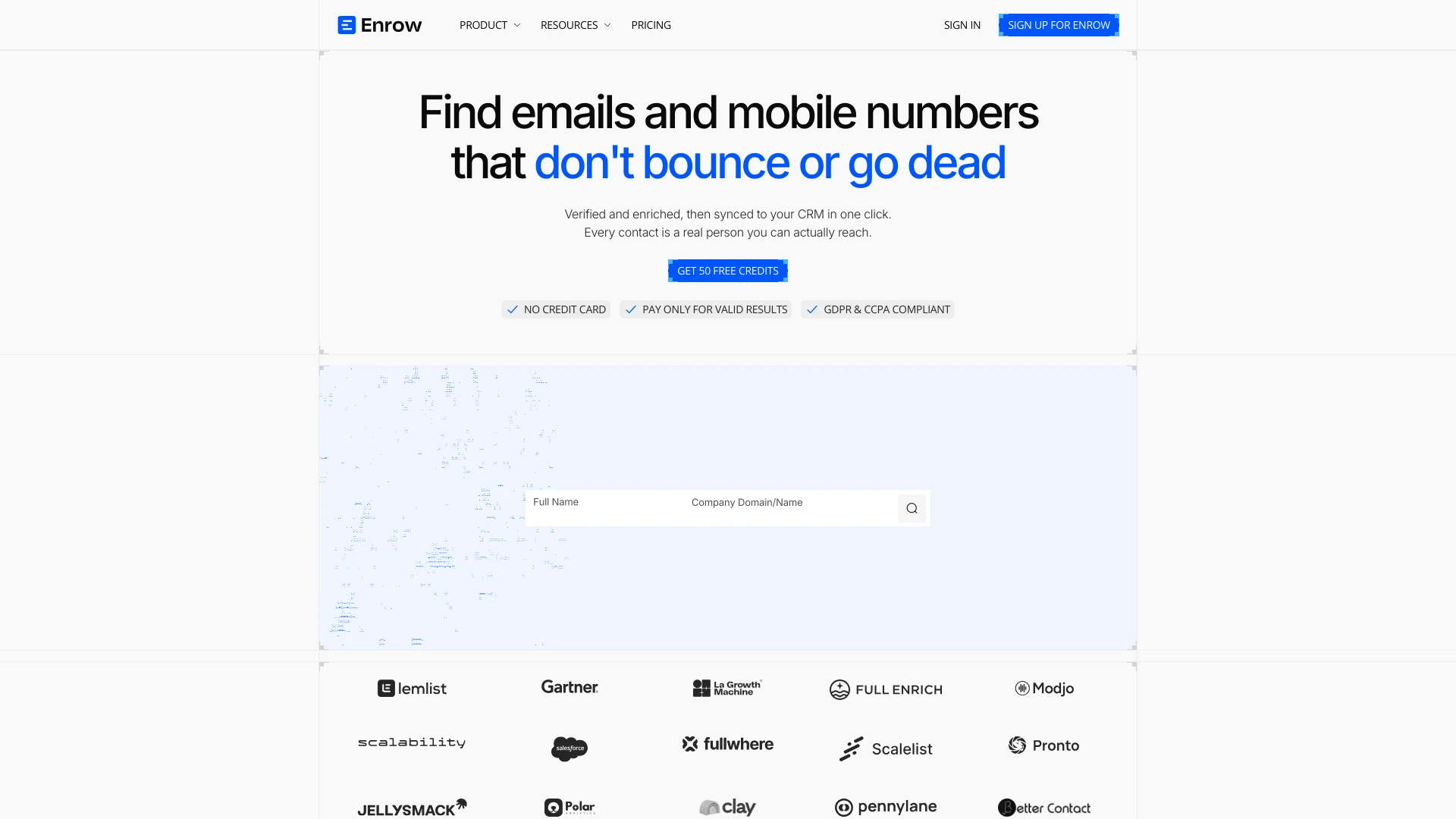
I built Enrow after one too many months of buying phone lookups where half the mobiles rang dead and the bill didn't care.
The split with RocketReach is clean, and it starts with where the number comes from.
RocketReach reveals a mobile from a stored row that was true at the last refresh, maybe months ago. Enrow finds the direct dial in real time, the moment you ask, and verifies it before it counts. That's why it connects more often.
There's no database aging in the background, no "this was accurate in Q3" caveat. On a live dial that difference is the whole game, and it's the reason reviewers put RocketReach's mobile accuracy in a rough 60-70% band (self-reported) while a real-time finder aims higher.
Then the money. RocketReach bills a lookup whether the reveal is a working number or a dead one, so you're partly paying to find out which of your credits were wasted. Enrow charges 40 credits for a phone, and the meter stays off until that number proves valid. A miss costs nothing.
On emails it's stricter still: 10+ verification checks per address, multiple SMTP passes and catch-all checks across servers in different regions, and catch-alls get verified and delivered instead of flagged "risky" and dropped. Bounce sat under 1% on my live send.
To be straight, that's an observed average, not a contractual guarantee, but it's a long way from the roughly 20-30% bounce reviewers report on RocketReach (self-reported).
The reach is the other piece. Enrow returns direct dials in any country and, more to the point for a European team, across the EU.
RocketReach's compliance and accuracy skew US; call a German or French decision-maker and the odds tilt hard toward Enrow. On my list that was the difference between a live conversation and a dead tone.
And there's a workflow edge nothing else here touches. Enrow's Chrome extension works off the LinkedIn or Sales Navigator profile you already have open: one click, and the whole verified contact lands in HubSpot, Salesforce or Pipedrive, email and phone included, every field filled in. No copy-paste. No half-filled record. And it writes create-or-update rather than inserting, so your scoring and routing rules read one complete contact instead of two thin copies of the same person.
RocketReach's extension reveals data you then export as rows; it doesn't build a complete, verified contact card inside your CRM the way this does.
One more thing, for the AI-agent crowd. Enrow ships an official MCP server and API (the repo is github.com/EnrowAPI/enrow-mcp), so you can call the email finder and verifier, or the direct-phone finder, straight from Claude, Cursor or Windsurf. Fresh, verified emails and phones pulled into an agent workflow, still pay-per-valid.
Small thing today. Handy if you're building.
- +A real Direct Phone Finder: direct dials in any country, EU included (RocketReach's phones are stored-DB reveals that skew US)
- +Real-time, so no stale rows; found and verified the moment you ask
- +Pay only for a valid result; a miss never costs a credit
- +10+ verification checks per email; catch-all verified and delivered, not dropped
- +The Chrome extension writes a complete verified contact card, all fields, from LinkedIn or Sales Navigator into HubSpot, Salesforce or Pipedrive with a single click (no rival on this list does it)
- +Native CRM integrations (Clay, HubSpot, Salesforce, Pipedrive, webhooks), a real API and MCP server; no per-seat fees, credits roll over on Pro and Scale
- –No searchable database, on purpose. A stored index is out of date the day after its last refresh, so you dial people who already moved on; Enrow reveals live instead, which is why the number tends to be right. To build source lists, work from LinkedIn or Sales Navigator.
- –No outreach sequencing, and we're not adding it. Send your campaigns through Emelia first, then La Growth Machine, then lemlist.
- –No technographics. You get LinkedIn-level company detail, nothing about the tech stack a prospect runs.
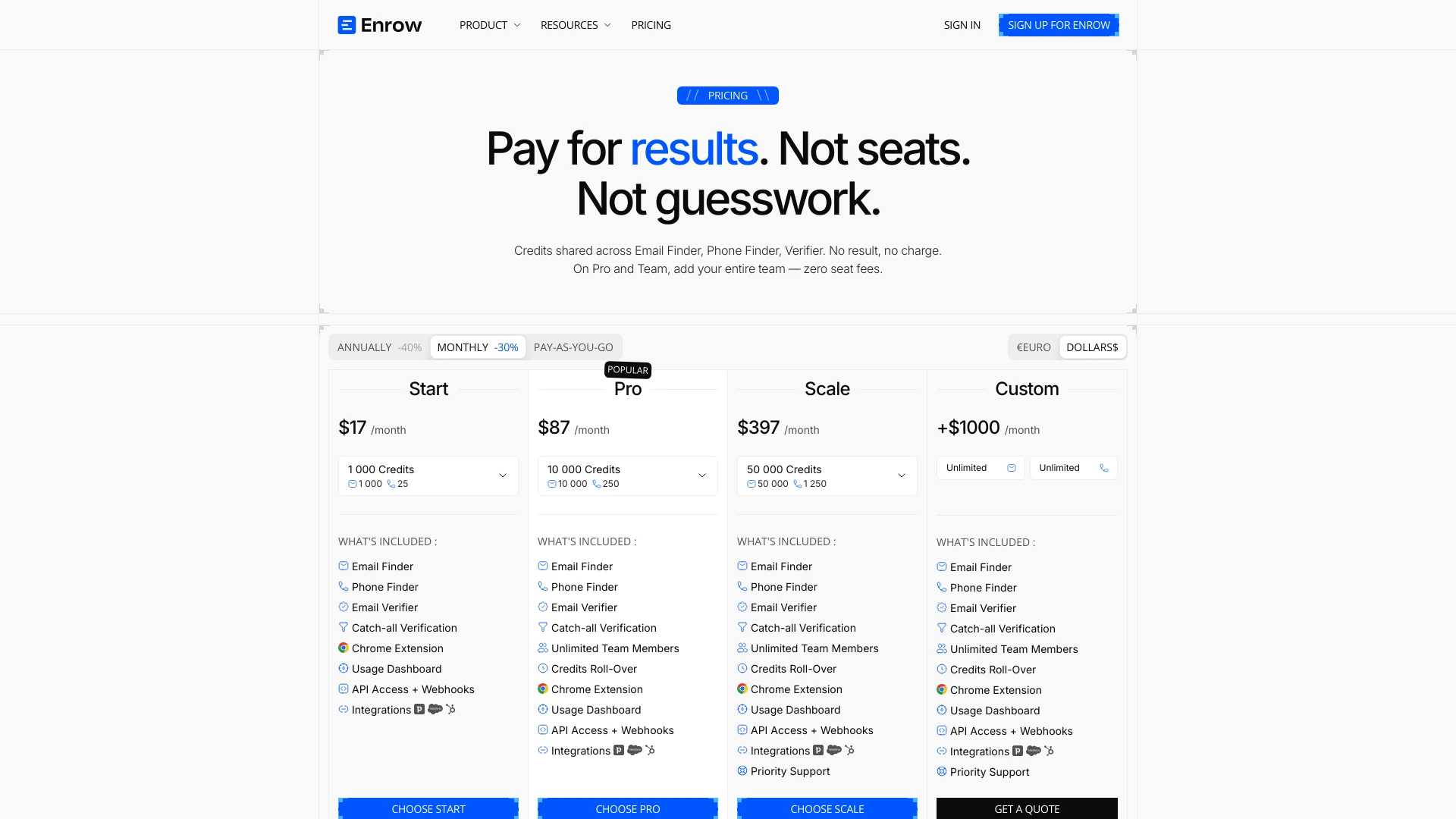
Subscription in three tiers. Start from $17/mo (1,000 credits, monthly only) and $47 for 4,000. Pro from $87/mo (10,000 credits), $167 for 20,000, $247 for 30,000. Scale from $397/mo (50,000 credits) up to $1,397 for 200,000.
Annual billing takes about 10% off on Pro and Scale, so 10,000 lands near $78/mo and 50,000 near $357/mo. The credit math is one line: 1 email = 1 credit, 1 phone = 40 credits, verification 0.25, catch-all included, and nothing spends unless the result is valid.
That makes a 1,000-credit plan 1,000 emails or 25 phones; 10,000 buys 250 phones. Credits roll over on Pro and Scale. Free: 50 credits every month, no card, and they land again next month whether you spend them or not.
Because a credit only spends on a valid result, the sticker is the real cost. The cleaner comparison base is Pro: $87 for 10,000 credits, meaning 10,000 valid emails at about $0.0087 each or 250 valid phones at about $0.35 each.
Scale drops further, and Start remains the smaller $17 entry tier.
Hold that $0.35 Pro phone benchmark, because every stored-database tool below either bills the same credit for a mobile that turns out dead, or hides the real number behind a per-seat or per-lookup meter, and that's where the gap opens.
Point your own test list at Enrow before you take my word for any of this. 50 free credits every month, recurring, no card, phones included.
2. Cognism
Go here when phone-verified European mobiles matter more than the invoice, and the budget can carry an enterprise contract.
Cognism is the serious phone specialist on this list, and it's the fairest fight for Enrow on data quality.
Its Diamond Data process actually phone-verifies a set of mobiles by calling them, which lifts connect rates on European contacts, and it screens numbers against a slate of national Do-Not-Call and TPS registries (Cognism cites 13-15 lists).
Against RocketReach it's a clear step up on phone accuracy and compliance. Where RocketReach is breadth-first, Cognism is a database that takes phones seriously, and for a large EU-calling sales org that's the real draw.
Two things bite: the model and the money. Cognism is still a stored database, so outside the phone-verified Diamond set, records age like any other.
Pricing is custom and steep: teams typically negotiate an annual platform fee plus per-seat costs, often in the region of a couple of thousand dollars per seat per year and a five-figure platform minimum, with credit pools rather than pay-per-valid.
There's no self-serve entry, no free test, and per-seat math that punishes small teams.
Here's my read after using both. Cognism's phone-verified mobiles are genuinely good, and I won't pretend otherwise.
But it verifies a subset by calling ahead; Enrow verifies the number you actually want, in real time, the moment you ask for it, and the bill only shows up once that number is valid, with no platform fee and no per-seat tax. For a big EU field team with budget, Cognism is a real option.
For everyone who wants that data quality without a five-figure contract, Enrow is the leaner buy.
- +Diamond Data: a phone-verified mobile set with strong EU connect rates
- +GDPR/CCPA-compliant, DNC/TPS-screened, enterprise certifications
- +Large searchable database with firmographic filters
- +Intent data and sequencing available at the top end
- –Custom enterprise pricing with a platform fee plus per-seat costs; no self-serve, no free test
- –Only a subset of mobiles is phone-verified; the rest is stored data that ages
- –Annual contracts and credit pools, not pay-per-valid
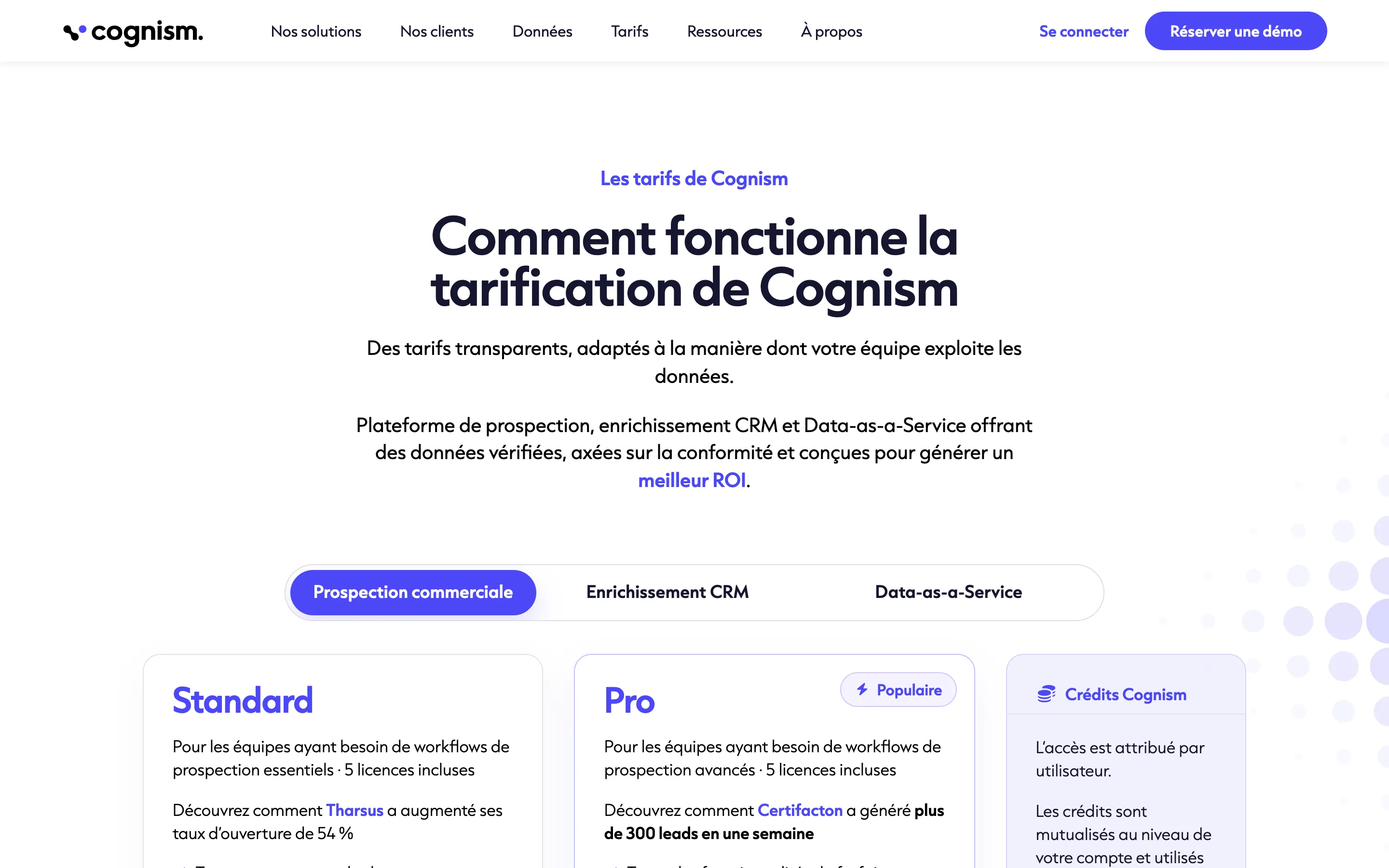
Cognism pricing is quote-only: an annual platform fee plus per-seat licences, commonly around $1,500+/seat/year on the entry package with a five-figure platform minimum, credit pools rather than a per-valid meter. Cognism publishes no per-phone number, so effective cost turns on the pool you negotiate and how much you burn — and with the non-Diamond reveals carrying the usual freshness haircut, it lands well above Enrow's $0.35 Pro benchmark for most teams.
vs Enrow: Cognism's Diamond mobiles are a fair rival to Enrow on quality, but entry means a platform fee, per-seat licences and an annual commitment. Enrow verifies the number you ask for, live, and only charges once it clears; no platform fee, no seat tax, just $17 to start and a full contact card dropped into your CRM in one click.
3. Lusha
Reach for Lusha when you want US mobiles today and refuse to sit through a sales call to get them.
Lusha is the easy on-ramp. A browser extension, self-serve pricing, and a credit reveals an email or a direct dial off a LinkedIn profile or a company page. Against RocketReach it's a similar stored-database model, just cleaner to buy and quicker to use for a single rep.
Its niche is the SDR who wants a handful of US mobiles a day without a procurement process, and on that narrow job it's genuinely smooth.
It hits the same wall as RocketReach, then adds a five-credit phone reveal on top. Lusha is a stored database, so mobiles age and a share bounce or ring the wrong person on a live dial.
Phone reveals cost 5 credits each, so a 400-credit plan buys 80 phones, not 400. EU coverage and accuracy are thinner than a specialist like Cognism or a real-time finder like Enrow. And credits are monthly allowances that don't stretch far once you dial in volume.
What stood out for me: the extension is fast and the buying is painless, no notes there. But the numbers are stored reveals, so a chunk were stale on a live dial, and at 5 credits a phone the meter moves quicker than it looks.
Enrow keeps that same self-serve ease but works live. Each dial is verified before it counts and billed only if it's valid. Fresher data, honest meter.
- +Self-serve, no sales call, fast browser extension
- +Clean UI, easy for a single rep to start
- +Email and mobile reveals in one tool
- +Reasonable entry price for light US use
- –Stored database, so mobiles age and a share bounce on a live dial
- –Phone reveals cost 5 credits each, so per-phone cost is higher than it looks
- –EU coverage/accuracy thinner than a phone specialist; monthly credits don't roll far
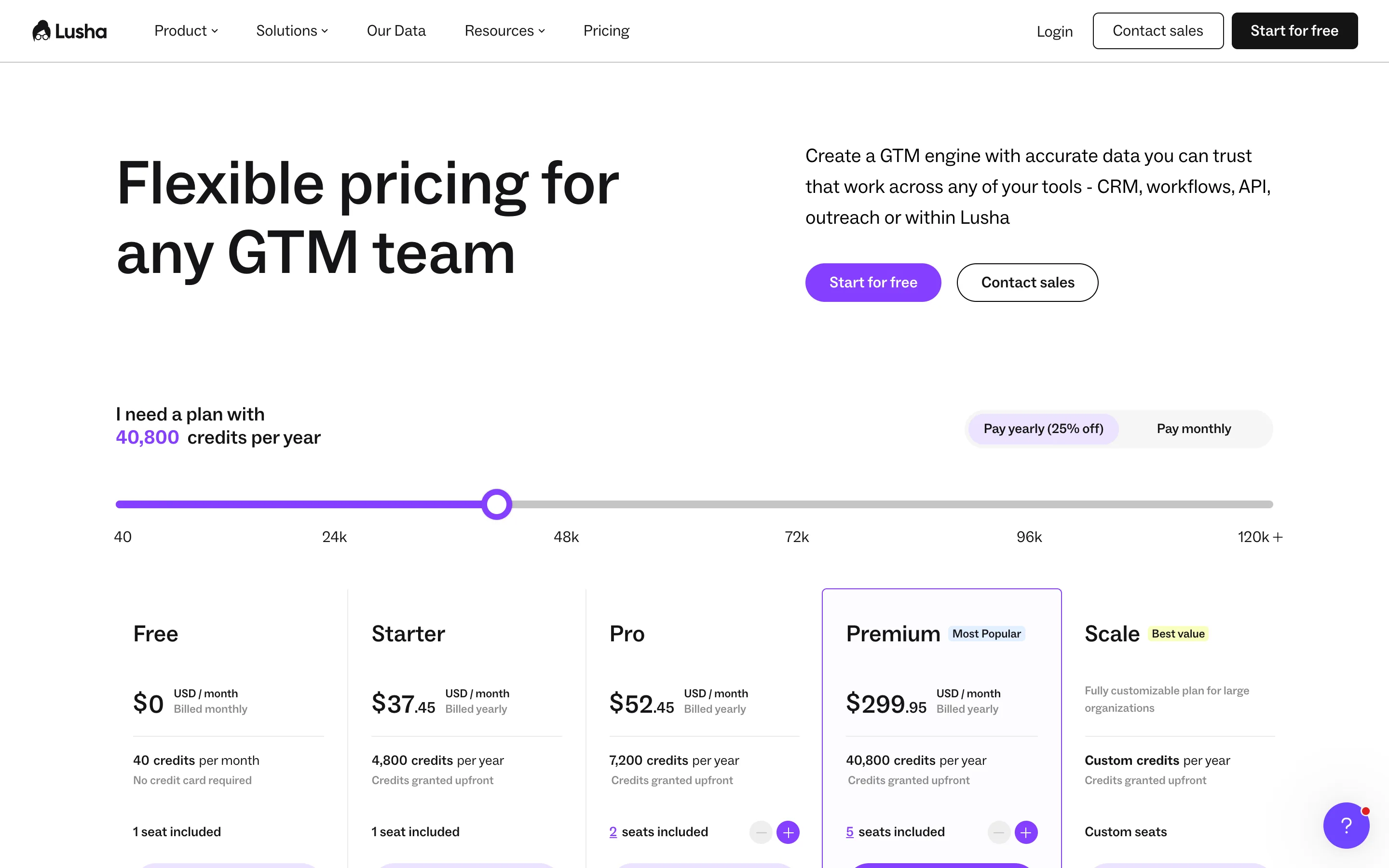
Lusha pricing (read 2026-10-05, USD) starts at $49.90/mo billed monthly ($37.45/mo billed annually) for 400 credits, and a phone reveal costs 5 credits — so Starter buys about 80 mobiles, roughly $0.62 each month to month. Those are stored reveals, so after a rough 50-70% accuracy haircut the real cost per valid mobile lands near $0.89-$1.25, well above Enrow's $0.35 on Pro, also billed monthly.
vs Enrow: Lusha is easier to buy than RocketReach but inherits the same stored-database staleness. Where Lusha runs thin on EU, Enrow returns direct dials, verifies each one before it counts, bills only the ones that connect, and hands the whole contact to your CRM in a single click.
4. Kaspr
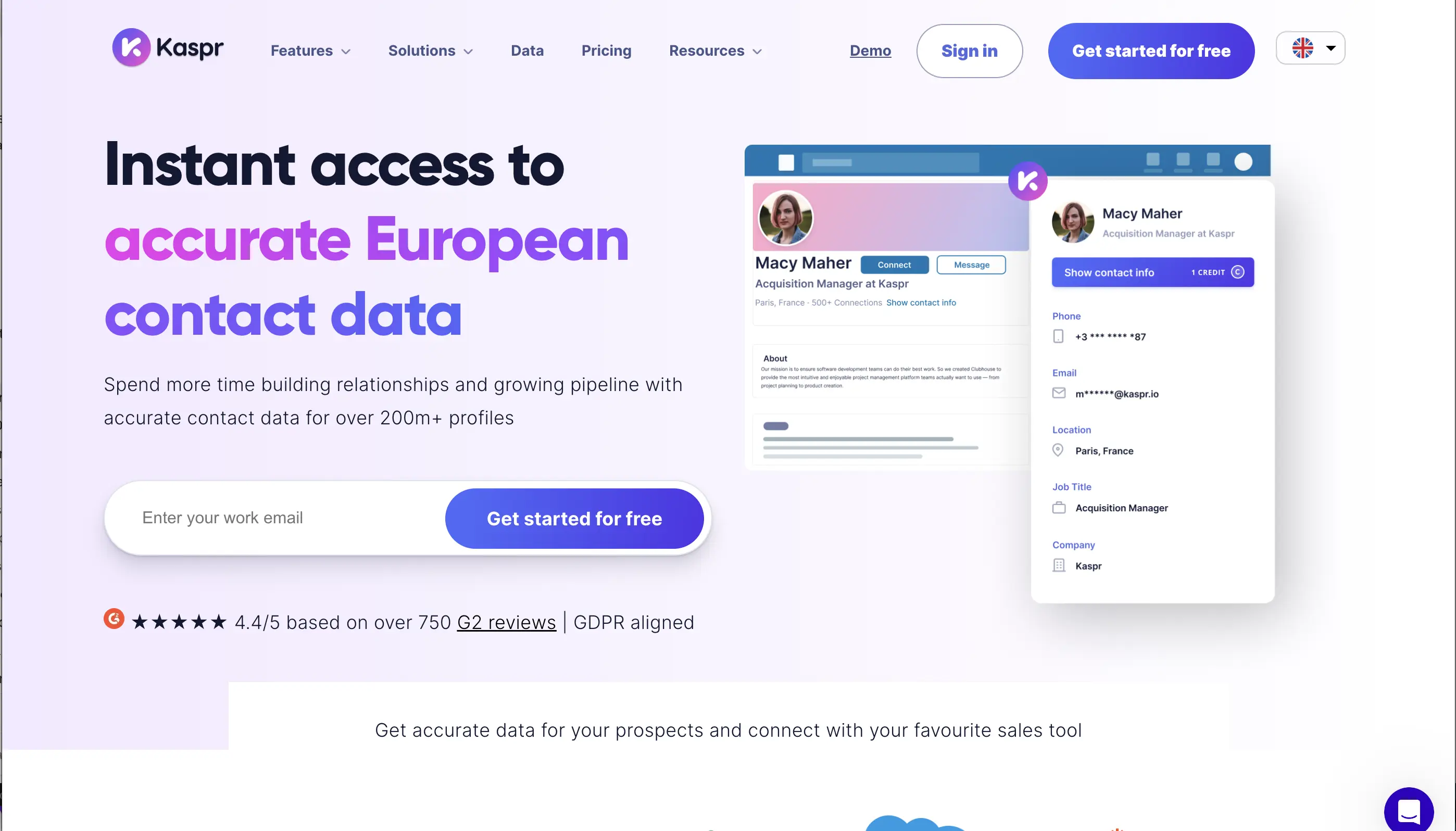
Kaspr is the LinkedIn door into EU-leaning mobile reveals, one profile at a time.
Kaspr (part of the Cognism group) is a LinkedIn-first extension: open a profile, reveal the phone and email, done. It's cheaper than RocketReach for a single user and dead simple.
Its split credit system gives you separate monthly phone and email allowances, plus generic B2B emails it markets as "unlimited" — though the fine print fair-use-caps them at 10,000 per account per month (kaspr.io/terms).
For a solo SDR working LinkedIn who wants a few stored reveals a day, it fits that narrow workflow.
A few catches lurk under the headline sticker. Those "unlimited B2B emails" are generic company addresses, not verified direct work emails, and "unlimited" is a fair-use ceiling of 10,000 per account per month, so don't confuse the marketing with the meter.
Phone credits are a capped monthly ration, and the data is stored-database reveal, so European accuracy is uneven and stale numbers happen. It's built for one person on LinkedIn, not for bulk or for a real EU dialing engine.
The LinkedIn workflow is quick and the price is friendly, both fair. But the split-credit ration empties fast once you dial in earnest, and stored reveals mean some numbers were dead.
Enrow puts no separate phone meter or split ration in the way; it finds and verifies each number as you ask, and its EU direct dials are exactly what Kaspr's uneven ration can't promise.
- +Sticker-price, simple LinkedIn Chrome extension
- +Split credits with a free tier to test (5 phone credits/mo)
- +Generic B2B emails marketed as "unlimited" (fair-use cap ~10,000 per account/mo)
- +Backed by Cognism's data pipeline
- –"Unlimited emails" are generic company addresses, not verified direct emails, and fair-use-capped at ~10,000 per account/mo
- –Phone credits are a capped monthly ration; stored reveals, so some numbers are stale
- –Uneven EU mobile accuracy; built for solo LinkedIn use, not bulk
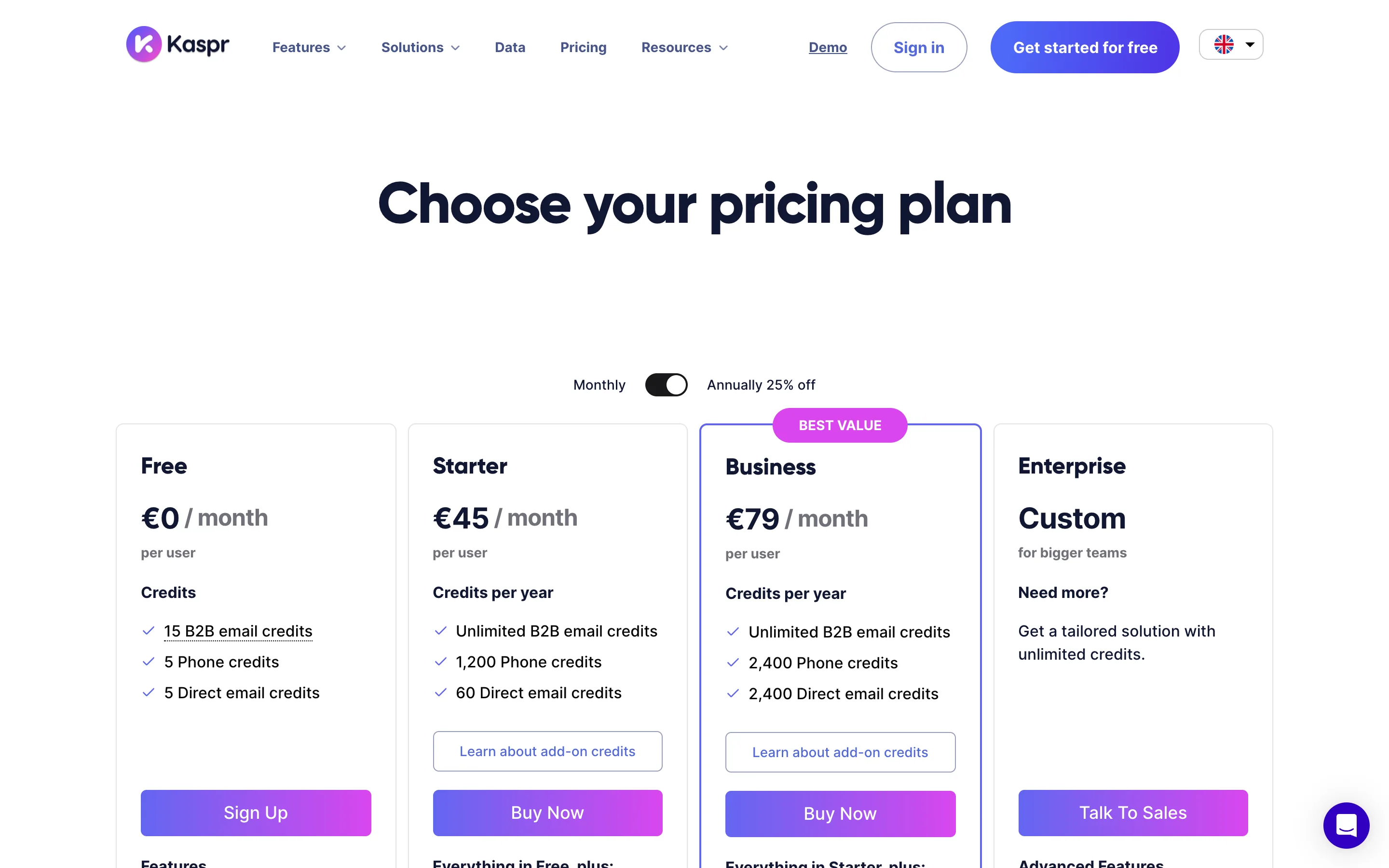
Kaspr pricing (verified 2026-10-06, in euros, per user) starts at €59/user/mo with 100 phone credits/mo, so a revealed mobile pencils near €0.59. But that's a stored number on a per-seat ration, so after a rough 50-70% accuracy haircut the real cost per valid mobile climbs to €0.84-€1.18, above Enrow's €0.30 on Pro (€75 for 10,000 credits, billed monthly like Kaspr) before the per-seat multiplier even bites.
vs Enrow: Kaspr is tidy for one rep on LinkedIn, but its phones come as a stored, capped, per-user ration and the "unlimited emails" are generic and fair-use-capped at ~10,000/account/mo. Enrow has no seat tax, verifies each dial the moment you request it, charges only for the ones that connect, and returns EU direct dials.
5. Apollo

Choose Apollo when you want RocketReach-scale breadth and a sequencer living in the same tab.
Apollo pairs a huge B2B database with sequencing, enrichment and a Chrome extension on one seat-based subscription. Against RocketReach, it's the same stored-database idea but with outreach built in, so you can go from a filter to a live sequence without leaving the tool.
Its niche is the small team that wants to source and enrich in the same place it sends, where the data is a component of the workflow rather than the product.
That breadth is also the trade. Apollo is a stored database, so a row is only as current as its last update, and you'll dial contacts who moved on months ago, the same freshness problem RocketReach has. Mobile numbers are a thin credit ration, and credits are per seat.
Export caps and data-accuracy gripes are the two things you'll read most in the reviews.
Fair play to Apollo: getting from a filter to a sequence in one tab is genuinely quick. Then I checked the data against a live dial, and real-time won.
Enrow finds and verifies each number on the spot and delivers EU direct dials that Apollo's mobile ration doesn't reliably cover; the meter runs only on a valid result, with no per-seat math. For the all-in-one, buy Apollo, and let Enrow feed it the clean phone layer.
- +Large B2B database with sequencing and enrichment in one place
- +Chrome extension and CRM integrations
- +Generous free tier (900 credits/year per seat)
- +Sourcing and enrichment live next to sending, in one tool
- –Stored database, so data ages and mobile accuracy is a common complaint
- –Mobile credits are a thin per-seat ration; exports draw down fast
- –Export caps and data-quality gripes recur in reviews
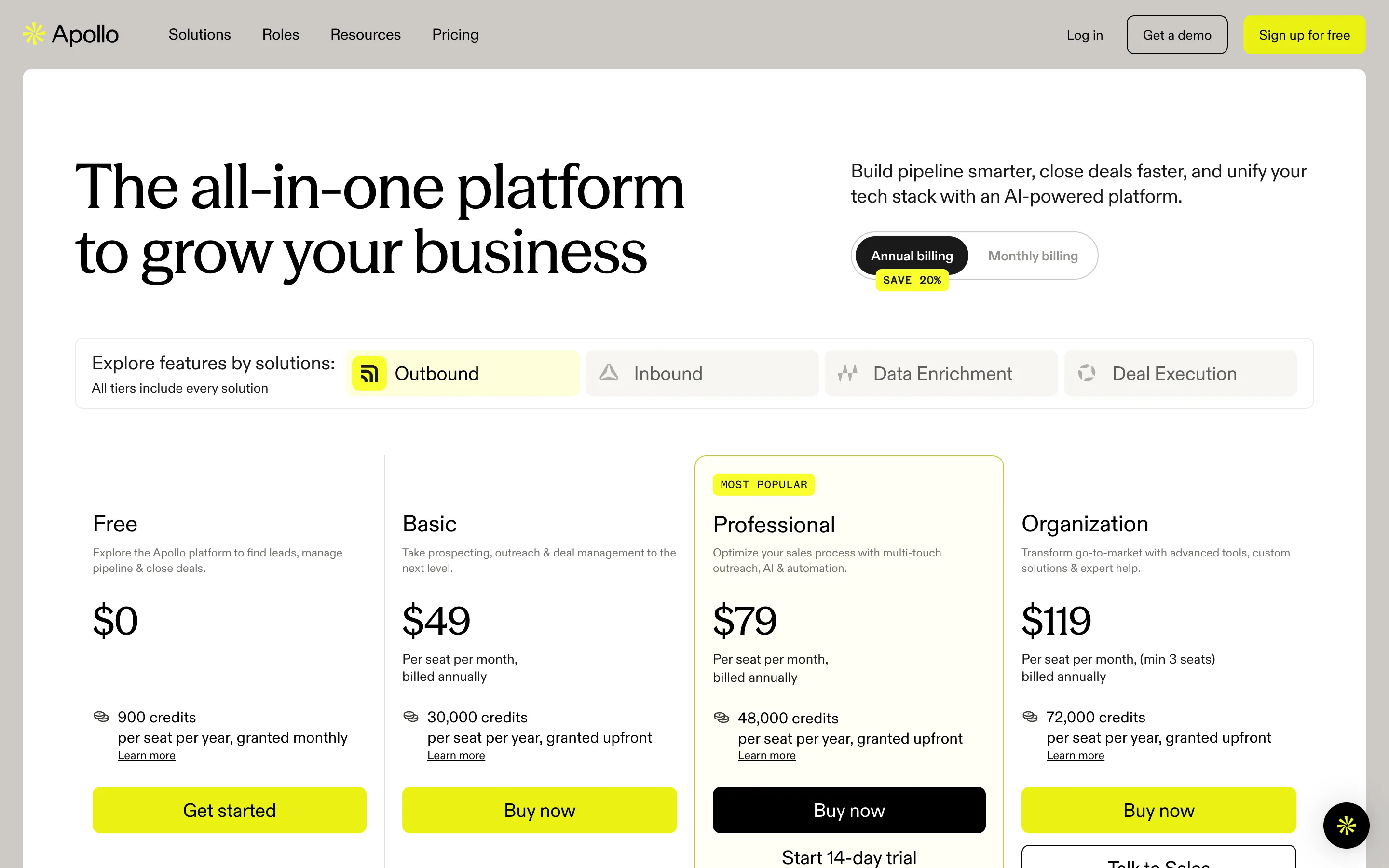
Apollo pricing (verified 2026-07-02, USD, per seat, billed annually) starts at $49/seat/mo for 2,500 unified credits, where a mobile reveal costs 8 credits from a pool it shares with email, and unused credits expire monthly. The sticker looks tiny only if the whole pool goes to phones; once you count the shared draw, the 50-70% staleness haircut, the per-seat fee and the expiring credits, the real cost per valid mobile lands above Enrow's $0.35 at Pro, not below it.
vs Enrow: Apollo is the all-in-one; Enrow is the phone-and-email data layer built for a different job. Enrow's real-time reveals beat a stored index on a live dial, the bill only lands on a valid result, and there's no seat fee to carry. Run both for the suite and clean dials, and let Enrow feed Apollo the phone layer.
6. SignalHire
SignalHire fits the recruiter who wants email and phone pulled from one credit, not two.
SignalHire reveals a contact's email and phone from a single credit when both are on file, which is a tidy model if you want both without double-charging (its newer plans do split into email-focused and phone-focused credit pools, so check which you're buying).
It leans recruiter, with LinkedIn integration and ATS-friendly exports. Against RocketReach it's a smaller database with a lower-looking entry sticker with a friendlier per-credit bundle. Its niche is recruiters and small teams who want email-plus-phone in one hit with a headline entry sticker.
Two problems, and one is depth. SignalHire's coverage is thinner than the big databases, so match rate on a niche list can dip, and the phones are stored reveals, so EU accuracy and freshness are uneven.
It's built for reveal-as-you-go, not for a verified, real-time direct-dial pipeline, and there's no documented GDPR-cleared EU phone story.
On my own run, the one-credit email-and-phone bundle was genuinely convenient and the entry price low. But the phones are stored reveals, so some were stale on a dial, and coverage thinned on my niche list.
Enrow flips that script: numbers found live and verified as you request them, the charge landing only when valid, EU direct dials, and a Chrome extension that lands the full contact in your CRM in one click, which SignalHire's plain rows can't.
- +One credit reveals email and phone together
- +Headline entry sticker and a small free allowance
- +LinkedIn integration, recruiter- and ATS-friendly exports
- +Straightforward reveal-as-you-go model
- –Smaller database, so match rate dips on niche lists
- –Stored phone reveals, so EU accuracy and freshness are uneven
- –No documented GDPR-cleared EU direct-dial story
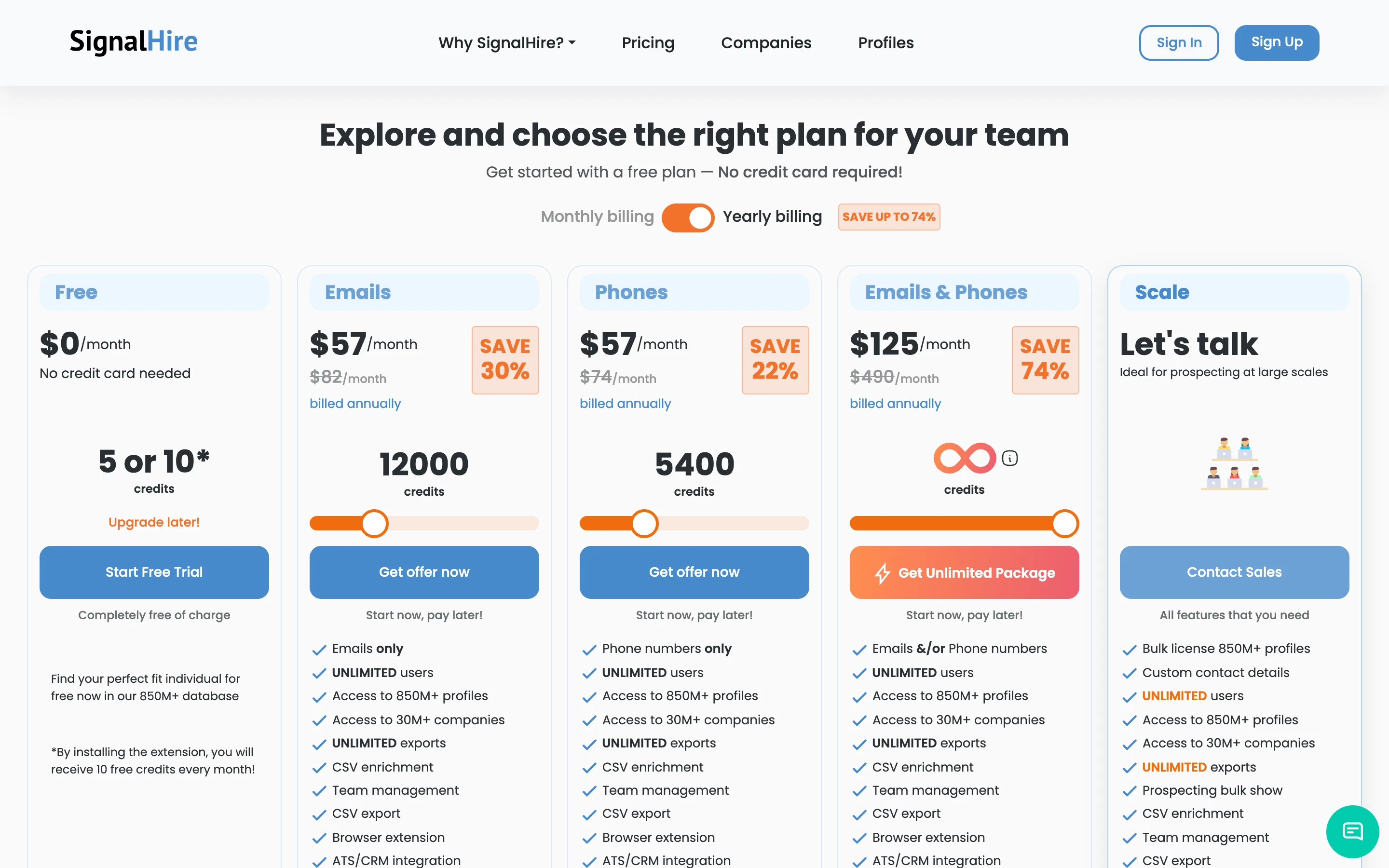
SignalHire pricing (verified 2026-07-02, USD) sells plan-typed credits: a Phones plan around $57/mo billed annually for ~5,400 phone credits/year, with a small free allowance to test. The tidy per-reveal figure only holds if you burn the whole annual pool, which almost nobody does — stack the unused-pool waste on a 50-70% stored-reveal accuracy haircut and the real cost per valid mobile lands above Enrow's $0.35 at Pro.
vs Enrow: SignalHire's one-credit reveal is convenient and low at the sticker, but the phones are stored numbers with uneven EU accuracy, and the meter runs whether the dial connects or not. Enrow only bills on a live result, verifies each number as you ask for it, and exports a full contact card SignalHire's plain rows can't.
7. Wiza
Wiza suits the team that wants a LinkedIn search turned into a clean exportable list, phones filled in.
Wiza is built around LinkedIn and Sales Navigator: run a search, and it exports the list with emails and phone numbers filled in. Against RocketReach it's less a searchable database and more a LinkedIn-list enrichment layer, which is a cleaner fit if LinkedIn is already your sourcing surface.
Its niche is teams that live in Sales Navigator and want a fast, simple export with contact data attached.
The catch is baked into the model. Wiza's credits don't roll over, so unused ones expire each cycle, and its phones are stored reveals like the rest of this pack, so mobile freshness and EU accuracy vary.
On monthly plans you're metered per email and per phone (with overage at $0.35 per phone), and there's no documented GDPR-cleared EU direct-dial story. It's a list-export tool, not a verified real-time dialer.
The Sales Navigator export is genuinely handy in practice, and the plan structure is easy to read. But phones are stored reveals, so a share were stale, and credits evaporate at renewal.
Enrow rolls credits over on Pro and Scale instead of burning them. Each dial gets found and verified as you ask for it, the charge applies only on a valid result, and the whole contact gets written into your CRM in one click, which Wiza's rows don't match.
- +Fast LinkedIn and Sales Navigator list export
- +Simple, readable plans with email and phone reveals
- +Free tier to test (20 emails + 5 phones/mo)
- +Clear per-reveal overage pricing
- –Credits don't roll over; unused ones expire each cycle
- –Phones are stored reveals too, so EU mobile accuracy and freshness vary
- –EU direct dials carry no documented GDPR clearance
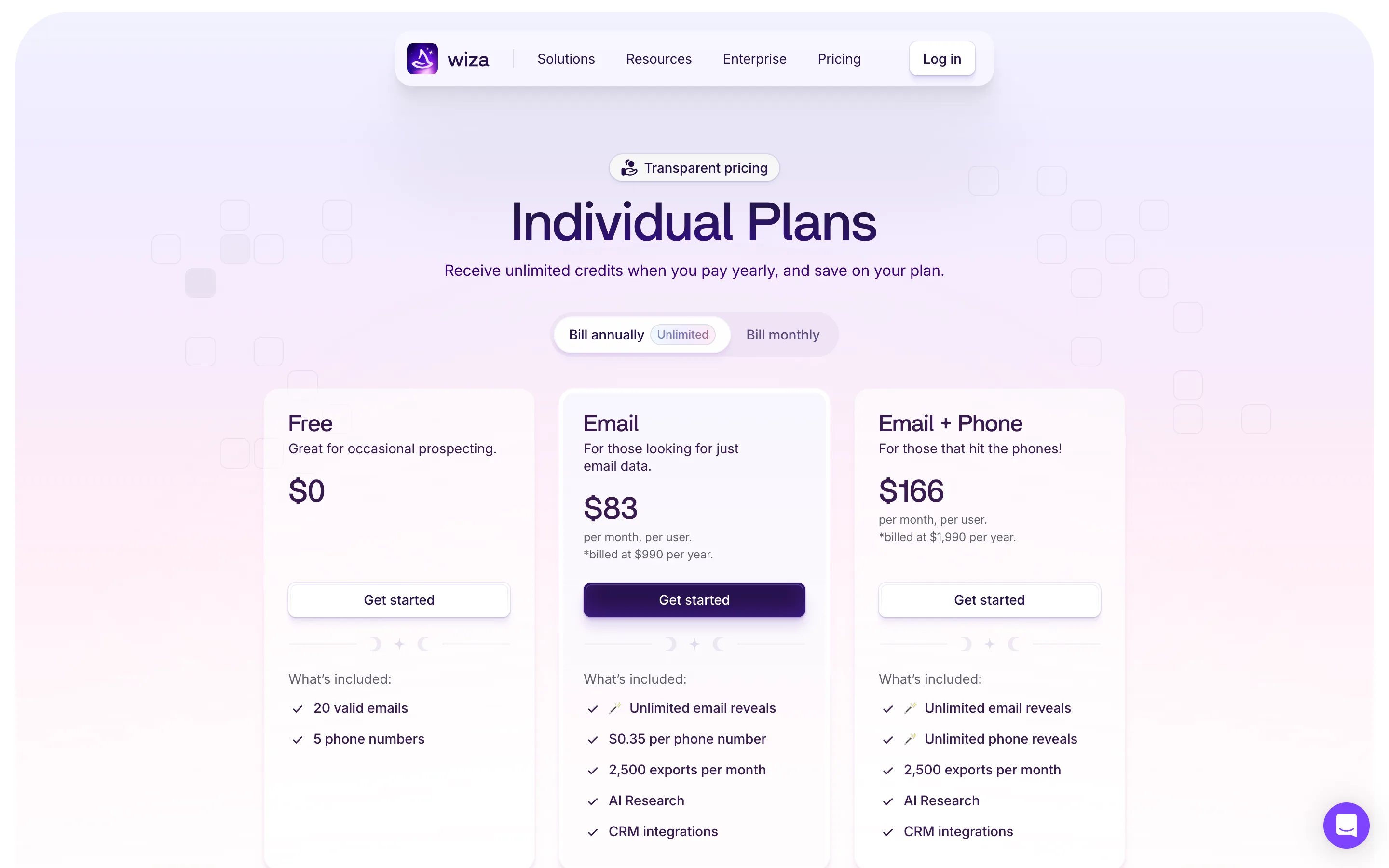
Wiza pricing (USD) starts at $49/mo for 100 emails + 100 phones, with phone overage at $0.35 each and no rollover. But that $0.35 buys a stored reveal that might be dead, so after a rough 50-70% accuracy haircut the real cost per valid mobile climbs into the $0.50-$0.70 range — above Enrow's $0.35 on Pro, and on aging data rather than live-verified.
vs Enrow: Wiza's LinkedIn export is handy and its sticker per-phone rate is low on paper, but its credits expire each cycle and its numbers go stale. Enrow's credits roll over on Pro and Scale, and the difference doesn't stop there: live verification on every dial you request, a charge only when it's live, EU direct dials, and the full contact pushed into your CRM in one click.
8. ContactOut
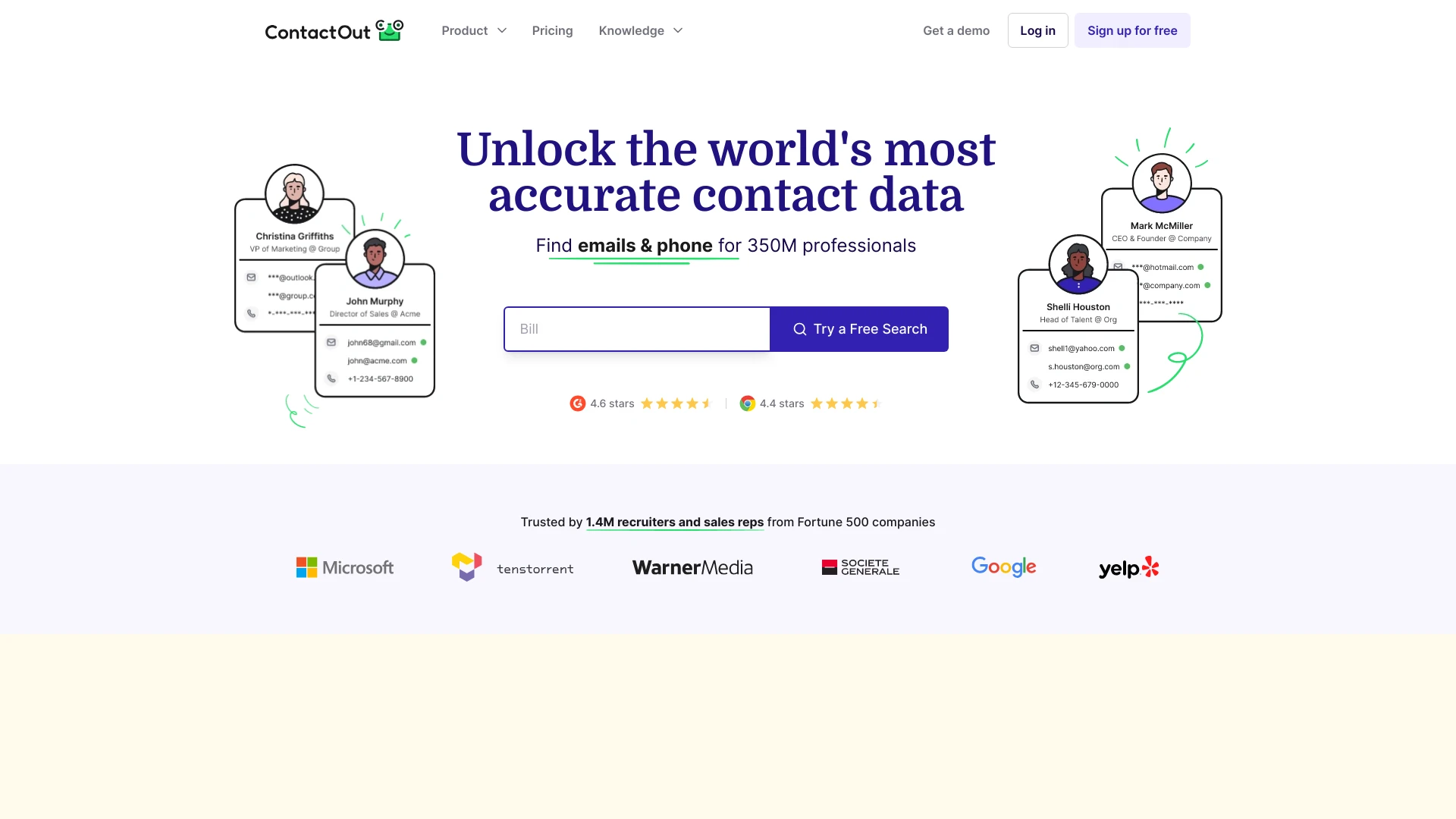
ContactOut is for the recruiter who needs a candidate's personal email and mobile, not just the work inbox, straight off LinkedIn.
ContactOut leans hard into recruiting: it surfaces personal and work emails plus phone numbers from LinkedIn profiles, with a browser extension and a search portal. Against RocketReach it trades breadth for a recruiter's angle, personal contact details in particular.
Its niche is talent teams who need to reach candidates on personal channels, not just work inboxes.
Scope and freshness are where it strains. ContactOut is a stored database with daily reveal caps, so heavy days hit a ceiling, and its phones are stored reveals, so mobile accuracy and EU freshness are uneven like the rest.
It's tuned for recruiting rather than high-volume sales dialing, and there's no documented GDPR-cleared EU direct-dial pipeline. Pricing is opaque until you talk to them on the higher tiers.
The personal-email angle is a real recruiting edge, and the extension is quick. But the daily reveal caps bite, and the phones are stored numbers, so some were stale.
Enrow is built for the sales-dial job specifically. Direct dials come verified in real time, no daily ceiling on what you can pull, pay-per-valid throughout, plus the full-contact CRM export ContactOut's reveals don't do.
- +Strong at personal and work emails for recruiting
- +Browser extension plus a search portal
- +LinkedIn-native workflow for talent teams
- +Useful when you need non-work channels to reach someone
- –Daily reveal caps limit heavy use
- –Phone data is stored, not live, so EU mobile accuracy and freshness swing widely
- –Recruiting-tuned, not built for high-volume sales dialing; opaque higher-tier pricing
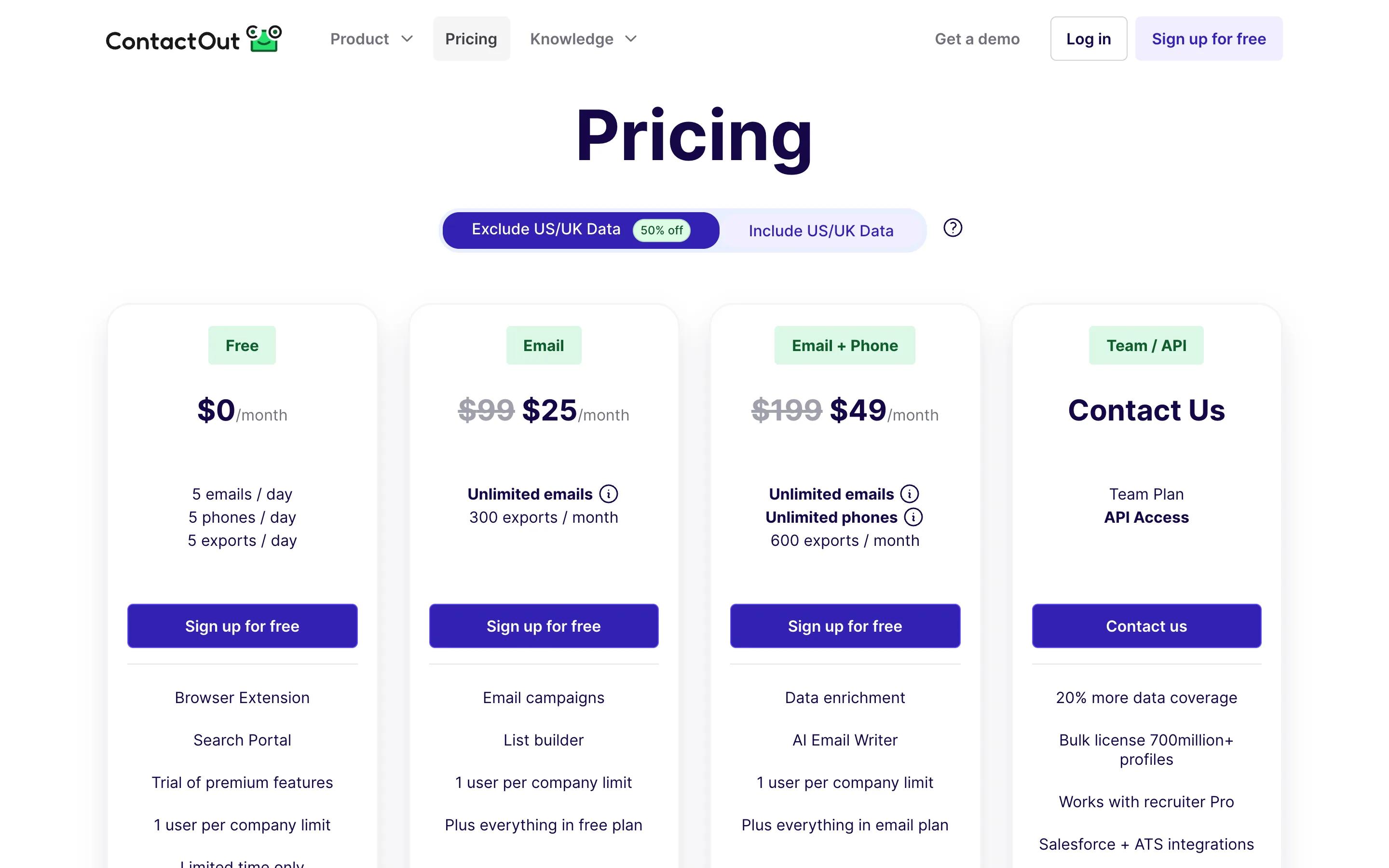
ContactOut pricing (verified 2026-07-02, USD; plan names render client-side) runs an Email + Phone plan around $99/mo monthly-billed ($79/mo annual), marketed as "unlimited" but capped in the terms at roughly 2,000 emails and 1,000 phones a month. It isn't priced per credit, so there's no honest per-valid sticker — but for any normal, part-used month the effective cost per valid mobile sits above Enrow's $0.35 at Pro once you count the stored-reveal accuracy haircut.
vs Enrow: ContactOut's personal-contact angle is a genuine recruiting edge, but for sales dialing its daily caps and stored phones can't keep pace with a real-time finder. There's no daily ceiling on Enrow, each dial gets verified as you go, and you're only charged for the live ones; the full contact lands in your CRM with one click.
9. ZoomInfo
Reach for ZoomInfo when you want the biggest US database on the market and a procurement budget to match.
ZoomInfo is the heavyweight RocketReach is most often measured against, and for good reason: it's the largest B2B contact database going, with firmographic filters, intent signals, and direct-dial and mobile numbers layered on top. Against RocketReach it's the same stored-database idea scaled up, deeper coverage and a much bigger bill.
Its niche is the enterprise revenue team that wants one authoritative data platform and can sign an annual contract to get it.
Two things bite, and they're the familiar ones. ZoomInfo is a stored database, so a direct dial is only as fresh as its last refresh, and reviewers report the same job-change staleness that dogs any big index. Its strength is US coverage; EU direct dials and GDPR compliance are the softer spot, and it has faced well-documented European opt-out and privacy complaints.
Then the money. ZoomInfo publishes two prices, neither on its own pricing page. The AWS Marketplace listing sells a 12-month contract, one user, 2,000 bulk credits, for $3,000 (re-checked 2026-09-30). The other is gtm.ai, its pay-as-you-go API, at $0.38 a record on the $1,000 tier and $0.25 only once you reach $25,000. No tier includes a mobile number. For a page about dialing, that's the line to remember. Searching and filtering cost nothing — ZoomInfo's documentation is explicit that credits go on enrichment and export of a contact record, not on search or lookup. On the platform, what costs you is the term: a year signed up front, a licence per seat, and any credits left unspent at renewal, which expire.
Here's my read after using both. ZoomInfo's database is genuinely the deepest here, and for a big US enterprise that lives inside it, that breadth is real. But it's a stored index behind a year's commitment, ageing between refreshes, EU dials trailing a specialist. Enrow works differently: it verifies the specific number you ask for, live, with the charge waiting on a valid result, opens at $17 a month with no contract and no seat fee, and covers EU direct dials.
- +The largest B2B database here, with deep firmographics and intent data
- +Direct-dial and mobile numbers on the higher tiers
- +Strong US coverage and enterprise-grade integrations
- +One broad platform: data, intent and workflow together
- –The platform starts at $3,000 for a 12-month contract, one seat and 2,000 exports (AWS Marketplace), with no monthly plan; the pay-as-you-go gtm.ai API leaves mobiles out
- –Stored database, so direct dials age and job-change staleness applies
- –EU direct dials and GDPR compliance weaker than a specialist; documented European opt-out complaints
- –Credits burn on export, and whatever you haven't spent by renewal expires
The ZoomInfo pricing page sends you to a form, but two public figures do exist. Its AWS Marketplace listing prices a 12-month contract at $3,000 for one user and 2,000 bulk credits (re-checked 2026-09-30). A credit is spent when you enrich or export a contact record, not when you search, so that platform contract works out at $1.50 per exported contact, one seat, twelve months committed. The second figure lives on gtm.ai, ZoomInfo's pay-as-you-go API: $0.38 a record at the $1,000 tier, $0.25 only at the $25,000 tier, and mobile numbers excluded at every tier. Enrow charges 41 credits for a complete contact card with a GDPR-cleared EU mobile: about $0.70 on the $17 Start tier, about $0.36 at Pro volumes. Card for card, a platform export costs more than double that. gtm.ai can't sell you the card at all, since the mobile isn't on offer. On the email alone, its $0.38 record runs about 22x Enrow's $0.017. Above the $3,000 contract, everything is negotiated (Vendr puts the median near $33,500 a year), and unused credits expire at renewal.
vs Enrow: ZoomInfo's database is the deepest on this list, but the platform means $3,000 committed for twelve months, a licence per seat and a stored index that ages, with EU dials that trail a specialist. Its gtm.ai API drops the contract and the mobiles along with it. Enrow flips the model: live verification on the number you ask for, a charge only once it's valid, $17 a month with no commitment and no seat fee, EU direct dials, and a full contact card dropped into your CRM in one click.
10. RocketReach
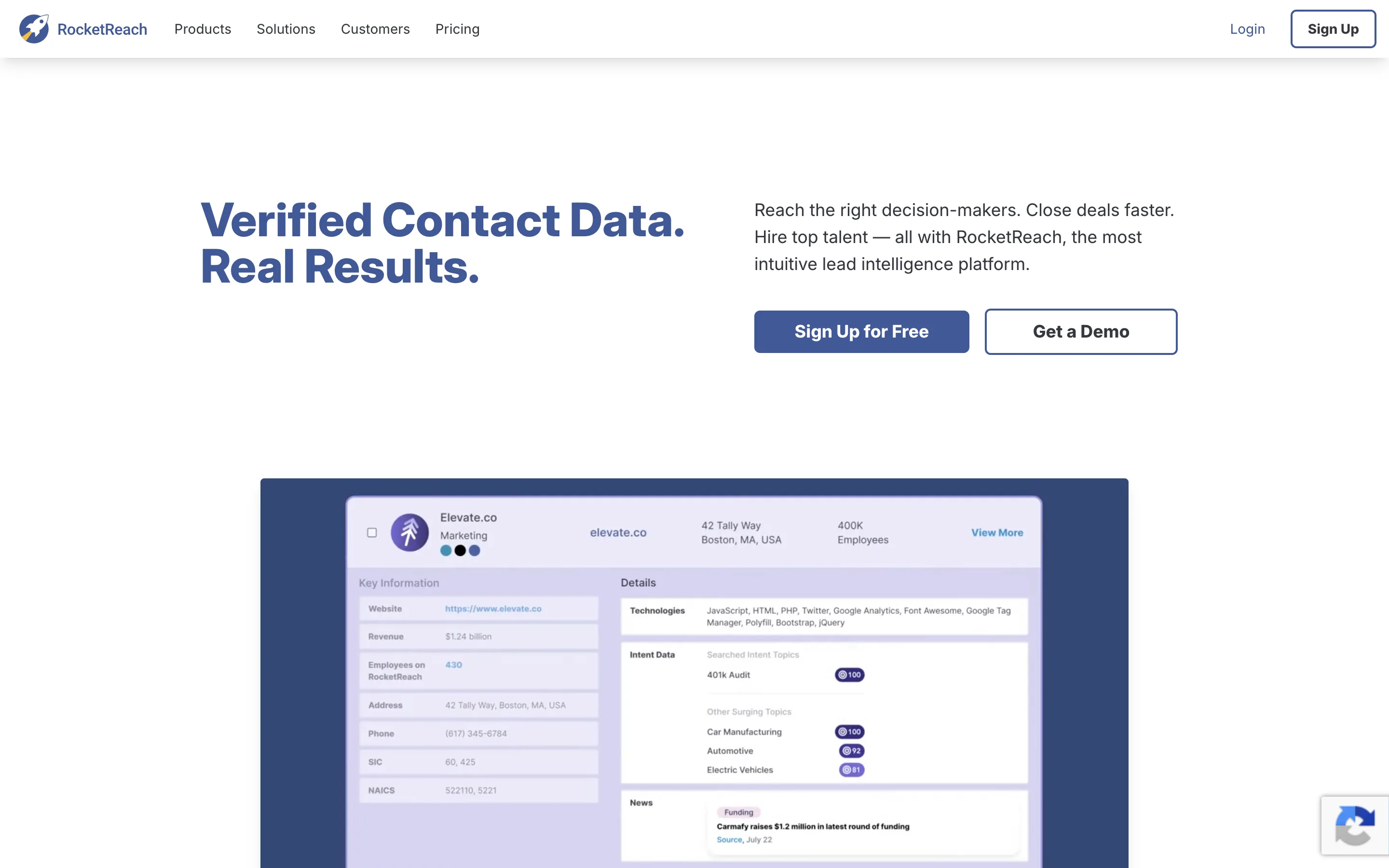
The tool this article is measured against, on its own terms.
RocketReach is the baseline, so here it is fairly. A large B2B contact database, hundreds of millions of profiles, with a clean search box and a browser extension that reveals emails and phone numbers.
One lookup reveals an email or a phone, and bulk lookups refund a credit when no email is found. For breadth and quick search, especially in the US, it does the job, and its rating of about 4.4/5 from well over a thousand G2 reviews reflects that.
Freshness and phones are the soft spots. RocketReach reveals stored rows, and stored rows age, so reviewers report mobile accuracy in a rough 60-70% band and email bounce around 20-30% (self-reported ranges, not a controlled test), plus a recurring complaint about contacts who changed jobs.
Phones are locked behind the Pro tier and up, EU accuracy is where reviewers complain most, and the monthly plans are far more limited than the annual ones. It's a search-and-reveal database, not a verified real-time direct-dial engine.
On its own merits, RocketReach is a fine breadth tool for a US-centric search-and-email motion. I'll grant it that. But for a team that dials, the stored-database freshness problem is exactly the thing it can't fix, and it's the reason this whole list exists.
Enrow does none of that waiting. It finds each number in real time and verifies it on the spot; the bill only lands on a valid result, and the full contact exports to your CRM in one click, none of which a stored-reveal database does.
- +Large, broad B2B database with strong US coverage
- +Clean search box and a browser extension
- +Email and phone reveals from one lookup; bulk refunds credits on no-email-found
- +About 4.4/5 from well over a thousand G2 reviews for ease of use
- –Stored reveals age, so reviewers report a rough 60-70% mobile accuracy and ~20-30% email bounce (self-reported)
- –Phones locked behind Pro and up; EU accuracy is a common complaint
- –Monthly plans far more limited than annual; you pay per lookup whether the number connects or not
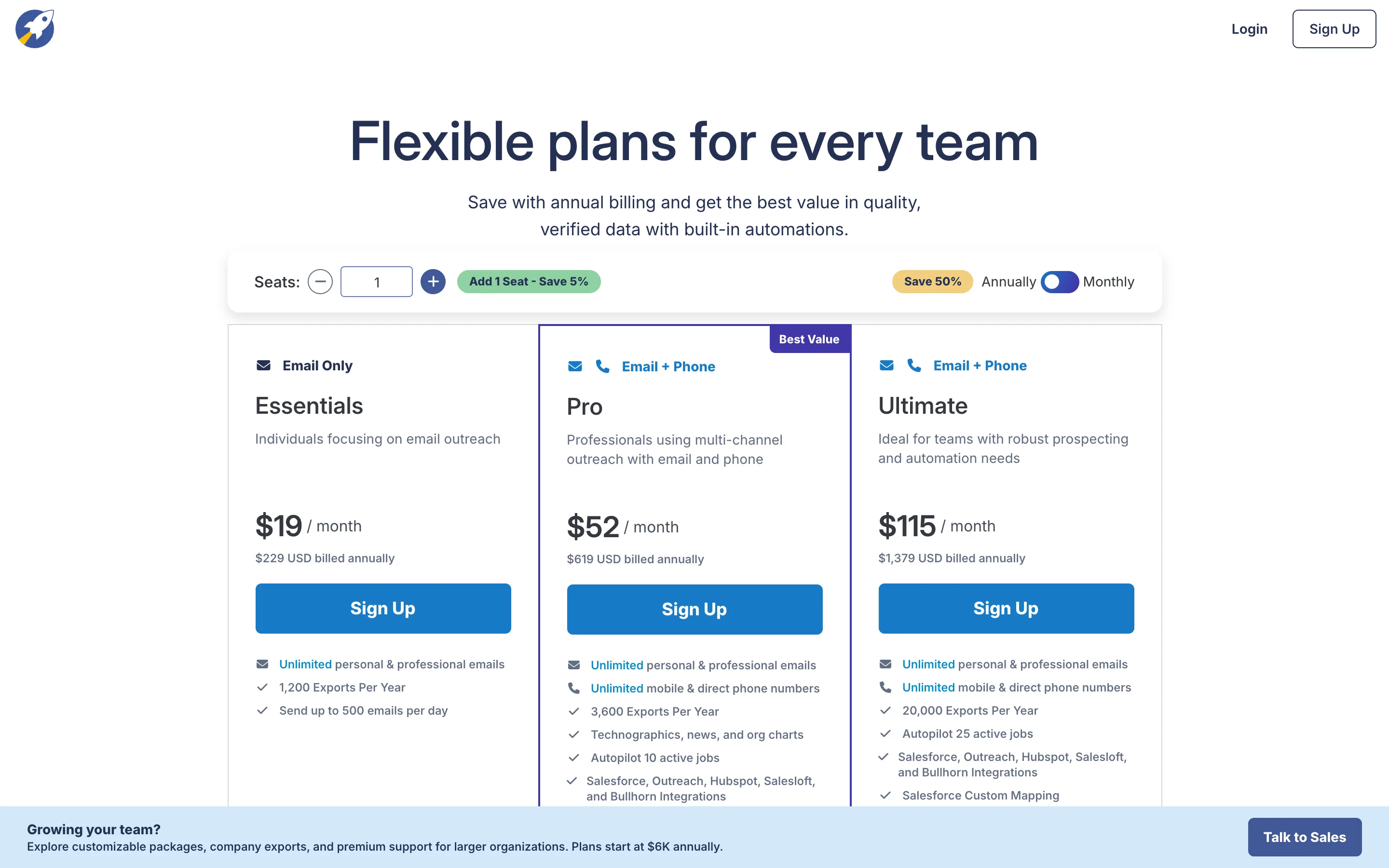
RocketReach pricing (verified 2026-07-02, USD, billed annually; monthly runs 20-100%+ higher) puts phones on Pro and up — about $75/mo for unlimited lookups plus 3,600 exports/year, so roughly $0.25 per exported contact if you spent every export on a mobile. But you spend an export the moment you reveal a number, live or dead, and a stored mobile is often out of date — haircut accuracy at the reviewer-reported ~60-70% and the real cost per valid mobile climbs to roughly $0.36-$0.42, above Enrow's $0.35 at Pro.
vs Enrow: RocketReach's raw Pro per-lookup sticker can look attractive, but that's a stored reveal before the freshness haircut, and it still bills you for the dead reveals, where Enrow bills only a valid result. Every dial gets found and verified the moment you ask for it, priced only on a valid result, with the full contact dropped into your CRM in one click, which no stored-reveal database here can match.
Point your own test list at Enrow before you take my word for any of this. 50 free credits every month, recurring, no card, phones included.
Side-by-side comparison
Final Verdict
For the one job that matters here, getting a phone number that answers, Enrow takes it. RocketReach reveals stored numbers that age, which is why reviewers land near a 60-70% mobile-accuracy band; Enrow finds each direct dial in real time, verifies it before it counts, and covers EU numbers, where most of this list leans US. Billing follows the same honesty: $0.35 per valid phone on Pro, charged only when the number connects. And the piece no rival here reaches: one click lifts a whole verified contact card off a LinkedIn profile, every field filled in including email and phone, straight into HubSpot, Salesforce or Pipedrive. Enrow isn't an all-in-one, though. No searchable database, no sequencing, and technographics aren't on the menu either. The broadest database, or a tool that also sends, is a different job entirely. But if your motion is calling, and you want a number worth dialing, the answer on this page is Enrow.
Point your own test list at Enrow before you take my word for any of this. 50 free credits every month, recurring, no card, phones included.
FAQ
How we evaluated these tools
Nobody paid for placement here, and there's no affiliate link on this page. I ran it myself: one list, pushed through the nine alternatives plus RocketReach as the baseline in the same week, then dialed and emailed for real. I scored the four things a calling budget actually lives on — how many mobiles connected on a live dial, how many emails bounced on a live send, the true cost of a valid phone instead of the sticker per lookup, and geographic reach, with legally-sourced EU direct dials weighted hardest. Prices and features come from each vendor's own pages, checked 2026-07-02.
ready to stop wasting time?
Connected in minutes.
Verified data in seconds.
no credit card
no setup required