clay alternatives
Top 13 Clay Alternatives & Competitors in 2026
We evaluated 13 alternatives on the four things that decide an outbound budget: match rate, bounce on a live send, real cost per valid contact, and EU phone coverage. Same list, same week, every tool.
13 tools tested
updated October 6, 2026
18 min read
Last updated October 6, 2026
The alternatives at a glance
if you want verified emails and EU phones you only pay for when they're valid, without building a single table, Enrow is the move: $17/month in, with Pro at about $0.0087 per valid email, a fraction of Clay's real cost once the waterfall consumes its credits. The other twelve each hold one lane. Apollo if you want a dashboard for the whole motion, LeadMagic if you script your enrichment, Cognism if procurement enjoys enterprise contracts. Route by niche below. And if you keep Clay, run Enrow inside it as a source.
Clay is a waterfall engine, not a data source. You wire providers together, pay per data credit at $0.05 and up, and stack credits on every hit. Powerful. Also complex, and pricey per valid contact once the waterfall runs.
The simpler switch is Enrow: a direct, verified data source billed only on valid results, from $17/month, and ~$0.0087 per valid email on Pro, plus GDPR-cleared EU direct dials. Its Chrome extension drops a whole verified contact from LinkedIn into your CRM in one click.
And it runs natively inside Clay, so you don't have to choose.
Why teams look for Clay alternatives
Clay is brilliant and it isn't for everyone; the same three reasons keep coming up. If your team wants the contact, not the orchestration, a simpler tool wins.
Conflict of interest disclosure
Let's be blunt. Enrow is mine, and it's sitting at #1 on a list I wrote. You know my bias now as well as I do, so weigh the rest accordingly.
What I won't pretend is that the ranking hides a weakness. Several tools below do far more than Enrow: Clay orchestrates entire workflows, Apollo bolts on a sequencer, Cognism ships a giant searchable database. We build none of that, deliberately.
Enrow does one job, finding and verifying the most accurate emails and direct dials money can buy, and refuses to dilute it. Being a purist about data is exactly why the data holds up.
If you want the whole engine, Clay or a tool below fits, and I'll say which. If you want the verified contact underneath it, that's the entire point of Enrow, and it plugs straight into Clay if you want both.
The 13 best Clay alternatives
1. Enrow
#1
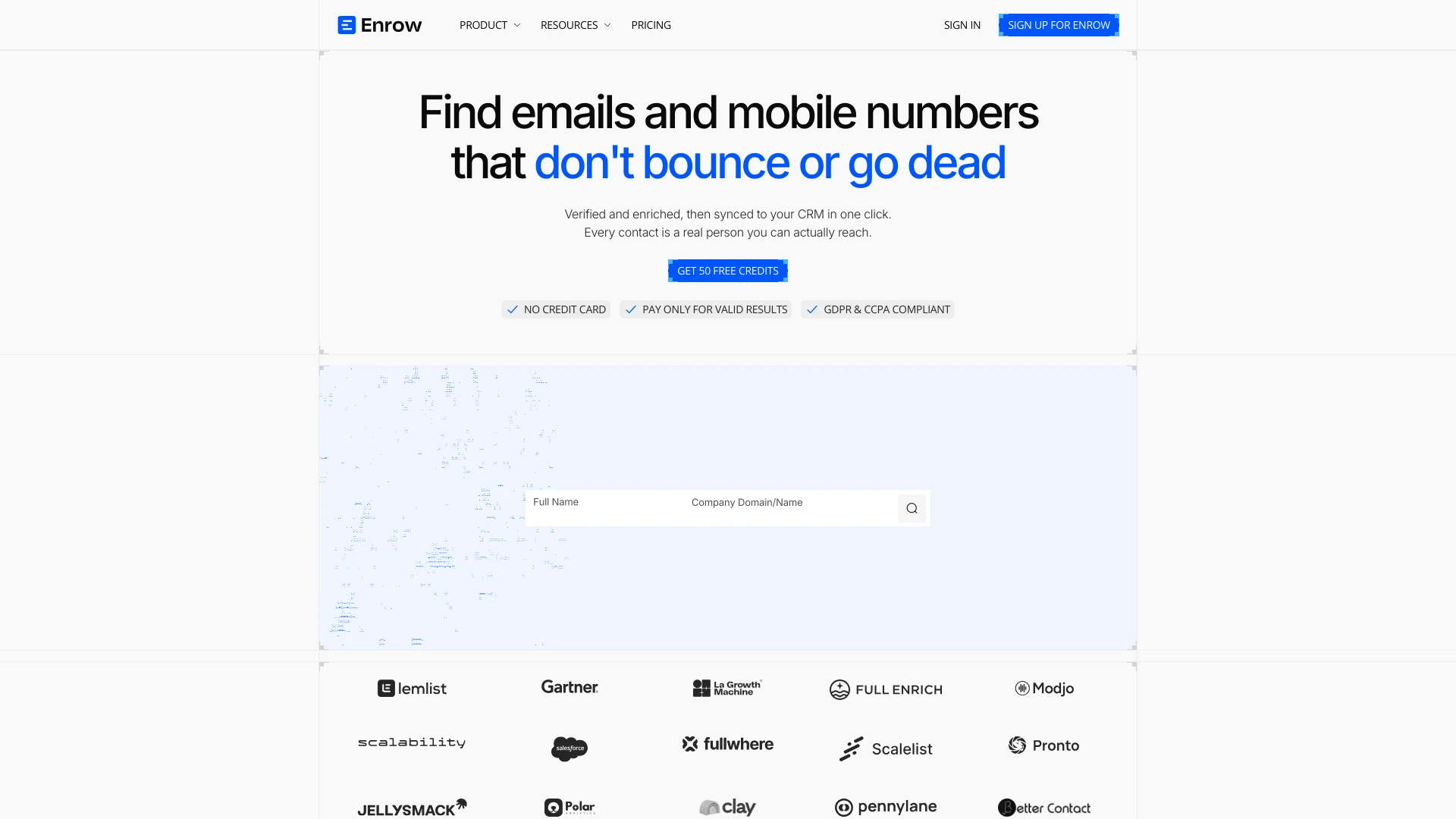
Disclosure twice over: this one is mine, and tools like Clay are part of why it exists. I got tired of paying per lookup, finding a fraction, and still eating bounces, so I built the data source I wanted to buy from.
The pitch against Clay is simple. Clay is a machine you operate; Enrow is a result you consume. There's no table to build, no provider key to juggle, and the waterfall everyone else debugs doesn't exist here. You ask for an email or a phone, and Enrow finds and verifies it in real time.
A miss is free. So is an address that fails verification, because it never counts as valid in the first place.
Verification is where the gap opens. Clay's output is only as good as whichever provider won the waterfall that row. Enrow runs 10+ checks per address, multiple SMTP passes plus catch-all probes from servers in different regions, before anything counts.
Catch-alls come back verified and usable instead of flagged "risky" and binned. On my mixed list, discovery ran around 60-70% and the live send bounced under 1%. Observed figures, not a contract.
Phones are the other half Clay leaves to third parties. Enrow's Direct Phone Finder returns dials in any country, Europe included. Most data providers treat a French or German number as out of reach.
And here's the part nobody else on this list does. Sit on a LinkedIn or Sales Navigator profile and the Chrome extension writes the complete verified record into HubSpot, Salesforce or Pipedrive, email and direct dial dropped straight into every field. No copy-paste. The write is a create-or-update, matched on the contact you already hold, so nothing lands twice. Worth more than it sounds if you're the one who ends up running the dedupe pass after everyone else.
For the agent crowd there's an official MCP server too (the repo is github.com/EnrowAPI/enrow-mcp), so Claude or Cursor can call the finder and verifier directly; details on the API page. And yes, Enrow is a native Clay integration, so you can feed its verified data straight into your existing tables.
- +No charge for a miss, valid results only
- +Direct dials in any country, Europe included
- +10+ verification checks per email; catch-alls verified and delivered
- +One click from a LinkedIn profile fills a complete contact card in HubSpot, Salesforce or Pipedrive
- +Native Clay, HubSpot, Salesforce and Pipedrive integrations, plus a well-documented API and MCP server
- +No per-seat fees; Pro and Scale credits roll over
- –There's no waterfall or workflow builder. Enrow is the data, not the orchestration engine; if you want to chain twenty providers and add AI columns, that's Clay's job, not ours.
- –There's no database to browse. Stored databases age and you end up pitching people who already left; real-time lookup is the fix we chose, so list sourcing stays in LinkedIn or Sales Navigator.
- –It won't send your campaigns. Sequencing is a product we refuse to build; Emelia, La Growth Machine or lemlist handle that side.
- –Company data stops at LinkedIn depth. No technographics.
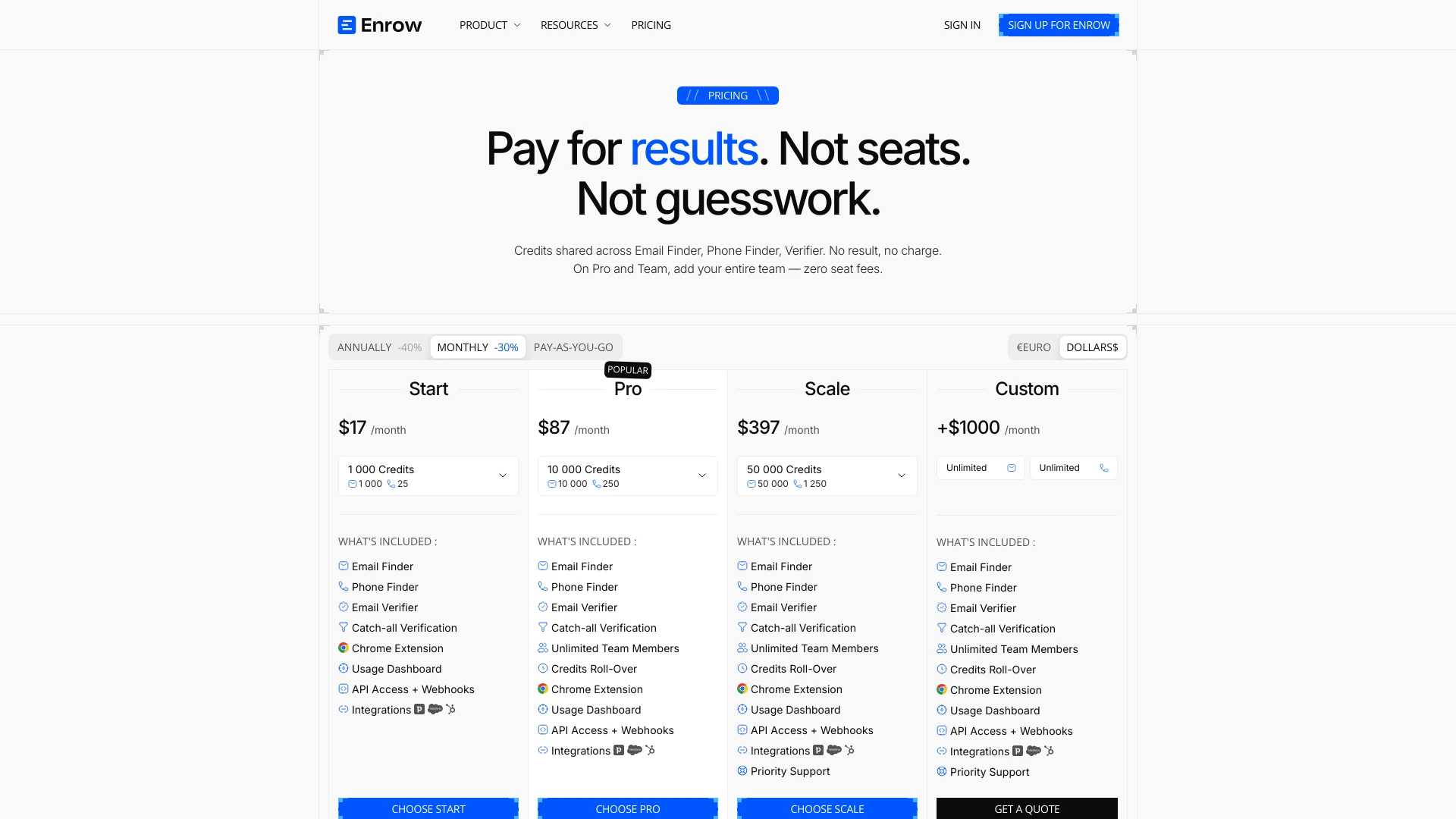
Three tiers, priced monthly. Start: 1,000 credits for $17 or 4,000 for $47 (monthly only). Pro: 10,000 for $87, 20,000 for $167, 30,000 for $247. Scale: 50,000 for $397, 80,000 for $597, 140,000 for $997, 200,000 for $1,397.
Annual trims Pro and Scale by about 10%, which puts 10,000 near $78/mo and 50,000 near $357/mo.
One credit buys one email; a phone runs 40 credits; a verification is 0.25, catch-all included. Nothing is charged unless the result is valid, so the cleaner comparison base is Pro: $87 buys 10,000 valid emails or 250 valid phones, about $0.0087 per email or $0.35 per phone.
Start remains the $17 entry tier. Pro and Scale credits roll over.
Set it next to Clay and the shape is different. Clay's floor is $185/month for the Launch tier; Enrow's is $17.
Clay bills data credits from $0.05 apiece and a waterfall can spend several per found contact, so a real verified email routinely lands between $0.05 and $0.15+ there, before you count the ones the waterfall paid to try and miss. Enrow's $0.017 is the whole bill.
The free tier refills on its own: 50 credits every month, no card, for as long as you want. Since credits only burn on valid results, none of the 50 die on a guess.
Every month, 50 fresh credits land in your account. No card required, and a credit spends only when the result is valid. Test Enrow against Clay, or drop it straight into your Clay tables and compare the bill.
2. Emelia
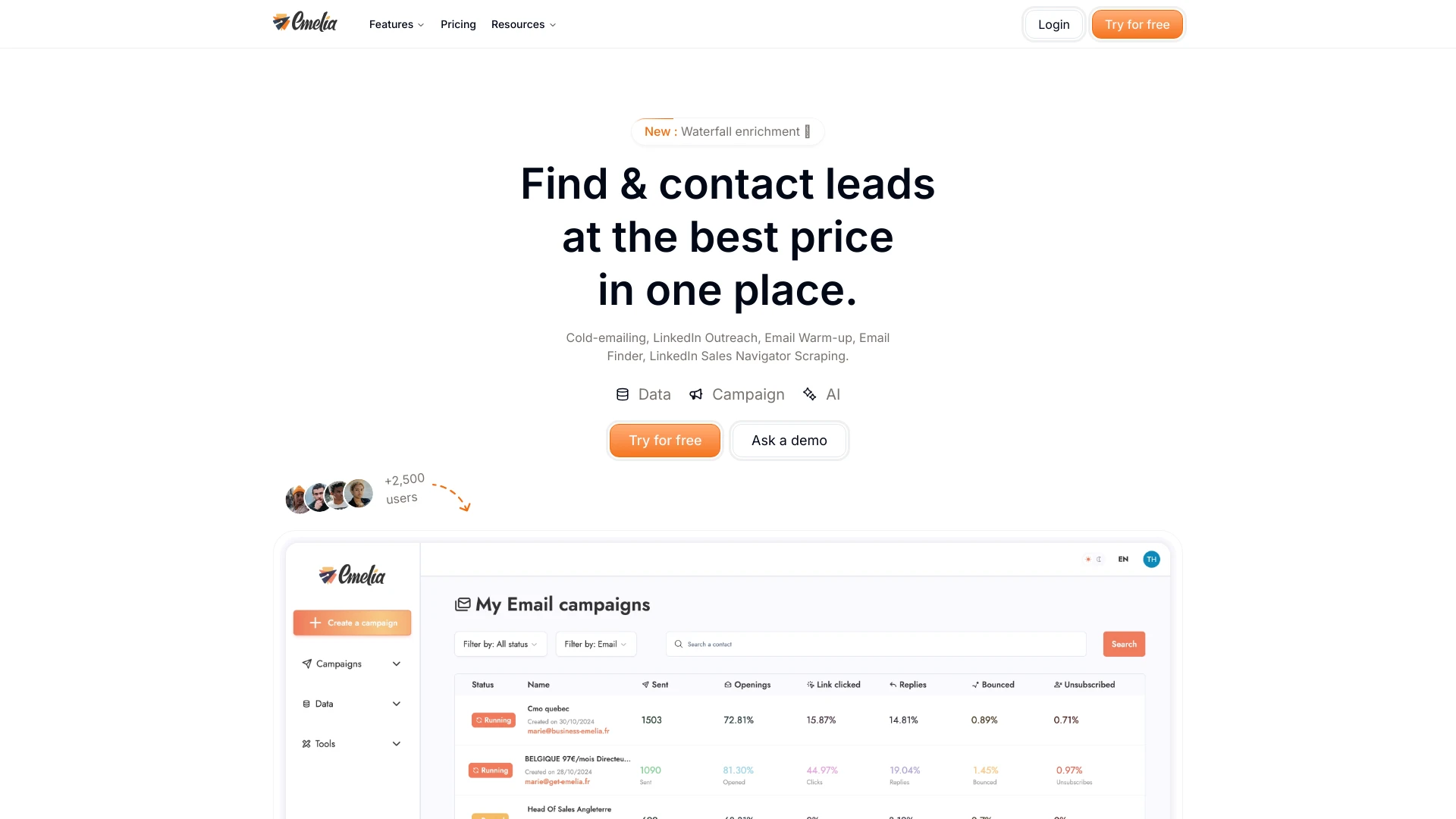
Emelia is a different job. It sends.
It's a sequencer with a finder attached: cold email, LinkedIn steps, warm-up, one login. Clay never sent your campaigns, and neither do we. Emelia is where we point people who ask us for sequencing.
As a data source it's respectable rather than the point. Finder credits burn on results found, phone coverage is thin, and heavier data use lands on add-on credit packs. The setup I actually recommend: Enrow finds and verifies, Emelia sends.
- +Finds, verifies, sends and warms up cold email and LinkedIn outreach, all from one login
- +Finder credits charge on results found
- +Sales Navigator scraping and waterfall enrichment included
- +Unlimited sending and contacts on paid plans
- –Thin phone coverage; not a dialing tool
- –Heavy data use pushes into add-on credit packs
- –Outreach-first, so data depth trails the pure finders
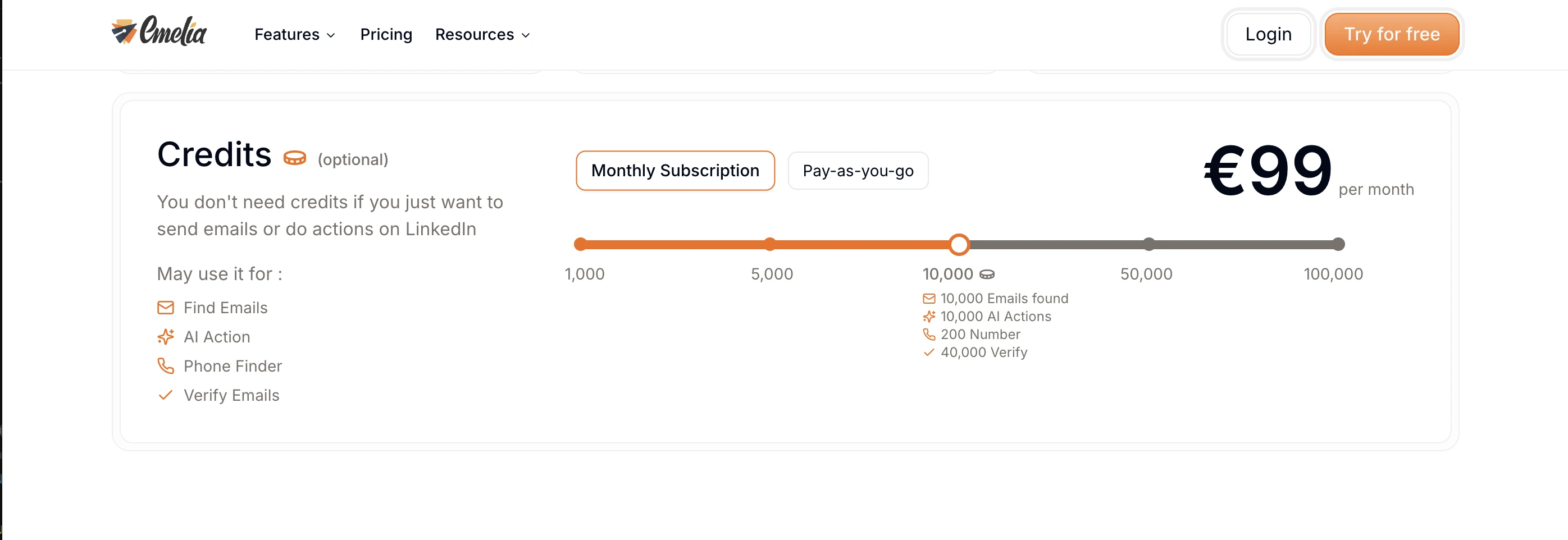
Converted from EUR (+20%): Start about $44/month (3 mailboxes, 1 LinkedIn seat, 500 credits). Finder and phone credits sit in add-on packs, so your true $/valid email depends on the pack you buy, and phones are too thin to price honestly.
vs Enrow: no contest on data, and Emelia wouldn't claim otherwise. Feed it Enrow's verified contacts at $0.017 apiece and both do their best work, at a fraction of what a Clay waterfall spends to assemble the same list.
3. Apollo

Apollo is the usual answer when someone wants the whole motion in one tab: database, sequences, enrichment, a dialer, one subscription.
Against Clay it's a different bet. Clay is bring-your-own-providers flexibility; Apollo is one vendor's data plus the outreach stack around it. For a small team that wants outbound end to end without wiring anything, that trade lands.
The bill for the breadth is the data. Apollo is a stored database, so records age, and its reviews circle two complaints on repeat: accuracy and export caps. Mobiles are a thin per-seat ration.
Getting from a filter to a live sequence in one sitting impressed me; checking those contacts against a live send is where real-time won.
- +Large B2B database with sequencing and enrichment in one place
- +Chrome extension and CRM integrations
- +Workable free tier (900 credits/year per seat)
- +One tool for sourcing and sending, enrichment built in
- –Stored database, so records go stale and accuracy gripes recur in reviews
- –Credits are per seat and don't roll over, so whatever a rep doesn't spend each month expires; mobiles and exports draw down fast
- –Export caps bite before the lookups do
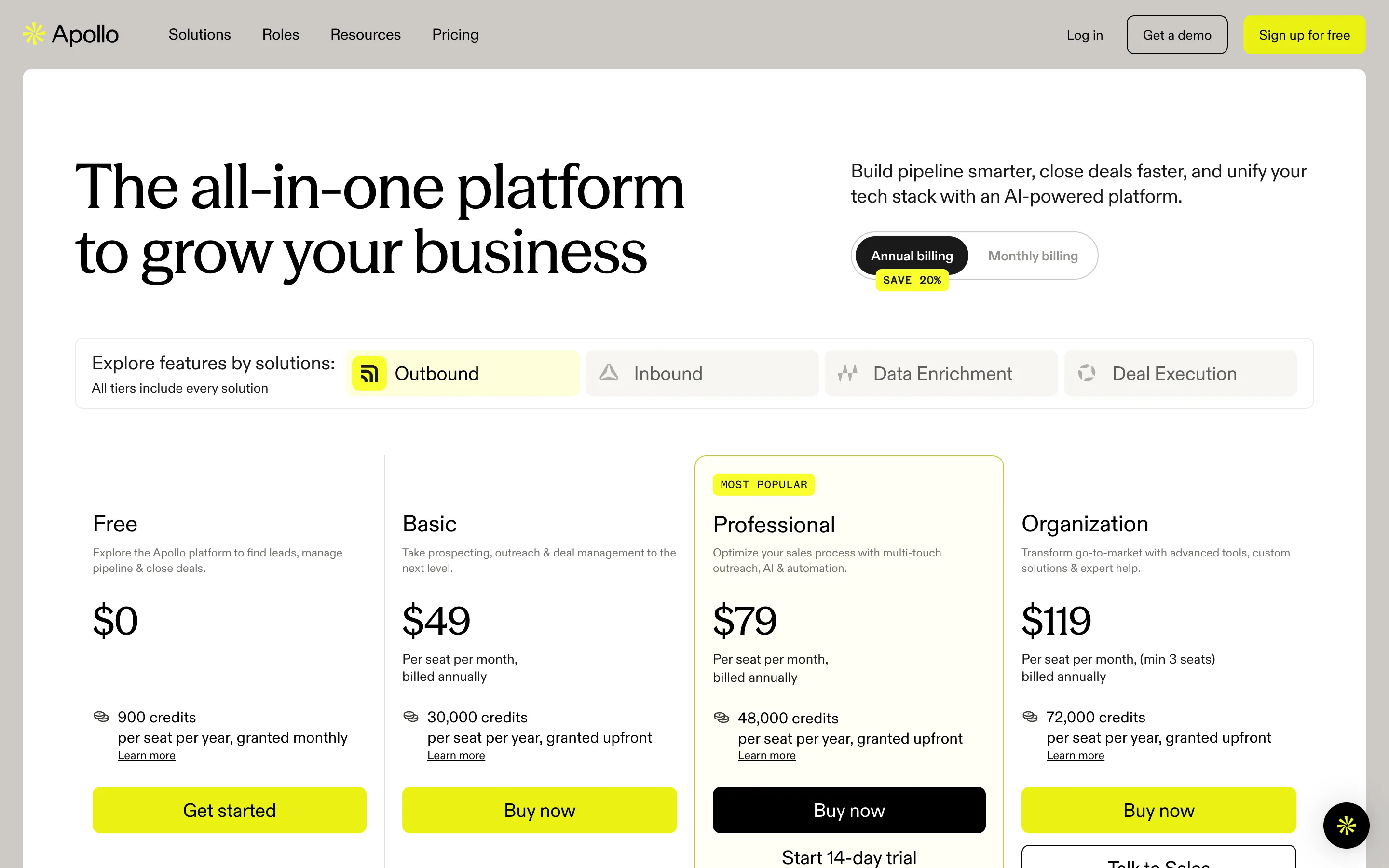
Apollo bills per seat: roughly $65/month per seat buys 2,500 unified credits (email 1 credit, mobile 8), and those credits don't roll over. After the no-rollover waste, that ~$0.026 sticker becomes about $0.033 per valid email, close to 2× Enrow Start and 3.8× Pro, and a five-rep team pays about $325/month before a single credit is spent.
vs Enrow: buy Apollo for the cockpit if you want one, then let Enrow supply the layer it can't keep fresh: $0.017 per valid email against credits that expire, and EU direct dials at $0.35 on Pro against a stored US reveal that never reaches Europe.
4. LeadMagic
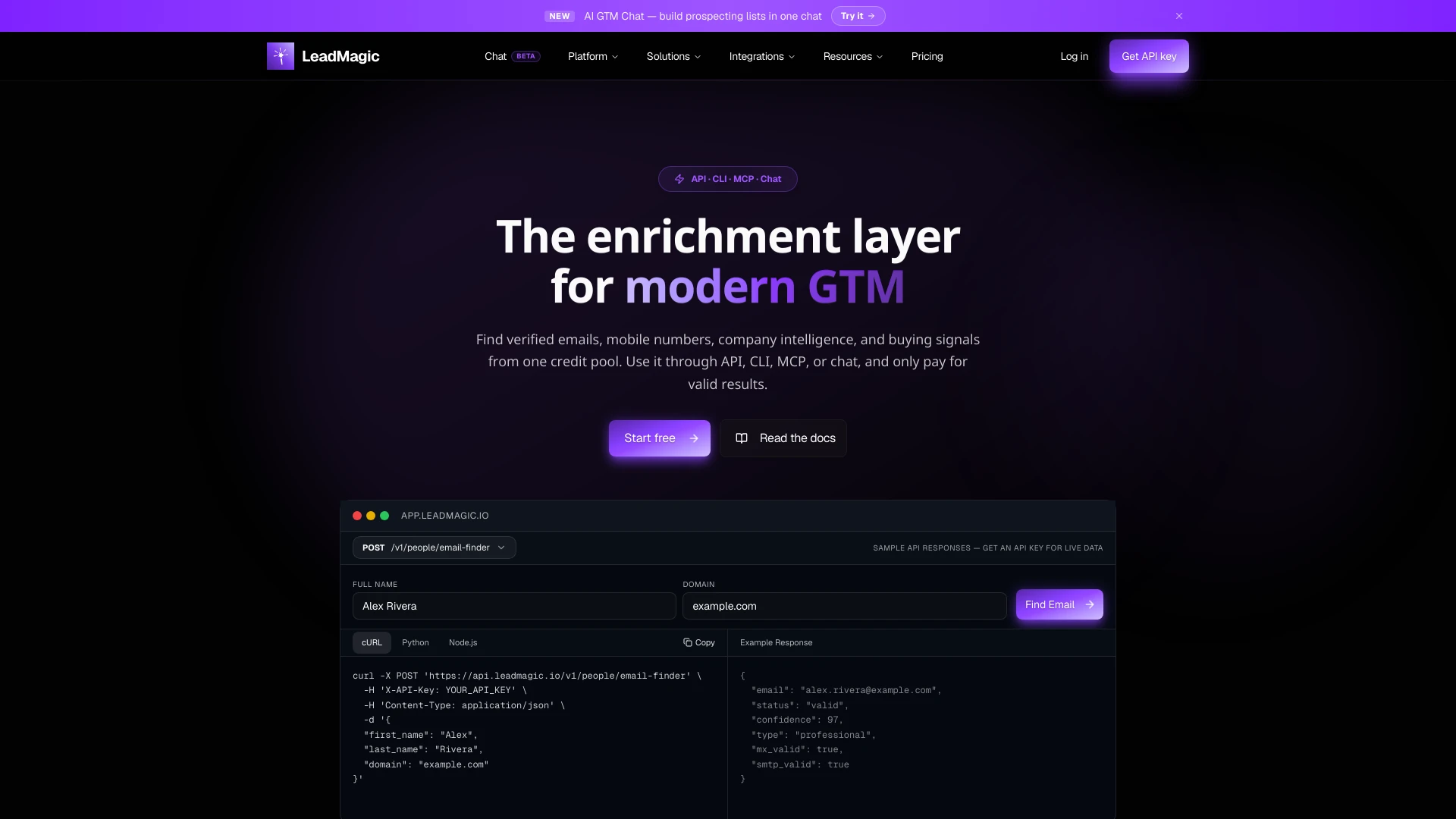
LeadMagic is the closest thing here to Clay's spirit, minus the tables. It's the enrichment layer as an API.
15+ endpoints (email, mobile, company, profile, job changes) draw on one shared credit pool, with an MCP server for agent workflows. Credits deduct only on success, which is the right default. Clay users who've had enough of the visual builder often drop LeadMagic straight into their pipeline instead.
It's also not something you hand a rep. There's no real UI to live in, EU phone coverage is unpublished, and rollover starts one tier up. The docs read better than most tools' dashboards, which tells you exactly who it's for.
- +Pay-per-valid: failed matches cost nothing
- +15+ endpoints on one shared credit pool
- +Developer tooling: an API and CLI, plus an MCP server
- +Mobile finder included in the same pool
- –No rollover on the entry Basic plan
- –Mobiles cost 5× an email, with no published EU/GDPR phone detail
- –API-first, so non-developers will stall
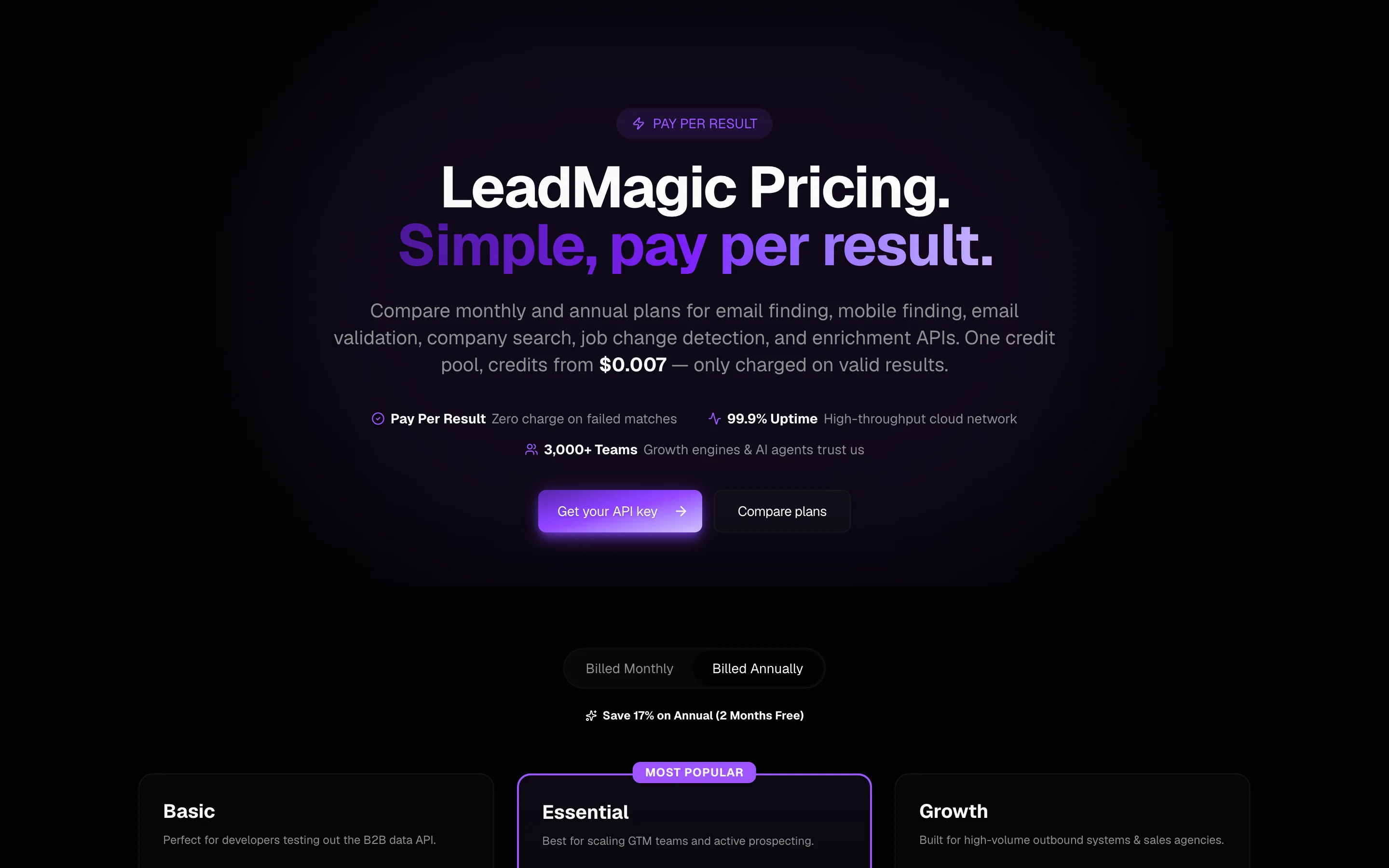
The LeadMagic Basic plan runs $49/month for 2,000 credits (email 1, mobile 5, validation 0.25), deducted only on success. Work out the cost of one valid email and it lands near $0.0245, close to 1.4× Enrow's $0.017, climbing toward $0.031 once you count the credits that lapse unspent on an entry tier with no rollover. A mobile runs near $0.12 with no published EU coverage.
vs Enrow: two honest meters, two audiences. Enrow matches the API story, then adds the rep-facing product: a UI, the extension, one-click CRM export, and EU phones.
5. Cognism
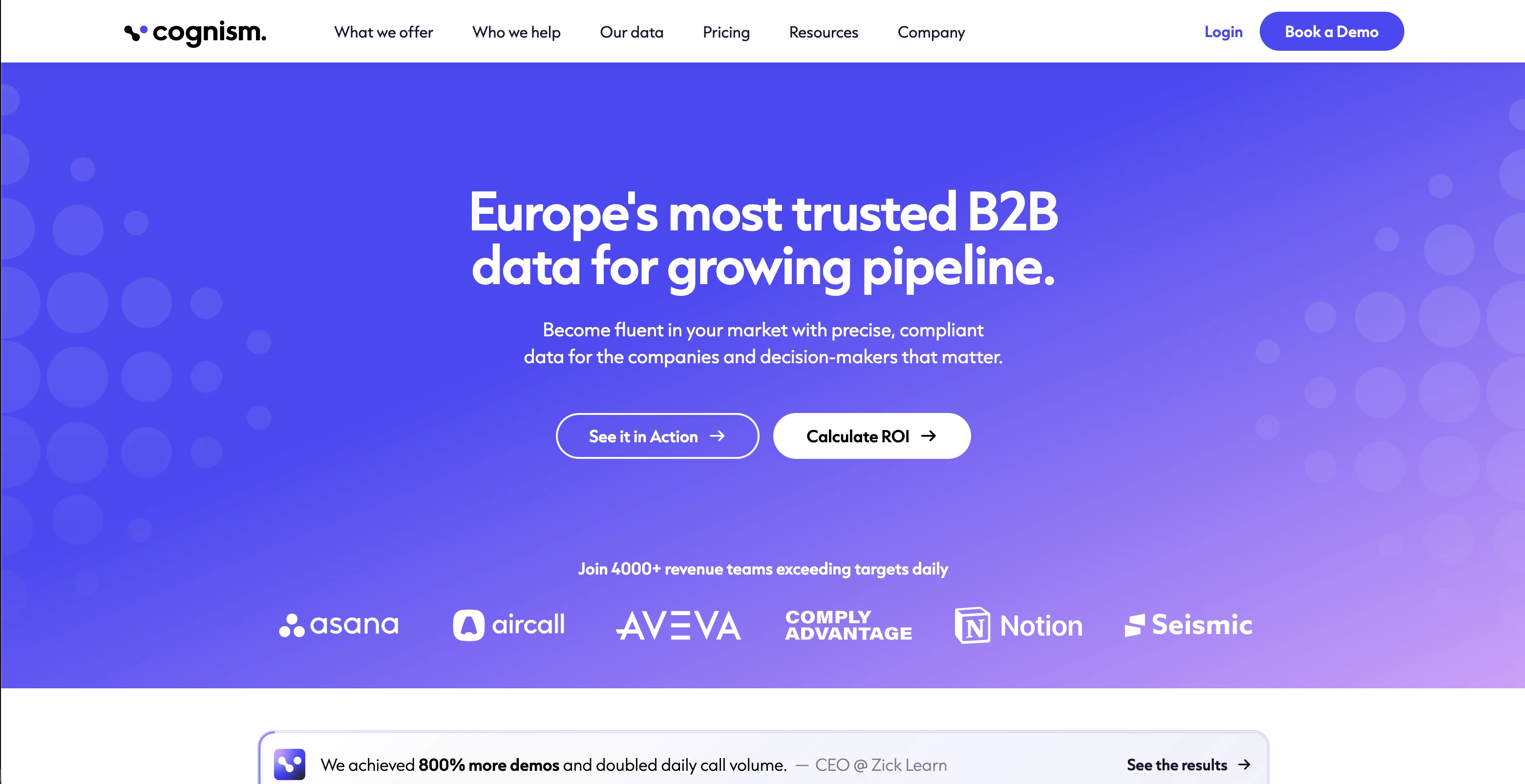
Cognism is the enterprise answer, and it behaves like one: serious EU phones, serious compliance, and a price you need a meeting to learn.
Its Diamond Data set is phone-verified by people actually calling the numbers, a real quality bar, and reveals are screened against national do-not-call lists. Where Clay routes to whichever provider you connect, Cognism sells its own vetted database as the product.
That's the trade: less flexibility, more accountability for the data.
The catches are structural. Only a subset of the database is Diamond-verified; the rest ages like any stored data. And buying in means quote-only pricing, annual contracts, per-seat licences and, by public accounts, a platform fee that prices small teams out of the room. Good data, enterprise procurement.
- +Diamond Data: phone-verified mobiles with strong EU connect rates
- +GDPR/CCPA compliance and DNC/TPS screening
- +Big searchable database, intent data on the Pro tier
- +Enterprise-grade support and certifications
- –Quote-only, annual contracts; public breakdowns suggest ~$1,500+/seat/year plus a platform fee
- –Only the Diamond subset is phone-verified; the rest is stored data that ages
- –Credit pools, not pay-per-valid; no self-serve, no free test
Cognism publishes no numbers. Public breakdowns put entry around $1,500+/seat/year with a five-figure platform minimum for a small team, and you pay to reveal a contact from a pool whether it pans out or not. Effective cost per valid mobile lands well above Enrow's $0.35 Pro benchmark.
vs Enrow: Cognism verifies a subset of numbers ahead of time; Enrow verifies the exact number you asked for, at the moment you ask, from $17/month with no seats, no contract and no sales call.
6. RocketReach
RocketReach is sheer breadth: hundreds of millions of stored profiles, emails and phones one lookup away.
That's its appeal. Where Clay makes you assemble coverage from providers, RocketReach hands you one giant database and a search box. Type a name, reveal a contact, export the rows. Recruiters love it, and a G2 rating around 4.4/5 from well over a thousand reviews backs the ease of use.
The full teardown is in our RocketReach alternatives page.
The problem is what a stored row does after it's stored. Reviewers self-report mobile accuracy around 60-70% and email bounce in the 20-30% range (their figures, not a controlled test), and a lookup burns whether the reveal is live or dead. Coverage skews hard US.
Its breadth kept impressing me right up until the third dead number in ten stopped feeling like coincidence.
- +Very broad B2B database with strong US coverage
- +One lookup reveals an email or a phone; bulk runs refund on no-email-found
- +Clean search box and browser extension, with CRM hooks on higher tiers
- +About 4.4/5 on G2 across 1,000+ reviews
- –Stored reveals: self-reported ~60-70% mobile accuracy and ~20-30% email bounce
- –Phones locked behind Pro and up; EU accuracy is the loudest complaint
- –Monthly billing runs well over annual, and dead reveals still cost credits
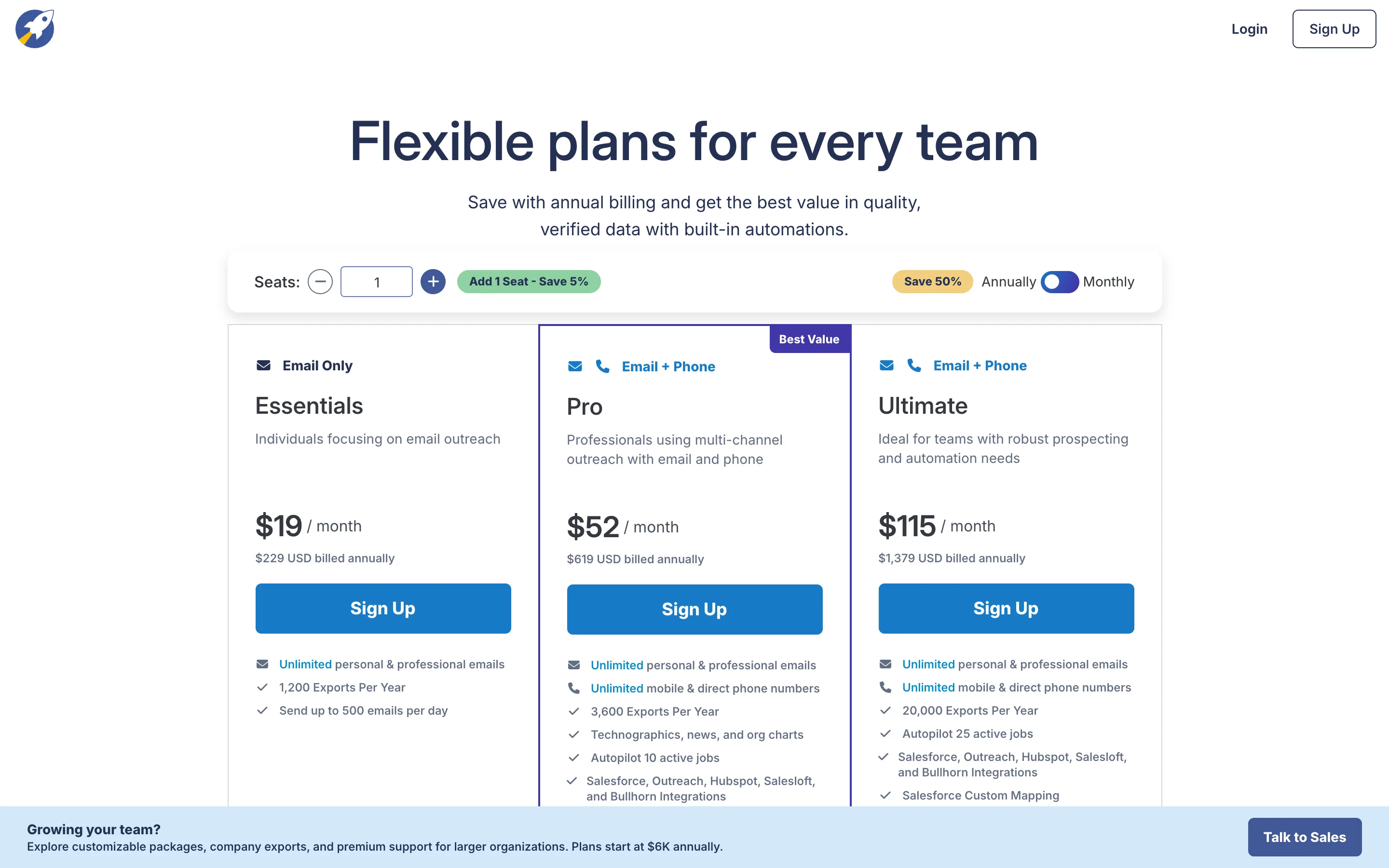
RocketReach prices Essentials at $69/month for 100 email-only lookups, with Pro at $119 for 250 that include phones. A lookup bills the attempt, not the valid you want, so Pro's ~$0.48 a lookup becomes about $0.64 per deliverable email and $0.73 per accurate mobile once self-reported ~60-70% accuracy and ~20-30% bounce are folded in (their figures).
vs Enrow: RocketReach charges you to discover which rows are dead; Enrow charges only when the contact is verified live: $0.35 per valid phone at Pro volume, not a credit spent on a miss.
7. Prospeo
Prospeo's price is its whole pitch. Look past it.
On my list it found about 20% of the contacts. Enrow found 60-70%. Here's the honest read: Prospeo bills only on a found email, so those misses cost you nothing in money — what they cost is the contact.
When four in five targets come back empty, you don't overpay Prospeo, you just finish only a fifth of the list and buy a second tool for the rest.
Inside a Clay waterfall it's often a sticker-price first step, but a first step that misses most of the list just passes the work downstream.
The rest is what you'd expect at the price point. Quality gets uneven past small jobs, phones cost 10 credits with no documented EU coverage, credits don't roll over, and pricing is per user.
- +1 credit per found email, 0 on a miss
- +Quick Chrome extension for LinkedIn and domains
- +Verification included in the same credit pool
- +Free plan (100 credits/month)
- –Found about 20% of my test list; most contacts simply don't come back
- –Phones cost 10 credits with no documented EU story
- –No rollover, and per-user pricing stacks on teams
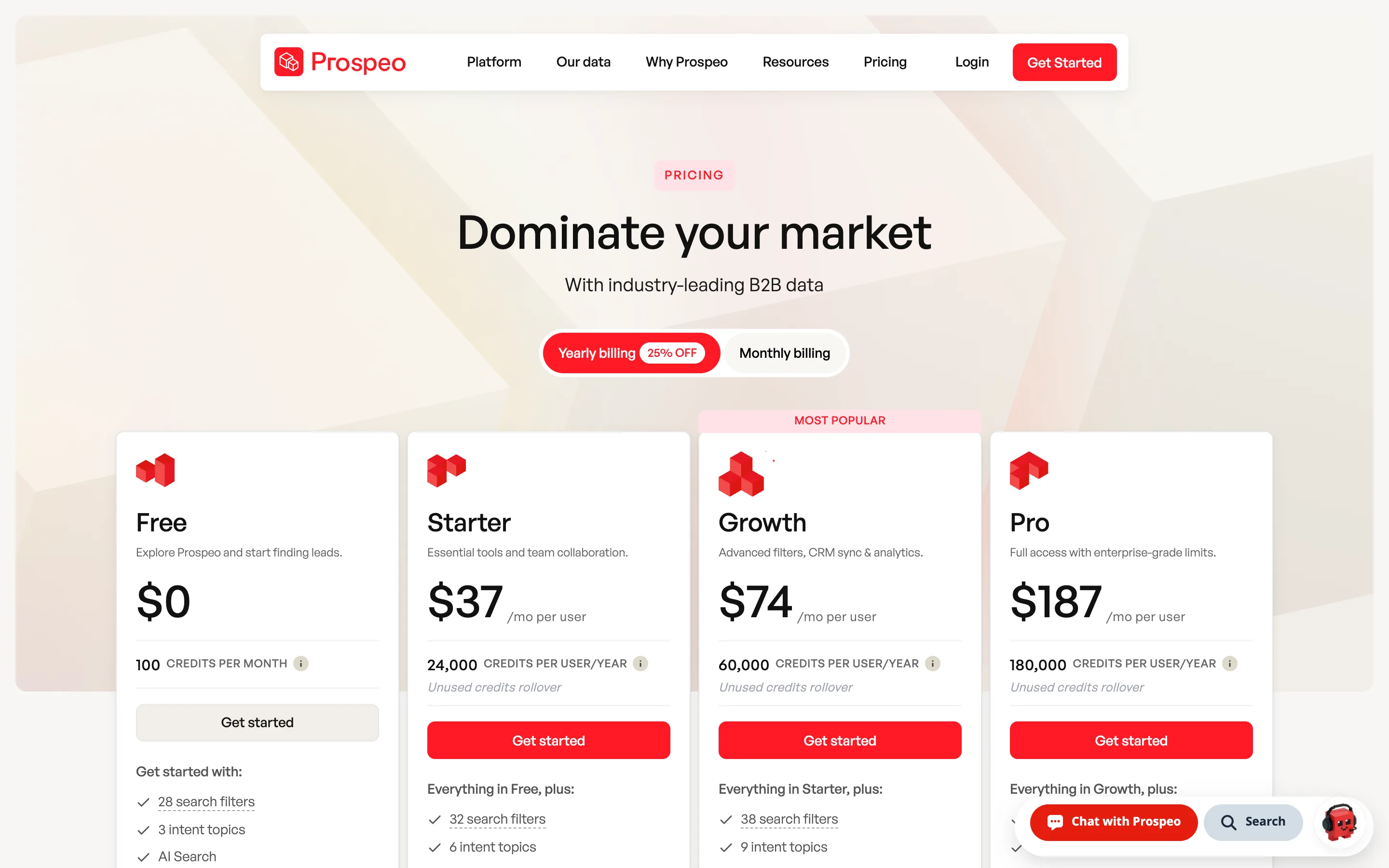
Per Prospeo's page, Starter runs $49/month for 2,000 credits, the free plan carries 100 credits/month, and mobiles cost 10 credits apiece. Priced per valid find, the sticker sits at about $0.0245 a valid email, already 1.4× Enrow's $0.017, though on my list it returned about a fifth of the contacts, so the real cost is finishing the list across two tools. Phones run about $0.245 on paper with nothing documented behind them.
vs Enrow: the sticker already runs above Enrow, and the find rates live on different planets. Enrow's $0.017 with 60-70% discovery buys a finished list, not a fifth of one.
8. Lusha
Lusha built its name on North American mobiles, and on that turf the reputation is earned. It's also a common provider inside Clay waterfalls, which is exactly why it's worth pricing on its own.
Self-serve buying, a quick extension, a credit reveals an email, five credits reveal a phone. Where Clay makes you route to it, Lusha gives you a direct account. The full comparison sits in our Lusha piece.
It's still a stored database, so the mobile you reveal is only as fresh as its last update, and Europe is where coverage thins out.
On my file the US mobiles hit; the EU column mostly shrugged.
- +Strong North American mobile quality
- +Self-serve, no sales call to buy
- +Clean extension and CRM integrations
- +Email and phone reveals from one credit pool
- –Stored rows: a revealed number can be months out of date
- –A phone reveal takes 5 credits, so Starter's 400 cover about 80 numbers
- –Thin EU direct-dial coverage; small free tier (40 credits/mo)
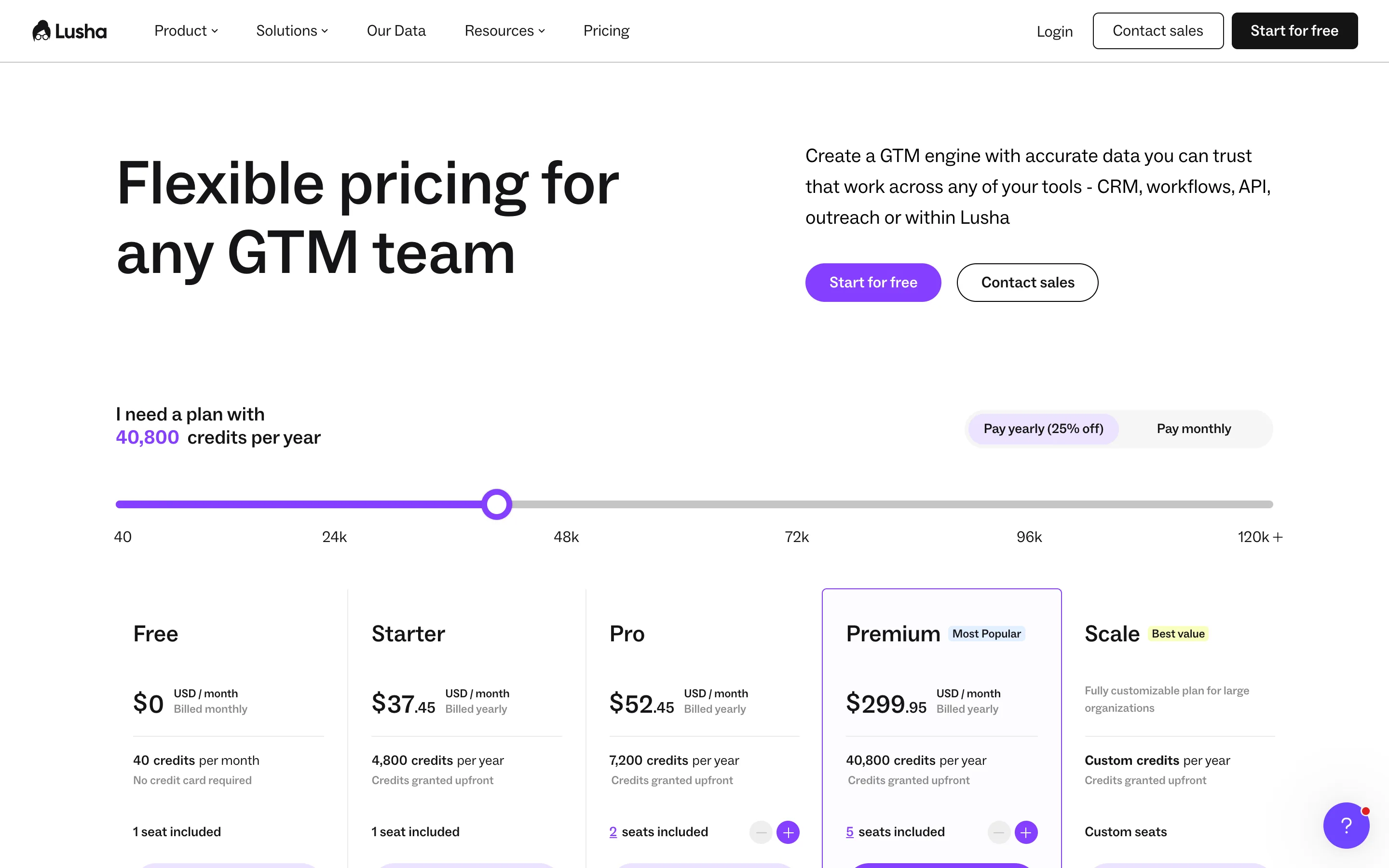
Lusha's Starter tier costs $49.90/month for 400 credits: a credit reveals an email, and a phone costs 5. That prices a mobile at about $0.62 on Starter, and a 50-70% staleness haircut lifts a valid one to $0.89-1.25; emails run about $0.12 a reveal, stale rows included.
vs Enrow: Lusha's US mobiles are good, and they still cost two to almost three times Enrow's monthly Start price of $0.47 per valid phone once dead reveals are counted. On EU dials it isn't close, and Enrow bills nothing until the number is verified.
Anymailfinder strips the whole idea down to one honest meter and stops there.
Verified emails, charged only when the address passes verification. No phones, no database, no CRM push, no waterfall. One credit buys one found email, checking an outside address is cheaper, and unused credits roll over while you stay subscribed. The scope fits in a sentence.
On a messy list the unverifiable rows cost me nothing, which kept the bill clean.
- +Charged only for emails confirmed valid
- +Strong catch-all handling
- +Credits roll over while subscribed
- +Access it single, in bulk, or through the API
- –Email-only, no phones at all
- –Entry lands at $0.049 per valid email, about 3× Enrow's rate
- –No CRM push or contact export to speak of
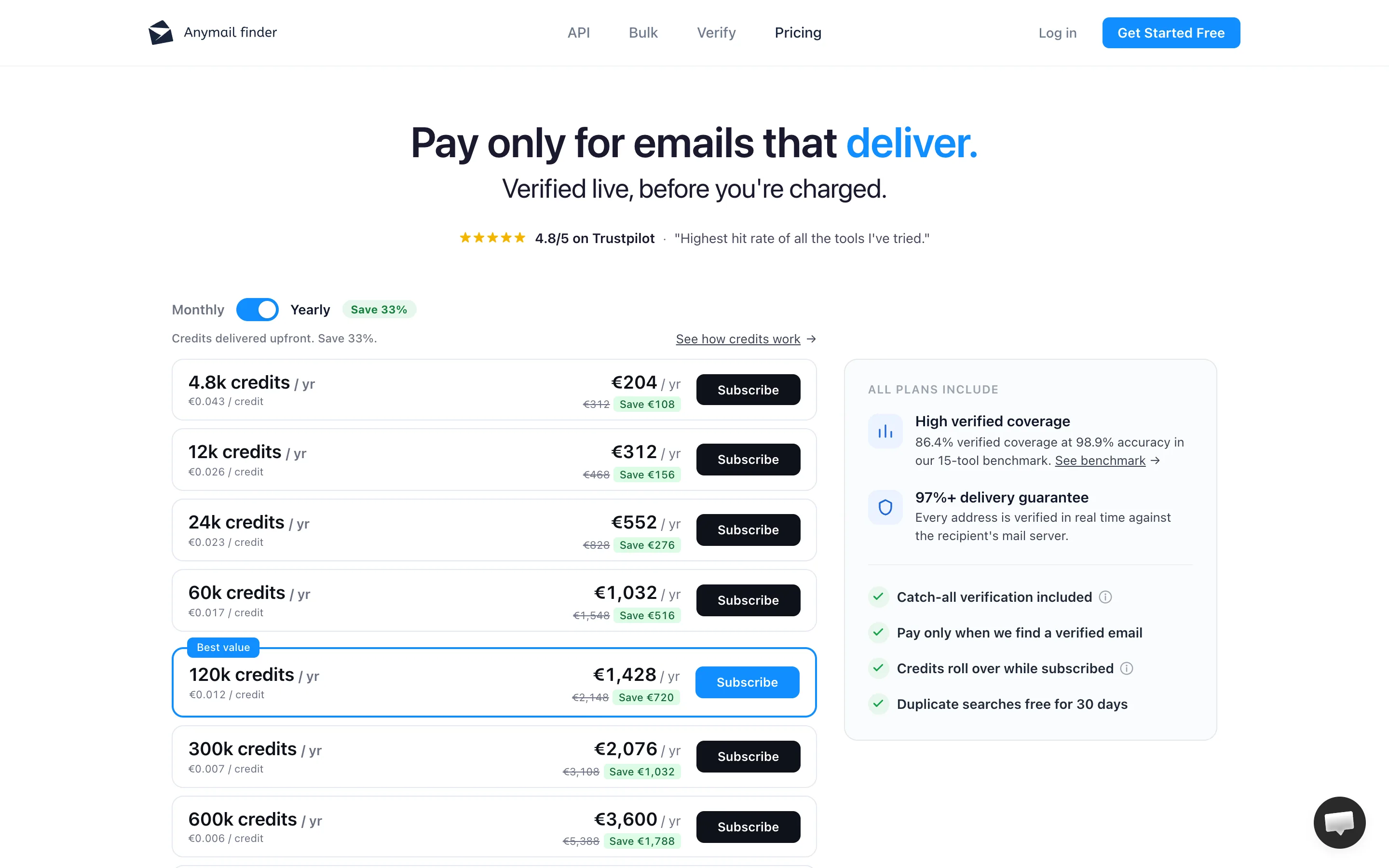
Priced in USD: Standard from $29/month for 400 credits, one credit per found email. Per-found billing keeps the sticker honest: the $49 tier prices a valid email at about $0.049, close to 3× Enrow's $0.017 at that same 1,000-email volume, narrowing only much further up the ladder.
vs Enrow: same billing philosophy, half the product, about triple the entry rate per valid email. Match the volume and Enrow undercuts it, then adds the phones and CRM export Anymailfinder never intended to build.
10. Snov
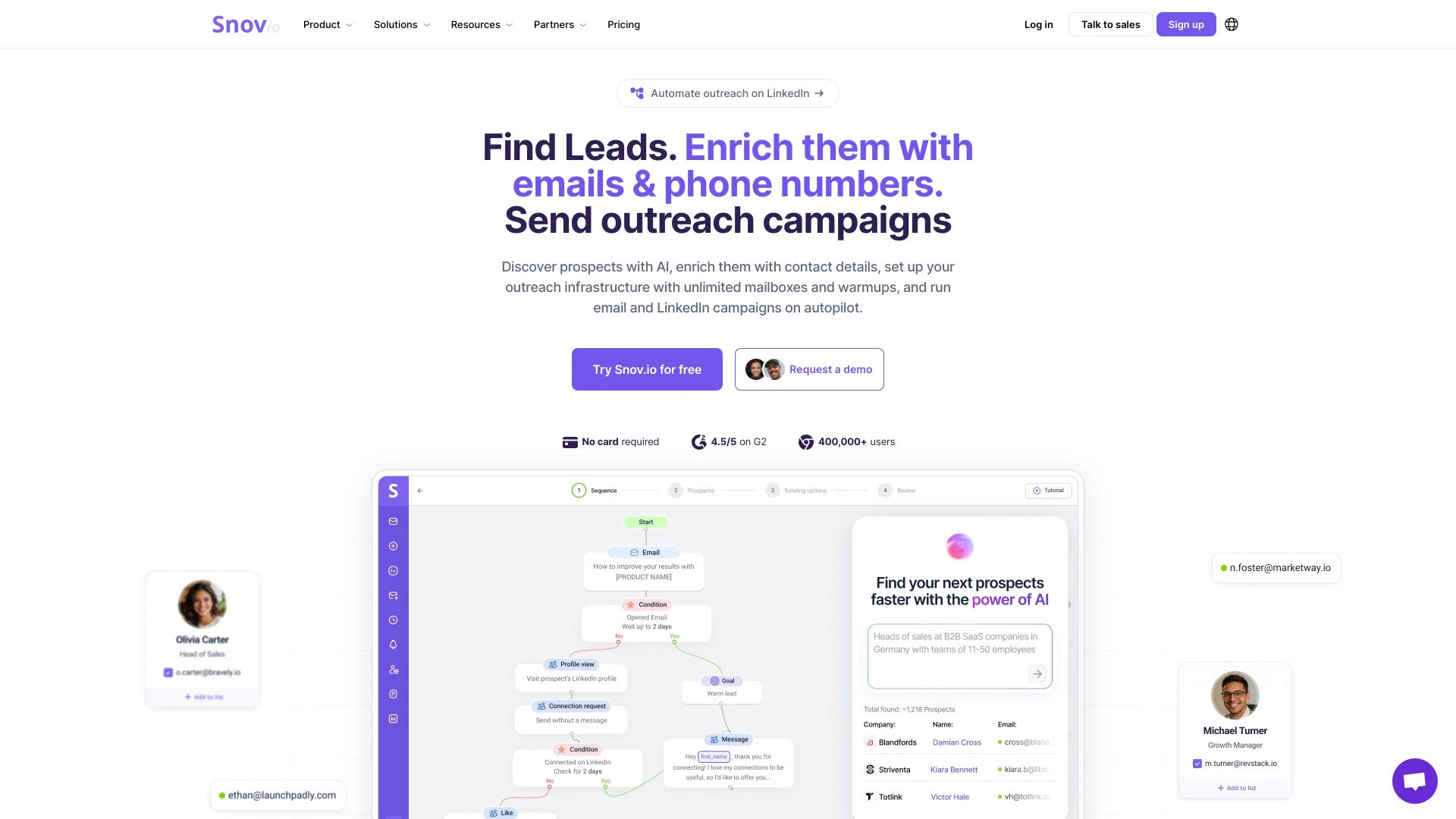
Snov sells the bundle: finder, verifier, drip campaigns, a light CRM, one modest bill.
Fair pitch for a solo user with loose data standards. But Snov bills for the search, not the valid found, and the rows it reveals drift stale, so a slice of what you pay for was dead before you bought it.
A visible share of my Snov finds needed a second verification pass before I'd send to them.
- +Finder, verifier, drip campaigns and CRM in one subscription
- +Searchable prospect database included
- +Unlimited team seats on paid plans
- +Annual billing cuts 25%
- –Credits spend on revealing stored rows that can be stale
- –No EU phone play; phones are a separate token add-on
- –A lot of platform if verified emails are all you need
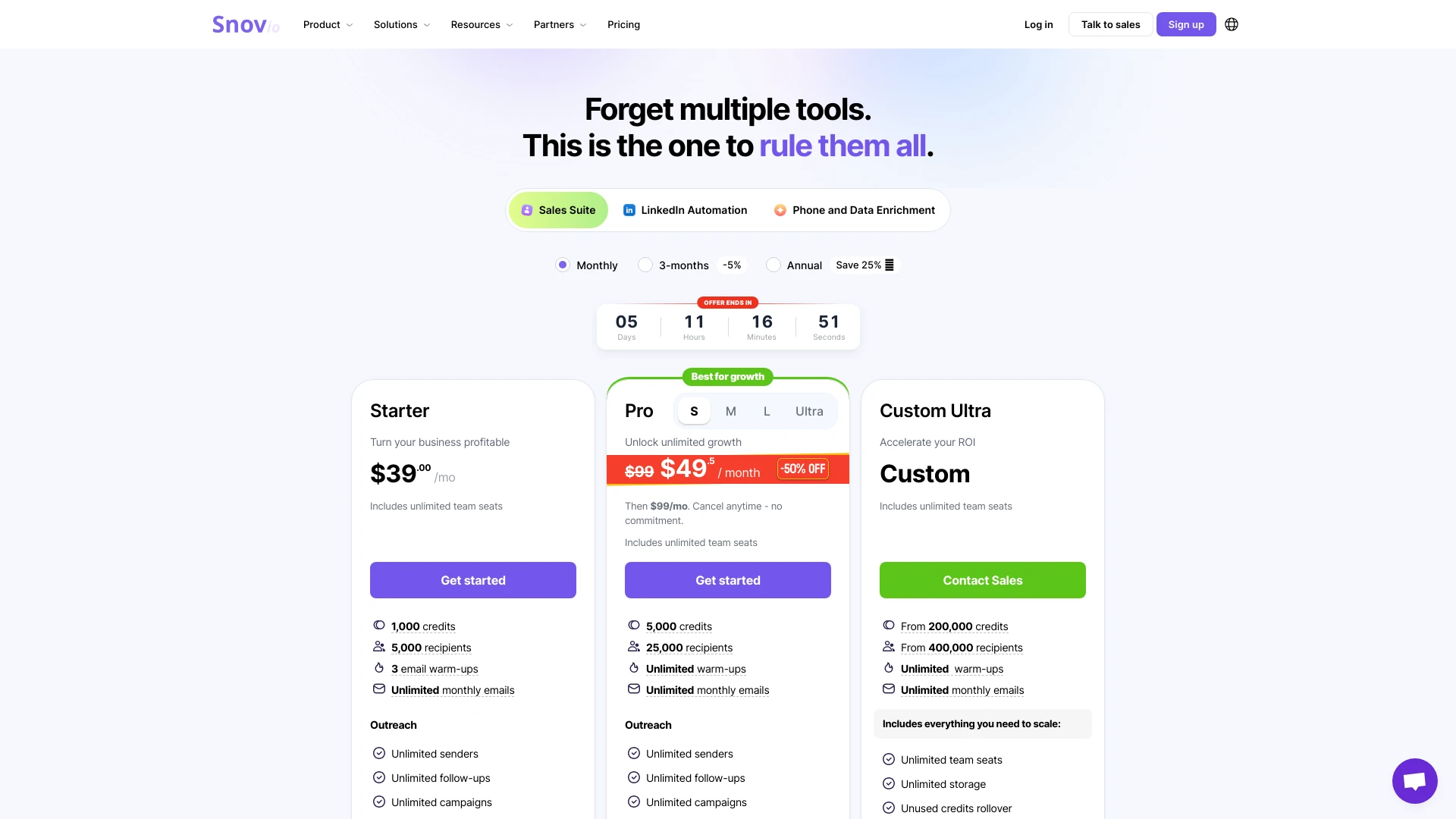
Snov's Starter plan costs $39/month for 1,000 credits, phones sit in a separate token add-on, and LinkedIn automation adds about $69 per slot. The $0.039-per-credit sticker buys an attempted search, not a deliverable address, so at a per-search finder's ~30% find rate (assumed, not measured) and no rollover, the real cost runs past $0.16 per deliverable email, several times Enrow's $0.017.
vs Enrow: Snov is the headline wrapper; the data inside is the weak part. Enrow is only the data, fresh and billed on valid, and it pairs with any sender, Snov's included.
11. Hunter.io
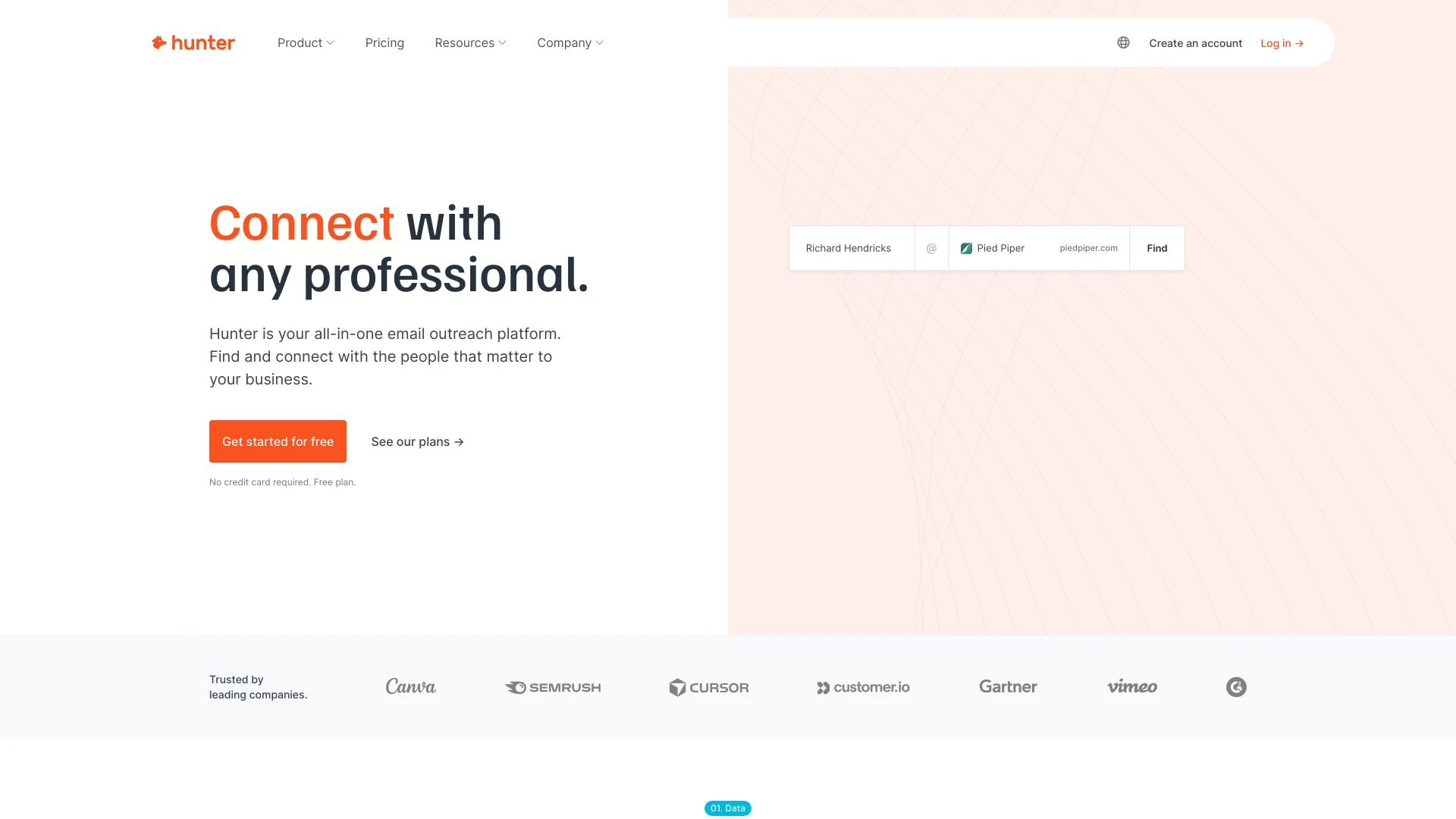
Hunter is the tool people learn the motion on. Feed it a domain, or a name plus a company, and it returns addresses scored for confidence.
Against Clay it's the opposite philosophy: no orchestration, no providers to chain, just a clean finder. That simplicity is genuinely nice.
The catch is the meter: Hunter bills a credit for every attempted search, not for the valid address found, and it returns low-confidence pattern guesses next to the solid finds. You pay whether the search lands or not, the guesses bounce, and there are no phones anywhere in the product.
The full breakdown is in our Hunter.io page.
There are also no phone numbers anywhere in the product, on any plan. If your team dials, Hunter is half the job.
- +Clean, simple domain search and email finder
- +Real free tier and wide integrations
- +Familiar to almost every SDR
- +Confidence score on every returned address
- –Bills for every attempted search, whether or not a usable address comes back
- –No phone data on any plan
- –Crawled data thins out on smaller companies
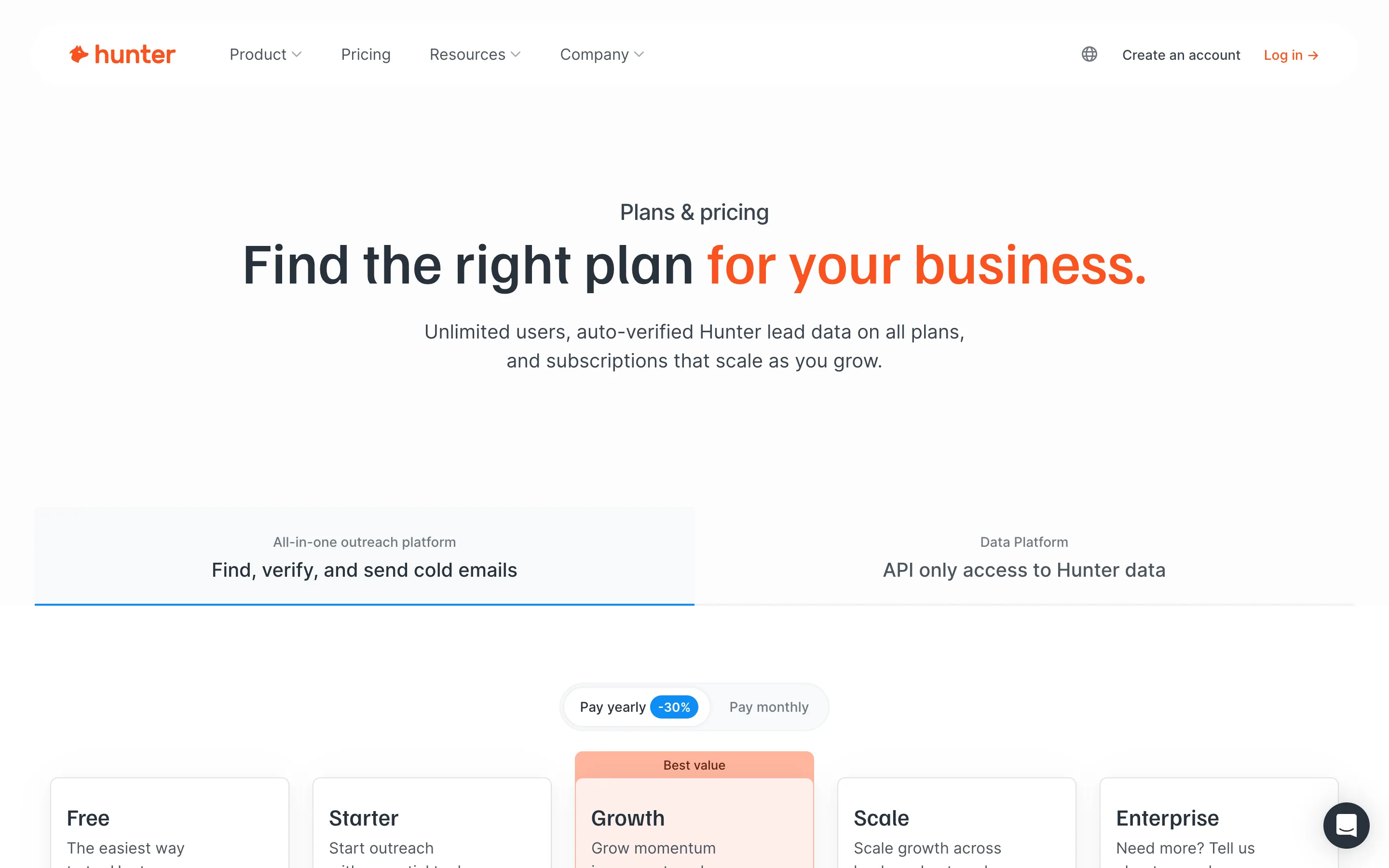
Hunter (EUR charged 1:1 in USD): free 25 searches/month, Starter $49/month for 2,000 credits, one credit per attempted search whether or not a usable address comes back. That $0.0245 sticker isn't what an address costs. Grant it the roughly 30% email find rate I assume for every per-search finder (my assumption, not Hunter's figure) and each address found runs about $0.082, close to 4.8× Enrow Start, more once unspent credits lapse at renewal, and there's no phone to show for any of it.
vs Enrow: Enrow opens at $17 against $49, bills only on a valid result so its $0.017 is the whole cost, verifies with 10+ checks instead of scoring a guess, and returns the EU direct dials Hunter has never offered.
12. Findymail
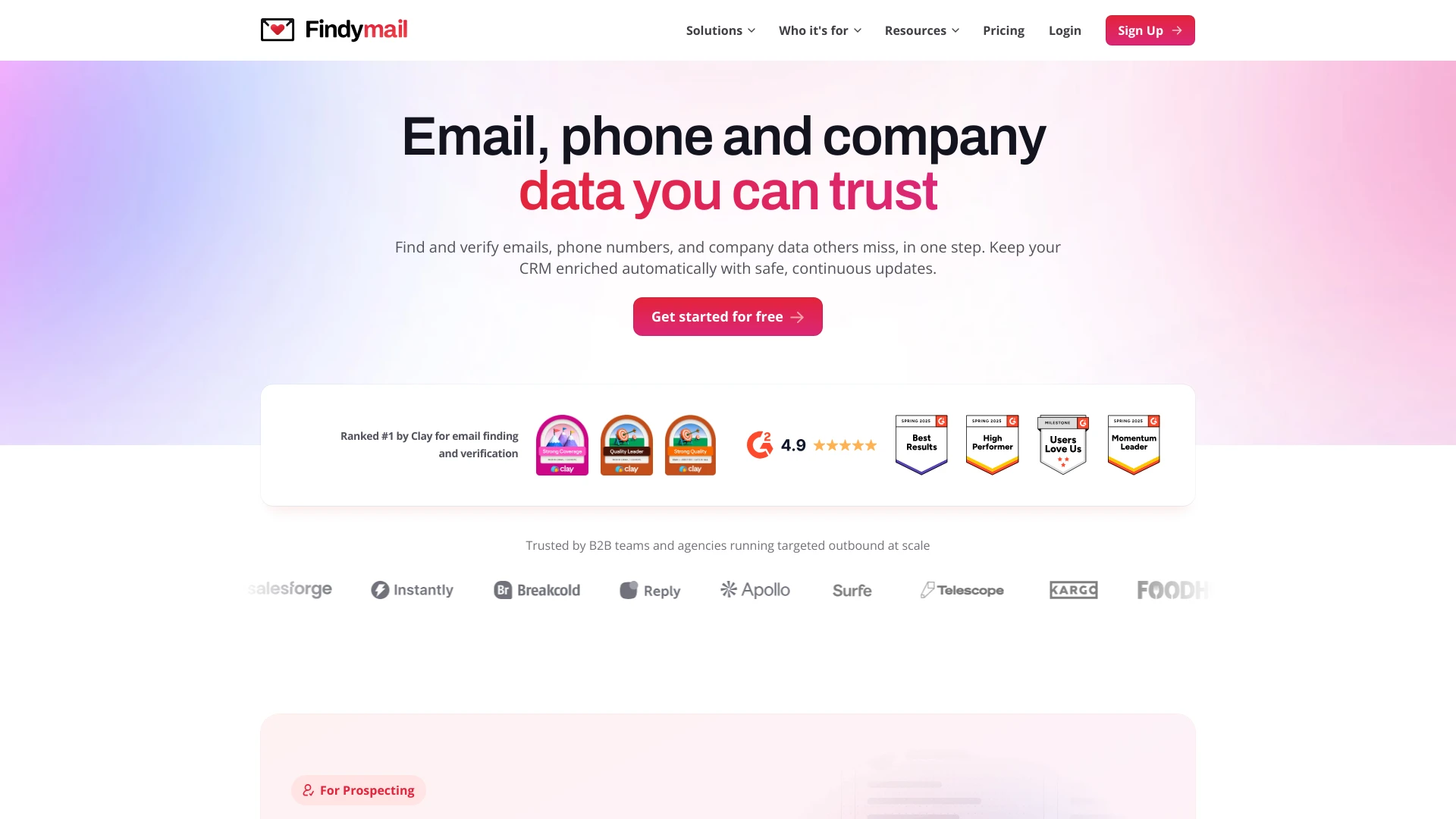
I'll give Findymail its due: it's a real email finder, and on US addresses it performs.
It bills the honest way: charged on the found, verified result, zero on a miss. Point it at a domain list or a LinkedIn export and what comes back tends to survive a live send. It's a frequent Clay-waterfall provider, and worth knowing on its own.
We go deeper in our Findymail breakdown.
The ceiling is geography and the floor price. GDPR closed EU phones to Findymail, so for European calling it's a spectator, since its numbers come from the US alone.
The plan floor is $49/month for 1,000 credits, rollover caps at 2× your monthly allowance, and there's no meaningful free plan, just 10 trial credits. On my list its US addresses held up; the French half came back email-only.
- +Charged on found, verified results, so a miss costs nothing
- +Strong US B2B email accuracy
- +SOC 2 Type 2, GDPR-compliant, EU-hosted
- +Native HubSpot, Salesforce, Pipedrive, Instantly and lemlist integrations
- –US-only phone data, nothing for Europe (GDPR-blocked)
- –Rollover caps at 2× the monthly allowance, so stockpiled credits die at renewal
- –No meaningful free plan; the floor is $49/month
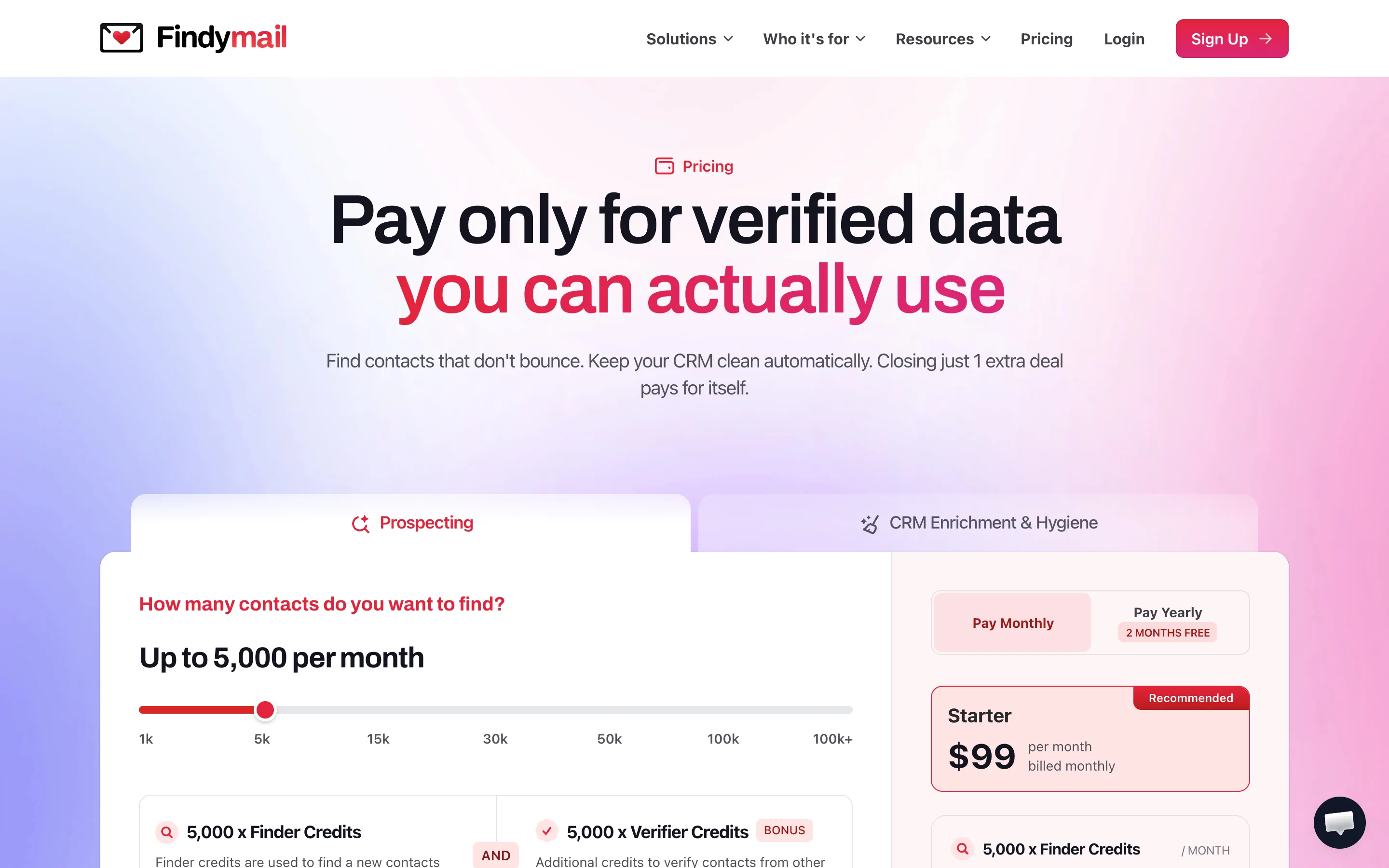
Findymail is a single Starter slider opening at $49/month for 1,000 finder credits, with phones at 10 credits each and rollover capped at 2× the monthly allowance. Per-valid billing keeps the sticker honest: the $49 floor prices a valid email at about $0.049, nearly 2.9× Enrow's $0.017 at that same volume, and it closes the gap only much further up the slider. Phones price near $0.20 on paper, except the paper excludes Europe entirely.
vs Enrow: same honest meter, narrower map, higher entry rate. Enrow starts at $17 where Findymail starts at $49, prices a valid email at $0.017 against Findymail's $0.049 at that volume, and returns the EU direct dials Findymail legally can't.
13. Dropcontact
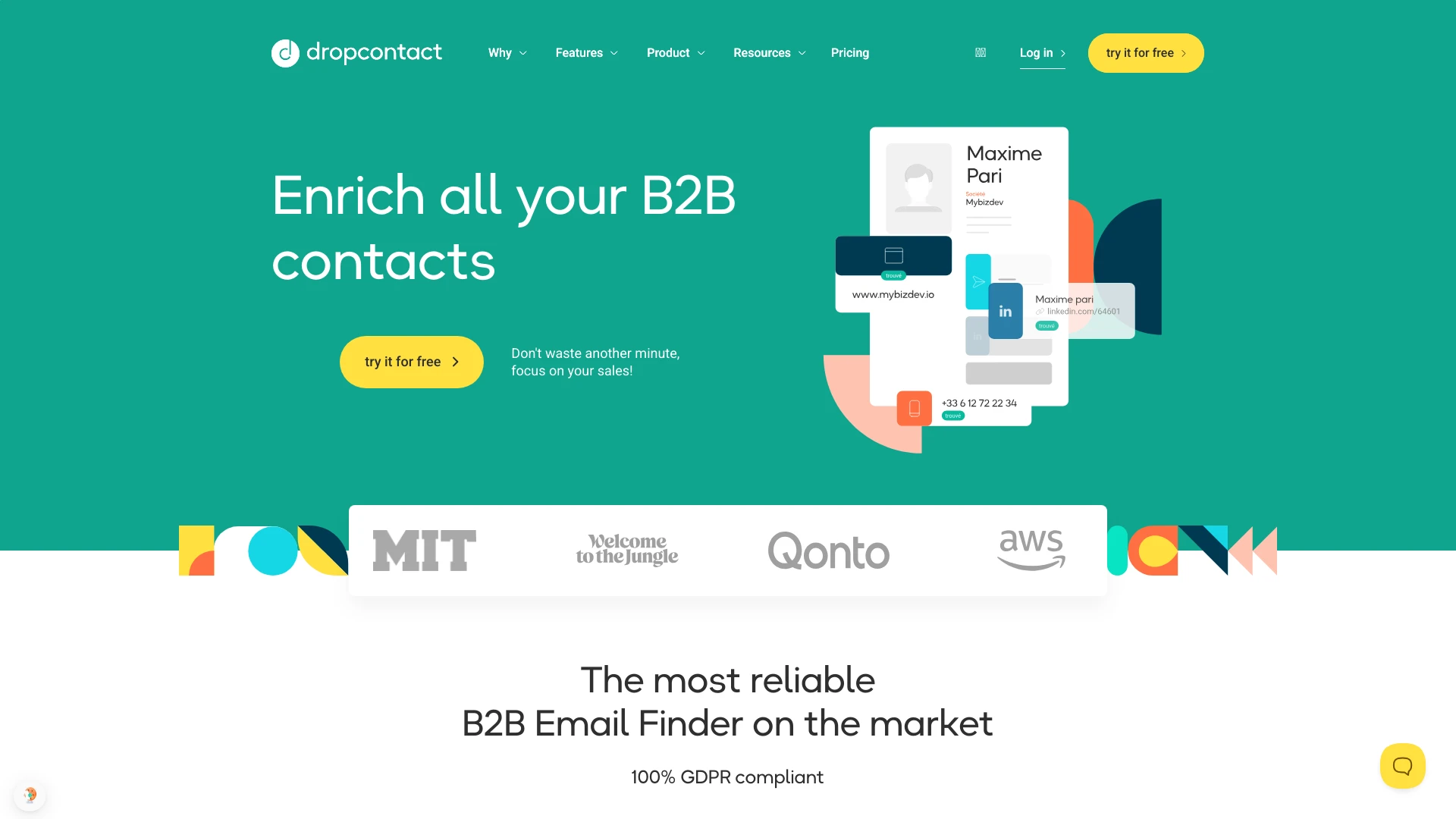
Dropcontact is the pick your DPO would make.
Everything runs under GDPR on EU servers, the data is computed fresh rather than pulled from a resold list, and it carries French firmographics (SIREN, VAT) most tools ignore. On emails it works pay-on-success: an address it can't find gets the credit reimbursed.
For cleaning a French or European CRM it's a fair specialist, and our Dropcontact page runs the full comparison.
But read the job description. Dropcontact enriches rows you already have; it isn't built to hunt a contact from scratch the way a finder is.
Each processed contact consumes a credit, and phones only appear when one can be scraped out of an email signature, so there's no direct-dial product behind the promise. It cleaned my French rows nicely and produced two phone numbers for a hundred contacts.
- +GDPR-first: EU servers, compliant by design
- +Pay-on-success on emails; unfound addresses are reimbursed
- +French firmographics (SIREN, VAT) built in
- +CRM-native enrichment for HubSpot, Pipedrive, Salesforce, Zoho
- –Enriches existing rows; not a real-time finder for new contacts
- –Phones come only from signature scraping, no direct-dial product
- –€19 gets 500 credits with no rollover; adding rollover makes it €29
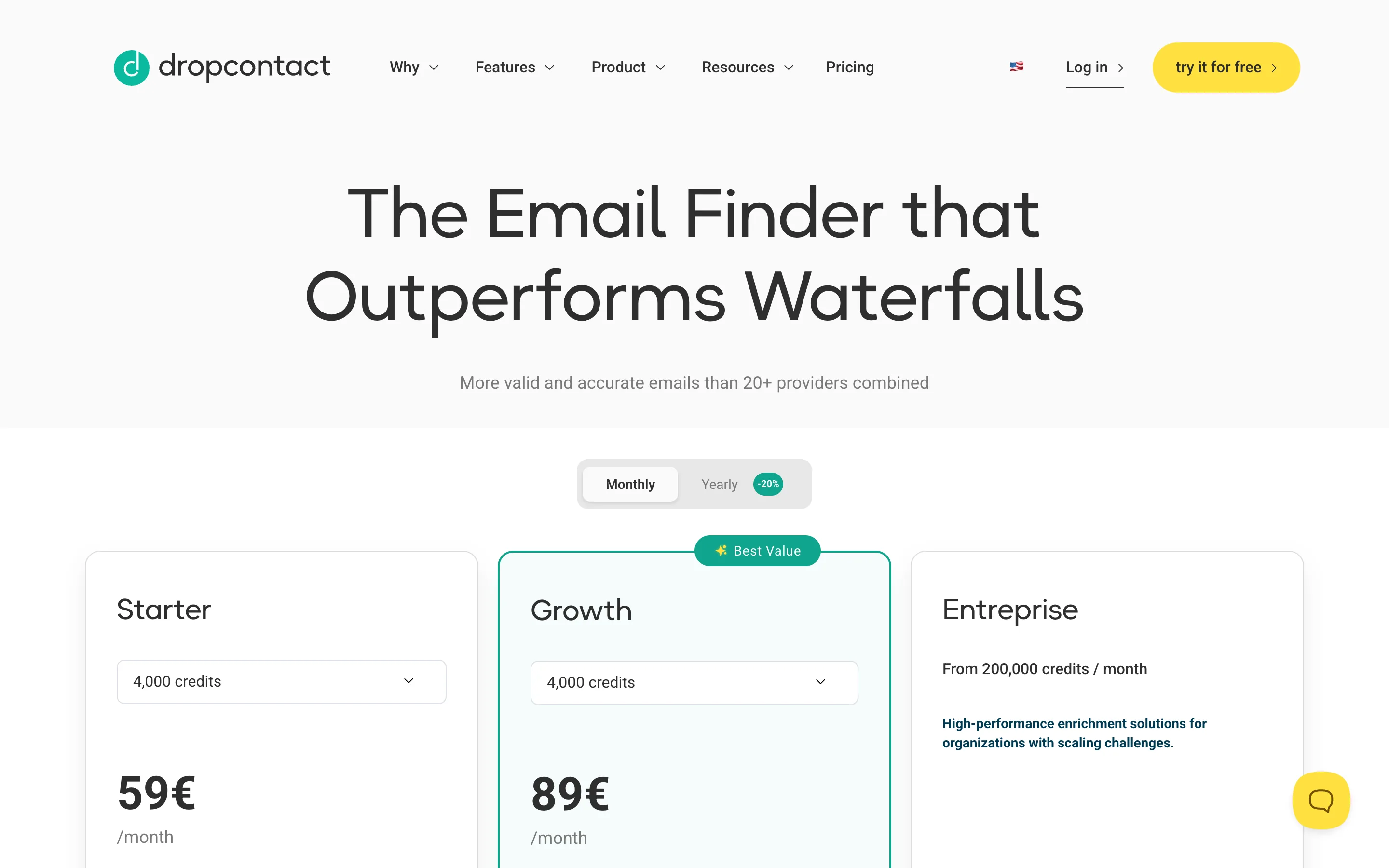
Dropcontact opens at €19/month for 500 credits with no rollover, or €29 if the credits should roll over, one credit per processed contact. That puts the entry math at about €0.038 per contact, so about 2.5 times Enrow's Start rate, both monthly and neither with rollover. Dropcontact bills on success, so a miss is reimbursed; there's no per-phone figure because there's no real phone product.
vs Enrow: the honest framing is enrichment versus finding. Dropcontact completes rows you already own and refunds the emails it misses; Enrow finds and verifies new contacts in real time for about two-fifths of Dropcontact's per-row entry rate, and returns EU direct dials instead of signature scraps.
Every month, 50 fresh credits land in your account. No card required, and a credit spends only when the result is valid. Test Enrow against Clay, or drop it straight into your Clay tables and compare the bill.
Side-by-side comparison
Final Verdict
Clay is the most flexible GTM platform out there, and flexibility is the wall: data credits from $0.05, several per contact down the waterfall, and tables you build and maintain. For a team with a GTM engineer that's a fair trade; for everyone who just wants the verified contact, Enrow is the simpler switch: verified emails and EU direct dials, found in real time, from $17/month, charged only when the result is real. It won't orchestrate a workflow or send a sequence — we left those to Clay and to senders like Emelia on purpose — but nobody else here does the last trick: one click turns a LinkedIn profile into a complete verified contact, phone included, sitting in your CRM, matched against the record you already had instead of stacked on top of it. Keep Clay if you love it and run Enrow inside it, or take the 50 free credits you get back every month and let your own list vote.
Every month, 50 fresh credits land in your account. No card required, and a credit spends only when the result is valid. Test Enrow against Clay, or drop it straight into your Clay tables and compare the bill.
FAQ
How we evaluated these tools
I ran this one myself. Nobody paid for a slot, no link on the page earns me a cut, and the top spot was never for sale. I pushed the same contact list through every tool inside one week, then fired it at a live inbox to see what actually bounced. Four things set the order: how many contacts came back, how many bounced for real, what a valid contact costs once the dead ones are priced in, and whether the tool hands me legally-sourced EU phone numbers. Competitor prices come off their official pricing pages, read 2026-07-06.
ready to stop wasting time?
Connected in minutes.
Verified data in seconds.
no credit card
no setup required