surfe alternatives
Top 11 Surfe Alternatives & Competitors in 2026
We evaluated 11 alternatives on the four things that actually decide an outbound budget: match rate, bounce on a live send, real cost per valid contact, and EU phone coverage. Same list, same week, every tool.
11 tools tested
updated August 3, 2026
16 min read
Last updated October 6, 2026
The alternatives at a glance
if you want verified emails and EU phones you only pay for when they're valid, Enrow is the move. $17/month gets you in the door, and Pro settles near $0.0087 per valid email, a fraction of Surfe's real cost per contact. The other ten each own one lane. Emelia if you want to find and send from one login, Apollo if you want a whole dashboard, Kaspr or Lusha if a rep reveals numbers off LinkedIn all day. Route by niche below; none of them is the better overall buy.
Surfe lives in your CRM sidebar and your LinkedIn tab, and that's the good part. The data behind it is a small monthly ration of email and phone credits, priced per seat, that runs about $0.31 per email at the entry tier.
The switch for the data layer is Enrow: verified emails plus GDPR-cleared EU direct dials, found in real time, with nothing charged unless the result is valid. Start is $17/month; Pro works out to roughly $0.0087 per valid email.
Its Chrome extension takes a LinkedIn profile and files the whole verified contact in HubSpot, Salesforce or Pipedrive on a single click. And the free tier restocks every month: 50 credits, no card.
Why teams look for Surfe alternatives
Surfe's CRM sync is loved; the data and the pricing are what push people to shop around. If the sidebar is the whole reason you bought Surfe, keep it. If the contact data is what's failing you, that's a data problem, and it has a data answer.
Conflict of interest disclosure
Let's be blunt: Enrow is my company, and I've put it at #1 on a list I wrote. Read the rest knowing that.
Here's what I won't dress up. Several tools below do more than Enrow. Surfe syncs your CRM; Apollo runs sequences and dials; Cognism ships a giant searchable database. We build none of that, and that's a decision, not a hole in the roadmap.
Enrow does one job — find and verify the most accurate emails and direct dials money can buy, and charge you only when they're valid. That narrow focus is exactly why the data holds up. The sidebar, the dashboard, the database: a tool below covers each of those.
Getting the contact data right is the whole point of Enrow.
The 11 best Surfe alternatives
1. Enrow
#1
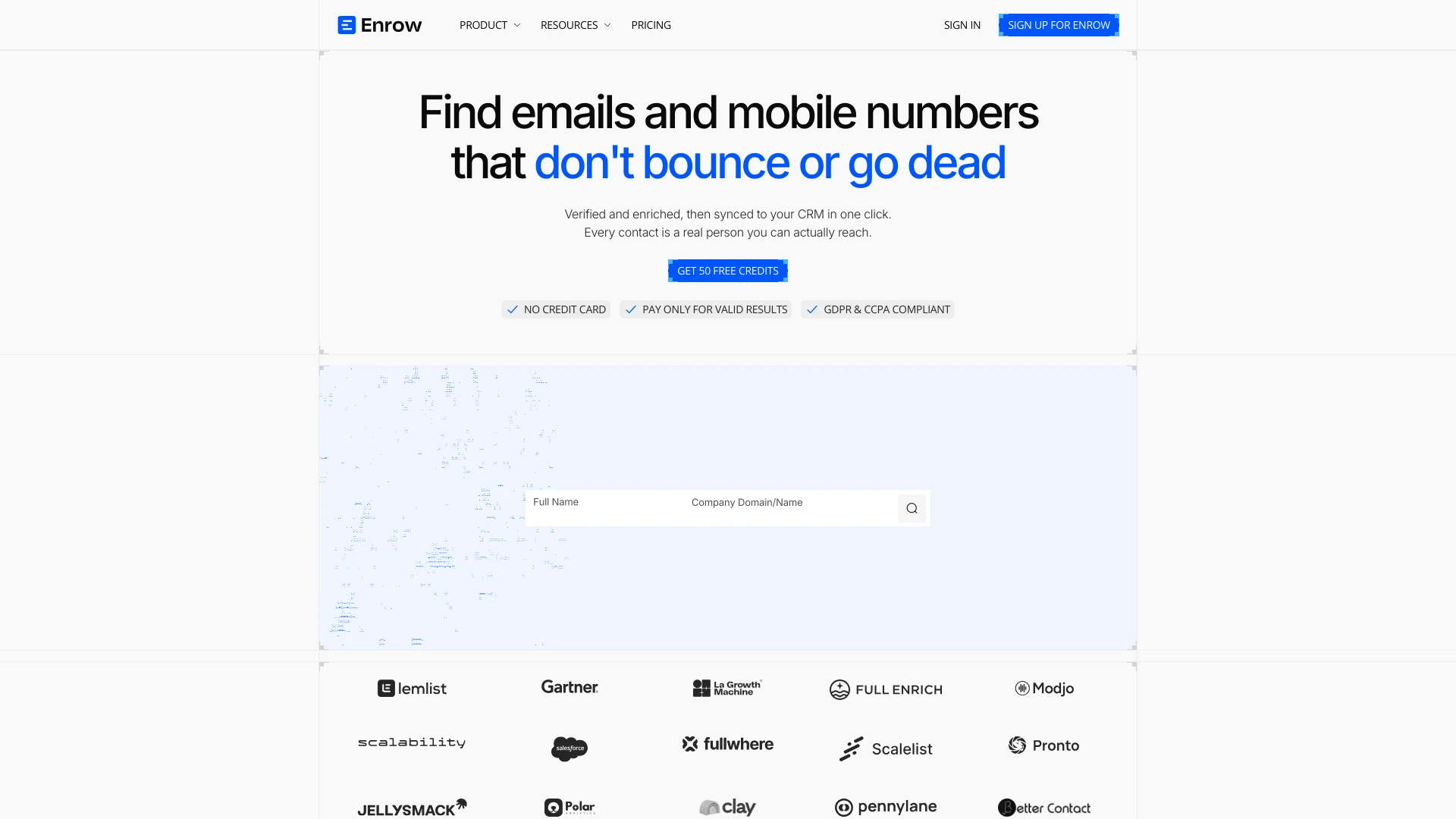
Full disclosure, again: this one's mine. I built it after years of paying to enrich files, finding a fraction, and still eating bounces. So the meter is the whole argument.
Surfe gives you a fixed pile of credits each month and pulls the data from third-party sources. Enrow finds and verifies in real time, and charges only when the address is deliverable. A miss is free.
So is an address that fails verification, because it never gets counted as valid to begin with.
Verification is the gap. Enrow runs 10+ checks per address — multiple SMTP passes plus catch-all probes from servers in different regions — before anything counts against you. Catch-alls come back verified and usable instead of flagged "risky" and thrown out.
On my mixed list, discovery ran around 60-70% and the live send bounced under 1%. Observed on that list, not a contract.
Phones are where the two tools stop resembling each other. Enrow's Direct Phone Finder returns dials in any country, Europe included. Surfe includes a small phone ration; it doesn't hold the EU calling apparatus underneath.
Then the trick that overlaps with what Surfe fans want. One click in the Chrome extension, taken straight off a LinkedIn or Sales Navigator profile, drops the complete verified record into HubSpot, Salesforce or Pipedrive, email and direct dial included. It drops as a create-or-update. Enrow looks for that person in the CRM before it writes, completes the card in place when it finds one, and creates a record only when there is nothing to match. Surfe syncs the profile; Enrow fills the record with data it just verified, and either way you finish with one card per human rather than two.
For the agent crowd there's an official MCP server too (repo github.com/EnrowAPI/enrow-mcp), so Claude or Cursor can call the finder and verifier directly — details on the API page.
- +Billed only on valid results; misses cost nothing
- +Direct dials in any country, Europe included
- +10+ verification checks per email; catch-alls verified and delivered
- +A complete verified contact card goes from LinkedIn into HubSpot, Salesforce or Pipedrive on one click
- +Native Clay, HubSpot, Salesforce and Pipedrive integrations, plus a well-documented API and MCP server
- +No per-seat fees; Pro and Scale credits roll over
- –There's no database to browse. Stored databases age and you end up pitching people who already left, so real-time lookup is the trade we made; list sourcing stays in LinkedIn or Sales Navigator.
- –It won't send your campaigns. Sequencing is a product we refuse to build; pair it with Emelia, La Growth Machine or lemlist.
- –Company data stops at LinkedIn depth. No technographics.
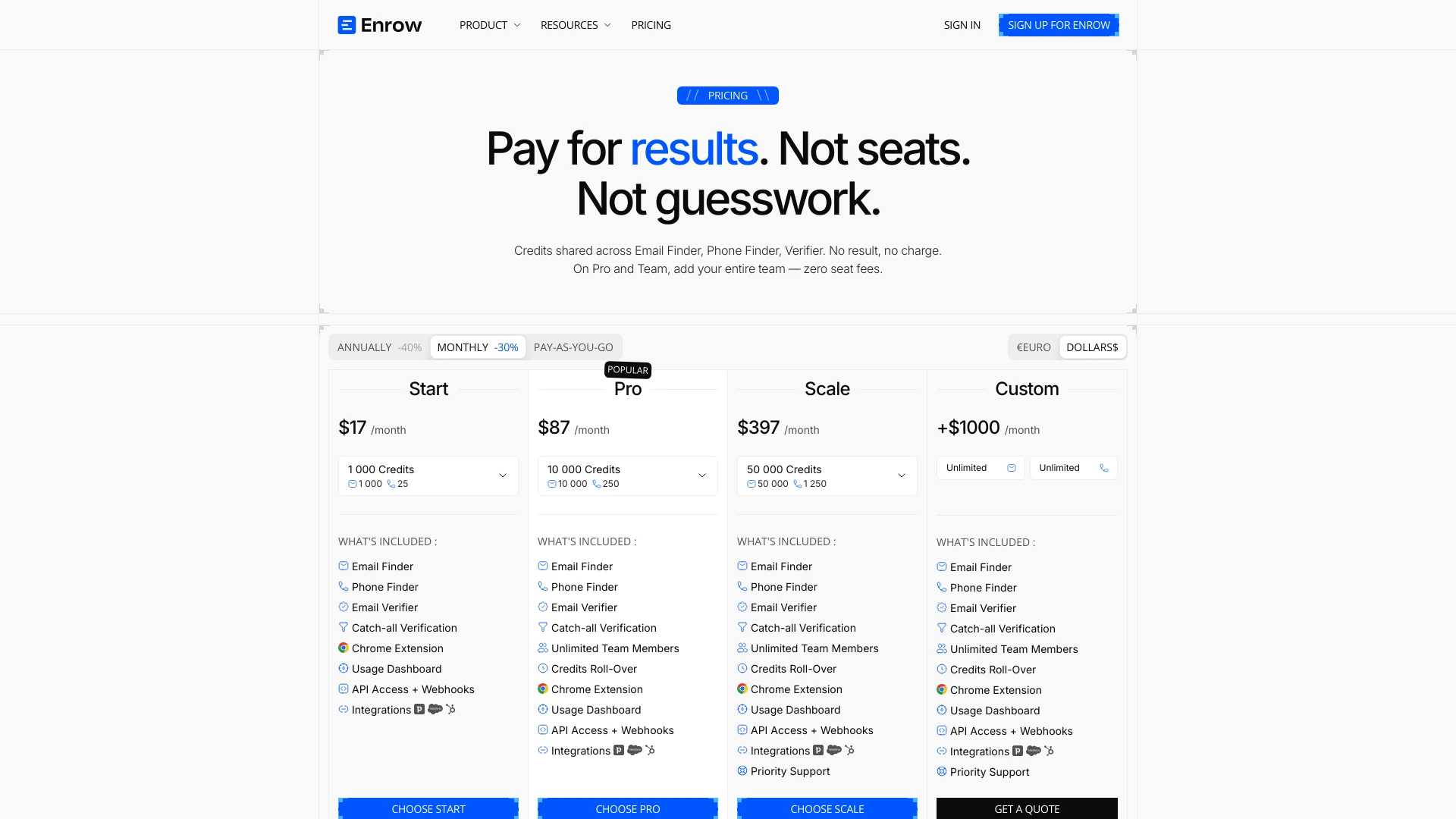
Three tiers, priced monthly. Start: 1,000 credits for $17 or 4,000 for $47 (monthly only). Pro: 10,000 for $87, 20,000 for $167, 30,000 for $247. Scale: 50,000 for $397, 80,000 for $597, 140,000 for $997, 200,000 for $1,397.
Annual trims Pro and Scale by about 10%, putting 10,000 near $78/mo and 50,000 near $357/mo.
One credit buys one email; a phone runs 40 credits; a verification is 0.25, catch-all included. A result has to be valid before anything gets charged, so the cleaner comparison base is Pro: $87 buys 10,000 valid emails or 250 valid phones, about $0.0087 per email or $0.35 per phone.
Start remains the $17 entry tier. Pro and Scale credits roll over.
Put that next to Surfe's Essential tier — about $47/month for roughly 150 emails a month, per seat — and the entry gap is stark: Enrow's $17 buys 1,000 emails on one shared account, no seat multiplier. Volume only widens it.
The free tier refills on its own: 50 credits every month, no card, for as long as you want. And since credits only burn on valid results, none of the 50 die on a guess.
Every month, 50 fresh credits land in your account. No card, and they only spend on valid results. Test Enrow against the tool you're leaving.
2. Emelia
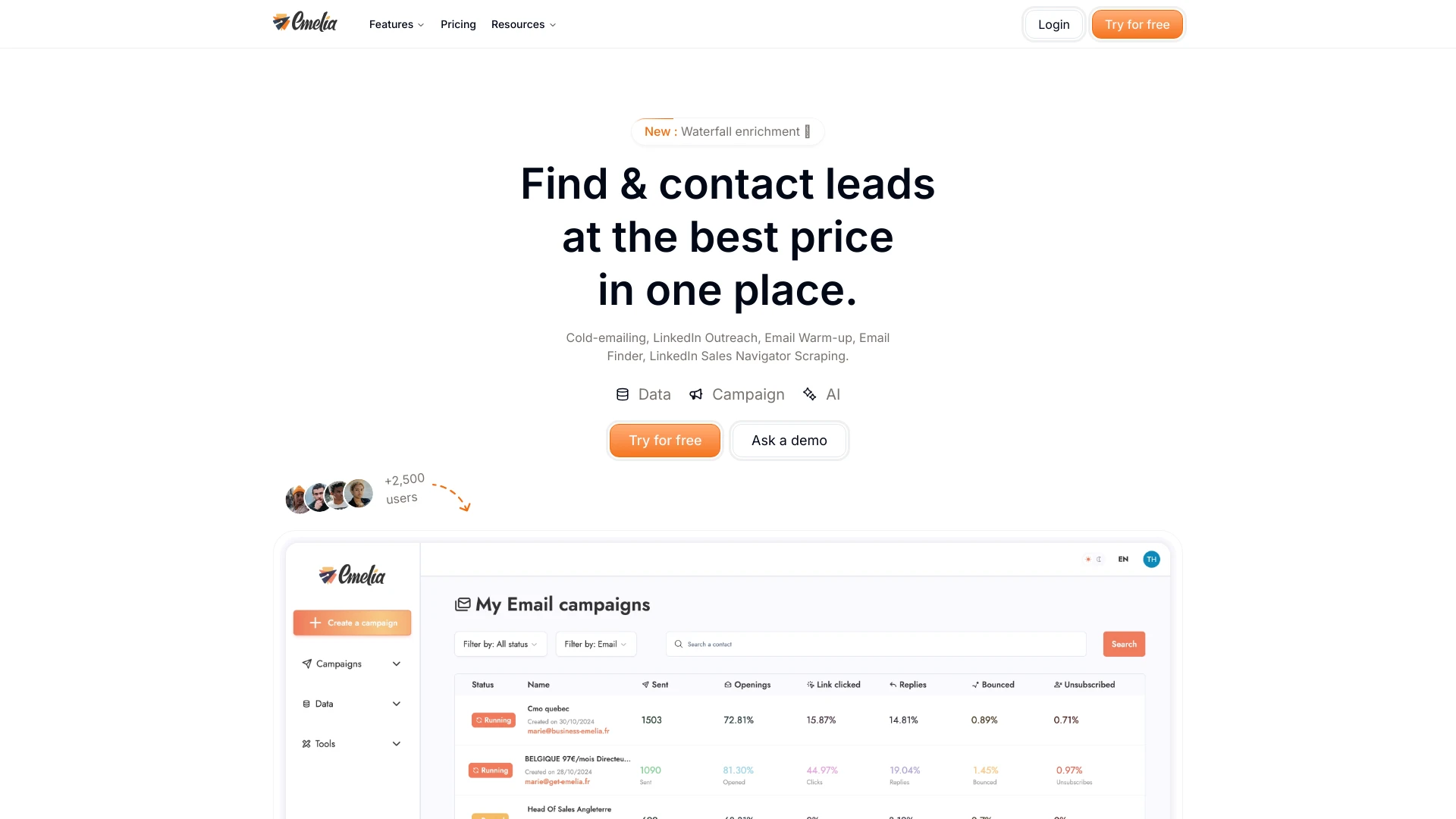
Emelia is a different job. It sends.
It's a sequencer with a finder attached: cold email, LinkedIn steps, warm-up, one login. Surfe doesn't send campaigns, and neither do we — so if you want finding and sending under one roof, Emelia is where we point you.
As a data source it's respectable rather than the headline. Finder credits burn on results found, phone coverage is thin, and heavier data use lands on add-on credit packs. The setup I actually recommend: Enrow finds and verifies, Emelia sends.
- +Finds and verifies contacts, then sends them across cold email, LinkedIn and warm-up sequences, one login for all of it
- +Finder credits charge on results found
- +Sales Navigator scraping and waterfall enrichment included
- +Unlimited sending and contacts on paid plans
- –Thin phone coverage; not a dialing tool
- –Heavy data use pushes into add-on credit packs
- –Outreach-first, so data depth trails the pure finders
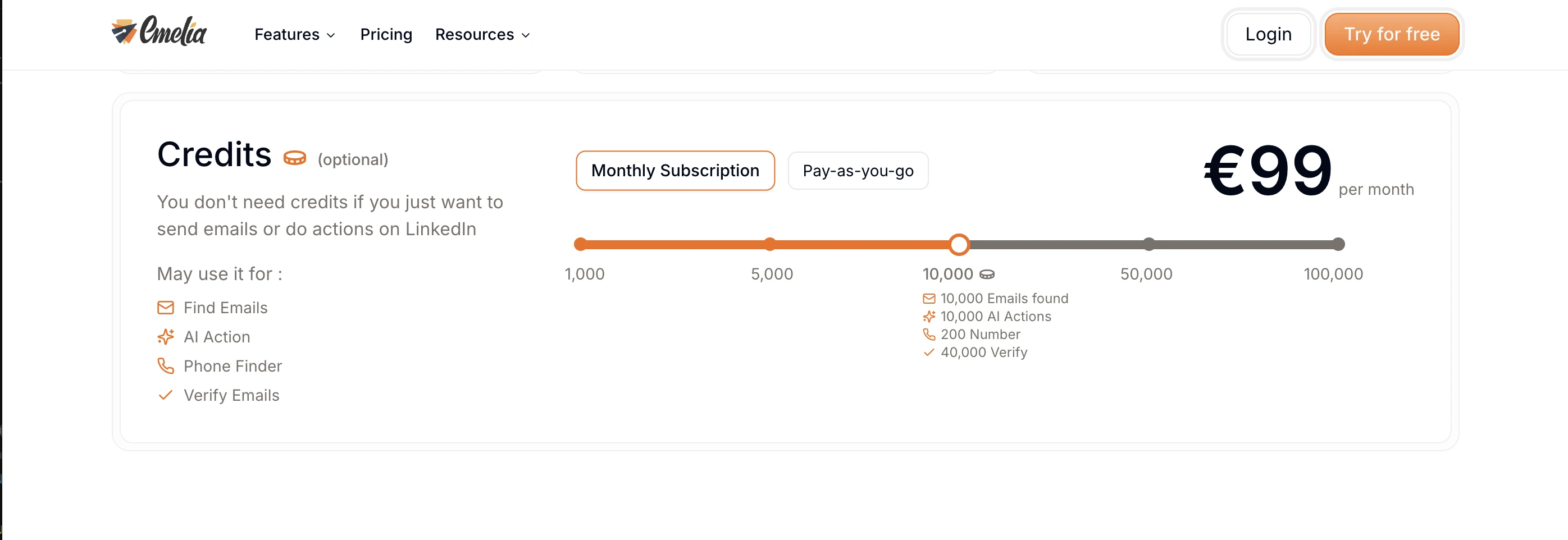
Converted from EUR (+20%), Emelia starts about $44/month (3 mailboxes, 1 LinkedIn seat, 500 credits). Finder and phone credits sit in separate add-on packs, so your true cost per valid email depends on the pack you buy.
vs Enrow: no contest on data, and Emelia wouldn't argue it. Feed it Enrow's verified contacts at $0.017 apiece and both tools do their best work.
3. Apollo

Apollo is the usual answer when someone wants the whole motion in one tab: database, sequences, enrichment, a dialer, one subscription.
Against Surfe that's a category jump. Surfe syncs your CRM from LinkedIn; Apollo tries to be the CRM-adjacent workspace itself, with data inside it. For a small team that wants outbound end to end without stitching tools together, the pitch is real.
The bill for the breadth is the data. Apollo is a stored database, so records age, and its reviews circle two complaints on loop: accuracy and export caps. Mobiles are a thin per-seat ration.
Getting from a filter to a live sequence in one sitting impressed me; checking those contacts against a live send is where real-time won.
- +Large B2B database with sequencing and enrichment in one place
- +Chrome extension and CRM integrations
- +Workable free tier (900 credits/year per seat)
- +One tool to source and send, with enrichment built in
- –Stored database, so records go stale and accuracy gripes recur in reviews
- –Credits are per seat and expire monthly — unused ones are lost; mobiles draw down fast at 8 each
- –Export caps bite before the lookups do
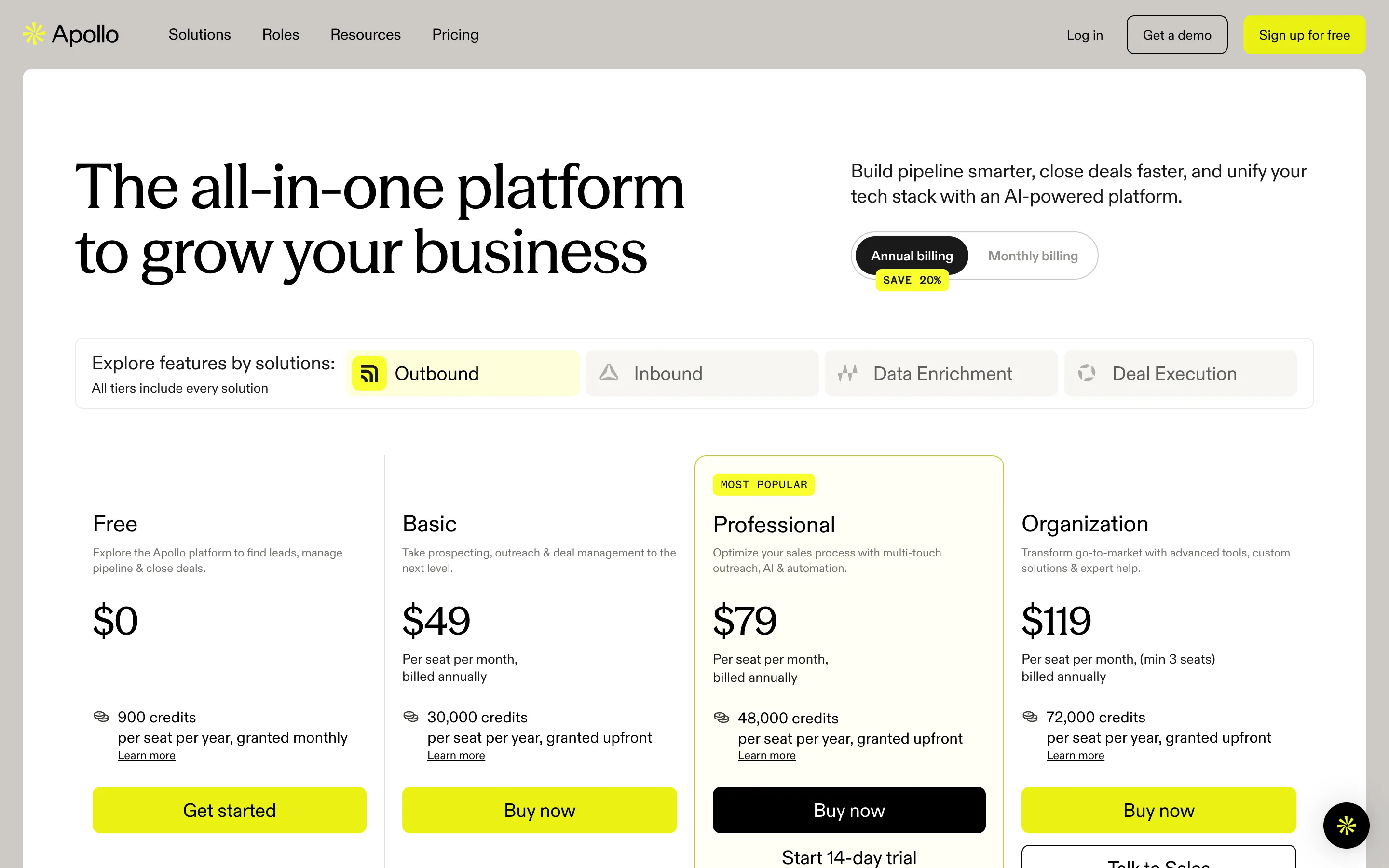
Apollo is per seat, from $65/seat/mo ($49 annual) for 2,500 unified credits (1 per email, 8 per mobile) that don't roll over. Since nobody burns every credit before the reset, the effective rate lands near $0.033 per valid email, about 2× Enrow's $0.017 Start — and it multiplies by seat, $325/month for five reps.
vs Enrow: buy Apollo for the cockpit if you want one, then let Enrow supply the layer it can't keep fresh. On phones it's stored reveals against verified dials; on emails, a database that ages against real-time lookup.
4. Kaspr
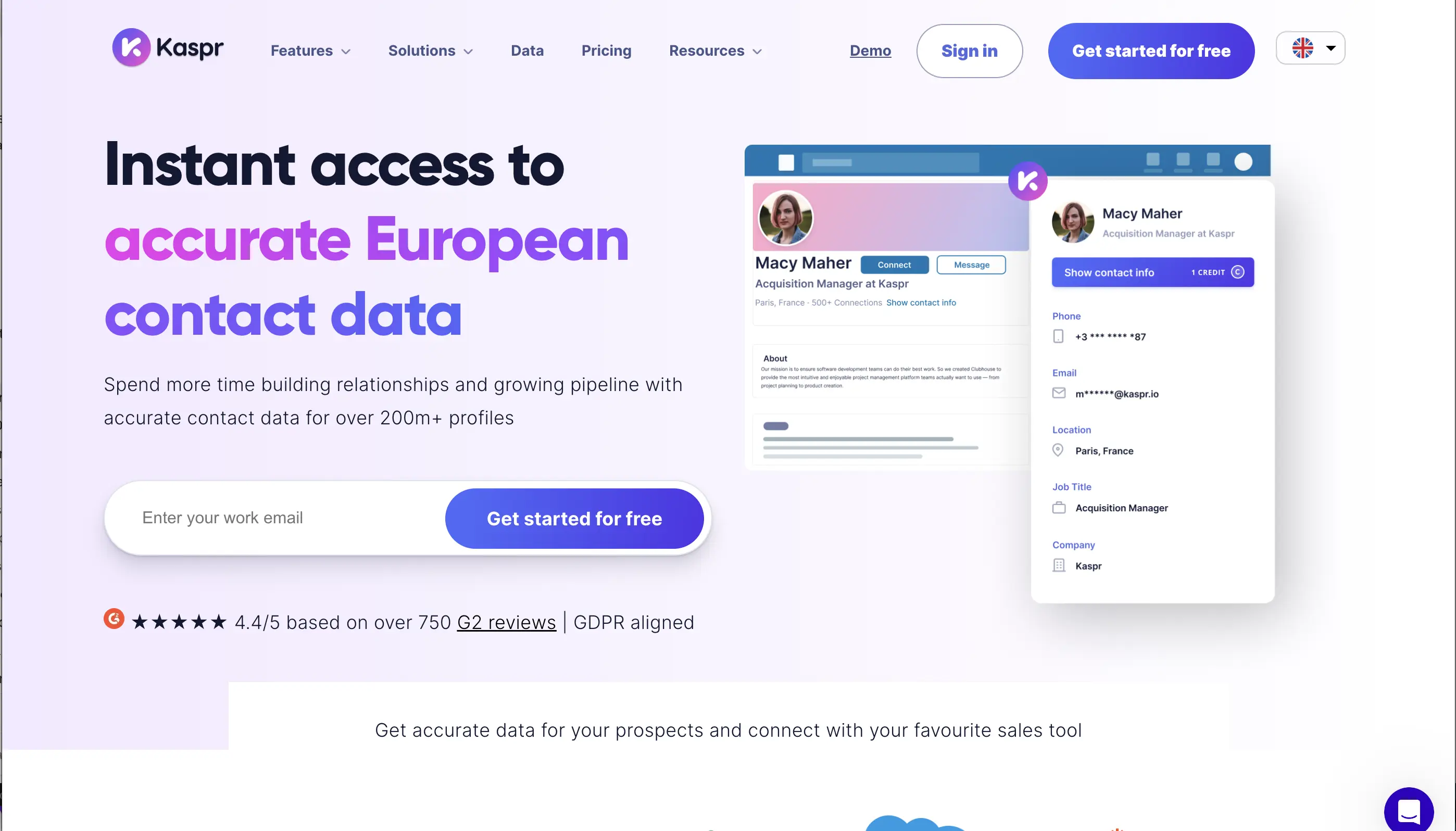
Kaspr is a LinkedIn side panel with a phone ration, and inside that sentence it's fine.
It's the closest match to what Surfe fans actually do all day: open a profile and reveal the phone and email, then push it to the CRM. For a solo SDR working Sales Navigator one profile at a time, it covers that job cleanly, and it leans European.
We ranked the full field in our Kaspr breakdown.
The asterisks stack, though. The "unlimited B2B emails" on paid plans are generic company addresses rather than verified direct work emails — and "unlimited" is itself fair-use capped at 10,000 emails per account per month (kaspr.io/terms), so it's a ceiling, not a firehose.
Phone credits are a capped monthly ration per user, the reveals come from stored data, and per-seat pricing multiplies across a team. Quick in my hands; the ration ran out before my list did.
- +Fast, simple LinkedIn Chrome extension
- +Free tier to test (5 phone credits/month)
- +Generic B2B emails on paid plans, fair-use capped at 10,000/account/month
- +European focus, backed by Cognism's data pipeline
- –"Unlimited" emails are fair-use capped at 10,000/account/month, and generic company addresses rather than verified direct ones
- –Phone credits are a capped per-seat ration, and stored reveals can be stale
- –Extension workflow only; no bulk engine or serious API
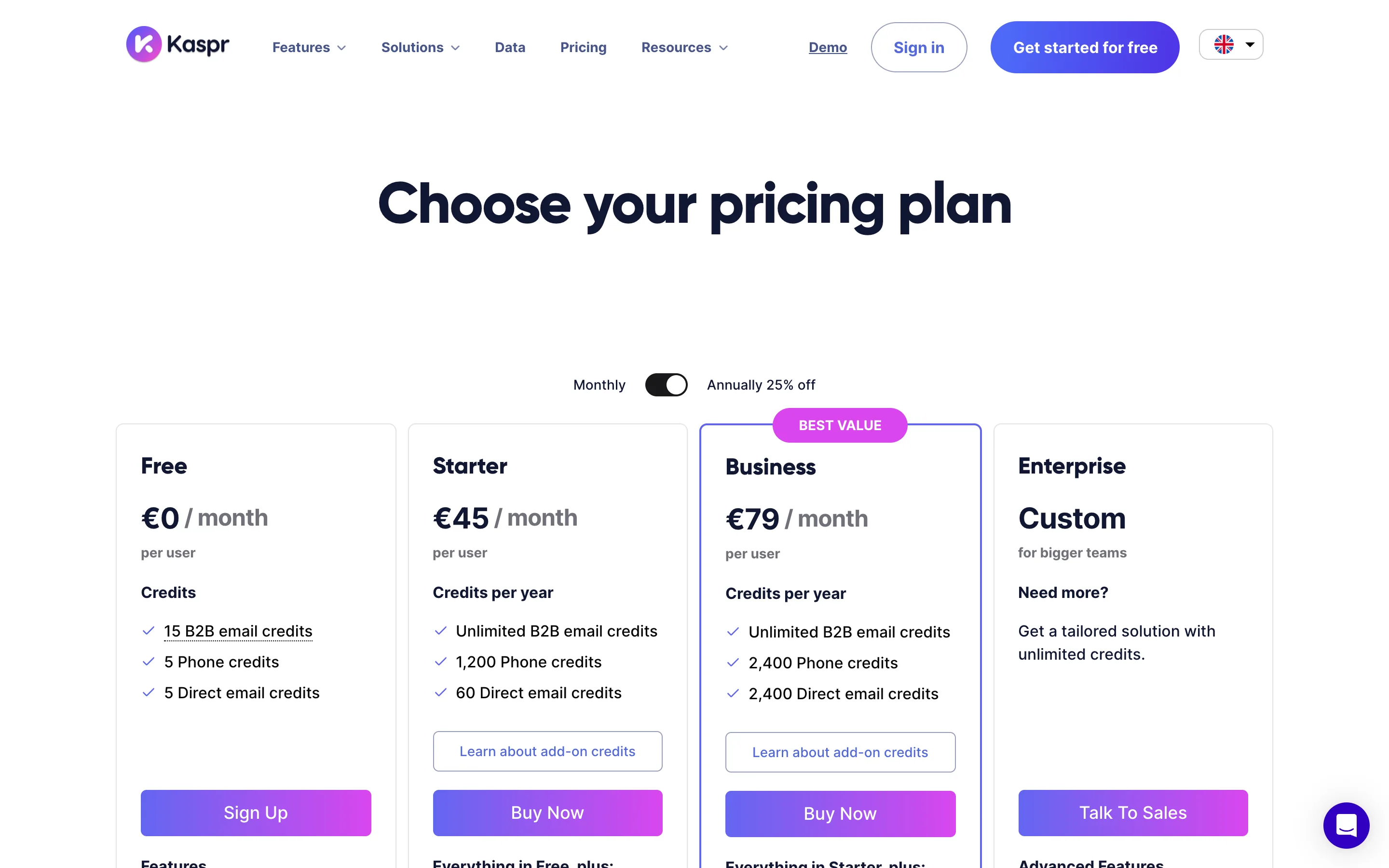
Kaspr is per user, from €59/user/month for 100 phone credits. Burn that ration and a phone reveal runs about €0.59 on the sticker; because the reveals are stored rows, a valid mobile lands nearer €0.84-1.18 after a staleness haircut — 2.8 to 3.9 times Enrow's €0.30 Pro benchmark, and multiplied by seat.
vs Enrow: a capped ration of stored reveals against a real-time finder that only counts valid numbers, with no per-seat fee attached. Handy panel, different weight class.
5. Lusha
Lusha built its name on North American mobiles, and on that turf the reputation is earned.
Self-serve buying, a quick extension, a credit reveals an email, five credits reveal a phone. Like Surfe it rides a LinkedIn extension into your CRM, but its lane is mobile quality, in one geography. The full comparison sits in our Lusha piece.
It's still a stored database, so the mobile you reveal is only as fresh as its last update, and Europe is where coverage thins out. Phone reveals also cost 5 credits each, which puts the real per-phone price at five times an email's.
On my file the US mobiles hit; the EU column mostly shrugged.
- +Strong North American mobile quality
- +Self-serve, no sales call to buy
- +Clean extension and CRM integrations
- +Email and phone reveals from one credit pool
- –Stored rows: a revealed number can be months out of date
- –Phone reveals cost 5 credits each
- –Thin EU direct-dial coverage
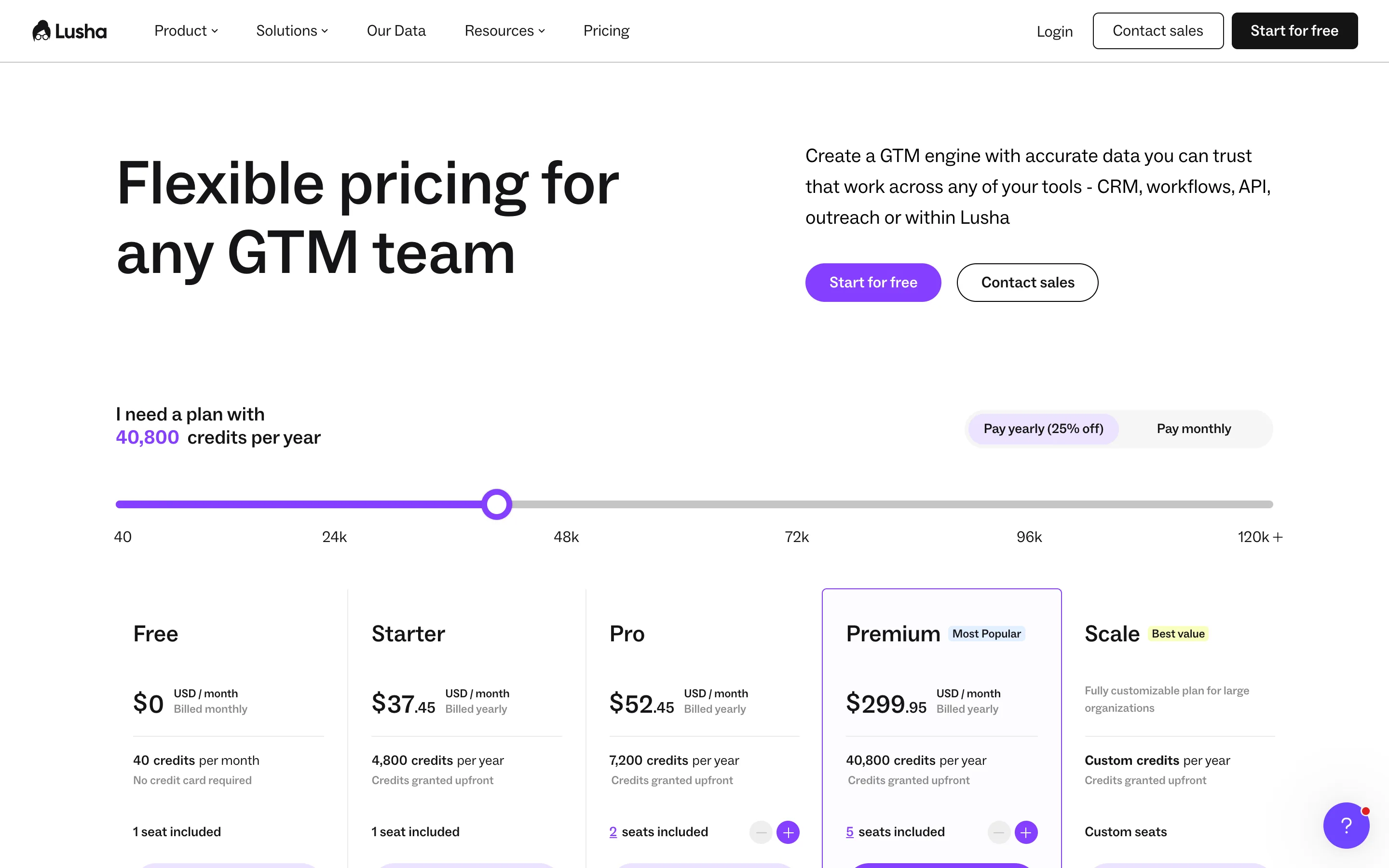
Lusha starts at $49.90/month for 400 credits (a phone reveal takes 5), with about 25% off annually. Spend that ration on phones and each mobile runs about $0.62, nearer $0.89-1.25 once stale reveals are priced out — multiples of Enrow's $0.35 Pro benchmark per valid phone, both billed monthly.
vs Enrow: Lusha's US mobiles are good, and they still cost several times Enrow's per valid phone once dead reveals are counted. On EU dials it isn't close, and Enrow bills nothing until the number is verified.
6. Cognism
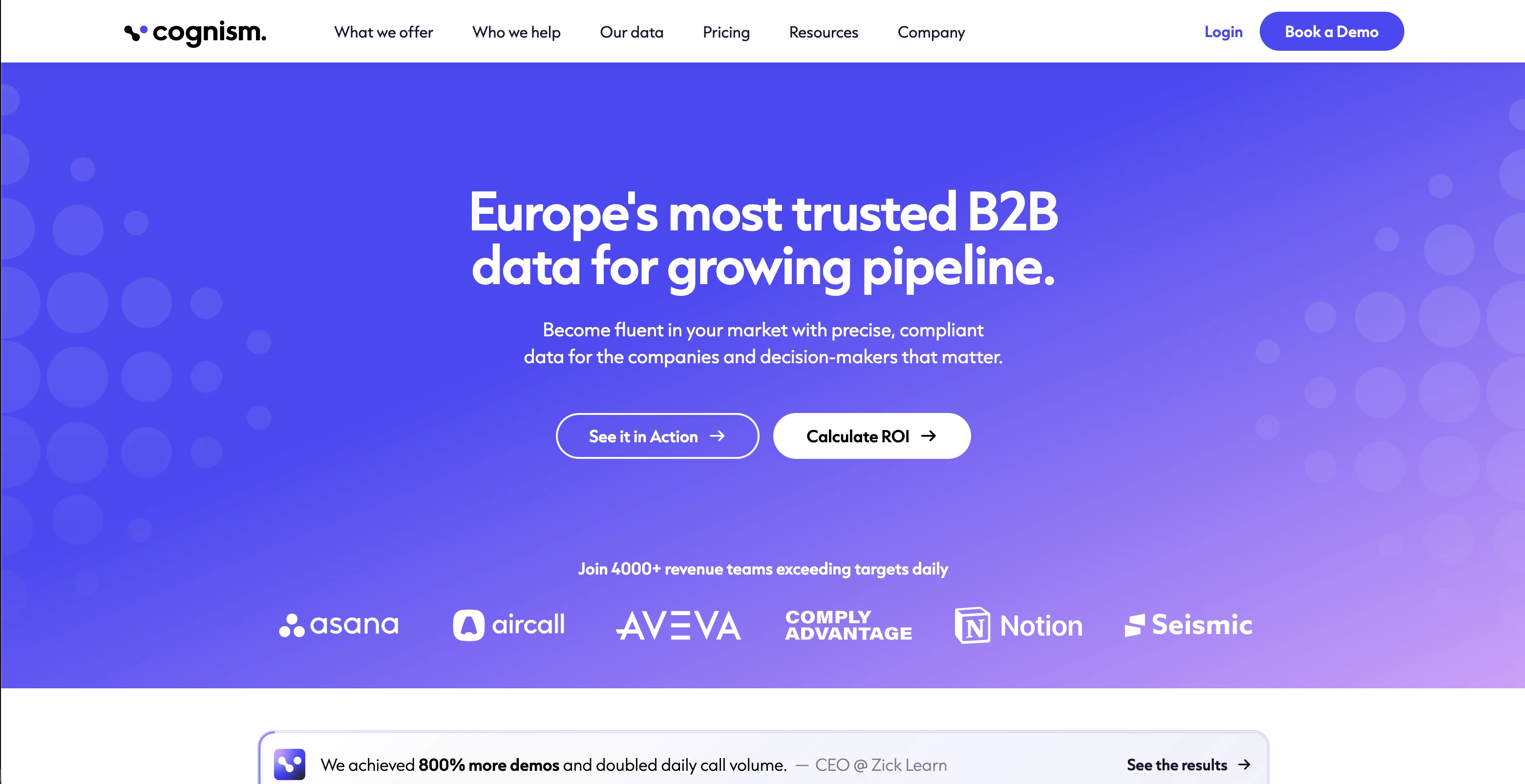
Cognism is the enterprise answer, and it behaves like one: serious EU phones, serious compliance, and a price you need a meeting to learn.
Its Diamond Data set is phone-verified by people actually calling the numbers, a real quality bar, and reveals are screened against national do-not-call lists. Where Surfe hands you a modest phone ration from third-party data, Cognism runs a compliance-heavy mobile program. We took it apart properly in our Cognism review.
The catches are structural. Only a subset of the database is Diamond-verified; the rest ages like any stored data. And buying in means quote-only pricing, annual contracts, per-seat licences and, by public accounts, a platform fee that prices small teams out of the room. Good data, enterprise procurement.
- +Diamond Data: phone-verified mobiles with strong EU connect rates
- +GDPR/CCPA compliance and DNC/TPS screening
- +Big searchable database, intent data on the Pro tier
- +Enterprise-grade support and certifications
- –Quote-only, annual contracts; public breakdowns suggest ~$1,500+/seat/year plus a platform fee
- –Only the Diamond subset is phone-verified; the rest is stored data that ages
- –Credit pools, not pay-per-valid; no self-serve, no free test
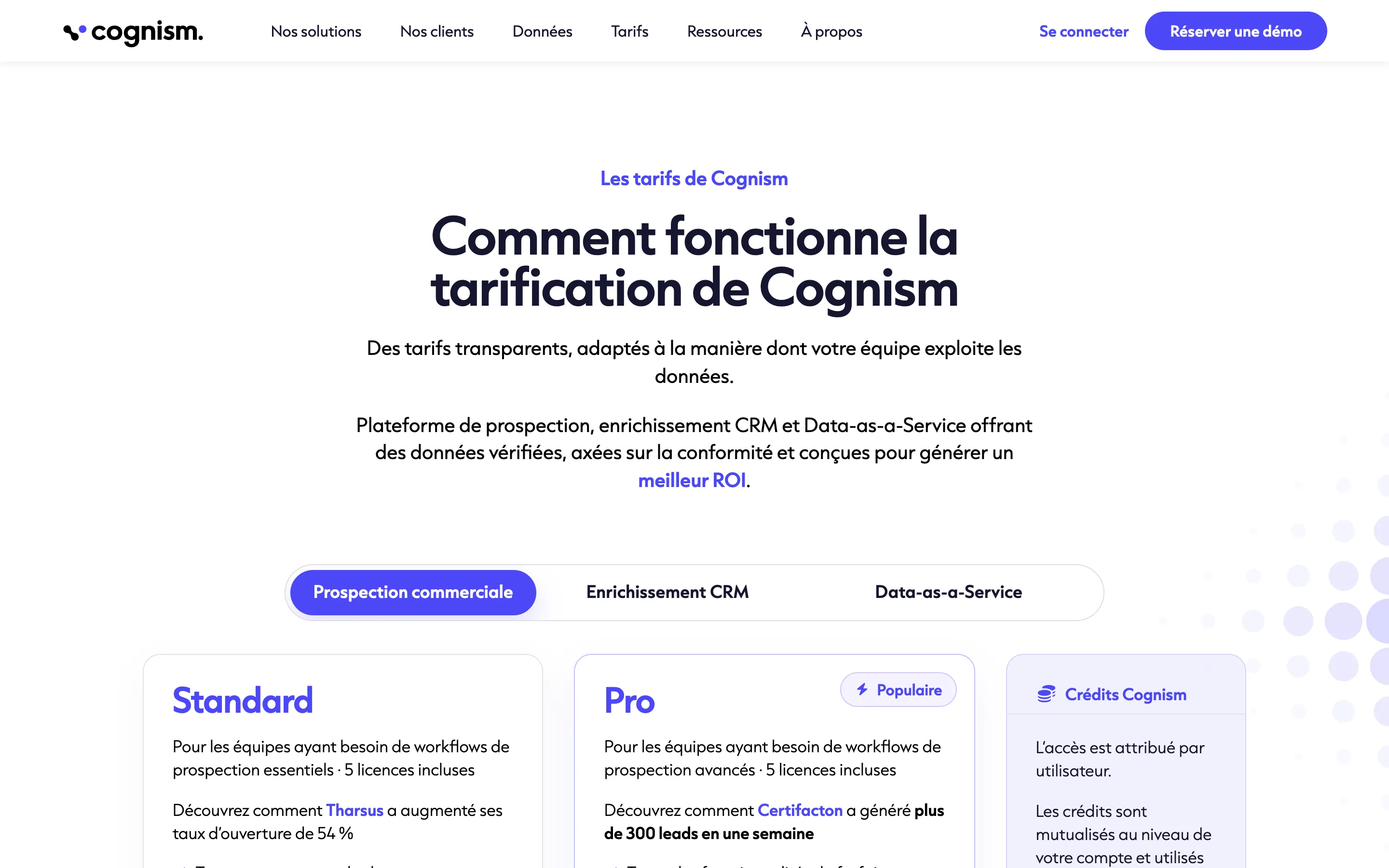
Cognism publishes no numbers; third-party breakdowns put a typical five-seat deal around $22,500+/year, billed per unlock from a negotiated pool whether the contact pans out or not. Effective cost per valid mobile lands well above Enrow's $0.35 Pro benchmark.
vs Enrow: Cognism verifies a subset of numbers ahead of time; Enrow verifies the exact number you asked for, at the moment you ask, from $17/month with no seats or contracts required, and no sales call either.
7. LeadMagic
LeadMagic is for people whose "tool" is a pipeline.
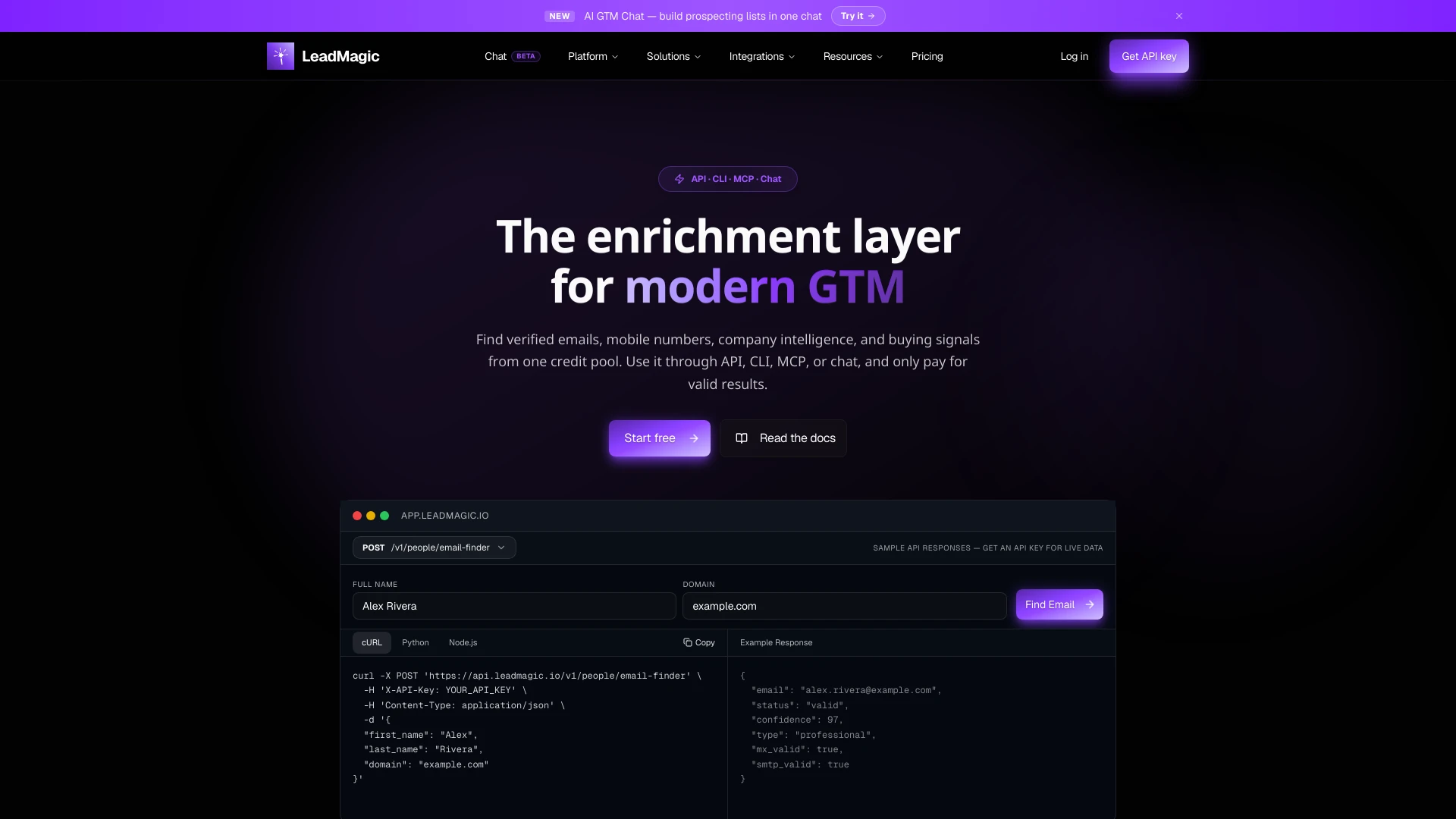
It's API-shaped: 15+ enrichment endpoints (email, mobile, company, profile, job changes) drawing on one shared credit pool, with an MCP server for agent workflows. Where Surfe is a sidebar for reps, LeadMagic is code for RevOps. Credits deduct only on success, which is the right default.
It's not something you hand a rep, though. There's no product to live in, EU phone coverage is unpublished, and rollover starts one tier up. The docs read better than most tools' dashboards, which tells you exactly who it's for.
- +Pay-per-valid: failed matches cost nothing
- +15+ endpoints on one shared credit pool
- +Developer tooling: API, CLI, MCP server
- +Mobile finder included in the same pool
- –No rollover on the entry Basic plan
- –Mobiles cost 5× an email, with no published EU/GDPR phone detail
- –API-first, so non-developers will stall
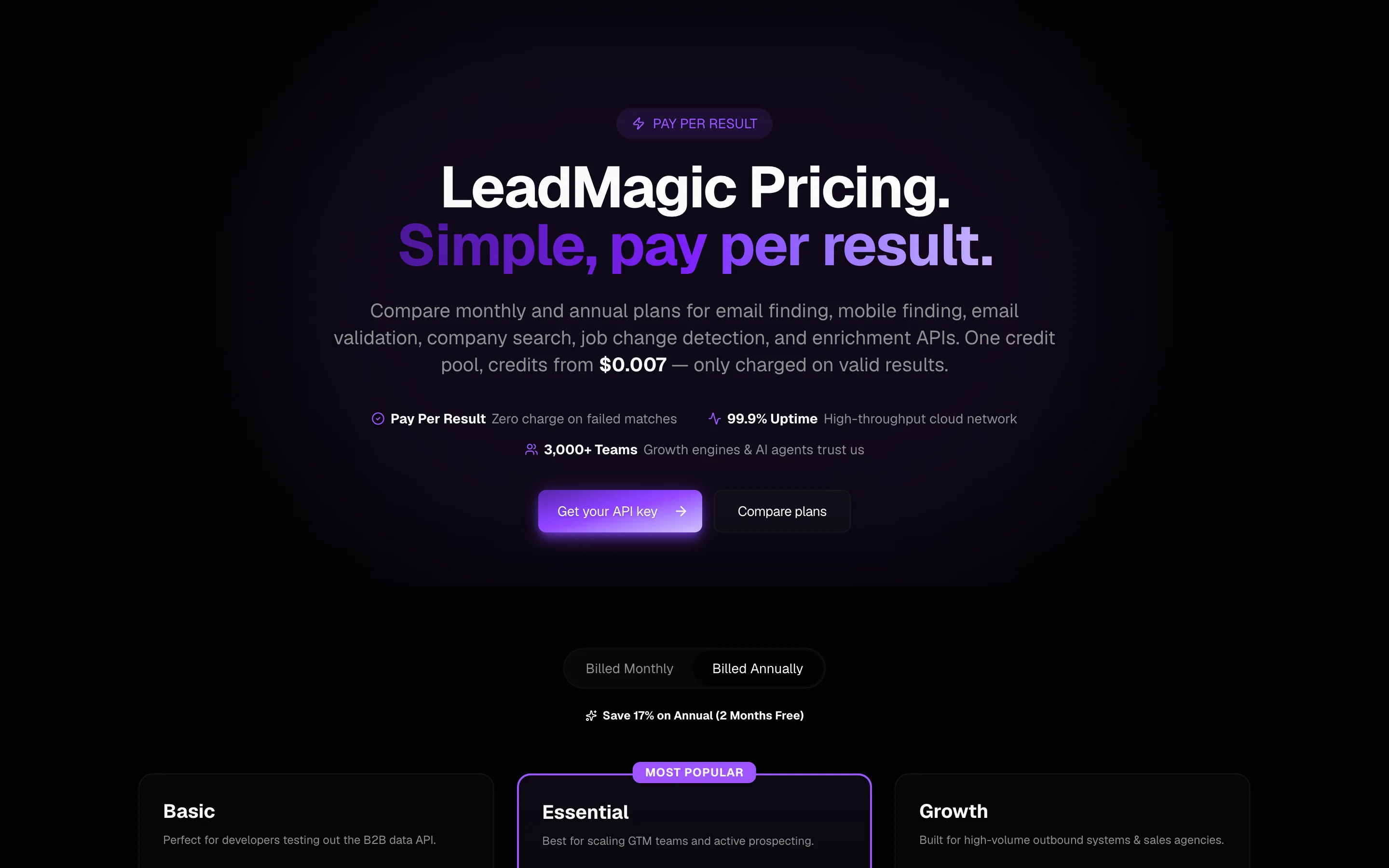
LeadMagic starts at $49/month for 2,000 credits (emails 1 credit, mobiles 5), deducted only on success. That prices a valid email at about $0.0245, roughly 1.4× Enrow's $0.017, with no rollover on Basic and no published EU phone coverage.
vs Enrow: two honest meters, two audiences. Enrow matches the API story, then adds the rep-facing product: a UI, the extension, and one-click CRM export.
8. Prospeo
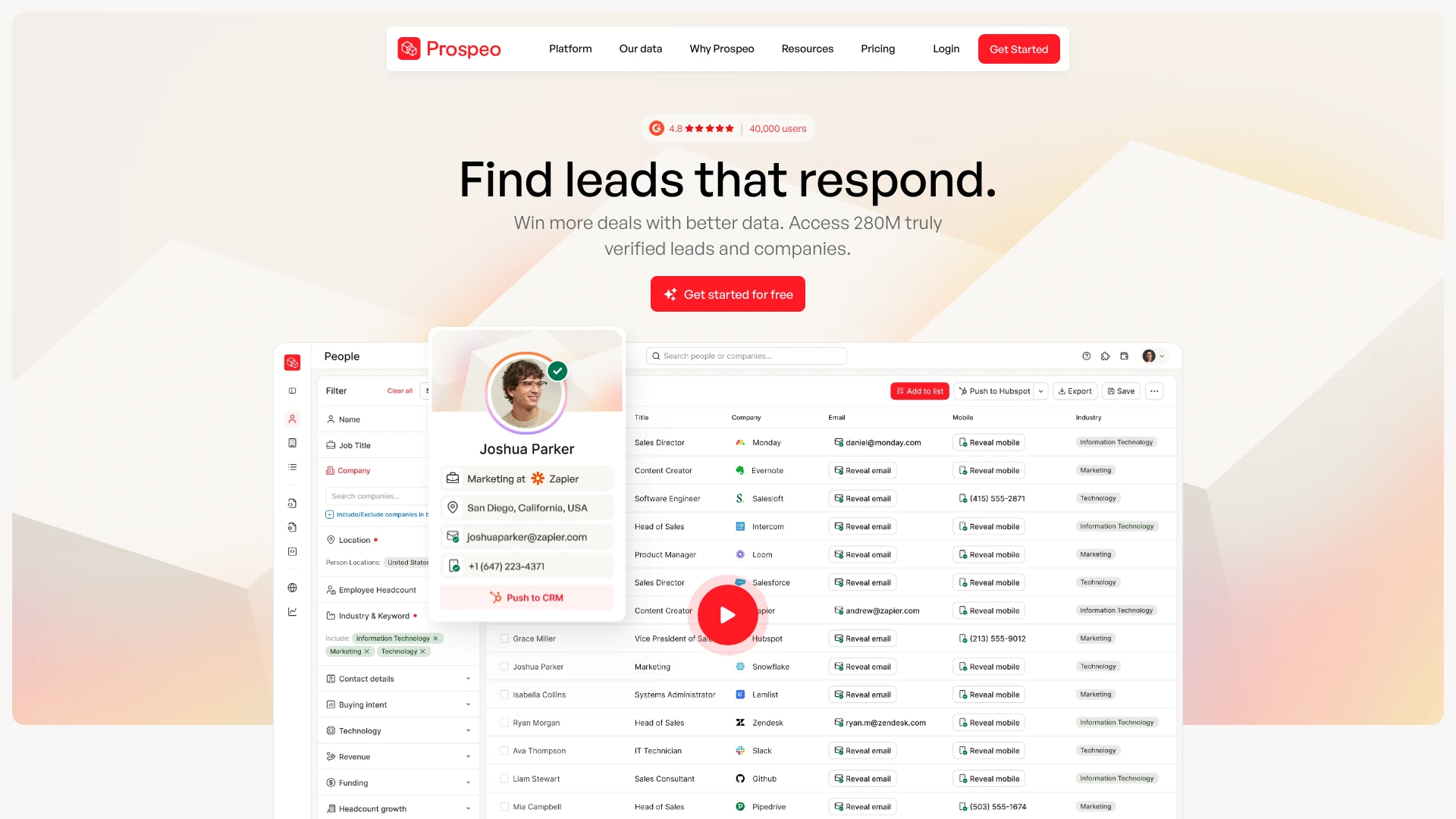
Prospeo's price is its whole pitch. Look past it.
On my list it found about 20% of the contacts. Enrow found 60-70%.
No entry price survives that gap: the misses themselves are free, but when four in five targets come back empty you finish the list on a second tool, and the reach you paid a subscription for never shows up.
It rides a LinkedIn extension like Surfe, but the coverage underneath is the problem.
The rest is what you'd expect at the price point. Quality gets uneven past small jobs, phones cost 10 credits with no documented EU coverage, credits don't roll over, and pricing is per user.
- +1 credit per found email, 0 on a miss
- +Quick Chrome extension for LinkedIn and domains
- +Verification included in the same credit pool
- +Free plan (100 credits/month)
- –Found about 20% of my test list; most contacts simply don't come back
- –Phones cost 10 credits with no documented EU story
- –No rollover, and per-user pricing stacks on teams
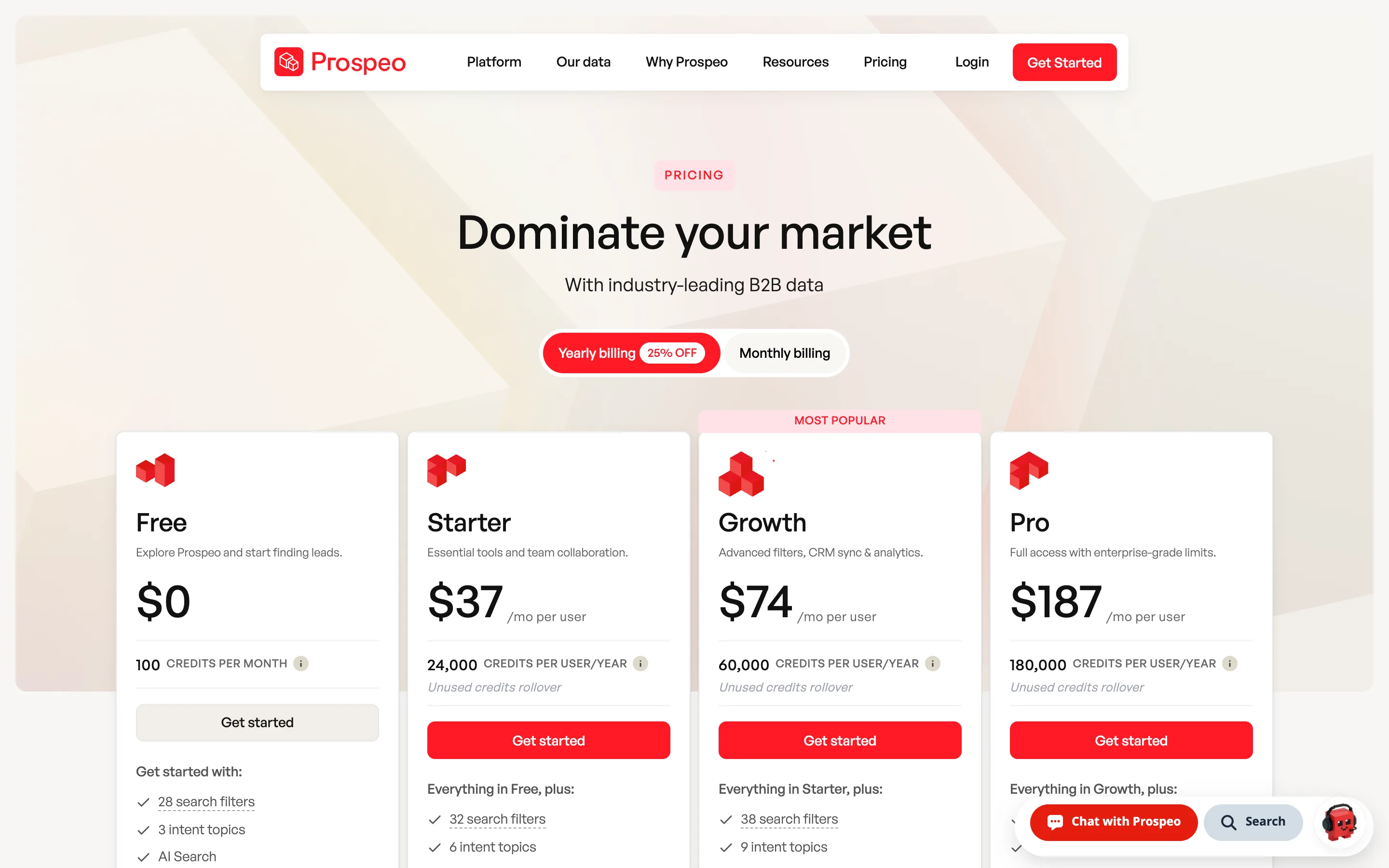
Prospeo starts at $49/month for 2,000 credits (mobiles 10 credits), with nothing charged unless the email is actually found. The sticker reads about $0.0245 per valid email, already 1.4× Enrow's $0.017 — and the honest meter hides the real cost, which is reach: on my list Prospeo returned about a fifth of the contacts.
vs Enrow: the sticker already runs above Enrow, and the find rates live on different planets. Enrow's $0.017 with 60-70% discovery buys a finished list, not a fifth of one.
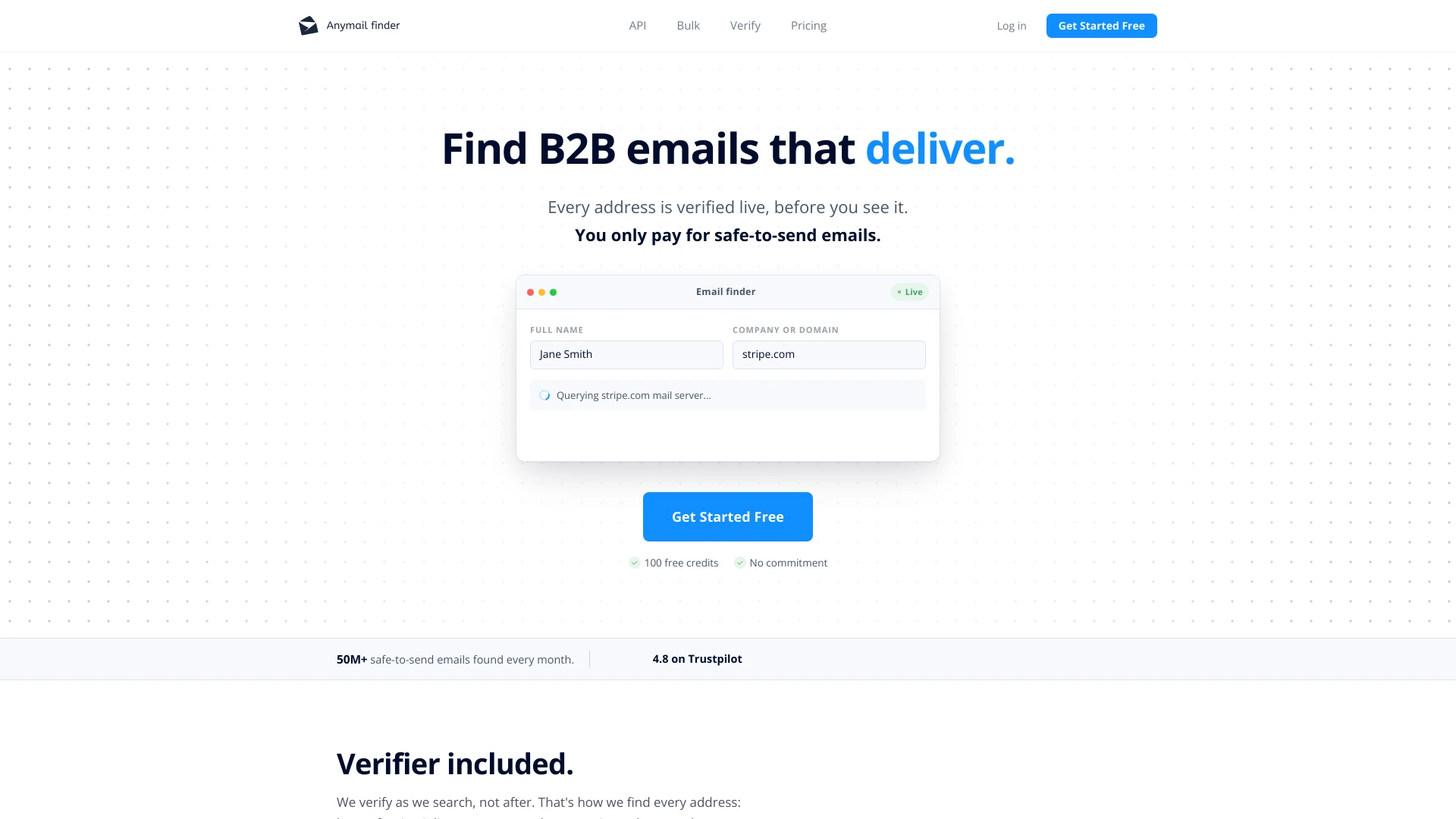
Anymailfinder fixes the meter and stops there.
Verified emails, and nothing gets charged until the address passes verification. It skips phones and databases entirely, and CRM sync isn't part of the deal either. One credit buys one found email, checking an outside address is cheaper, and unused credits roll over while you stay subscribed. The meter is honest and the scope fits in one sentence.
On a messy list the unverifiable rows cost me nothing, which kept the bill clean and small.
- +Only confirmed-valid emails are billed
- +Strong catch-all handling
- +Credits roll over while subscribed
- +Simple single, bulk or API access
- –Email-only, no phones at all
- –Entry sits at $0.049 per valid email, roughly 3× Enrow's rate
- –No CRM sync or contact export to speak of
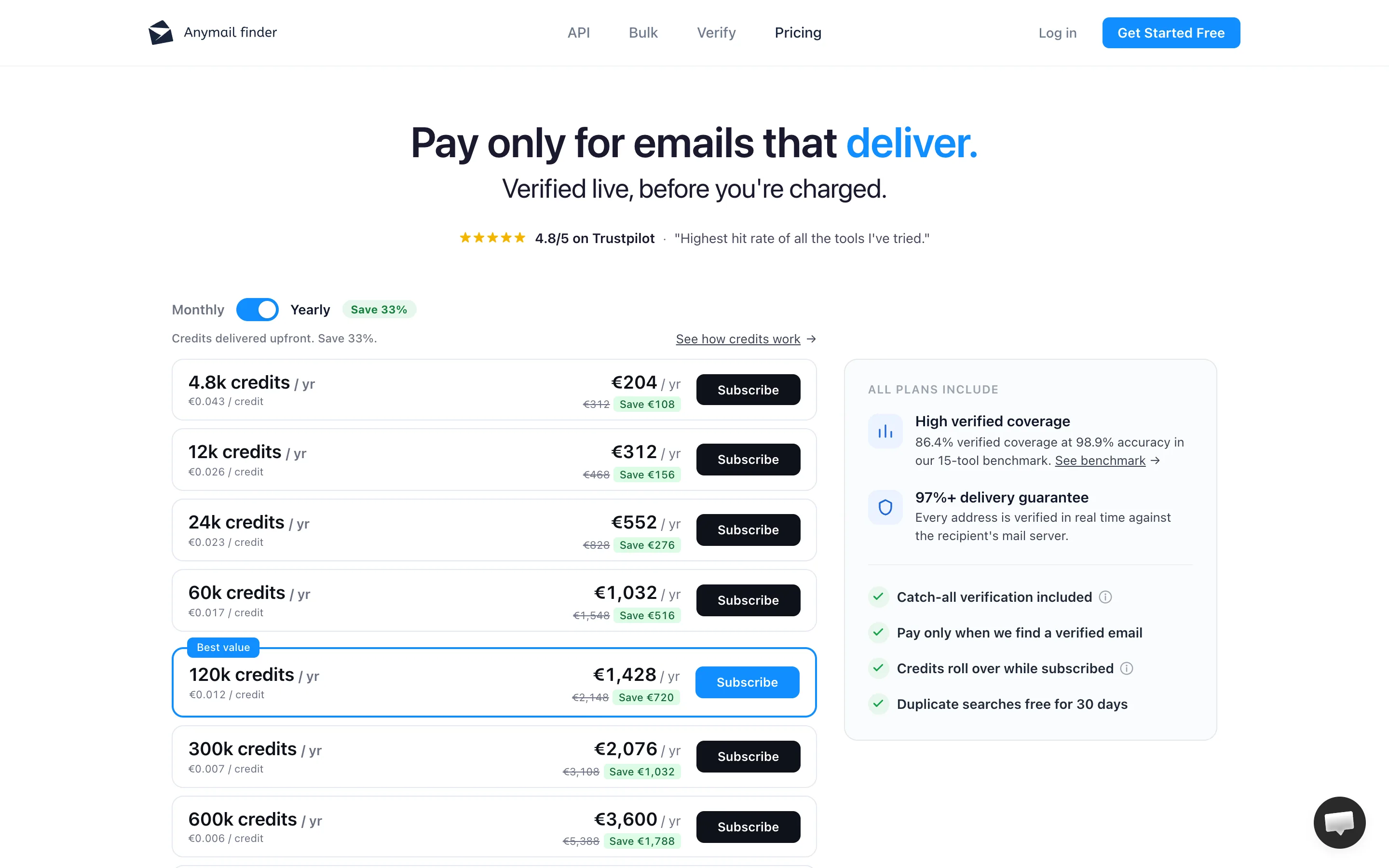
Priced in USD, Anymailfinder runs from $29/month (400 credits) with one credit per found email. The $49/1,000 tier works out to about $0.049 per valid email, roughly 3× Enrow's $0.017 at matched volume, easing toward Enrow's rate only far up the ladder.
vs Enrow: same billing philosophy, half the product, about triple the entry rate per valid email. Match the volume and Enrow undercuts it, then adds the phones and one-click CRM export Anymailfinder never set out to build.
10. Findymail
I'll give Findymail its due: it's a real email finder, and on US addresses it performs.
It also bills the way a finder should. Charged on the found, verified result, zero on a miss. Point it at a domain list or a LinkedIn export and what comes back tends to survive a live send.
We go deeper on the matchup in our Findymail breakdown.
The ceiling is geography and the floor price. GDPR closed EU phones to Findymail, so for European calling it's a spectator, and its phone numbers cover the US only.
The plan floor is $49/month for 1,000 credits, unused credits carry over only to 2× your monthly allowance, and there's no meaningful free plan, just 10 trial credits. On my list its US addresses held up; the French half came back email-only.
- +Found, verified results are what get billed; a miss costs nothing
- +Strong US B2B email accuracy
- +SOC 2 Type 2, GDPR-compliant, EU-hosted
- +Native HubSpot, Salesforce, Pipedrive, Instantly and lemlist integrations
- –No EU phone data (GDPR-blocked); phone numbers cover the US only
- –Rollover caps at 2× the monthly allowance, so stockpiled credits die at renewal
- –No meaningful free plan; the floor is $49/month
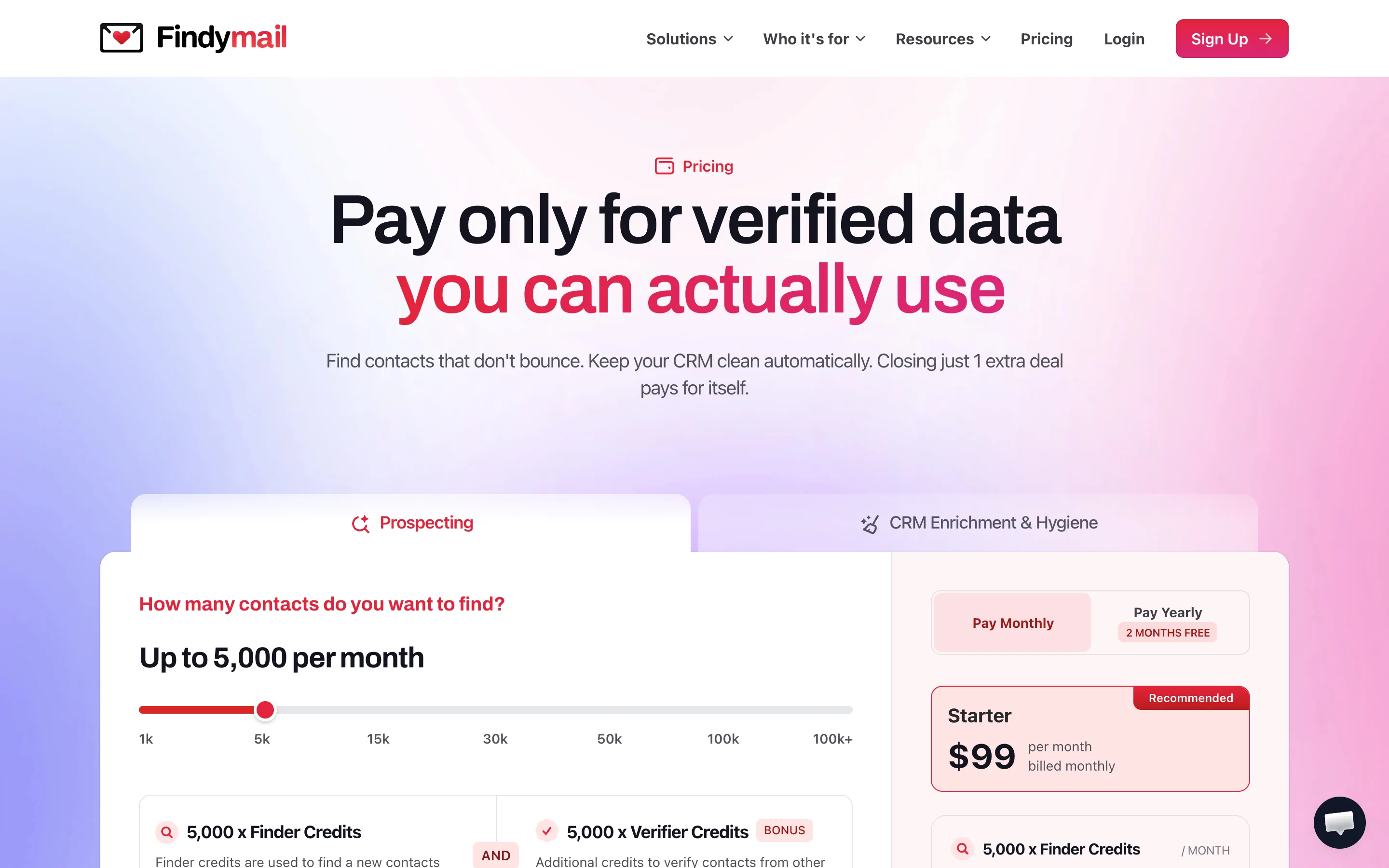
Findymail opens at $49/month for 1,000 finder credits on a single Starter slider (phones 10 credits; rollover caps at 2× the monthly allowance). Per-valid billing keeps the sticker honest at about $0.049 per valid email, roughly 2.9× Enrow's $0.017 at matched volume — and the phone figure excludes Europe entirely.
vs Enrow: same honest meter, narrower map, higher entry rate. Enrow opens at $17 instead of $49, prices a valid email at $0.017 against Findymail's $0.049 at that volume, and returns the EU direct dials Findymail legally can't.
11. Dropcontact
Dropcontact is the pick your DPO would make.
Everything runs under GDPR on EU servers, the data is computed fresh rather than pulled from a resold list, and it carries French firmographics (SIREN, VAT) most tools ignore. On emails it works pay-on-success: an address it can't find gets the credit reimbursed.
For cleaning a French or European CRM, it's a fair specialist, and our Dropcontact page runs the full comparison.
But read the job description. Dropcontact enriches rows you already have; it isn't built to hunt a contact from scratch the way a finder is. And it sells no phone numbers at all — the GDPR positioning means there's no direct-dial product behind the promise.
It cleaned my French rows nicely and produced no mobiles for a hundred contacts.
- +GDPR-first: EU servers, compliant by design
- +Pay-on-success on emails; unfound addresses are reimbursed
- +French firmographics (SIREN, VAT) built in
- +CRM-native enrichment for HubSpot, Pipedrive, Salesforce, Zoho
- –Enriches existing rows; not a real-time finder for new contacts
- –No phone product at all (no direct dials)
- –At €19 you get just 500 credits and no rollover; carry-over costs €29
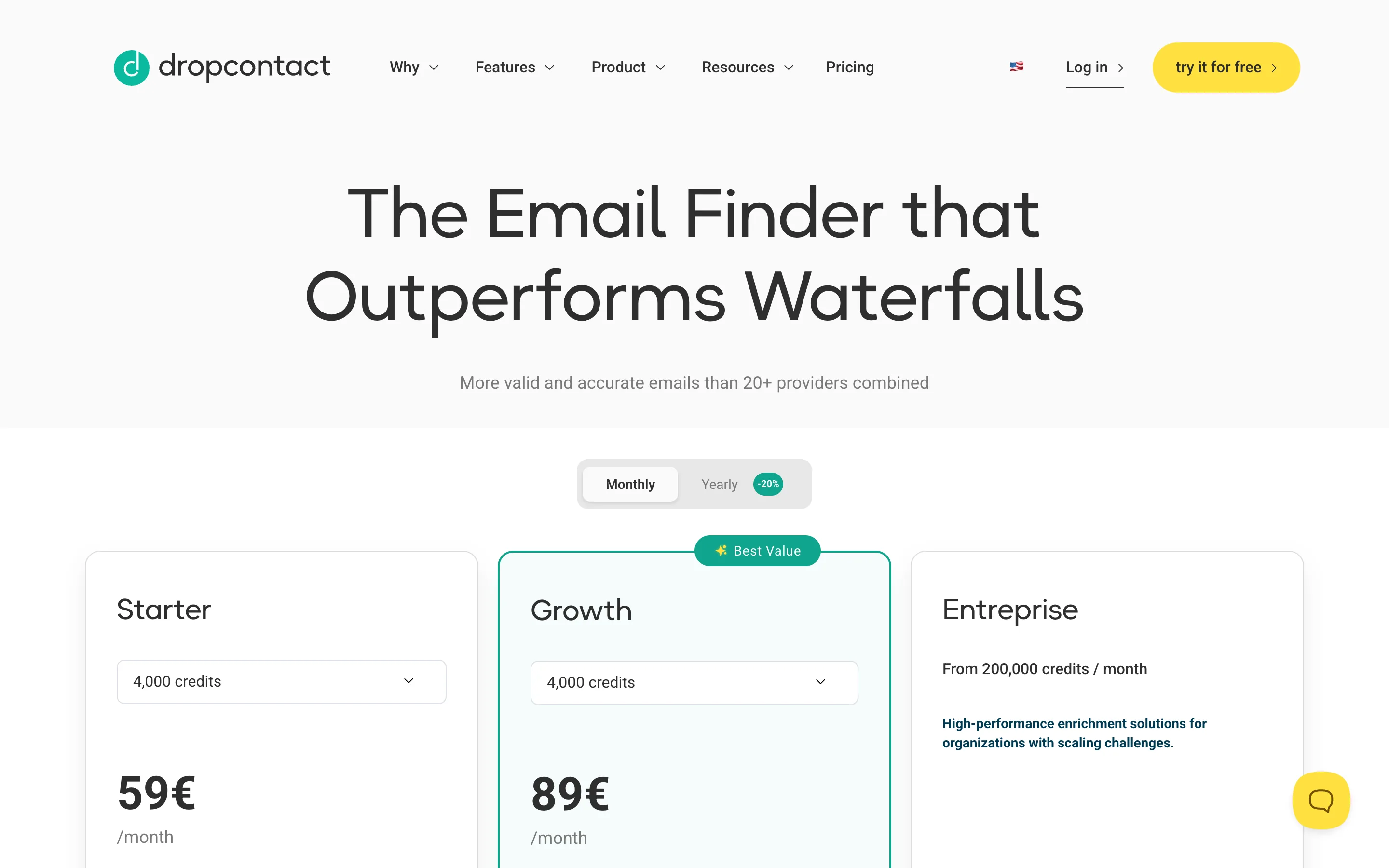
Dropcontact opens at €19/month for just 500 credits with no rollover, or €29 with rollover, on a pay-on-success model (one credit per found contact). That puts the entry math at about €0.038 per email on the Starter: about 2.5× Enrow's €0.015 Start rate in euros, both monthly and neither rolling over; there's no per-phone figure because there's no phone product.
vs Enrow: the honest framing is enrichment versus finding. Dropcontact completes rows you already own and refunds the emails it misses; Enrow finds and verifies new contacts in real time at €0.015 per valid email on its euro Start plan, and returns EU direct dials Dropcontact simply doesn't sell.
Every month, 50 fresh credits land in your account. No card, and they only spend on valid results. Test Enrow against the tool you're leaving.
Side-by-side comparison
Final Verdict
Surfe keeps LinkedIn and your CRM in sync, and reps love it for that. But the contact data underneath is a per-seat ration stitched from third-party sources, and the moment cost-per-valid or EU dialing matters, Enrow is the switch: verified emails and EU direct dials, found in real time, from $17/month at about $0.017 per valid email. It won't be your CRM sidebar or send a sequence — we left those jobs to the specialists, which is exactly why the data layer holds up. And it does the one thing nobody else here matches: one click turns a LinkedIn profile into a complete verified contact, phone included, sitting in HubSpot, Salesforce or Pipedrive. Take the 50 free credits you get back every month and let your own list decide.
Every month, 50 fresh credits land in your account. No card, and they only spend on valid results. Test Enrow against the tool you're leaving.
FAQ
How we evaluated these tools
Nobody paid for a spot here — no affiliate links, no sponsored slots, no winner up for sale. I ran the test myself: one contact list, every tool, all inside the same week, then fired at a live inbox to count what actually bounced. Four things set the order — how many contacts came back, how many addresses died on the send, what a valid contact really costs once the junk is priced in, and whether the tool can hand over legally-sourced EU phone numbers. Competitor prices come from official pricing pages read on 2026-07-06.
ready to stop wasting time?
Connected in minutes.
Verified data in seconds.
no credit card
no setup required